- 464 pages
- English
- ePUB (mobile friendly)
- Available on iOS & Android
eBook - ePub
About this book
Eucalyptus, a genus of over 800 species, is a multiproduct crop par excellence. Not only is it grown for timber, pulp and fuelwood, but, as the Aborigines discovered thousands of years ago, it has numerous medicinal and aromatic properties. Since the first commercial distillation of eucalyptus oil 150 years ago, a vast array of eucalyptus-based pro
Trusted by 375,005 students
Access to over 1 million titles for a fair monthly price.
Study more efficiently using our study tools.
Information
Part 1
General aspects
1 Botany of the eucalypts
Ian Brooker
Introduction
There are probably few tree genera that have had as much written about them as the eucalypts. Indigenous to the Australasian region, they are now among the most widely cultivated of all plants, particularly in tropical and subtropical parts of the world. The multiple uses to which eucalypts are put, from construction timber to fuel and pulp, and from oils to amenity planting, make this plant genus one of the most valuable and widely used in the world.
To the average Australian they are a natural feature of the environment, where vast forests have been exploited for commercial purposes, often in the expectation that natural regeneration will sustain an industry more or less permanently. In the last thirty years, however, an awareness of the need to preserve the forests has become as much a political as a silvicultural necessity.
The perspective in many other countries, where the eucalypt is known as an alien plant, is different. But after generations of planting the eucalypt may be seen as almost part of the landscape, providing fuel, timber and ornamentation in places where the original forests have been razed beyond the possibility of natural regeneration. In a few countries the eucalypt is the dominant tree in plantations where vast numbers of even-aged trees of more or less identical habit and size occupy great areas. Their uniformity is often due to the surprisingly small choice of species, many subsequently cloned or produced by manipulated crossing to package the most desired characters for site adaptation and specific end use.
When it is considered that relatively few species of eucalypt form the basis of plantation industries, it may be questioned to what extent this large and greatly variable genus has been tested. It occurs in a vast assortment of forms and in sites which range from rainforest to alpine to desert. There is no doubt that among the 800 species of eucalypt which have now been described, species as yet untried will prove to be successful for a multitude of reasons, whether for their fuel, timber, fibre, oils or other chemicals, or merely for shelter and amenity.
The discovery of the eucalypts
The popular conception of the discovery of Eucalyptus relates to the voyages of Captain James Cook in the Endeavour in the 1770s. Following the naming and exploration of New Zealand on his first voyage, the party arrived on the eastern coast of Australia. From their first principal landfall which Cook named Botany Bay, they sailed northwards, making plant collections under the guidance of Sir Joseph Banks. There are several extant eucalypt specimens from this first voyage, one of which from Botany Bay was described, but not recognised as a new genus, and was placed in the established genus Metrosideros by the botanist Joseph Gaertner in 1788.
On Cook’s third voyage to the south seas, the botanist of the party, David Nelson, collected a specimen on Bruny Island to the south of the Tasmanian landmass. Taken back to England it was studied by the French botanist, Charles Louis L’Héritier de Brutelle, working at the British Museum, Natural History, where the specimen remains. He published it in 1788 as the single species of a new genus which he named Eucalyptus, from the Greek, eu, well, and calyptos, covered, alluding to the cap (operculum) that covered the stamens in the bud before anthesis. In the fifty years following Cook’s voyages many more eucalypt species were discovered. These were found by settlers radiating from the new settlements on Port Jackson (Sydney), Hobart, Melbourne and Adelaide, and by naturalists on exploration trips around the continent, of which the best known are those of Labillardière in 1792, Robert Brown in 1801–1803, and that of the surveyor Allan Cunningham (1817–1822).
By 1867, when the first substantial classification of the genus Eucalyptus was published by George Bentham, 135 species were known. Since then hundreds more have been discovered, with periods of activity coinciding with the efforts of the principal eucalypt botanists operating at the various times. Notable eras of Eucalyptus publication have been the latter half of the nineteenth century (Ferdinand von Mueller), 1903–1933 (Joseph Henry Maiden) and 1934 (William Faris Blakely). An indication of the accumulation of named eucalypts is given in Figure 1.1, where periods of intensive activity can be seen. Considering that eucalypts are now recognised to number about 800, it appears that, on average, for every species published a synonym has also been published.
While eucalypts were largely brought to public awareness from the early nineteenth century onwards, there can be no doubt that eucalypts were known to Europeans well before that time. In 1699, the English navigator William Dampier landed on the west coast of Australia and made plant collections which are extant and held at Cambridge, England. There are no eucalypts among them (A.S. George pers. comm.) but it is unlikely that Dampier or his party could not have come across them, even though they landed in a very arid part of the continent. The earliest collected eucalypt is believed to have come from Ceram, an island of eastern Indonesia. It was probably Eucalyptus deglupta Blume, one of the few Eucalyptus species not indigenous to the Australian landmass but occurring in New Guinea, Indonesia and the southern Philippines. The specimen was not described and published at the time and its history remains a curiosity. The species was, however, formally described in 1849 by Carl Blume from a sterile specimen earlier given the manuscript name ‘Populus deglubata’.
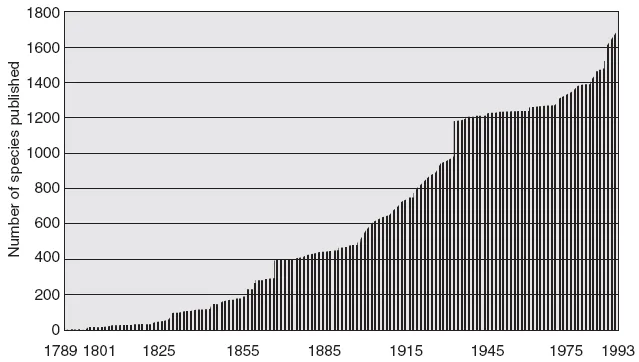
Figure 1.1 Numbers of Eucalyptus species published by year.
There is a possibility that a eucalypt species was reasonably well known before the Ceram specimen. E. alba Reinw. and E. urophylla Blake, the latter only described in 1977, are indigenous to Timor and some Indonesian islands and it is likely that these species were encountered and used by the colonising Portuguese, as well as the local people. Seed may also have been taken to Brazil, another colony of the Portuguese, from the early 1600s.
The origins of Eucalyptus
Australia is the most arid of continents. Nevertheless, there are significant regions of very high rainfall along the eastern coast and in southwestern Tasmania. These areas support the remaining rainforests which, floristically, are in great contrast to the far more widely distributed ‘typical’ Australian landscapes dominated by Eucalyptus and Acacia. It was once assumed that the sclerophyll vegetation of most of the land surface was the autochthonous flora and that the rainforest was a later invader, probably from the north, across land bridges which were manifest at times of low sea level. The more recent theories of plate tectonics, supported by fossil evidence, show that the present landmass was once part of a single super-continent, Gondwana (Barlow 1981) comprising what is now known as New Guinea, Antarctica, India, Arabia, Africa, Madagascar and South America.
As Gondwana broke up in the Tertiary period, the Australian landmass drifted northwards from Antarctica. It is believed that in the early part of this drift the continent experienced high rainfall and was characterised by a relatively uniform rainforest vegetation. The landmass gradually became drier and the ancient soils lost their fertility. The new land environments became totally unsuited to rainforest and it contracted, largely to the eastern seaboard. However, by the evolution of new adaptable forms some plant families were able to occupy the areas of less certain rainfall and soils of diminishing fertility. Notable examples are Myrtaceae, which spawned the eucalypts, and Mimosaceae, the distinctive phyllodinous acacias. Both plant groups required morphological and physiological modifications to enable them to thrive. This may be seen in Acacia in the dominance among the hundreds of dryland species of the phyllode, a modification of the soft divided leaves of the probable rainforest precursors.
In the case of the eucalypts, the most conspicuous change for the survival of plants in the harsher environments of the open forests and shrublands can be seen in the leaves and inflorescences. In the closed forests there would have been far more competition for sunlight and the leaves are necessarily dorsiventral, held more or less horizontally, with the photosynthetic tissues facing upwards and stomata on the underside. For the most successful reproduction of primarily entomophilous plants, it is likely that the inflorescences should be presented as conspicuously as possible. This requires that the inflorescence be large and terminal on the crown (e.g. E. calophylla R. Br. ex Lindley, Figure 1.2). We cannot know what the precursor or precursors of Eucalyptus were, but from an analysis of the present rainforest and of the sclerophyllous vegetation of the majority of the Australian environment, Protoeucalyptus may have had the characters given in Table 1.1.
The contrast between the shadowy environment beneath the crowns of the rainforest and the intense light of the open forests and shrublands is immense in terms of available sunlight. An essential adaptation was the development of the isobilateral leaf which, in addition, tended to be held vertically, often presenting an edge to the sun with the stomata on both sides, a style of leaf that minimises the effects of direct sunlight and protects the stomata as much as possible.
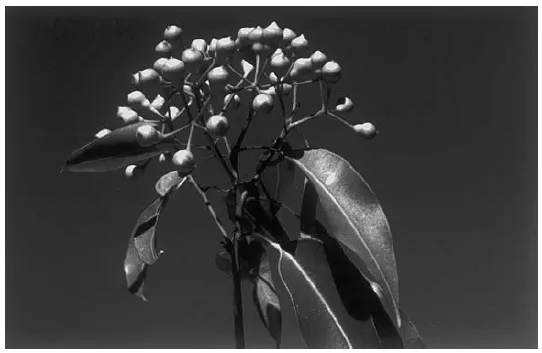
Figure 1.2 Terminal inflorescences (E. calophylla).
Table 1.1 Suggested characters in Protoeucalyptus
It is interesting to observe in leaf characters, however, the present day relationships between the current species of the more humid forests and their related taxa in the more arid lands. In the emergence of Eucalyptus and its development of a hierarchy of infra-generic forms, many taxonomic series have present-day species in the humid forests, with unmistakably related species that have been modified to adapt to the drier environments. This is notable in the bloodwoods, which have radiated over most of the continent. All the bloodwood species currently in the humid east and far southwest have dorsiventral leaves. None of the numerous species of the arid lands in this group has dorsiventral leaves. The situation of the northern tropics, with their short, very wet season and long dry one, is somewhat different, with predominantly dorsiventral species and some isobilateral ones. Examples of humid-climate, dorsiventrally-leaved species and dry-climate, isobilaterally-leaved species of the same taxonomic groups are shown in Table 1.2.
The situation with the inflorescence is somewhat different. While there has been an apparent retreat of the inflorescence from the outside of the crown to the leaf axils in most taxonomic groups (e.g. E. pyrocarpa L. Johnson & Blaxell, Figure 1.3), the bloodwood species in particular have retained the terminal inflorescence in all arid zone species. All bloodwood species, whether of the humid forests or of the inland arid regions, have the primitive terminal inflorescence (Figure 1.2). However, several hundred species of the other taxonomic groups which have radiated across the continent, and which occur in myriad environments, have the derived axillary inflorescence.
Table 1.2 Examples of related pairs of Eucalyptus species showing advance from the primitive dorsiventral leaf to the isobilateral leaf
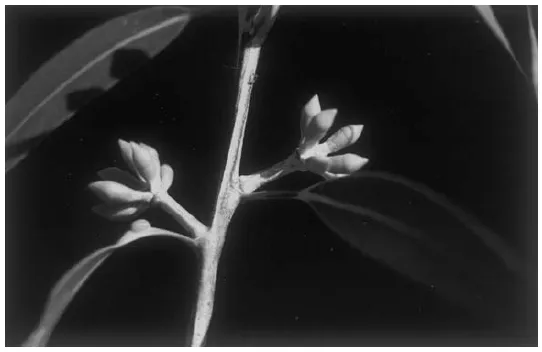
Figure 1.3 Axillary inflorescences (E. pyrocarpa).
The bark of Protoeucalyptus was probably rough. This has been retained without exception in the eastern bloodwood species occupying humid regions. Desert species provide a contrast and the rough bark may vary from nil to rough over part or most of the trunk. The adaptive nature of rough bark is open to much speculation. It may appear to be protective but is scarcely a necessity as rough and smooth-barked species grow in association in many varying environments. The form of the bark, whether rough or smooth, remains a powerful aid in identifying taxonomic groups within the genus, although experience is required to distinguish the different types.
Classification in the genus Eucalyptus
The genus Eucalyptus, which began in formal botanical terms as a single species, E. obliqua L’Hérit., in 1788, has now been recognised to comprise about 800 species, in numbers second only in Australia to Acacia. By 1800 only a few species had been described. These were, as expected, all from around the new colony at Port Jackson (Sydney). Most were named by Joseph Smith working at the British Museum. They include many of the most valuable timber species which, then as now, must have been the most important in a pioneer settlement for construction and fuel, namely, E. saligna Smith, E. resinifera Smith, E. pilularis Smith, E. capitellata Smith and E. paniculata Smith.
In the first half of the nineteenth century, land and sea-based expeditions resulted in the discovery of many more new eucalypts. Groups of related species soon became evident, e.g. the stringybarks and the ironbarks. Consequently, a comprehensive classification of the 135 known species into these recognisable categories, as formal series and subseries, was published in 1867 by George Bentham of the Royal Botanic Gardens, Kew, England. He did not visit Australia but was greatly assisted by the endeavours of the great scientist Ferdinand von Mueller, working from Melbourne, who sent Bentham plant material on which to base his studies.
Bentham devised a system that divided the eucalypts into five taxonomic series based on stamen characters. For each group he further discussed other characters such as bark, habit, etc., although these latter appear not to be essentially diagnostic. His largest series was divided into subseries based on the structure of the inflorescence and, to a lesser extent, the leaves. Overall, Bentham’s system of classification was a brave attempt to order the eucalypts but his groupings have little relevance ...
Table of contents
- Cover Page
- Title Page
- Copyright Page
- Contributors
- Preface to the series
- Preface
- Part 1 General aspects
- Part 2 Cultivation and production of eucalypts around the world: With special reference to the leaf oils
- Part 3 Biological and end-use aspects
- Appendices
Frequently asked questions
Yes, you can cancel anytime from the Subscription tab in your account settings on the Perlego website. Your subscription will stay active until the end of your current billing period. Learn how to cancel your subscription
No, books cannot be downloaded as external files, such as PDFs, for use outside of Perlego. However, you can download books within the Perlego app for offline reading on mobile or tablet. Learn how to download books offline
Perlego offers two plans: Essential and Complete
- Essential is ideal for learners and professionals who enjoy exploring a wide range of subjects. Access the Essential Library with 800,000+ trusted titles and best-sellers across business, personal growth, and the humanities. Includes unlimited reading time and Standard Read Aloud voice.
- Complete: Perfect for advanced learners and researchers needing full, unrestricted access. Unlock 1.4M+ books across hundreds of subjects, including academic and specialized titles. The Complete Plan also includes advanced features like Premium Read Aloud and Research Assistant.
We are an online textbook subscription service, where you can get access to an entire online library for less than the price of a single book per month. With over 1 million books across 990+ topics, we’ve got you covered! Learn about our mission
Look out for the read-aloud symbol on your next book to see if you can listen to it. The read-aloud tool reads text aloud for you, highlighting the text as it is being read. You can pause it, speed it up and slow it down. Learn more about Read Aloud
Yes! You can use the Perlego app on both iOS and Android devices to read anytime, anywhere — even offline. Perfect for commutes or when you’re on the go.
Please note we cannot support devices running on iOS 13 and Android 7 or earlier. Learn more about using the app
Please note we cannot support devices running on iOS 13 and Android 7 or earlier. Learn more about using the app
Yes, you can access Eucalyptus by John J.W. Coppen in PDF and/or ePUB format, as well as other popular books in Medicine & Alternative & Complementary Medicine. We have over one million books available in our catalogue for you to explore.