Perceiving the Affordances is a personal history and intellectual autobiography of Eleanor Gibson, the groundbreaking research psychologist who was influential in the founding of the theory of perceptual development. It is also a biography of her husband, James J. Gibson, who was a major perceptual theorist and the founder of the ecologically-oriented theory of perception. This is the story of their lives together and how each came to make particular contributions. This book is of interest to people who study perception, perceptual development, infancy, developmental psychology, and the history of psychology.

- 160 pages
- English
- ePUB (mobile friendly)
- Available on iOS & Android
eBook - ePub
About this book
Information
Publisher
Psychology PressYear
2001Print ISBN
9780415650779
9780805839494
Edition
1eBook ISBN
9781135644437
1
Growing Up in the Heartland

Both James and Eleanor Gibson grew up in the Midwest, with its long vistas of plains and corn- fields as far as the eye could see. James Gibson had, indeed, occasional exposure to the grandeur of the far West, because his father was a railroad man and could take his family for vacations on train trips as a perquisite of his profession. But both were eager to escape to the East. First things first, however.
James Jerome Gibson was born on January 27, 1904, in McConnelsville, Ohio, at the home of his Grandmother Stanbery. His mother, née Mary Gertrude Stanbery, had previously had two stillborn infants, so this healthy son was cherished by his parents, grandmother, and a great aunt, Miss Mary Merriam, a tiny maiden lady. Both of these women later lived with the Gibson family. McConnelsville is a small town in southern Ohio on the Muskingum River near the farm of the Stanbery forebears where Gertrude Stanbery Gibson grew up. I happened, in an absurd way, to see the town once. There was a meeting in 1988 at Miami University in Oxford, Ohio, of the Society of Ecological Psychologists, a group inaugurated after James’s death by his followers. I was driven to the meeting by David Lee, an old friend and one-time student of James’s from Edinburgh, Scotland. Accompanying us was Karen Adolph, a graduate student of mine dating from a sojourn at Emory University (she says David was driving her car). As we sped homeward from the meeting along a major turnpike, a crossroad appeared with a sign advising that McConnelsville was 30 miles to the south. David, spotting it, said, “McConnelsville! That’s where Jimmy was born—let’s go!” He slowed the car and turned south, despite Karen’s and my protests that there was nothing to see. We arrived at the center of a small, old, respectable Midwestern town. “Where’s the house?” asked David. I assured him that 1 had no idea and anyhow, it would have been his grandmother’s house; he was only born there because his father was currently being moved to a new post by the Northwestern Railroad, where he served as right-ofcway agent. David persisted and checked with a local historical society, but of course we never found the house. Several years later, after the story had made the rounds, I received a very large framed panoramic photograph of the center of McConnelsville, complete with courthouse, church, war memorial, and so on. Under the picture was an engraved title, “McConnelsville, Ohio; birthplace of James J. Gibson, 1904–1979”. The photographer was Tom Stoffregen, my old graduate student, by then a professor at the University of Cincinnati, not far away from McConnelsville. The picture now hangs in the faculty room of the Psychology Department at Cornell University.
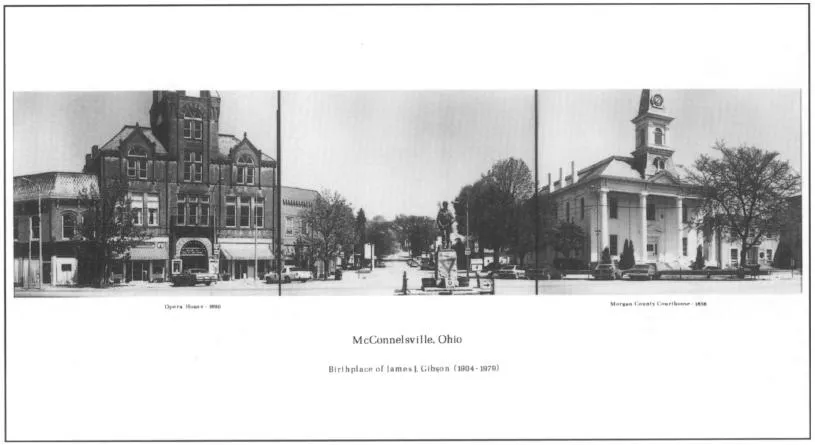
Fig. 1. McConnelsville, Ohio; Birthplace of James J. Gibson, 1904–1979.
James was followed by two brothers, Thomas (Tom), born 4 years after James and William (Bill) born 4 years after lom. Their father, who adored them, often pretended to confuse them, saying to one or the other, “Jim, Tom, Bill—whoever you are!” The family moved several times, living in Ohio, Wisconsin, and South Dakota before Thomas Sr. was finally assigned to Chicago for good. Then it was time for a permanent residence, and a house was built on 10th Street in Wilmette, Illinois, a middle-class suburb on Lake Michigan, north of Chicago. It was handy for commuting to the city on the Northwestern train, which stopped for passengers just a block north of the family residence, and connected with the “El” to The Loop, the Chicago business area where Thomas Sr. had his office.
The house was a rather large off-white stucco building with a front porch (everyone in Wilmette had a front porch), a sunroom in the back, and above the sunroom a sleeping porch that connected with one of the back bedrooms. This arrangement allowed the three boys to be housed in a single area, an advantage because both Grandmother Stanbery (Gertrude Gibson’s mother) and her sister, Aunt Mary, came to live with them in Wilmette. Aunt Mary was a little weak in the head and must have been a trial to her niece and nephew (a very patient man, however). Grandmother Stanbery, according to her grandsons, was a plus and often helped them with their math. She was also a wise and helpful counselor and babysitter, which was more than could be said of Aunt Mary, who once gave my son (age 2), her great-nephew, a large carving knife to play with.
Although there was an ample living room and a dining room, much of the family’s time was spent in the sunroom. Most meals were served there on a two-piece walnut table that could be joined in the center. Half of the table is now cherished by Betty Gibson (Tom’s wife) and the other half by my daughter Jean, Gertrude and Thomas Gibson’s granddaughter. Five of the chairs (cherry with twisted spindle backs and cane seats) are at my son’s house in South Carolina. Homework was done in the sunroom, and every Sunday afternoon, Thomas Gibson, treasurer of the First Presbyterian Church of Wilmette, spread the day’s offering over the table as he sorted it, counted it, recorded it in an impressive ledger, and sealed it up for its trip to the bank. No one was ever allowed to help. The Gibsons and the Stanberys were founders of one of the earliest Presbyterian churches in Ohio.
James and his brothers grew up in Wilmette, attending a nearby school and never missing Sunday school at the church. We still have a Bible given to James for perfect attendance, with a note remarking on this by the minister. It is not exactly well worn, but the old leather binding is dry and cracked. The boys not only went diligently to Sunday school; they were also expected to work diligently (however reluctantly) in the large vegetable garden behind the house. The garden was productive, and vegetables were canned, jellies made, and so on, for Gertrude Gibson was a very thrifty housewife. She sewed, too, making clothes for herselfand even for the boys as long as that was practical. I still remember her homemade Sunday dresses, not very stylish but very respectable. She had a favorite store in Chicago, Carson-Pirie Scott, where she purchased sturdy, me- dium-priced clothing and dry goods.
The lake was a wonderful place to bathe and swim, with a sandy beach to play on. Gertrude Gibson did not swim herself, but she sometimes went there with the boys, to keep an eye on them. On one occasion, Tom swam out to a raft and stayed there a long time with companions, visibly shivering. The next day, Gertrude made the train trip in to Carson-Pirie’s to buy herself a bathing suit so that she could better monitor the swimming activities. When she arrived home, Grandmother Stanbery met her at the door, saying, “Tom’s sick—you’d better call the doctor.” Tom had polio, which was epidemic at the time. He recovered, but had a game leg for the rest of his life.
Gertrude Gibson’s social life was centered entirely in her church and in her family. This was her inclination, to be sure, but it was further ensured by her growing deafness. Before she was middle-aged she was totally dependent on a hearing aid, at the time a very awkward contraption with large batteries that had to be contained and hidden somewhere in one’s dress. She was a cheerful, good-tempered person, nonetheless, and took her trial in her stride. The deafness was of genetic origin. She had one brother (referred to in the family as “Unc”) who was also deaf. He lived in West Virginia and had something to do with oil wells. His wife must have died young, but he had one daughter, Virginia. They were only rarely heard from, but Gertrude also had two sisters, with whom she was always in close touch.
One sister, Eurie Stanbery, married Will Nichols, a dentist in Medina, Ohio. Gertrude always traveled to Medina for any dental work. The Nicholses had four children. The oldest, Abner, was a few years older than James Gibson, and became a chemist (later he was killed in an explosion at DuPont). Then came Ruth, Stanbery, and Ellen. All four of them graduated from Oberlin College and went on to further study. Gertrude’s other sister, Maude, married lom McCoy and lived in Twin Falls, Idaho. She had two sons. Neither of Gertrude’s sisters was deaf, fortunately. They often visited back and forth.
Thomas Gibson, Sr., had three sisters, Jessie, Cad, and Mildred. Aunt Cad married and had one son, who died in his youth. Aunt Mildred never married, but became a very successful business-woman. Cad was widowed early and the two sisters lived together in Los Angeles. Jessie, the eldest sister, married “Uncle Link.” They lived in southern California, too, and had a small holding where they grew oranges, walnuts, and the like. They had one daughter, Fern. Fern married and had a daughter, Jesslyn. Fern was widowed very early and Jesslyn was the spoiled darling of the whole California family, who were very close.
With all these relatives in the West and Midwest, the Gibson family traveled often, as Thomas Gibson’s free passes on the Northwestern Railroad made the travel easy. However, Pullman berths had to be paid for and that was expensive for a family of five. I remember my mother-in-law explaining to me that she and her husband always shared a berth, which was quite tolerable if their heads were at opposite ends. The travel, in any case, was fun and educational for the boys. James wrote later that he got his first inkling of the importance of optical flow as information for the perception of distance from the rear observation platform of a train.
The schools in Wilmette were good. The boys attended New Trier High School, shared by three suburbs north of Chicago, known for its excellence throughout the Midwest. James Gibson was a reader and a good student. He was no athlete, but debated (with gusto and pleasure, I am sure, because he always loved an argument) and took part in high school dramatics. For some reason, the high school did not require 4 years of Latin, and when it came time to choose a college, James found that Princeton, his choice, would not admit him with only 2 years. Never mind, he took his freshman year at Northwestern University, and transferred as a sophomore to Princeton, which mysteriously forgave the lack of Latin after 1 year at another institution.
Eleanor Jack was born December 7, 1910, in Peoria, Illinois. Peoria is the second-largest city in Illinois, situated on the Illinois River, at the spot where the river widens into a large lake. The name (not to be scoffed at) means “beautiful view” in the language of the Indians who once inhabited the land. The land next to the river is flat, perhaps 2 miles wide on either side; above the flat land are tall bluffs from which the view is, in fact, very beautiful. The flat land was settled first, of course, and later gave way to businesses and manufacturing, as the bluffs were taken over for dwelling places. The location afforded excellent transportation on the river, and the city became a railroad hub as well. The Caterpillar Tractor Company settled there (on the “other” side of the river), and many other businesses, too. The Board of Trade (in the center of the best corn-producing land in the country) hummed with activity, especially before Prohibition.
My maternal grandmother’s parents, the Clarkes, moved to Peoria from the East. My great-grandfather, Samuel Strong Clarke, originally a Connecticut Yankee, had been a successful importer in Charleston, South Carolina, but he found the climate unhealthful. In 1856 he moved his family to new land in Illinois where he expected to settle down as a gentleman farmer. He built a home, Cottonwood (still in existence), and planted not just the corn of the country but more exotic things, such as grapes from which wine was made. We still had Cottonwood wine on holidays when I was a child. He also founded a dry goods company (Clarke & Co). Two of his sons helped run it when they grew up. My Great-Grandmother Clarke, née Katherine Elizabeth Burns, came from New York City, where we think her father was a silversmith. She had a great deal of gorgeous silver, which the family still possesses. Her heritage was Scottish, so the family was Presbyterian and Great-Grandfather Clarke became one of the founders of the Second Presbyterian Church of Peoria (as did my Great-Grandfather Grier). The Clarke family was said to have been conveyed to Illinois from South Carolina in a coach lined with blue satin, which was later set on fire as a prank by the two younger sons. An apocryphal story, perhaps, but told in the family.
My maternal grandfather’s parents were of Scotch—Irish ancestry and had moved west from Pennsylvania where the family originally settled. My grandfather’s name was Thomas Atherton Grier, and his parents were considered (by my mother) very austere. They were Presbyterian too, of course, and Great-Grandfather Grier, as mentioned, was a cofounder of the Second Presbyterian Church. My grandfather had a brother Robert and a sister Anna (later Anna Jack). A cousin, John Grier Hibben, grew up with them. His mother, known as Cousin Jenny, was the widow of a Presbyterian minister and the Griers gave them a home. John Grier Hibben later became president of Princeton University. My grandfather became a corn broker on the Chicago Board of Trade.
My father’s family also came to Illinois from Pennsylvania, again of Scotch-Irish stock and stout Presbyterians. My Great-Grandfather Joseph Jack was a general in the Civil War, serving in the Union army. We have a picture of him taken with his fellow officers in New Bern, North Carolina, in 1863. He moved west rather late in life, to Decatur, Illinois, where I had many Jack relatives, including my grandfather’s two sisters, Aunt Anna Roberts and Aunt Elizabeth Wells, both tall and awe-inspiring ladies. My grandfather and his brother, my great-uncle William Jack, settled in Peoria; my grandfather, Francis Heron Jack, in the wholesale hardware business; and his brother as a lawyer. My great-uncle William married my great-aunt Anna Grier, so their children (four of them) were double cousins of my parents. All four of those children remained single and gave a lot of affection to my sister and me. One last word about the Jacks: My grandfather and his brother and sisters grew up in a large stone house in southwestern Pennsylvania that the family had inhabited for a century, near a village called Pleasant Unity. We have a picture of the house painted by my great-aunt Elizabeth from memory. The walls were so thick, she said, that three children could play at once in a window embrasure. The house still stands, now a country vacation home for a New York family.
My grandmother Jack died before my parents were married. Her name was Anna Kilgore (more Scotch-Irish). Her grandfather and his six sons all fought in the Revolutionary War, as did my great-great grandfather Jack as a very young man. (That was an unusual case of a father serving in the Revolutionary War and his own son in the Civil War.) My great-grandfather General Joseph Jack and his wife, Hanna Jane Heron Jack, had a 50th wedding anniversary in Decatur in 1892. All the grandchildren and a few other privileged children (including my mother) attended the celebration and each child presented the couple with a silver spoon with the date and the child’s name engraved on it. I have one engraved Will (for my father) and my sister Emily has three; one says Isabel (my mother), one Emily (our father’s sister), and the third, Hartley (for the son of a cousin, Jenny Jack Clarke; there was a lot of intermarriage in those days!).
My parents, of course, knew each other practically from birth, attending the same schools and Sunday school and having common relatives. My mother grew up in a double house (downtown) that held her family (her parents, older sister Caroline, younger brothers Tom Jr. and S. Clarke Grier, and two faithful servants, Emma and Tillie). There also lived the family of my great-uncle William Jack and Anna Grier Jack (my grandfather Grier’s sister). They had four children, Robert, Sarah, William, and Elizabeth (Bess). Bess was exactly my mother’s age and the two girls were inseparable, even through college. Both graduated from Smith College in 1903.
I knew less about my father’s family because his mother, Anna Kilgore Jack, died so young. My father had two elder sisters, Emily and Jane, both very tall, handsome women, and a younger brother, Francis (named for his father, Francis Heron Jack). One of my father’s legs had been severely injured in an accident as a child, and he limped for the rest of his life (it did not keep him from playing golf or going duck hunting, however). His name, William, was identical with one of his cousins. When he and my mother were married, my Grandmother Grier, his future mother-in-law, needed a middle name when she was ordering the wedding invitations. All she knew was A, which Dad used to distinguish himself from his cousin William Jack. Grandmother liked the sound of Alexander, which she ordered printed on the invitations. My father was known ever after as Bill Alec. By the time my parents married, all the families had moved up on the “Bluff” (the west bluff, preferred, for some reason to the east). They were married at home, with many Chicago Board of Trade friends of my grandfather’s as guests, all of whom came through with expensive (fairly useless) wedding presents. My sister and I are still wondering what to do with some of them.
My parents settled in a modest middle-class home not far from my grandmother’s house and just a few doors down the street from my Aunt Caroline. Aunt Carrie and Uncle Herbert Jamison had four children, Herbert Jr., Katherine (Cassie), and the twins Tommy and Mary, of whom one (Mary) was sickly and probably mildly epileptic. My cousin Cassie was just 1 year and 2 months older than 1 was, and we were close friends, sisters almost, always at one or the other’s house. My own sister, Emily, was nearly 6 years younger than I, so Cassie and I, during childhood, were always closer.
We grew up in an extended family with many relatives. At Christmas and Thanksgiving dinners, always held at my Grandmother Grier’s house, there had to be two tables and two turkeys. One table, set up in the large front hall, was the children’s table. All the young cousins sat there together, monitored by my great-aunt (grandmother’s sister), Isabel Clarke. She was very much a maiden lady, known to us children as Auntie Belle. She took care of her parents until they died and Cottonwood was sold. Then she lived for a while at my grandmother’s home, but that didn’t work. An arrangement was finally...
Table of contents
- Cover
- Half Title
- Title Page
- Copyright Page
- Table of Contents
- Preface
- 1 Growing up in the Heartland
- 2 Becoming Psychologists
- 3 Teaching and Life at Smith College
- 4 World War II
- 5 Back to Civilization (Academic Style)
- 6 High Above Cayuga's Waters
- 7 Visiting in Academe
- 8 Midlife Without Crises
- 9 The Decade of the Books
- 10 The Seer of Ithaca
- 11 Going It Alone
- 12 Life After the Lab
- Postscript
- References
- Index
Trusted by 375,005 students
Access to over 1.5 million titles for a fair monthly price.
Study more efficiently using our study tools.
Frequently asked questions
Yes, you can cancel anytime from the Subscription tab in your account settings on the Perlego website. Your subscription will stay active until the end of your current billing period. Learn how to cancel your subscription
No, books cannot be downloaded as external files, such as PDFs, for use outside of Perlego. However, you can download books within the Perlego app for offline reading on mobile or tablet. Learn how to download books offline
Perlego offers two plans: Essential and Complete
- Essential is ideal for learners and professionals who enjoy exploring a wide range of subjects. Access the Essential Library with 800,000+ trusted titles and best-sellers across business, personal growth, and the humanities. Includes unlimited reading time and Standard Read Aloud voice.
- Complete: Perfect for advanced learners and researchers needing full, unrestricted access. Unlock 1.5M+ books across hundreds of subjects, including academic and specialized titles. The Complete Plan also includes advanced features like Premium Read Aloud and Research Assistant.
We are an online textbook subscription service, where you can get access to an entire online library for less than the price of a single book per month. With over 1.5 million books across 990+ topics, we’ve got you covered! Learn about our mission
Look out for the read-aloud symbol on your next book to see if you can listen to it. The read-aloud tool reads text aloud for you, highlighting the text as it is being read. You can pause it, speed it up and slow it down. Learn more about Read Aloud
Yes! You can use the Perlego app on both iOS and Android devices to read anytime, anywhere — even offline. Perfect for commutes or when you’re on the go.
Please note we cannot support devices running on iOS 13 and Android 7 or earlier. Learn more about using the app
Please note we cannot support devices running on iOS 13 and Android 7 or earlier. Learn more about using the app
Yes, you can access Perceiving the Affordances by Eleanor J. Gibson in PDF and/or ePUB format, as well as other popular books in Psychology & Cognitive Psychology & Cognition. We have over 1.5 million books available in our catalogue for you to explore.