eBook - ePub
Wind Energy and Landscape
Proceedings of the international workshop WEL, Genova, Italy, 26-27 June 1997
- 176 pages
- English
- ePUB (mobile friendly)
- Available on iOS & Android
eBook - ePub
Wind Energy and Landscape
Proceedings of the international workshop WEL, Genova, Italy, 26-27 June 1997
About this book
Arising from an international workshop, these papers discuss aspects of wind turbines and the landscape. Topics: Harmonization of wind turbines with landscape; Visual and audio impact of wind turbines; Interference with telecommunication; Impact of wind turbines on birds; Real experiences in different countries; Offshore wind farms; Wind turbines in coastal and mountainous areas; Wind turbines, thunderstorms and lightning; Economic and social impact of wind turbines; Insurance policies regarding wind turbines; Greater public acceptance of wind turbines.
Information
Selected papers
Visual compatibility of wind power plants with the landscape: Possible methods for preliminary assessment
ABSTRACT: This paper describes three methods that have been taken into consideration by the Italian utility ENEL, in co-operation with the research companies Conphoebus and ISMES, with a view to evaluating the possible visual impact of wind power plants on the local environment. These three methods refer to as many consequential levels of assessment. The first method is aimed at getting a preliminary evaluation of landscape sensitivity to the insertion of a wind power plant, in order to choose the less sensitive sites among those found as technically suitable. The second method carries out an evaluation of the visibility of a plant from the most significant landscape viewpoints in a chosen area to define the best possible lay-out of wind turbines. As a further step, the third method makes it possible to obtain photo-insertions of the wind power plant into the landscape to depict some realistic scenarios of the area.
1 INTRODUCTION
Wind is a “clean” energy. That does not mean, however, that the location of wind power plants for the production of electric energy, does not have compatibility problems with the environment. The aspects to be considered and evaluated in this respect are various and of different nature: among them, land occupation, visual impact, noise emission, impact with telecommunications and, last but not least, impact with the birds are worth noting. Among the aspects listed, visual impact or impact on the landscape is of particular importance, also in connection with the influence it may have on the attitude of the population and local authorities with respect to the acceptance of a plant on their territory.
It is worth noting that a commercial wind power plant of significant power (in the 5-10 MW range) is formed by a few tens of medium-sized wind turbines whose rotor is 30 - 40 m in diameter and has a hub height above the ground in the same range. Therefore the visual impact, in some cases, can be considerable and a negative perception by the public, due to low consideration of the problem by plant developers, could have a remarkable influence on the future of wind power plant deployment.
Within the framework of its research activities in the wind energy field, ENEL S.p.A., together with the Conphoebus and ISMES companies, is defining control and evaluation methods of landscape implications of wind power plants. These methods are described in this paper and are divided into three consequential observation and study levels:
1. preliminary evaluation of landscape sensitivity of a site to the insertion of a power plant (evaluation aimed at selecting the areas with less landscape problems among a number of sites already defined as suitable for wind resources and other technical requirements);
2. evaluation of plant visibility from the most significant landscape viewpoints and simultaneous check for other technical and environmental limitations through the production of sensitivity maps superimposable to the basic mapping of the area;
3. photo-insertions of the project aimed at depicting some realistic scenarios of the wind plant inserted into the landscape.
2 EVALUATION OF THE LANDSCAPE SENSITIVITY OF A WIND ENERGY SITE
This method, developed at ENEL’s R&D Depai inent (Polo Energie Alternative) and based on what had been done by the French in the field of landscape sensitivity evaluation to the insertion of HV overhead lines (in particular the environmental impact study of the Charpenay St. Maurice l’Exil power line), starts from the assumption that today’s landscape, as modified following its transformation by the capitalistic and industrial economy, is a system of shapes and signs that are easy to isolate and are, therefore, quantifiable.
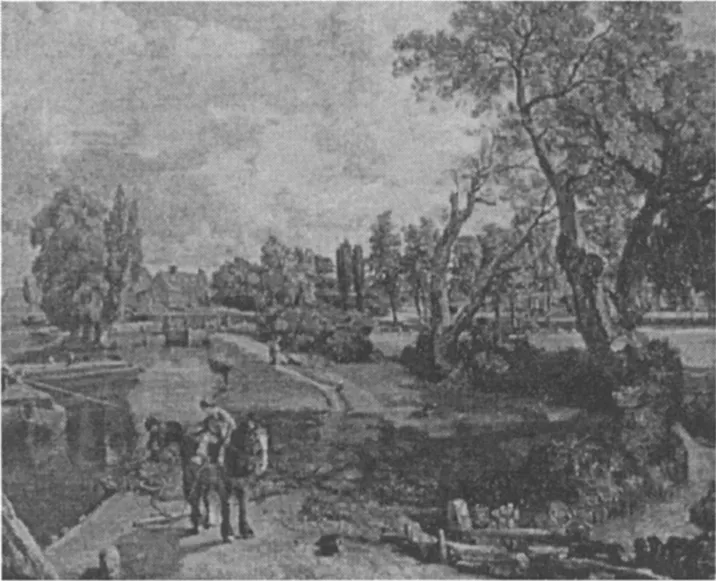
Figure 1. Romantic landscape.
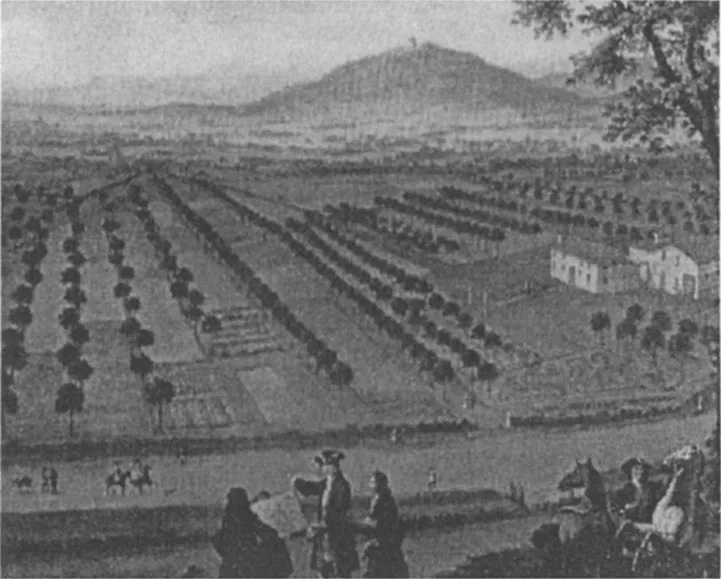
Figure 2. Transformation of the romantic landscape.
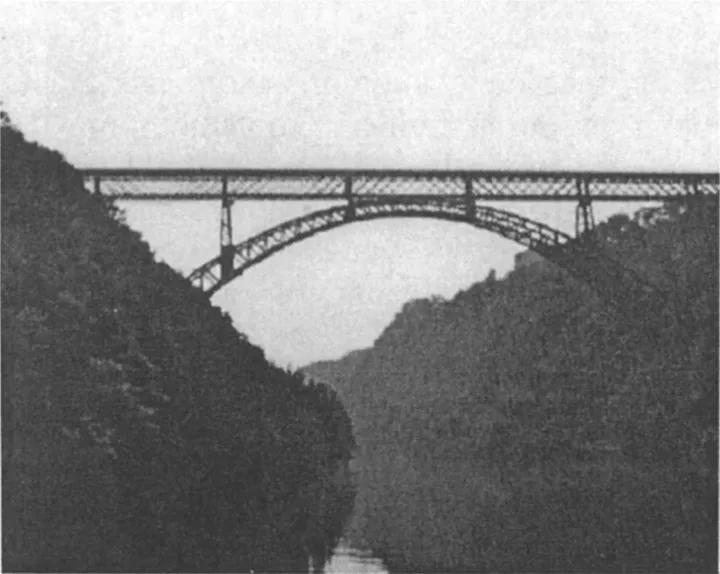
Figure 3. Industrial landscape.
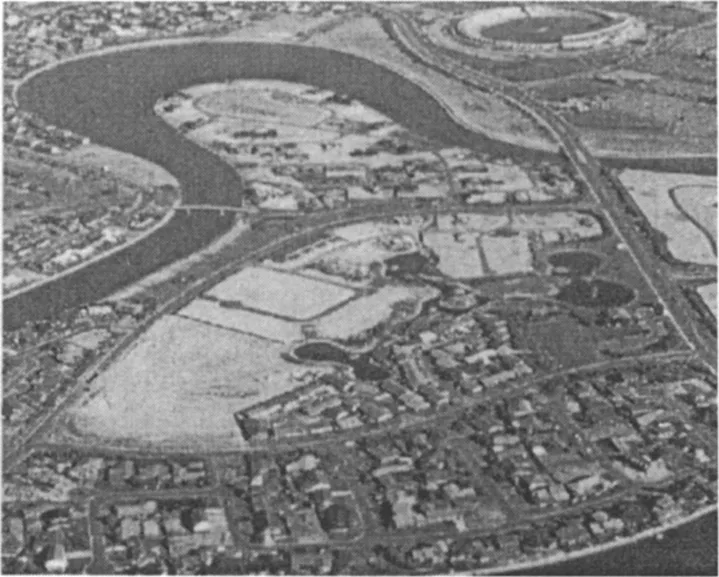
Figure 4. Modem landscape.
Following the change from an archaic and natural landscape to an artificial one (Figures 1,2,3), the essence of modern landscape (Figure 4) can be considered as a structure which nature and man have equally contributed to shape. This includes the possibility to dissect it in its various components, depending on their evocative content, and to identify some indicators suitable for evaluating the possibility to transform it by introducing new shapes bearing a clear evocative content such as, specifically, an array of wind turbines.
2.1 Evaluation of the morphological and vegetation quality (or “scale’) of the site
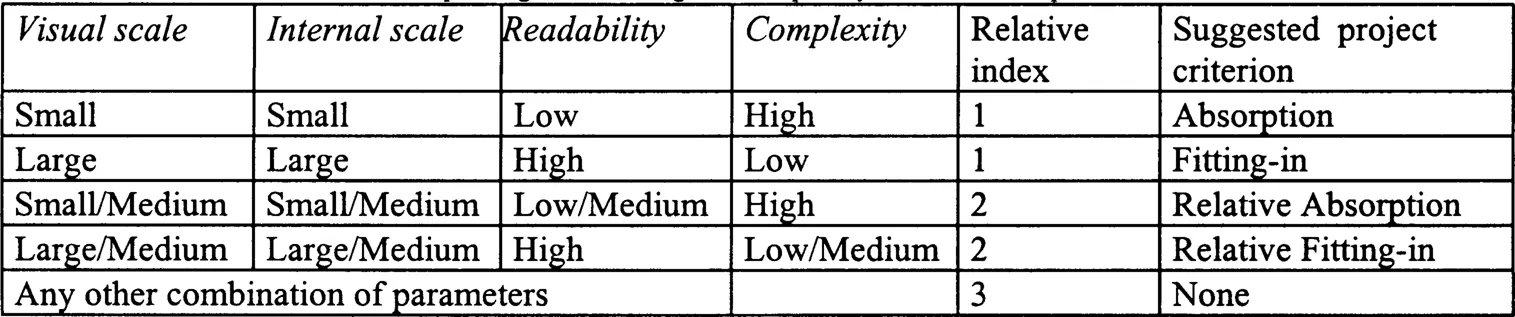
The morphological aspect of a site, ascribable to its topography and vegetation (better defined as adaptation capability or scale breaking between works and space), can be identified through the following parameters:
• Visual scale (large, medium or small): it is a function of the location of the site visual limits more or less far from the observer;
• Internal scale (large, medium or small): it is a function of the dimensions and spatial characteristics of the morphological and vegetation elements forming the site landscape
• Readability (high, medium or low): it is defined as the attitude to offer the impression of an easy-to-read spatial organization of the at a site;
• Complexity (high, medium or low): it is defined as a function of the density (quantity) and of the diversity (quality) of the elements that go to make up a given landscape.
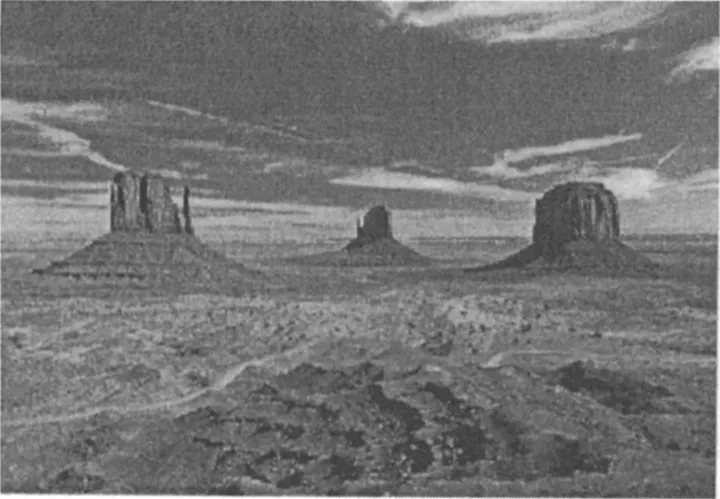
Figure 5. Landscape with a large internal scale.
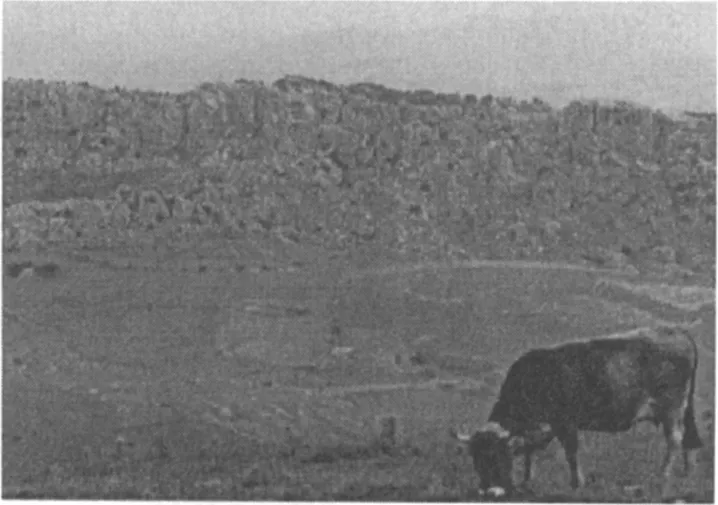
Figure 6. Unchangeable landscape.
The study of the morphological and vegetation quality allows to quantify (Table 1) three increasing numerical indexes (from 1 to 3) of difficulty to the fitting-in or absorption of a plant and to evaluate, according to the combination of the parameters acquired, which of these two project criteria should be pursued.
Table 1. Determination of the morphological and vegetation quality from the site parameters.
2.2 Evaluation of the picturesque quality (or “ambiance’) of the site
The site picturesque quality, also called “ambiance”, is defined according to the landscape’s ecological, aesthetic and historical peculiarities, depending on its sensitivity to anthropic actions. It is evaluated according to five degrees of appreciation (Table 2) of the cultural coherence between the works and the landscape:
• Trivialisat...
Table of contents
- Cover
- Title Page
- Copyright Page
- Table of Contents
- Foreword
- WEL Organization
- Wind engineering and the 2 EACWE: Some background notes
- Keynote lectures
- Selected papers
- Author index
Trusted by 375,005 students
Access to over 1.5 million titles for a fair monthly price.
Study more efficiently using our study tools.
Frequently asked questions
Yes, you can cancel anytime from the Subscription tab in your account settings on the Perlego website. Your subscription will stay active until the end of your current billing period. Learn how to cancel your subscription
No, books cannot be downloaded as external files, such as PDFs, for use outside of Perlego. However, you can download books within the Perlego app for offline reading on mobile or tablet. Learn how to download books offline
We are an online textbook subscription service, where you can get access to an entire online library for less than the price of a single book per month. With over 1.5 million books across 990+ topics, we’ve got you covered! Learn about our mission
Look out for the read-aloud symbol on your next book to see if you can listen to it. The read-aloud tool reads text aloud for you, highlighting the text as it is being read. You can pause it, speed it up and slow it down. Learn more about Read Aloud
Yes! You can use the Perlego app on both iOS and Android devices to read anytime, anywhere — even offline. Perfect for commutes or when you’re on the go.
Please note we cannot support devices running on iOS 13 and Android 7 or earlier. Learn more about using the app
Please note we cannot support devices running on iOS 13 and Android 7 or earlier. Learn more about using the app
Yes, you can access Wind Energy and Landscape by C.F. Ratto,G. Solari in PDF and/or ePUB format, as well as other popular books in Arte & Arte generale. We have over 1.5 million books available in our catalogue for you to explore.