That which does not kill us makes us stronger. (Nietzsche)
The phenomenon of positive personal change following devastating events has been recognized since ancient times, but given little attention by contemporary psychologists and psychiatrists, who have tended to focus on the negative consequences of stress.
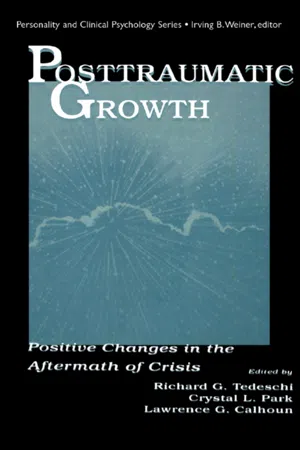
In recent years, evidence from diverse fields has converged to suggest the reality and pervasive importance of the processes the editors sum up as posttraumatic growth. This volume offers the first comprehensive overview of these processes. The authors address a variety of traumas--among them bereavement, physical disability, terminal illness, combat, rape, and natural disasters--following which experiences of growth have been reported.
How can sufferers from posttraumatic stress disorder best be helped? What does "resilience" in the face of high risk mean? Which personality characteristics facilitate growth? To what extent is personality change possible in adulthood? How can concepts like happiness and self-actualization be operationalized? What role do changing belief systems, schemas, or "assumptive worlds" play in positive adaptation? Is "stress innoculation" possible? How do spiritual beliefs become central for many people struck by trauma, and how are posttraumatic growth and recovery from substance abuse or the crises of serious physical illnesses linked?
Such questions have concerned not only the recently defined and expanding group of "traumatologists," but also therapists of all sorts, personality and social psychologists, developmental and cognitive researchers, specialists in health psychology and behavioral medicine, and those who study religion and mental health. Overcoming the challenges of life's worst experiences can catalyze new opportunities for individual and social development. Learning about persons who discover or create the perception of positive change in their lives may shed light on the problems of those who continue to suffer.
Posttraumatic Growth will stimulate dialogue among personality and social psychologists and clinicians, and influence the theoretical foundations and clinical agendas of investigators and practitioners alike.
eBook - ePub
Posttraumatic Growth
Positive Changes in the Aftermath of Crisis
- 272 pages
- English
- ePUB (mobile friendly)
- Available on iOS & Android
eBook - ePub
Posttraumatic Growth
Positive Changes in the Aftermath of Crisis
About this book
Information
1
Posttraumatic Growth: Conceptual Issues
Richard G.Tedeschi
University of North Carolina at Charlotte
University of North Carolina at Charlotte
Crystal L.Park
Miami University
Miami University
Lawrence G.Calhoun
University of North Carolina at Charlotte
University of North Carolina at Charlotte
Given the universality of suffering and devastation for individuals and groups of people, how can we account for phenomena such as individual renewal and the rebirth of nations? Historically, in psychology and psychiatry, we have focused almost exclusively on the course of disease and on the maladaptive behavior observed in those who have experienced traumatic events such as losses, abusive childhoods, and other frightening experiences. Most depressive and anxiety disorders, and many personality disorders have been attributed in great part to experiences of fear, discouragement, and damage in the face of adversity.
An influential but relatively small amount of literature that describes how these negative outcomes might be prevented, and how some persons cope successfully with negative events, has existed outside this mainstream disease-oriented framework (e.g., Basic Behavioral Science Task Force of the National Advisory Mental Health Council, 1996). Although there is still much to be learned about recoveries from trauma, we seek to explore the experiences of people who not only bounce back from trauma, but use it as a springboard to further individual development or growth, and the development of more humane social behaviors and social organization.
Posttraumatic growth (PTG) is both a process and an outcome. We see it as developing out of a cognitive process that is initiated to cope with traumatic events that extract an extreme cognitive and emotional toll. These events that initiate PTG have the quality of “seismic events” (Calhoun, 1996) on a psychological level. Consider that earthquakes produce a significant threat to existing structures, and leave little but the poorly functioning rubble of a community in their wake. The remains of old structures must be removed so that new, stronger structures can be built. But a period of confusion and mourning precedes this rebuilding, and there may be worry that it is no use, the task is too great, and aftershocks or future disasters will wipe out all constructive efforts. But eventually, weaknesses of the previous ways of constructing the community are discerned, and changes proposed. New emergency plans may be established based on the experience of surviving an earthquake. And, in the wake of the disaster, the community may reflect later on not only what has been lost, but also the care that members of the community showed, the superior nature of what has been rebuilt, and what has been learned.
Psychologically, similar processes are taking place in many individuals coping with traumas. These traumas call into question the basic assumptions about one’s future and how to move toward that future, and therefore produce massive anxiety and psychic pain that is difficult to manage. Inherent in these traumatic experiences are losses such as the loss of loved ones, of cherished roles or capabilities, or of fundamental, accepted ways of understanding life. In the face of these losses and the confusion they cause, some people rebuild a way of life that they experience as superior to their old one in important ways. For them, the devastation of loss provides an opportunity to build a new, superior life structure almost from scratch. They establish new psychological constructs that incorporate the possibility of such traumas, and better ways to cope with them. They appreciate their newly found strength and the strength of their neighbors and their community. And because of their efforts, individuals may value both what they now have, and the process of creating it although the process involved loss and distress. Groups and societies may go through a similar transformation, producing new norms for behavior and better ways to care for individuals within the group.
There has been no single term for the phenomenon of interest here that has been used consistently in the literature. So PTG has been variously referred to as “positive psychological changes” (Yalom & Lieberman, 1991), “perceived benefits” or “construing benefits” (Calhoun & Tedeschi, 1991; McMillen, Zuravin & Rideout, 1995; Tennen, Affleck, Urrows, Higgins, & Mendola, 1992), “stress-related growth” (Park, Cohen & Murch, 1996), and “thriving” (O’Leary & Ickovics, 1995). Taylor has described similar out-comes in people experiencing trauma as “positive illusions” (Taylor & Brown, 1988). Janoff-Bulman (1992) does not provide any specific term for the changes of interest here, but provides a useful theory to explain how the changes occur through the shattering and rebuilding of assumptive worlds. There has been some attention paid to the coping mechanism variously called “positive reinterpretation” (Scheier, Weintraub, & Carver, 1986) and “drawing strength from adversity” (McCrae, 1984) as well.
We are suggesting that the term posttraumatic growth is the best descriptor for this phenomenon because this term makes clear that persons experiencing this phenomenon have developed beyond their previous level of adaptation, psychological functioning, or life awareness, that is, they have grown. Second, we are interested in how this growth happens in the aftermath of events that are undesirable in the extreme. “Thriving” could apply to healthy living in any circumstance, and “stress-related growth” may not make clear that the events that are of interest are highly stressful. “Perceived benefits” or “positive illusions” imply that the benefits may not be real or valid. We also want to emphasize that PTG seems to have more impact on people’s lives, and involves such fundamental changes or insights about living that it does not appear to be merely another coping mechanism. Therefore, we are treating PTG as a significant beneficial change in cognitive and emotional life that may have behavioral implications as well. The significance of these changes can be so great, that this growth may be truly transformative (Tedeschi & Calhoun, 1995). Furthermore, it maybe useful to see posttraumatic growth as the antithesis of posttraumatic stress disorder, emphasizing that growth outcomes are reported even in the aftermath of the most traumatic circumstances, and even though distress coexists with this growth.
This chapter provides a chronological sketch of the development of the concept of PTG and some of the most important research efforts in this area. Related concepts are compared and contrasted with PTG and the concept of PTG is clarified.
BEGINNINGS
The phenomenon we term posttraumatic growth has been recognized for centuries. Religion and literature have described and explained the role of human suffering in bringing people closer to wisdom, truth, and God. The literature of tragedy presents life lessons on morality and human frailty (Krook, 1969; Raphael, 1960). Cultural traditions have incorporated the idea of possibilities for positive change in the aftermath of trauma in the central stories of life. In Egyptian mythology, the phoenix flew over the Arabian Desert for years, fell to the ground, was consumed by flames, and rose again from its own ashes. After the Flood, there emerged a rainbow and a new hope for humanity. After Christ’s crucifixion, there was forgiveness of sin for all people who believed that he was the Son of God. The understanding of suffering plays a central role in eastern traditions such as Buddhism and Hinduism as well. Tedeschi and Calhoun (1995) explored the relationship between perspectives on suffering in literary and religious traditions and PTG. We find important precursors to the concept of PTG in other literature that deals with existential issues as well.
Existential Philosophy and Psychology
Existential psychologists have long recognized opportunities for growth in trauma and suffering, and have described trauma as a time when meaning may be created and courage may be found. These views are extensions of the ideas of Kierkegaard (1983) and Nietzsche (1955) who described the usefulness of suffering for personal development. The “courage to be” (Tillich, 1952) or “being mode” (Fromm, 1976) is the result of the stripping away of the inauthentic in the crucible of trauma, in coming face-to-face with nonbeing (May, 1960). One of the ways people are compelled to create more meaningful lives is by the recognition that they sell themselves short, play it safe, and suffer ontological guilt as a result (May, 1983). Traumatic events can reveal the uselessness of attempting to create security, and the possibility that life might be lived to its fullest.
Some descriptive reports of PTG can be found in the literature of existential and humanistic psychology. Jaffe (1985) and Kessler (1987) highlighted many of the issues that are found throughout this book in their descriptions of the bereaved and other trauma survivors, discussing transformations of identity, spirituality, interpersonal relating, and meaning structures. An early attempt to empirically document the effects of trauma on existential issues was made by Ebersole (1970). He asked 36 students to describe the effects of “peak” and “nadir” experiences on their lives, and reported that about one third of them stated that the nadir experiences had long term benefits for them.
People sometimes need some assistance in finding courage in the face of suffering, to allow for the development of meaningful living and an authentic self. Frankl (1961) developed logotherapy on the proposition that people find meaning in life through creativity, love, and suffering, and suggested how this process of finding meaning could be encouraged.
Crisis Intervention and Prevention
Gerald Caplan (1961, 1964) developed a preventive, or early response crisis intervention approach to community mental health that was at variance with the long-term explorative approaches to therapy that had reigned to that time. Caplan saw crises as crucial periods that required definitive intervention, in order to prevent further deterioration. Caplan recognized that crises are essentially situational, and that they usher in a period of psychological disequilibrium. He proposed that most people manage these crisis situations in 4 to 6 weeks, during which changes are wrought that may remain stable within their lives for years afterwards. Such changes may be adaptive or maladaptive, but there is an opportunity for significant learning and psychological growth during this period.
Within the literature that focused on crisis intervention and prevention, there is also some seminal work by Finkel (1974, 1975; Finkel & Jacobsen, 1977) on the concept of “strens” or life events that are “health-promoting” or “growth-potentiating” experiences. Finkel (1974) found that while these strens were positive events in many instances, some research participants mentioned that events that were traumatic were also considered to be strens. It is interesting to note that one participant anticipated the concept of posttraumatic growth by stating “In fact, I cannot see how a stren experience if it is to have an influence on your life, can be devoid of trauma (Finkel, 1974). Events that had elements of both stren and trauma comprised 36% of those reported in Finkel’s initial study, prompting him to look into the process by which traumas were “converted” into strens. Finkel (1975) found that about two thirds of his college student participants reported such conversions, that they happened more frequently as they grew up, and that pure, unconverted trauma experiences declined with age. These conversions tended to happen between 2 weeks and 4 months after the event, and were essentially cognitive in nature. In a later study with adults (Finkel & Jacobsen, 1977), two thirds of the sample reported the trauma-stren conversion, although only 15% of total experiences reported fell into this category. Finkel and Jacobsen also distinguished “converters,” persons reporting at least one trauma-stren conversion experience from non-converters. For converters, conversion experiences tended to become more frequent in their 20s, and by the mid-30s, they became more frequent than either unconverted traumas or pure strens. In contrast, non-converters continued to report high percentages of unconverted trauma up to age 45, the limit for that study. After beginning his work by attempting to distinguish events that were traumatic from those that were strengthening, Finkel seemed to arrive at the conclusion that certain persons had the ability to convert trauma into growth through some cognitive restructuring mechanism. In a followup to Finkel’s work several years later, Ebersole and Flores (1989) asked college students the degree to which their most painful life experiences affected them positively or negatively and if the events changed the meaning of their lives. Ebersole and Flores found that 42% of their students described the impact of their most negative events as positive, and 87% of this group cited a change in meaning of their lives.
THE EVOLUTION OF THE CONCEPT OF POSTTRAUMATIC GROWTH
Until the 1980s, researchers almost never set out specifically to investigate PTG or to understand the processes involved in its emergence. Most of the studies that acknowledged PTG were focused on coping with particular traumatic events, and PTG was mentioned as a coping strategy or was described parenthetically among many characteristics of primarily unfortunate outcomes. Of the few exceptions that spoke directly to the issue of experiencing growth in the aftermath of life crises were Hamera and Shontz (1978), in a study of the effects of life threatening illness, and Taylor (1977), in a discussion of the effects of natural disasters.
Beginning in the mid-1980s, there was an increasing tendency among researchers to give top billing to the findings of PTG in populations as diverse as the bereaved (Calhoun & Tedeschi, 1989–1990; Edmonds & Hooker, 1992; Hogan, Morse, & Tason, 1996; Lehman et al., 1993; Miles & Crandall, 1983; Nerken, 1993; Schwab, 1990), persons suffering from chronic illnesses and disabilities (Tedeschi & Calhoun, 1988; Tennen, Affleck, Urrows, Higgins, & Mendola, 1992), HIV infection (Schwartzberg, 1993), cancer (Collins, Taylor, & Skokan, 1990; Curbow, Somerfield, Baker, Wingard, & Legro, 1993), and heart attacks (Laerum, Johnsen, Smith & Larsen, 1987), parents coping with the medical problems of their children (Abbott & Meredith, 1986; Affleck, Tennen, & Gershman, 1985), survivors of transportation accidents (Joseph, Williams, & Yule, 1993) and house fires (Thompson, 1985), and rape and sexual abuse survivors (Burt & Katz, 1987; Draucker, 1992; Silver, Boon & Stones, 1983; McMillan, Zuravin, & Rideout, 1995; Veronen & Kilpatrick, 1983). Focused attempts to measure PTG and explore the relationship of this construct to other variables have developed in the 1990s (Frazier, Byrne, & Klein, 1995; Joseph, Williams, & Yule, 1993; Park, Cohen & Murch, 1996; Tedeschi & Calhoun, 1996; Tedeschi, Calhoun, & Page, 1992). Theoretical developments are occurring as well, as attempts are made to account for these more frequently measured outcomes of trauma (Hogan, Morse, & Tason, 1996; Holahan & Moos, 1990; Kast, 1990; Nerken, 1993; Schaefer & Moos, 1992; Tedeschi & Calhoun, 1995; Calhoun & Tedeschi, Chapter 9, this volume). These theoretical developments will be reviewed by O’Leary, Alday, and Ickovics later in this volume.
RELATED AREAS OF THEORY AND RESEARCH
Clearly there are other areas of study that recognize the tendency of some persons to cope successfully and to manage trauma relatively unscathed: the literature on resilience, especially in high-risk children; the research on the personality constructs of hardiness and sense of coherence, focused most often on resistance to disease; and the approaches of stress inoculation and toughening, processes that can help develop this resistance.
Resilience
Resilient children appear to have an ability to manage life successfully despite dif...
Table of contents
- Cover Page
- Title Page
- Copyright Page
- Preface
- 1 Posttraumatic Growth: Conceptual Issues
- 2 Assessment of Posttraumatic Growth
- 3 A Developmental Perspective on Posttraumatic Growth
- 4 Personality and Transformation in me Face of Adversity
- 5 The Context for Posttraumatic Growth: Life Crises, Individual and Social Resources, and Coping
- 6 Models of Life Change and Posttraumatic Growth
- 7 Implications of Posttraumatic Growth for Individuals
- 8 By the Crowd They Have Been Broken, By the Crowd They Shall Be Healed: The Social Transformation of Trauma
- 9 Posttraumatic Growth: Future Directions
Trusted by 375,005 students
Access to over 1.5 million titles for a fair monthly price.
Study more efficiently using our study tools.
Frequently asked questions
Yes, you can cancel anytime from the Subscription tab in your account settings on the Perlego website. Your subscription will stay active until the end of your current billing period. Learn how to cancel your subscription
No, books cannot be downloaded as external files, such as PDFs, for use outside of Perlego. However, you can download books within the Perlego app for offline reading on mobile or tablet. Learn how to download books offline
Perlego offers two plans: Essential and Complete
- Essential is ideal for learners and professionals who enjoy exploring a wide range of subjects. Access the Essential Library with 800,000+ trusted titles and best-sellers across business, personal growth, and the humanities. Includes unlimited reading time and Standard Read Aloud voice.
- Complete: Perfect for advanced learners and researchers needing full, unrestricted access. Unlock 1.5M+ books across hundreds of subjects, including academic and specialized titles. The Complete Plan also includes advanced features like Premium Read Aloud and Research Assistant.
We are an online textbook subscription service, where you can get access to an entire online library for less than the price of a single book per month. With over 1.5 million books across 990+ topics, we’ve got you covered! Learn about our mission
Look out for the read-aloud symbol on your next book to see if you can listen to it. The read-aloud tool reads text aloud for you, highlighting the text as it is being read. You can pause it, speed it up and slow it down. Learn more about Read Aloud
Yes! You can use the Perlego app on both iOS and Android devices to read anytime, anywhere — even offline. Perfect for commutes or when you’re on the go.
Please note we cannot support devices running on iOS 13 and Android 7 or earlier. Learn more about using the app
Please note we cannot support devices running on iOS 13 and Android 7 or earlier. Learn more about using the app
Yes, you can access Posttraumatic Growth by Richard G. Tedeschi, Crystal L. Park, Lawrence G. Calhoun, Richard G. Tedeschi,Crystal L. Park,Lawrence G. Calhoun in PDF and/or ePUB format, as well as other popular books in Psychology & Clinical Psychology. We have over 1.5 million books available in our catalogue for you to explore.