1 Introduction
The peculiar nature of US civil-military relations
A Standing Army, however necessary it may be at some times, is always dangerous to the Liberties of the People…. Such a Power should be watched with a jealous Eye.
Samuel Adams, 17761
The Union itself, which [the Constitution] cements and secures, destroys every pretext for a military establishment which could be dangerous.
James Madison, Federalist, 41
Of all the cares or concerns of government, the direction of war most peculiarly demands those qualities which distinguish the exercise of power by a single hand.
Alexander Hamilton, Federalist, 74
United States armed forces take an oath to support and defend a piece of paper - the Constitution. The British military take an oath of allegiance to the monarch. German forces swear to defend the law and liberty of the people. The Japanese vow to maintain the nation’s independence and peace. Russians swear loyalty to the Fatherland. Perhaps not surprisingly, the French armed forces, after five republics, two empires, numerous monarchies and several attempted military coups, take no oath.
The oath to the Constitution means that US military personnel must protect not only the structure of the Federal Government but also its processes. It means that they must even accept outcomes that are contrary to the wishes and interests of those in uniform. The dirty secret about democracy is that its test is fairness and faithful observance of the rules, not the wisdom or justice of the outcomes. To be a voter in a democracy one does not need to be informed, or smart, or consistent - only registered. Similarly, the top leaders and lawmakers in a democracy do not need to be wise or moral or logical - only elected.
The US government is unusual, too, because of the strength and independence of its branches of government. In parliamentary democracies, the legislature is supreme. In presidential systems, even when the parliament is nominally important, the president is usually dominant, especially with regard to control of the military. Warriors prefer hierarchical systems because they value the unity of command - the clear line of authority so important in the stress of battle. In the United States, however, the commander-inchief, the President, controls only the immediate chain of command for the issuance of orders. The Congress controls the system of issuing orders, the organization of the forces, and, most importantly, the funds for their equipping and use. Responding to these dual sources of civilian control gives US military personnel special challenges and opportunities. This will be illustrated throughout this book.
Since the Constitution is the basis for civil-military relations in the United States, we must turn to the substance of that document and the history of its application to the armed forces. How the process works in wartime is particularly important and difficult. But it is also valuable and informative to consider how civil-military relations work in other challenging circumstances - in periods of rearmament and preparations for war, and in periods when the civilian leaders try to transform the military to deal with new threats and new technologies. From over 230 years of history, this book has selected a handful of significant episodes to illustrate the major patterns of US civil- military relations. These case studies were chosen both because they seem interesting and significant and because most prior studies have neglected or minimized the role of Congress in these events. This book seeks to redress those omissions with fresh analysis.
Legacy of distrust of power
The founders of the American republic were familiar with ancient history. They recognized the role military forces and commanders had in the making and unmaking of governments in Athens and Rome. And they were acutely aware of recent British history, especially the ouster and execution of King Charles I, the Civil War, and the dictatorship of Oliver Cromwell. Samuel Adams was only one of countless American patriots who believed that standing armies were a threat to representative government. As he wrote in 1776,
A Standing Army, however necessary it may be at some times, is always dangerous to the Liberties of the People. Soldiers are apt to consider themselves as a Body distinct from the rest of the Citizens. They have their Arms always in their hands. Their Rules and their Discipline is severe. They soon become attached to their officers and disposed to yield implicit obedience to their Commands. Such a Power should be watched with a jealous Eye.2
Americans in 1776 revolted not only against British taxation without representation, but also against military domination. The Declaration of Independence complained that King George III had kept standing armies “among us, in Times of Peace” without local consent and that he “has affected to render the Military independent of, and superior to the Civil Power.” As will be seen in Chapter 2, the American revolutionaries fought their war of independence with unusual procedures precisely in order to forestall a military dictatorship.
The first system of government devised by the Americans, while the war for independence still raged, imposed tight restraints on the creation and use of military forces. The Articles of Confederation gave the central government “sole and exclusive right and power of determining on peace and war” as well as authority to pay for “the common defence” out of a “common treasury.” There was no separate executive, only a congress which could act, with each state having one vote, by supermajorities of nine. The congress also had the powers of: “appointing all officers of the land forces, in the service of the united states, excepting regimental officers - appointing all the officers of the naval forces, and commissioning all officers whatever in the service of the united states - making rules for the government and regulation of the said land and naval forces, and directing their operations.” The states were forbidden to maintain land or naval forces in peacetime above the number congress might deem “requisite.” These powers were undercut, however, by the fundamental weakness of the central government. It could not tax directly, but had to ask the states to raise funds proportionate to land values. It had no standing forces of its own in peacetime. Moreover, the Articles declared that “every state shall always keep up a well-regulated and disciplined militia” with sufficient weapons and equipment and with all officers of colonel or below appointed by the state legislatures.3
The government under the Articles could not even decide whether to create a peacetime military establishment to staff western forts and otherwise guard against Indians. And it was so inept at paying troops that it required an emotional appeal from George Washington to prevent a mutiny at Newburgh, NY in 1783.4
When the delegates gathered in Philadelphia in the steamy summer of 1787, they were determined to create a stronger government, better able to deal with threats at home and from abroad. While most historians credit the internal security concerns demonstrated by the tax revolt in Massachusetts called Shay’s Rebellion as the strongest impetus for the Constitutional Convention, Richard Kohn argues persuasively that the United States faced several other security threats - from the British in Canada to the Spanish in Florida and Louisiana as well as from the Indians along the frontier. Kohn also notes that of 18 explicit provisions of the Constitution listing Congress’ powers, 11 related to security.5
The Framers had a theory of government, derived from Montesquieu and Locke, which called for divided government and safeguards against the concentration of power. What they created was a framework of separated institutions sharing power, in which action was possible only with the concurrence of at least two of the three components of the government. It is misleading to call the Constitutional system a “separation of powers” because the actual powers are shared: no expenditures by the executive without appropriations by the Congress; no enactment of laws without the concurrence of the President; no enforcement of the laws without support of the judiciary. Each branch of government had some checks and balances on the other two.
The Framers had a theory of national strategy that permitted isolation from and neutrality with regard to the wars in Europe. The Atlantic Ocean was a huge defensive barrier to the east; thus the only major threat was from the European empires and their potential Indian allies on the frontier. To deal with those threats, the political and military leaders planned to rely on the local militias, with the possibility of federal command in acute circumstances.
Over half the delegates to the Constitutional Convention - 30 of the 55 - had served in uniform during the Revolutionary War. At least 15 had seen serious action.6 They were wary of a standing army but recognized the ultimate necessity of military capability. As William Paterson of New Jersey said when he presented the plan favored by the small states, “[N]o government could be energetic on paper only, which was no more than straw; there must be a small standing force to give every government weight.” Many of the delegates also had had enough experience with ragtag militia units to want a more professional army. They knew, Gouverneur Morris of Pennsylvania noted, “that to rely on militia was to lean on a broken reed.”7 George Washington felt the same way: “They come in you cannot tell how, go you cannot tell when, and act you cannot tell where, consume your provisions, exhaust your stores, and leave you at last at a critical moment.”8 Despite these doubts about its effectiveness, the delegates saw the militia as a counterweight to the small standing army and voted to allow the states to choose militia officers.
Elbridge Gerry of Massachusetts, later famous as Vice President under James Madison and designer of a state legislative district that looked like a salamander and gave rise to the term “Gerrymander”, was the most vocal opponent of a standing army at the convention. He was joined by George Mason of Virginia, another foe of a strong central government. When the delegates debated the military provisions in the draft document in August 1787, Gerry argued vigorously that “There was no check here against standing armies in time of peace.” He proposed limiting the force to two or three thousand men. George Washington is said to have uttered a loud whisper that the document should also limit invading forces to the same number.9 The numerical limitation never gained much support, but the delegates did approve a two year limit on the availability of funds for the army.
The delegates also changed the draft text from the Committee of Detail, which had given Congress the power to “make” war. After some delegates questioned the legislature’s ability to meet and act in a crisis, Madison and Gerry proposed changing the wording to “declare” war. Madison argued that the new language would allow “the executive the power to repel sudden attacks.” And Roger Sherman of Connecticut agreed, saying “the executive should be able to repel and not commence war.”10
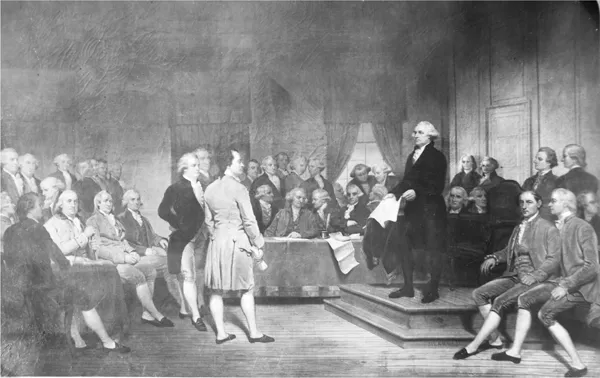
Figure 1.1 Signing of the US Constitution, 1787 (National Archives)
Ultimately, Gerry refused to sign the Constitution, as did George Mason. And one of the strongest criticisms raised by the Antifederalists during the ratification debates was the issue of the standing army. Patrick Henry, for example, argued that the Constitution provided “a government of force, and the genius of despotism expressly.” Other opponents used similar inflammatory arguments, calling the standing army “the nursery of vice”, “engines of despotism”, the “bane of freedom.”11
One proof of the power of these arguments is that nearly every state’s ratifying convention urged further amendments to the Constitution, such as limits on Congress’ power to raise forces and a ban on quartering of troops in private homes. Several states also urged restrictions on federalizing the militia. To respond to these concerns, early in the First Congress, Madison included provisions on weapon ownership and troop quartering as the second and third amendments in his Bill of Rights.12
Constitutional safeguards
The Framers wrote a Constitution filled with what now may seem quaint details regarding military forces. But at the time they were considered necessary safeguards against a large standing army that could repress the rights of citizens. By design, the army and navy were intended to be creatures of the Congress. In enumerating the powers of the legislative branch, the Constitution specifically provides that the Congress could “raise and support Armies” and “provide and maintain a Navy.” But it was also specifically empowered “To make Rules for the Government and Regulation of the land and naval forces” and “To provide for calling forth the Militia to execute the Laws of the union, suppress Insurrections and repel Invasions.” Those were the threats the Framers feared and for which they were willing to create armed forces. But the militia - the citizen-soldiers living at home - was the primary force envisioned for local defense. To give some coherence to such forces, however, the Constitution also specifically authorized Congress “To provide for organizing, arming, and disciplining the Militia” - so that the troops might easily be melded into a federal force. They remembered the difficulty Washington and General von Steuben had training the Continental army.13
The Framers gave Congress three additional powers to control the military. Most important was the power “To declare War”, words carefully chosen to give the legislature the right to authorize combat, while letting the executive branch control its conduct. The Philadelphia convention revised the original wording - “to make war” - to recognize this distinction. Second was the power given to the Senate to advise and consent to nominations for military officers as well as civilian officials of the government. While this was probably intended as a check on the appointment of unqualified or corrupt people, it became over time an important source of congressional leverage on the executive branch.
The third power, the power of the purse, applied to all of the executive branch, not just the military: “No Money shall be drawn from the Treasury, but in Consequence of Appropriations made by Law.”14 Over the years since 1787, Congress has authorized some deviations from a strict reading of this language, such as permitting later reimbursement for “food and forage” for troops in remote areas and allowing some secret accounts that do not need to be publicly reported, though Congress must be informed. But this basic requirement makes the military beholden to the legislature for pay and weapons and peacetime bases - and subject to the limitations on expenditures the lawmakers frequently have wanted to impose.
As evidence of the particular concern over standing armies, the Framers specifically provided that “no Appropriation of Money [for the army] shall be for a longer Term than two years.” In theory, each new Congress must reestablish the army, or it would be forced to demobilize. In practice, the law now allows money for weapons procurement and research and development - though not for pay or operations - to be spent over a longer period of years.
Congress has claimed for itself another power, fully accepted by the other two branches of government: the power to oversee and investigate the military. As one might expect, this has been used - ever since Washington’s administration - to look into military disasters, such as failed campaigns against the Indians, and to expose mismanagement of government contracts. While the authority for oversight is linked in theory to the development of new laws, in practice it is another instrument to use for political purposes, especially the embarrassment of those being investigated.
The President also has important powers over the military, ones more direct and practica...