This book is available to read until 23rd December, 2025
- 148 pages
- English
- ePUB (mobile friendly)
- Available on iOS & Android
eBook - ePub
Available until 23 Dec |Learn more
About this book
This list of matriarchs differs from the usual four.Sarah is undisputedly the matriarch of the nation of Israel even though she bore only one son, the son of promise. Her tenure is followed by Rebekah, who had two sons; only one received the promise. Leah, the third matriarch, bore six sons and Jacob's only daughter. But she was the first wife and was, no doubt, influential in raising Rachel's two boys, as well as the boys of the servant wives. Asenath is included in this numbering. Given that her husband received the double blessing, her two sons are tribes: Ephraim and Manasseh.Each of the mothers had very different personalities and backgrounds. Each had influence in her time and has wisdom to share with believers of our day.
Frequently asked questions
Yes, you can cancel anytime from the Subscription tab in your account settings on the Perlego website. Your subscription will stay active until the end of your current billing period. Learn how to cancel your subscription.
At the moment all of our mobile-responsive ePub books are available to download via the app. Most of our PDFs are also available to download and we're working on making the final remaining ones downloadable now. Learn more here.
Perlego offers two plans: Essential and Complete
- Essential is ideal for learners and professionals who enjoy exploring a wide range of subjects. Access the Essential Library with 800,000+ trusted titles and best-sellers across business, personal growth, and the humanities. Includes unlimited reading time and Standard Read Aloud voice.
- Complete: Perfect for advanced learners and researchers needing full, unrestricted access. Unlock 1.4M+ books across hundreds of subjects, including academic and specialized titles. The Complete Plan also includes advanced features like Premium Read Aloud and Research Assistant.
We are an online textbook subscription service, where you can get access to an entire online library for less than the price of a single book per month. With over 1 million books across 1000+ topics, we’ve got you covered! Learn more here.
Look out for the read-aloud symbol on your next book to see if you can listen to it. The read-aloud tool reads text aloud for you, highlighting the text as it is being read. You can pause it, speed it up and slow it down. Learn more here.
Yes! You can use the Perlego app on both iOS or Android devices to read anytime, anywhere — even offline. Perfect for commutes or when you’re on the go.
Please note we cannot support devices running on iOS 13 and Android 7 or earlier. Learn more about using the app.
Please note we cannot support devices running on iOS 13 and Android 7 or earlier. Learn more about using the app.
Yes, you can access Lives and Legacies by Cheryl Rhodes in PDF and/or ePUB format, as well as other popular books in Theology & Religion & Biblical Studies. We have over one million books available in our catalogue for you to explore.
Information
Leah
mother of six tribes
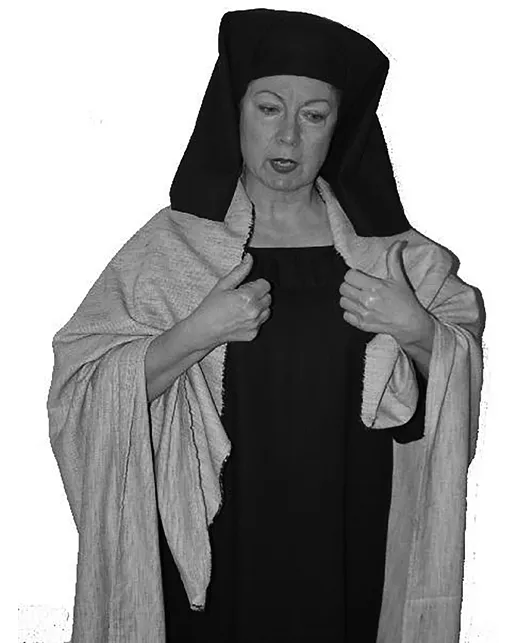
Jacob’s first, less loved wife (Gen. 29:30)
older sister to Rachel, Jacob’s second, best-loved wife (Gen. 29:16)
mother of six of Jacob’s twelve sons (Gen. 29:32−35; 30:17, 19)
mother of Jacob’s only daughter (Gen. 30:21)
claimant of two sons by Zilpah (Gen. 30:10, 13)
Jacob’s/Israel’s Family
Wives in order:
Leah (first)
Rachel (second)
Bilhah (third)
Zilpah (fourth)
Children in birth order:
Leah’s sons
first: Reuben
second: Simeon
third: Levi
fourth: Judah + Tamar
Bilhah’s sons
fifth: Dan
sixth: Naphtali
Zilpah’s sons
seventh: Gad
eighth: Asher
Leah’s sons and daughter
ninth: Issachar
tenth: Zebulan
eleventh: Dinah
Rachel’s sons
twelfth: Joseph + Asenath
thirteenth: Benjamin
Leah, Mother of Six Tribes
My name is Leah. I was Jacob’s first wife and am the mother of six tribes of the nation of Israel. But I was the less loved wife, and my story is not a happy one. I cannot tell you my story apart from my sister Rachel’s story—my younger, beautiful, best loved sister. Yet Rachel’s is not a happy story either. As you will see, our stories are inseparably linked.
Why is it that people think life is about happiness rather than joy, about getting rather than giving, about the temporal rather than the eternal? We were not fast learners, my sister and I. Perhaps, from my story, you can learn more quickly than we did. Thankfully, a blessed eternity removes the pain of sin, both our own sin and the sin done to us. We are now at peace, and I will share with you, honestly, how my life unfolded.
Jacob, our husband, had journeyed into our land, the land of Paddan-aram, to flee the wrath of his brother, Esau (Gen. 27:42−28:5). Jacob, at his mother Rebekah’s instruction, had tricked his father Isaac into giving him the blessing that his father intended to give to his brother, Esau. Aunt Rebekah and Uncle Isaac sent Jacob to our land to escape Esau’s revenge and to take a wife from their own people.
When Jacob arrived, he saw a well in a field with three flocks of sheep waiting to be watered (Gen. 29:1−3). You may remember that Eliezer, Abraham’s servant, found Aunt Rebekah at the well outside the city of Nahor (Gen. 24:11). Wells were more than the source of life-giving water in our part of the world. They were gathering places where information was sought and exchanged. In Aunt Rebekah’s case, the well was the source of a new and different life, married to the son of promise, Isaac.
Jacob asked the men gathered at the well where they lived (Gen. 29:4−5). They told him they were from Haran. Haran was the place where Abraham’s father, Terah, had died.
Jacob asked after my father, Laban (Gen. 29:6). The herdsmen were telling Jacob that my father was well when they pointed out that my sister, Rachel, was coming with our father’s sheep.
Jacob suggested that, as it was the height of the day, the flocks should be watered and returned to pasture. He was told that they waited until all the flocks gathered before they removed the large stone over the well opening, eight to twelve feet across (Gen. 29:1−3). It appears Jacob wanted the other shepherds and their flocks gone.
Because while this was being explained to Jacob, Rachel arrived. Jacob took one look at my beautiful younger sister, rolled the stone from the well’s mouth single-handedly, and proceeded to help her water our father’s sheep (Gen. 29:9−10). Was that supposed to be impressive?
Now give Jacob his due; he had come to find a wife, and I will repeat: Rachel was beautiful. Love at first sight? Jacob kissed her and wept; I feel sure that he believed The lord God had led him to his future wife. He explained to Rachel that he was son of Aunt Rebekah and Uncle Isaac (Gen. 29:11−12).
Rachel ran home to tell us about Jacob’s arrival, and our father, Laban, rushed out to meet his rich sister’s son (Gen. 29:13−14). Never one to let an opportunity slip through his fingers, our Father Laban. He welcomed Jacob royally, and Jacob enjoyed a month-long visit. During this time, Jacob’s attraction to Rachel continued to grow, and he proved himself profitable by working with her among the flocks.
Our father, I feel sure, missed nothing. You may have noticed that Yahweh blessed His chosen, Abraham and Isaac, with material wealth. Those associated with The Chosen enjoyed the spillover of this blessing. My father was not dull-witted. He could see his own advantage in having Jacob in his employ.
So our father approached Jacob as unwilling to take advantage of him (Gen. 29:15−19). “Because you are my kinsman, should you therefore serve me for nothing? Tell me, what shall your wages be?” Sly, our father. Even then I knew it.
Because Jacob loved Rachel, he said he would serve our father seven years for her (Gen. 29:18). Just so you’ll know, that was nearly twice the going bride price. Our father agreed, I’ll just be blunt, to sell Rachel to Jacob for seven years’ labor. The benefit of Yahweh’s blessing on Jacob would spill over on our father. He looked out for himself, did Father.
I knew about the deal and why Father made it. I was not so beautiful as my eyes were sensitive and my vision indistinct. This resulted in my squinting and frowning to protect them from the light and gain better detail. Rachel was lovely of face and figure (Gen. 29:16−17). Our father could have arranged a marriage for me, but being who he was, he was interested in making the most of our marriages for himself.
Our father’s reply to Jacob’s offer sounded lacking in enthusiasm: “It is better that I give her to you than that I should give her to any other man; stay with me” (Gen. 29:19). In actual fact, he was giving nothing and delighted with the years of labor he’d receive. But he must not show too much eagerness. You know?
Jacob served seven years for Rachel, and they seemed to him but a few days because of the love he had for her (Gen. 29:20). Granted, time for us and time for you is not the same. Nevertheless, seven years is seven years.
You can imagine that I wondered, even asked, what plans our father had for me. Should he not be making arrangements? I thought Jacob a wonderful prospect for Rachel, but what about a marriage for me? Father kept his own council. “Not to worry, my girl. I’ll take care that you are well set up,” I was told. Then again, knowing my father, I could count on being in clover, at least financially. That would be to his advantage.
When Jacob’s seven years’ labor had been paid, he went to our father with “Give me my wife that I may go in to her, for my time is completed” (Gen. 29:21). Reasonable, and father dared not put him off, wanting to keep this financial insurance.
So our father gathered together all the people of the place and made a great feast. You know, no such event could go unnoticed by anyone in the household. Rachel and I were naturally part of the preparation.
Only at the time for retiring were Rachel and I given to understand Father’s decision. I was to be the bride, and we were to both keep our mouths shut because Father said it was the only way to ensure that we both were well provisioned. Balderdash! Our father was looking out for himself, not us.
But he was in charge; what could we do? We had no voice. Did we like it? Of course not. I didn’t want to be married to a man who loved my sister. My sister didn’t want me married to the man who loved her.
Father had been very crafty. We were told at the last minute and with finality. So Father took me to the marriage tent, and Jacob came in to me.
That was the most wonderful night of my life. I was loved, really loved. But not for myself.
Not hard to imagine Jacob’s response, is it (Gen. 29:25−27)? He’d spent the night in my arms and giving to me the love he had for Rachel. You’ll notice he did not confront me. He knew the situation. Jacob went to our father. “What is this you have done to me? Did I not serve with you for Rachel? Why then have you deceived me?”
Why indeed? But Father didn’t tell him the truth. No, Father gave excuse: “It is not done in our country to give the younger before the firstborn.” No, the truth was that my father intended to get maximum benefit from having Jacob in his employ for another seven years, ensure that his daughters would never want for anything, and never be...
Table of contents
- mother of nations
- mother of two nations
- mother of six tribes
- mother of two tribes