eBook - ePub
Paul the Jew
Rereading the Apostle as a Figure of Second Temple Judaism
- 432 pages
- English
- ePUB (mobile friendly)
- Available on iOS & Android
eBook - ePub
Paul the Jew
Rereading the Apostle as a Figure of Second Temple Judaism
About this book
The decades-long effort to understand the apostle Paul within his Jewish context is now firmly established in scholarship on early Judaism, as well as on Paul. The latest fruit of sustained analysis appears in the essays gathered here, from leading international scholars who take account of the latest investigations into the scope and variety present in Second Temple Judaism. Contributors address broad historical and theological questions—Paul's thought and practice in relationship with early Jewish apocalypticism, messianism, attitudes toward life under the Roman Empire, appeal to Scripture, the Law, inclusion of Gentiles, the nature of salvation, and the rise of Gentile-Christian supersessionism—as well as questions about interpretation itself, including the extent and direction of a "paradigm shift" in Pauline studies and the evaluation of the Pauline legacy. Paul the Jew goes as far as any effort has gone to restore the apostle to his own historical, cultural, and theological context, and with persuasive results.
Information
Topic
Theology & ReligionSubtopic
Biblical Studies5
Paul beyond Judaism?
10
Paul the Jew Was Also Paul the Hellenist
Anders Klostergaard Petersen
Wie alles sich zum Ganzen webt,
Eins in dem Andern wirkt und lebt!
Eins in dem Andern wirkt und lebt!
—Goethe, Faust, v. 447f.
Initially, it may appear rather banal—verging on a tautological statement—to proclaim that Paul the Jew was also Paul the Hellenist.[1] After all, have we not—following in the aftermath of Martin Hengel’s erudite work, Judentum und Hellenismus, and the scholarly discussions it gave rise to, also with respect to the interpretation of the emergence of formative Christ-religion and its texts—had almost half a century of studies that have been careful to highlight how Paul’s Judaism should not be understood as exclusive of his Hellenism and vice versa? Nevertheless, the argument that I shall develop in this chapter may not be as trivial as it sounds on a first hearing. Despite the fact that we have had almost fifty years of discussion pertaining to the Judaism/Hellenism debate and thirty years of intense scholarly exchange on Paul’s respective Hellenism and Judaism,[2] I do not think that we have come far enough in terms of the theoretical underpinning and methodological subtlety that the question demands. Although scholars are often prone to emphasize the necessity of moving beyond the conceptualization of the problem in terms of a dualism, or, worse, a dichotomy, the binary formulation—still coming close in many cases to a dichotomization of the two entities—still characterizes much current work.[3] Paul the Jew is frequently played out against Paul the Hellenist and the other way around.
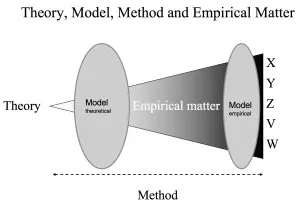
Some of this may have to do with difficulties pertaining to an inescapable “aspectualism”: a study focused on Paul’s relationship to Stoicism or Greco-Roman philosophy of a popular kind will find it hard to place simultaneous emphasis on Paul’s Jewishness. Owing to the perspective one projects onto the world, there is a certain and obvious limit to how much one can encapsulate. That said, however, I think there is more to the question than having to make an inevitable choice when selecting a particular empirical focus for one’s study. It is not only a matter of choosing sides or refraining from doing so, but a far more thorough question with important theoretical ramifications for how we ultimately understand culture and the relationship between different cultural entities—whether in the current world or in that of antiquity. In addition, this initial question also determines the methods to be applied in order to make the simultaneous double movement from the theoretical perspective to the empirical matter segmented by that particular view and back again. This also has significant consequences and implications for the models to be used, whether they are of a more abstract (for instance, culture or religion perceived as a system) or a more concrete nature (culture or religion understood in terms of a kinship metaphor).[4] It is through such models that we filter the theoretical perspective (see the figure below, which is meant as an iconic representation of the ideal relationship between theory, method, models, and empirical matter).
Due to space constraints, I shall confine my discussion to three aspects with respect to which I want to provide a rejoinder to the current debate on Paul’s relationship to Judaism and Hellenism or Greco-Roman culture. The three aspects are intrinsically related in terms of overall theoretical perspective. Additionally, I have decided to direct my attention to issues of a more theoretical nature, important for the discussion of Paul’s relationship to Hellenism and Judaism. Since I got the impression that the first papers circulated at the conference underlying this volume were predominantly focused on empirical matters, I thought it beneficial to also have a contribution that concentrated more specifically on the discussion of various theoretical matters pertinent to the comparison between Paul’s purported Hellenism and Judaism and the manner of staging the problem. It is to this question that I devote the rest of my chapter.
Provisional Sketch of the Three Main Issues
First, I think it is pivotal to explore how we may possibly refine our thinking about culture. Such an endeavor is crucial in order to develop a terminology and a concomitant manner of conceptualizing the relationship between what appear to us as different cultural trajectories, and to avoid the problem of turning Paul’s alleged Judaism and Hellenism into a zero-sum game. Despite all allegations to the opposite, it is hard to avoid the impression that this is, in fact, the practical upshot of numerous studies in which the demonstration of one cultural entity is ultimately conceived of as a corresponding lack of the other.[5] Similarly, and as a reasonable objection to my line of thought, it may be argued that if we turn Judaism and Hellenism into excessively general, and, therefore, fuzzy categories, we are no longer able to make crucial, and finer, cultural differentiations and gradations. In fact, we especially risk emptying the category of Hellenism so that it is used in an extremely general and superfluous manner, as a floating signifier; thereby, it no longer comes to mean anything to designate one form of Judaism as being of a particularly Hellenistic nature. Perhaps there is a more theoretically appropriate manner of conceptualizing the relationship between cultural entities by which we shall, at one and the same time, be able to steer past the Scylla that turns Paul’s Judaism and Hellenism into a binary choice and the Charybdis that makes the two of such a comprehensive nature that the differentiation between them loses its value. I concur with the astute observation of Erich Gruen when he endorses the view that:
We avoid the notion of a zero-sum contest in which every gain for Hellenism was a loss for Judaism or vice-versa. The prevailing culture of the Mediterranean could hardly be ignored or dismissed. But adaptation to it need not require compromise of Jewish precepts or practices… Ambiguity adheres to the term “Hellenism” itself. No pure strain of Greek culture, whatever that might be even in principle, confronted the Jews of Palestine or the Diaspora. Transplanted Greek communities mingled with ancient Phoenician traditions on the Levantine coast, with powerful Egyptian elements in Alexandria, with enduring Mesopotamian institutions in Babylon, and with a complex mixture of societies in Asia Minor. The Greek culture with which Jews came into contact comprised a mongrel entity−or rather entities with a different blend in each location of the Mediterranean. The convenient term “Hellenistic” employed here signifies complex amalgamation in the Near East in which the Greek ingredient was a conspicuous presence rather than a monopoly.[6]
Second, I will attempt to sketch a taxonomy that will enable us not only to distinguish between different analytical levels, but also—and perhaps more importantly—to enhance our awareness of the analytical levels at which we, in a particular study, may operate with the Hellenism/Judaism distinction. I think there are different levels of analysis to which this conceptual scheme may advantageously be applied, but it is important also to acknowledge the particular level at which one is working in a specific study of Paul’s respective Judaism and Hellenism, whereby I do not mean to say, obviously, that one is excluded from operating simultaneously with different aspects as long as the pertinent levels are made theoretically and methodologically lucid.
Third, in continuity with recent work in the field of the study of religion, I suggest that it may be advantageous to extend the debate of Paul’s Judaism and Hellenism to a level of analysis that, for a long period of time, has been neglected in the humanities and the social sciences: that is, that of cultural evolution. Needless to say, I acknowledge the contentious nature of this form of thinking, but I nevertheless find it imperative—for reasons that will hopefully become clear—to revitalize a manner of thinking that has been banned for almost a century. Evolutionary reasoning had its heyday from the Enlightenment to around 1920, when the experience of World War I made it intellectually impossible to uphold a form of thinking that had turned Western culture into the apex of civilization and Christianity into the zenith of the history of religion. Although there was a horrendous political aftermath of this type of thinking with the rise of the extreme right-wing political movements of the 1930s, it is fair to say that in intellectual circles, this form of reasoning came to a halt around 1920. In retrospect, though, we may have thrown the baby out with the bathwater: it may be useful to stop neglecting the evolutionary perspective and the scope of questions implied by it and to apply it to the field of problems pertaining to the relationship between Hellenism and Judaism in Paul’s thought world. For this reason, I shall—despite potential problems in taking it up again—argue that we may benefit considerably from the evolutionary perspective when, for instance, we focus on the Hellenism/Judaism field of problems. In fact, the application of this perspective may—in line with my previous point—enable us to refine our discussion of the set of problems involved. However, it ...
Table of contents
- Cover
- Title Page
- Copyright
- Table Of Contents
- Preface
- Introduction
- Paul and Scripture/Paul in Scripture
- Paul and Second Temple Apocalypticism
- Paul and Gentile Inclusiveness
- Paul between Empire and Jewish Identity
- Paul beyond Judaism?
- Index of Names
Trusted by 375,005 students
Access to over 1.5 million titles for a fair monthly price.
Study more efficiently using our study tools.
Frequently asked questions
Yes, you can cancel anytime from the Subscription tab in your account settings on the Perlego website. Your subscription will stay active until the end of your current billing period. Learn how to cancel your subscription
No, books cannot be downloaded as external files, such as PDFs, for use outside of Perlego. However, you can download books within the Perlego app for offline reading on mobile or tablet. Learn how to download books offline
Perlego offers two plans: Essential and Complete
- Essential is ideal for learners and professionals who enjoy exploring a wide range of subjects. Access the Essential Library with 800,000+ trusted titles and best-sellers across business, personal growth, and the humanities. Includes unlimited reading time and Standard Read Aloud voice.
- Complete: Perfect for advanced learners and researchers needing full, unrestricted access. Unlock 1.5M+ books across hundreds of subjects, including academic and specialized titles. The Complete Plan also includes advanced features like Premium Read Aloud and Research Assistant.
We are an online textbook subscription service, where you can get access to an entire online library for less than the price of a single book per month. With over 1.5 million books across 990+ topics, we’ve got you covered! Learn about our mission
Look out for the read-aloud symbol on your next book to see if you can listen to it. The read-aloud tool reads text aloud for you, highlighting the text as it is being read. You can pause it, speed it up and slow it down. Learn more about Read Aloud
Yes! You can use the Perlego app on both iOS and Android devices to read anytime, anywhere — even offline. Perfect for commutes or when you’re on the go.
Please note we cannot support devices running on iOS 13 and Android 7 or earlier. Learn more about using the app
Please note we cannot support devices running on iOS 13 and Android 7 or earlier. Learn more about using the app
Yes, you can access Paul the Jew by Gabriele Boccaccini, Carlos A. Segovia, Gabriele Boccaccini,Carlos A. Segovia,Gabriele Boccaccini,Carlos A. Segovia, Gabriele Boccaccini, Carlos A. Segovia in PDF and/or ePUB format, as well as other popular books in Theology & Religion & Biblical Studies. We have over 1.5 million books available in our catalogue for you to explore.