eBook - ePub
Ecology and Management of Inland Waters
A Californian Perspective with Global Applications
- 544 pages
- English
- ePUB (mobile friendly)
- Available on iOS & Android
eBook - ePub
Ecology and Management of Inland Waters
A Californian Perspective with Global Applications
About this book
Ecology and Management of Inland Waters: A Californian Perspective with Global Applications presents the geologic history and physical characteristics of aquatic ecology. The author draws on his research from the inland waters of California and applies this to other areas, including Mediterranean climate systems, the tropics, and even South Africa. The endorheic basins covered in this text can be found in 30% of the US, including the Aral Sea, which is a fascinating case study that provides an important warning for other locations. The author also covers Zebra Mussels, which are set to soon be a permanent population in California.
The book is authored by an expert in the field who covers a very wide and interdisciplinary subject area which brings a holistic view to this complex discipline.
- Focuses on examples from California, which is not currently covered in most limnology books, but with an outlook to other locations
- Examines complex patterns of human and natural development, allowing the reader to appreciate how aquatic systems in the Anthropocene experience a new "regime" that does not rely on vague and outdated versions of ecological theory
- Presents a geological history, including fossil records, of California which allows the reader to appreciate how inland waters formed
Trusted by 375,005 students
Access to over 1.5 million titles for a fair monthly price.
Study more efficiently using our study tools.
Information
Topic
Physical SciencesSubtopic
Geology & Earth SciencesPart 1: Coevolving Aquascapes
Chapter 1: Coevolution of Biota, Geology, and Climate
| I write as though you could understand |
| And I could say it |
| One must always pretend something |
| Among the dying |
| When you have left the seas nodding on their stalks |
| Empty of you |
| Tell him that we were made |
| On another day |
WS Merwin, “For a Coming Extinction”
Abstract
This chapter explores how various planetary processes have selected for a wide range of species to invade inland waters, while placing this evolution expansion within the context of major extinctions. Crossing disciplines to understand how ecosystems work and how they evolved is something the environmental scientists do on regular basis. In this case, we will focus on the geologic history of the earth to frame the development of inland waters with a long history.
Keywords
evolution; plate tectonics; fossil record; climate history; extinction; atmospheric evolution
For over three billion years or approximately 60% of the Earth's 4.7 billion year existence, the planet's physical history has been inextricably linked with its evolving life forms. Earth's early atmosphere had no free oxygen, but included enough greenhouse gases to prevent the Earth's water to freeze, providing a conducive context for our life to evolve.
Early forms of life harnessed coupled reactions to generate energy and to reproduce. And as a rather dramatic evolutionary shift, some bacteria began producing oxygen as a waste product. Over the course of several hundred million years, the concentrations of oxygen increased and became toxic for many groups of bacteria.
In addition, living organisms altered the carbon cycle to influence methane and carbon dioxide concentrations, which has a direct role in controlling the Earth's temperature and climate. Thus, the composition of the Earth's atmosphere is a biological product, which can also control the Earth's climate that will in turn influence biological organisms (Fig. 1.1).
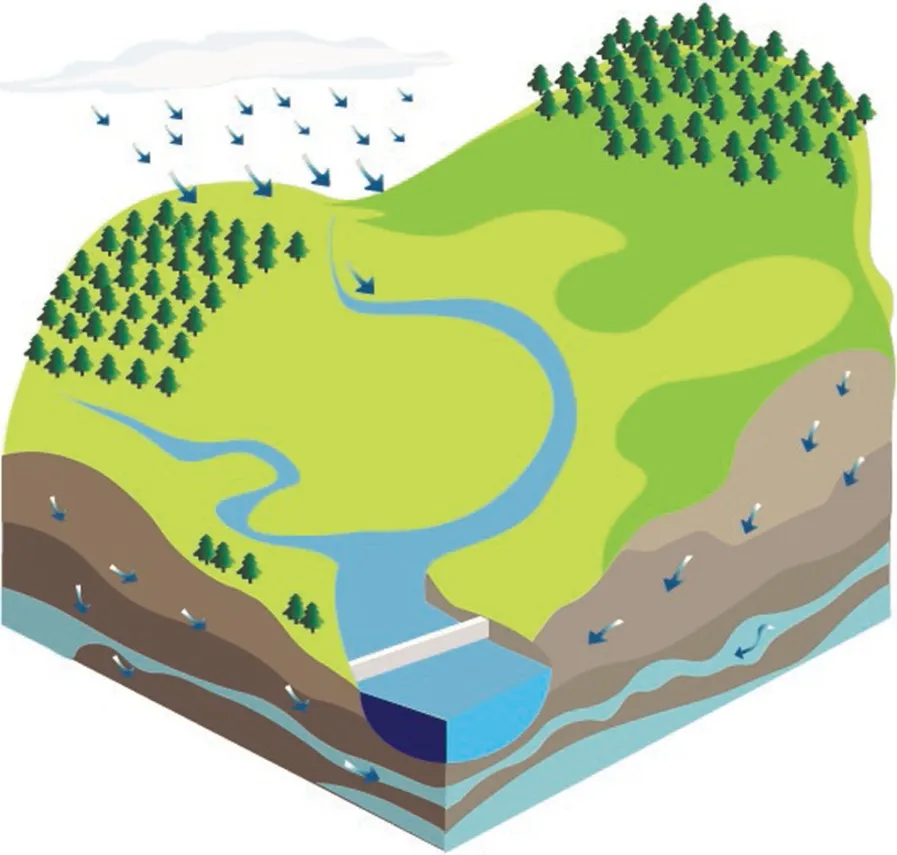
Figure 1.1 Simple model of the links between the Earth's biota, atmosphere, and climate.
Beside the composition of the atmosphere, the Earth's climate depends on solar radiation, geographic positioning of the continents, geologic events, and biogeochemical cycles (for example carbon cycle). The result of these processes provides a feedback on evolutionary processes and the Earth's biodiversity, all of which have implications for inland water ecology and management.
This chapter explores how various planetary processes have selected for a wide range of species to invade inland waters while placing this evolution expansion within the context of major extinctions. Crossing disciplines to understand how ecosystems work and how they evolved is something the environmental scientists do on regular basis. In this case, we will focus on the geologic history of the earth to frame the development of inland waters with a long history. To appreciate the implications of the Earth's history for inland waters, we will aim at the following outcomes:
- 1. Describe the evolution of the Earth's atmosphere and the implications for life on Earth;
- 2. Recognize the limitations of the fossil record and summarize what they tell us about evolution of inland waters;
- 3. Summarize the causes of major extinction events, and describe why the current extinction process is unique in the Earth's history.
Biotic Linkages Between Climate and Atmosphere
Story of a Star: A Brief History of Our Sun
Similar to evolution of life on Earth, our Sun has been developing over time: from the beginning of the universe to our present state, the changes of the Sun provide the Earth with a relatively unique opportunity for life to develop (Fig. 1.2).
Figure 1.2 Image of the Sun's turmoil (Source: NASA). Solar flare on February 24, 2014 with a magnitude of X4.9. Flares are classified by their energy output: A-class (near background levels), followed by B, C, M, and X. Each letter represents a 10-fold increase in energy. An X has ten times more energy than M and 100 times more than C. Within each letter class, there is a finer scale from 1 to 9. The Solar and Heliospheric Observatory spacecraft recorded a solar flare as it erupted from the sun early on Tuesday, October 28, 2003, but it overloaded the sensors measuring it (X28!). The sun has been relatively quiescent in the last few decades, but we expect more sunspots and flares in the next decade.
Throughout Earth's history, our planet's surface temperature has remained within a surprisingly narrow range, despite receiving increasing energy from the Sun over the last few billion years.
The Sun was formed about 4.57 billion years ago and is about halfway through its 10-billion-year sequence of developmental stages. Theoretical models of the Sun's development suggest that 3.8 to 2.5 billion years ago, during the Archean period, it shone ~75% as brightly as it d...
Table of contents
- Cover image
- Title page
- Table of Contents
- Copyright
- Dedication
- Page with poetry
- List of Figures
- List of Tables
- Preface
- Acknowledgments
- Introduction
- Part 1: Coevolving Aquascapes
- Chapter 1: Coevolution of Biota, Geology, and Climate
- Chapter 2: Archeology of Inland Waters
- Part 2: The Ecological Theater and the Evolutionary Play
- Chapter 3: The Players: Evolving Aquatic Species
- Chapter 4: The Rules: Population Growth and Competition
- Chapter 5: The Roles: Beyond Competition
- Chapter 6: The Matrix: The Physical and Chemical Properties of Water
- Chapter 7: The Stage: Typologies of Aquatic Systems
- Chapter 8: The Plot: Community Dynamics and Trophic Interactions
- Part 3: Water in the Anthropocene
- Chapter 9: Developing and Appropriating Water
- Chapter 10: Water Quality and Catchments
- Chapter 11: Biogeochemistry and Global Change
- Chapter 12: Conservation and Restoration
- Chapter 13: Crossing the Divides: The Mismatch Between Political and Watershed Boundaries
- Chapter 14: Unfinished Business: Futures and Inland Waters
- References
- Glossary
- List of Taxa
- Index
Frequently asked questions
Yes, you can cancel anytime from the Subscription tab in your account settings on the Perlego website. Your subscription will stay active until the end of your current billing period. Learn how to cancel your subscription
No, books cannot be downloaded as external files, such as PDFs, for use outside of Perlego. However, you can download books within the Perlego app for offline reading on mobile or tablet. Learn how to download books offline
Perlego offers two plans: Essential and Complete
- Essential is ideal for learners and professionals who enjoy exploring a wide range of subjects. Access the Essential Library with 800,000+ trusted titles and best-sellers across business, personal growth, and the humanities. Includes unlimited reading time and Standard Read Aloud voice.
- Complete: Perfect for advanced learners and researchers needing full, unrestricted access. Unlock 1.5M+ books across hundreds of subjects, including academic and specialized titles. The Complete Plan also includes advanced features like Premium Read Aloud and Research Assistant.
We are an online textbook subscription service, where you can get access to an entire online library for less than the price of a single book per month. With over 1.5 million books across 990+ topics, we’ve got you covered! Learn about our mission
Look out for the read-aloud symbol on your next book to see if you can listen to it. The read-aloud tool reads text aloud for you, highlighting the text as it is being read. You can pause it, speed it up and slow it down. Learn more about Read Aloud
Yes! You can use the Perlego app on both iOS and Android devices to read anytime, anywhere — even offline. Perfect for commutes or when you’re on the go.
Please note we cannot support devices running on iOS 13 and Android 7 or earlier. Learn more about using the app
Please note we cannot support devices running on iOS 13 and Android 7 or earlier. Learn more about using the app
Yes, you can access Ecology and Management of Inland Waters by Marc Los Huertos in PDF and/or ePUB format, as well as other popular books in Physical Sciences & Geology & Earth Sciences. We have over 1.5 million books available in our catalogue for you to explore.