- 224 pages
- English
- ePUB (mobile friendly)
- Available on iOS & Android
eBook - ePub
Security Electronics Circuits Manual
About this book
Security Electronics Circuits Manual is an invaluable guide for engineers and technicians in the security industry. It will also prove to be a useful guide for students and experimenters, as well as providing experienced amateurs and DIY enthusiasts with numerous ideas to protect their homes, businesses and properties.As with all Ray Marston's Circuits Manuals, the style is easy-to-read and non-mathematical, with the emphasis firmly on practical applications, circuits and design ideas. The ICs and other devices used in the practical circuits are modestly priced and readily available types, with universally recognised type numbers. This title replaces the popular 'Electronic Alarm Circuits Manual'.Ray Marston has proved, through hundreds of circuits articles and books, that he is one of the leading circuit designers and writers in the world. He has written extensively for Popular Electronics, Electronics Now, Electronics and Beyond, Electronics World, Electronics Today International, Nuts and Bolts, and Electronics Australia, amongst others.· Easy to read guide to Circuits.· Practical approach to applications, circuits and design ideas.· From a well-known author in the electronics field.
Information
1
Security system basics
Any system that provides its owner/user with a reasonable degree of protection against one or more real or imagined dangers, threats, or nuisances (such as physical attack, theft of property, unwanted human or animal intrusion, machine breakdown, or risks from fire, electric shock, or vermin infestation, etc.) can be described as a ‘security’ system. An ‘electronic’ security system is one in which the system’s actions are heavily dependent on electronic circuitry; simple examples of such systems are electronic door-bells, key-pad door locks, and domestic burglar alarms. The opening chapter of this book starts off by explaining electronic security system basic principles and then goes on to describe a wide variety of devices that can be used within modern electronic security systems. Later chapters show practical examples of various specific types of low- to medium-complexity electronic security systems and circuits.
Electronic security system basics
All electronic security systems consist of the basic elements shown in Figure 1.1. Here, one or more ‘danger’ sensing units are placed at the front of the system and generate some kind of electrical output when danger is sensed. The output of the sensor unit is fed, via a data link, to a decision-making signal processing unit, and this unit’s output is fed, via another data link, to a ‘danger’ response unit such as an alarm or an electromechanical trigger or shutdown device. Note in Figure 1.1 that each of the system’s three major elements is shown using its own power supply, but that in practice two or more elements may share a single power supply.
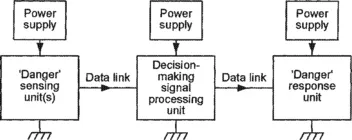
Figure 1.1 Basic elements of an electronic security system
Figures 1.2 to 1.5 show, in basic form, four different low- to medium-complexity types of security system. The first of these (Figure 1.2) is a simple electronic door-bell or shop-entry alarm system, in which the ‘danger’ sensor is a push-button switch in the case of the door-bell system or a door-mounted microswitch (or a pressure mat switch, etc.) in the case of the shop-entry system. In both cases, the circuit action is such that when switch S1 closes it activates a timing generator that turns on an alarm sound generator for a period of 10 seconds, irrespective of the actual duration of the switch closure, and repeats this action each time that S1 is closed. Ideally, this type of circuit draws zero quiescent current. Note in the case of the door-bell circuit that the ‘danger’ sensor (S1) is operated voluntarily by the unknown visitor, in a deliberate effort to attract the attention of the householder, but that in the case of the shop-entry circuit S1 is operated involuntarily by the visitor, and warns the shopkeeper of the presence of a potential customer or thief.
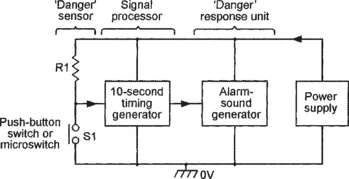
Figure 1.2 Electronic door-bell or shop-entry system
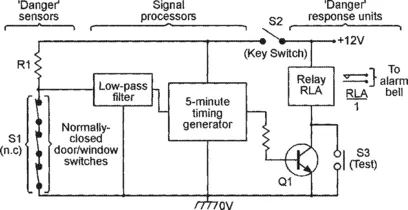
Figure 1.3 Simple domestic burglar alarm system
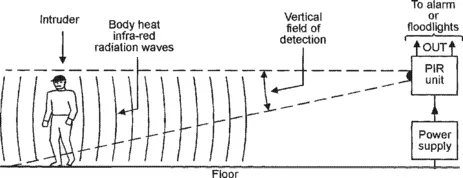
Figure 1.4 Passive infra-red (PIR) movement detector system
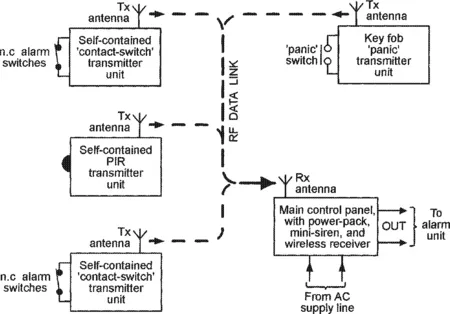
Figure 1.5 Wireless burglar alarm system
Figure 1.3 shows a simple domestic burglar alarm circuit. Here, the main alarm system is enabled by closing key-operated switch S2, and the S1 ‘danger’ sensor actually consists of any desired number of series-connected normally-closed switches (usually reed-and-magnet types) that are each wired to a protected door or window, so that the composite S1 switch opens when any protected door or window is opened or a break occurs in S1’s wiring. Under this condition, R1 pulls the input of the transient-suppressing low-pass filter high, and after a brief delay (usually about 200mS) the filter output triggers the 5-minutes timer generator, which turns on relay RLA via transistor Q1 and thereby activates an external alarm bell or siren via the relay’s RLA/1 contacts. Once activated, the relay and alarm turn off automatically at the end of the 5-minute timing period, but can be turned off or reset at any time by opening key-switch S2. The alarm can be tested at any time, with or without closing S2, via push-button switch S3, which closes RLA directly.
Figure 1.4 shows, in pictorial form, a modern passive infra-red (PIR) movement detector system that can be used to automatically sound an alarm or turn on floodlights when a person enters the PIR detection field (the PIR has a typical maximum range of 12 metres and the field has a vertical span of about 15 degrees and a horizontal span of 90 to 180 degrees). The PIR unit detects the small amounts of infra-red radiation generated by human body heat, but gives an ‘alarm’ output only when the heat source moves significantly within the detection field. Most PIR units have good immunity to false alarms; some types incorporate an output relay that is normally closed (turned on) but opens (turns off) when an intruder is detected or the unit’s power supply fails or is removed; units of this latter type typically need a 12V DC supply and consume a quiescent current of about 20mA. PIR units are widely used to give room or area protection in modern burglar alarm systems.
Figure 1.5 shows, in simplified form, the basic elements of a modern domestic ‘wireless’ burglar alarm system, in which the data link between the various major parts of the system takes the form of a coded RF (usually 418MHz or 458MHz) signal, thus greatly easing installation problems. The heart of the system is the main control panel, which houses a wireless receiver and decoder and control logic, plus a high-power mini-siren, and has an output that can activate an external high-power siren and light-strobe alarm unit. The system’s ‘danger’ sensing units each house a small RF transmitter and antenna that sends out a coded signal under a danger condition; each of the units are designed to give a minimum of six months of normal operation from a small battery.
Most domestic wireless burglar alarm systems can be used to monitor a maximum of four to six zones (individual protected areas) via suitable sensing units. The sensing units come in three basic types; ‘contact-switch’ types transmit a danger signal when one or more series-connected normally-closed switches are opened, and can be used to protect a zone of any desired size; ‘PIR’ types transmit a danger signal when a human moves within the visual field of the PIR unit, and can be used to protect a zone of limited size; ‘panic’ types transmit a danger signal when a key-fob button is pressed, and can be used to protect a person against sudden physical attack or threat whenever they are within communication range of the system’s receiver (control panel) unit. All three types of sensing unit also send out monitoring signals that give warnings of failing battery power or deliberate interference, etc., and the wireless burglar alarm system thus offers a high degree of security.
Note that simple elect...
Table of contents
- Cover image
- Title page
- Table of Contents
- Dedication
- Copyright
- Preface
- Chapter 1: Security system basics
- Chapter 2: Contact-operated security circuits
- Chapter 3: Optoelectronic security circuits
- Chapter 4: Anti-burglary security circuits
- Chapter 5: Temperature-sensitive security circuits
- Chapter 6: Instrumentation security circuits
- Chapter 7: Automobile security circuits
- Chapter 8: Miscellaneous security circuits
- Index
Trusted by 375,005 students
Access to over 1.5 million titles for a fair monthly price.
Study more efficiently using our study tools.
Frequently asked questions
Yes, you can cancel anytime from the Subscription tab in your account settings on the Perlego website. Your subscription will stay active until the end of your current billing period. Learn how to cancel your subscription
No, books cannot be downloaded as external files, such as PDFs, for use outside of Perlego. However, you can download books within the Perlego app for offline reading on mobile or tablet. Learn how to download books offline
Perlego offers two plans: Essential and Complete
- Essential is ideal for learners and professionals who enjoy exploring a wide range of subjects. Access the Essential Library with 800,000+ trusted titles and best-sellers across business, personal growth, and the humanities. Includes unlimited reading time and Standard Read Aloud voice.
- Complete: Perfect for advanced learners and researchers needing full, unrestricted access. Unlock 1.5M+ books across hundreds of subjects, including academic and specialized titles. The Complete Plan also includes advanced features like Premium Read Aloud and Research Assistant.
We are an online textbook subscription service, where you can get access to an entire online library for less than the price of a single book per month. With over 1.5 million books across 990+ topics, we’ve got you covered! Learn about our mission
Look out for the read-aloud symbol on your next book to see if you can listen to it. The read-aloud tool reads text aloud for you, highlighting the text as it is being read. You can pause it, speed it up and slow it down. Learn more about Read Aloud
Yes! You can use the Perlego app on both iOS and Android devices to read anytime, anywhere — even offline. Perfect for commutes or when you’re on the go.
Please note we cannot support devices running on iOS 13 and Android 7 or earlier. Learn more about using the app
Please note we cannot support devices running on iOS 13 and Android 7 or earlier. Learn more about using the app
Yes, you can access Security Electronics Circuits Manual by R M MARSTON in PDF and/or ePUB format, as well as other popular books in Social Sciences & Criminology. We have over 1.5 million books available in our catalogue for you to explore.