eBook - ePub
The Case for the Chief Data Officer
Recasting the C-Suite to Leverage Your Most Valuable Asset
- 88 pages
- English
- ePUB (mobile friendly)
- Available on iOS & Android
eBook - ePub
The Case for the Chief Data Officer
Recasting the C-Suite to Leverage Your Most Valuable Asset
About this book
Data are an organization's sole, non-depletable, non-degrading, durable asset. Engineered right, data's value increases over time because the added dimensions of time, geography, and precision. To achieve data's full organizational value, there must be dedicated individual to leverage data as assets - a Chief Data Officer or CDO who's three job pillars are:
- Dedication solely to leveraging data assets,
- Unconstrained by an IT project mindset, and
- Reports directly to the business
Once these three pillars are set into place, organizations can leverage their data assets. Data possesses properties worthy of additional investment. Many existing CDOs are fatally crippled, however, because they lack one or more of these three pillars. Often organizations have some or all pillars already in place but are not operating in a coordinated manner.
The overall objective of this book is to present these pillars in an understandable way, why each is necessary (but insufficient), and what do to about it.
- Uncovers that almost all organizations need sophisticated, comprehensive data management education and strategies.
- Delivery of organization-wide data success requires a highly focused, full time Chief Data Officer.
- Engineers organization-wide data advantage which enables success in the marketplace
Information
Chapter 1
Introduction – Speaking of Data (Big, Little, Dark …) in Anticipation of the Impending Tsunami
As this book was being completed (2013, Q1), the Gartner Group estimated that ‘big data’ was 2–5 years away from peak hype. Their widely watched, reported, and adopted forecast indicated that buzz around the concept of “big data” would be increasing the near future. If you have not heard the hype – you will.
We are not going to bore you by re-creating a bunch of statistics showing that data creation, data processing, and data understanding requirements are increasing at increasing rates. Just consider the widely-cited fact that AT&T mobile traffic increased 8,000% between the years 2007–2010 or Eric Schmidt’s often-repeated comment that, “Every 2 days we create as much information as we did up until 2003.” It is sufficient to say that the number of things that produces data is rapidly growing. For example, 1 billion smart phones were in use in 2012. It should take only three more years to double to 2 billion (Brown 2012). Increasingly, individuals make use of the thing’s (smart phone/tablet/sensor, etc.) data-producing capabilities. It all adds up to a number of challenges that are referred to as “big data.”1
While it has so far proven impossible to define data as ‘big,’ it is possible to objectively categorize big data techniques, which are what have really been responsible for the so-called big data successes2 (Figure 1.1).
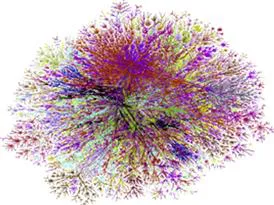
Figure 1.1 It is not possible to define big data (but there are a lot of depictions).
When considering data issues, a minority of decision-makers possess the required KSAs/background – they are not data-knowledgeable. Poor understanding of how to successfully leverage data prevents an organization from obtaining a data advantage by making poor decisions about data, its management, and how it is shared.
We have crystalized the reasons that have prevented most organizations from obtaining a data advantage. We advocate a CDO, responsible solely for organizational data assets. Through the CDO’s perspective, the organization will understand what size and shape data challenge it is facing. Only then will the organization be able to make decisions about data using the appropriate context and understanding. We’ll describe how the CDO should get started on this daunting task.
This book’s contents can be visualized with the aid of Figure 1.2 – a word cloud of the text.3 Sequentially, the next chapter describes the Chief Information Officer (CIO) function as having too broad a technology management to focus enough resources on data issues. The third chapter details ‘exploiting a data advantage’ and how the CDO function provides much-needed relief for broadly focused CIOs, who are ill-prepared to devote requisite time and attention. Chapter 4 presents measurements showing how organizations are not ready to leverage their data assets and what must be done to correct this. The fifth chapter examines the causes for this poor DM practice maturity and suggests remediation. It also argues that the remedy starts with a properly supported CDO as a business capability reporting outside of IT. Chapter 6 sums up and provides some implementation guidance. Organizations can soon be in a position to take advantage of the promise of big data techniques as well as more mundane DM benefits such as more effective/efficient operations.
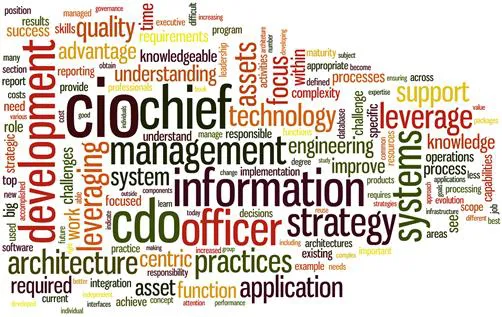
Figure 1.2 Wordle(.net) of this text.
1Truth be told, there cannot be any such thing as big data. First – all other data would then have to be labeled “small” or “medium.” We are now left with the challenge of using vocabulary such as “dark” to refer to legacy data. Second, because no one has come up with an objective definition for “big data” – it is impossible to separate out any specific causes and effects to study. Any measurements, claims of success, quantifications, etc. attributable to big data must be viewed with appropriate skepticism.
2Appropriate processing trade-offs such as eliminating the von Neumann processing bottleneck, taking advantage of continuous availability; or eliminating human limitations – can be objectively evaluated along with other advances for potential organizational utility – as all proposed capabilities should be evaluated. If your organization suspects that it might be able to benefit from the application of big data techniques, or has already embarked on this journey, this material is a must read!
3That the word cloud isn’t on this book’s cover is evidence of still significant technology understanding gaps in the industry.
Chapter 2
Understanding the Current C-level is not Data-Knowledgeable
2.1 Chapter Overview
2.2 Who is Your Data Chief?
2.3 Chief Officers
2.4 The Broad Technology Focus of Most CIOs
2.5 CIO Preparation – Agreeing on Uniform Qualifications
2.6 What are the CIO DATA Function Challenges as Currently Practiced?
2.7 Chapter Summary
2.1 Chapter Overview
We describe the reasons that C-level executives are not data-knowledgeable. To understand the challenge, it is important to understand leadership and symbolism requirements accruing to chief officer positions, as well as a needed technology management focus, and highlight the varied backgrounds brought to IT chiefs.
2.2 Who is Your Data Chief?
If you picked up this book and thought to yourself:
Hmm – isn’t the CIO the top data job?
Then you are exactly the person we are trying to reach. The short answer is:
Not in today’s IT!
Before launching into what some have already viewed as a critique of the CIO function, it is important we state that CIOs have accomplished astounding feats, developed excellent organizational skill sets, and delivered tangible business value. In the process, we’ve learned a great deal about using technology to obtain a strategic advantage.1 CIOs have our tremendous respect for the amazing results delivered by the organizations they oversee, the differing approaches to IT management, and reward systems (Wailgum 2009).
As a group, they have proven themselves astoundingly capable and quite adept at addressing organizational challenges – often by incorporating new technologies (clouds, analytics, service architectures, etc.) into complex environments. With rapid technology advancement, slow learners quickly fall behind and those who survive as successful CIOs have achieved extraordinary successes. But those who are successful are still largely not data-knowledgeable of the foundational role data plays in IT. Most organizations suffer from poor DM and a small but measureable number (less than 10%) think the approach we have outlined below is just common sense. An early reviewer of this book stated:
I have worked with very senior, very talented CIOs. These folks fundamentally understand data – the complexity, multi-dimensional behavior and systemic flow of data. They understand the consequences of not delivering data to key operations. They understand the importance of data around operational risk and risk reporting. So it’s not a knowledge issue – I believe it’s a focus and attention issue.
We have to respectfully disagree with the reviewer.2 Our combined 80+year experiences3 with more than 500 organizational DM practices indicate that 90(+) percent of CIOs are not data-knowledgeable. The data-knowledgeable 10% are inevitably surprised to learn they comprise such a small minority. As a group, CIOs have not m...
Table of contents
- Cover image
- Title page
- Table of Contents
- Copyright
- Dedication
- Acknowledgements
- About the Authors
- Foreword
- Executive Summary
- Chapter 1. Introduction – Speaking of Data (Big, Little, Dark …) in Anticipation of the Impending Tsunami
- Chapter 2. Understanding the Current C-level is not Data-Knowledgeable
- Chapter 3. Developing Your Organization’s Data Leveraging Capabilities
- Chapter 4. Focusing DM to Meet Common Organizational Challenges
- Chapter 5. Creating the Right Conditions for CDO Success
- Chapter 6. Conclusions/Suggestions
- References
Trusted by 375,005 students
Access to over 1.5 million titles for a fair monthly price.
Study more efficiently using our study tools.
Frequently asked questions
Yes, you can cancel anytime from the Subscription tab in your account settings on the Perlego website. Your subscription will stay active until the end of your current billing period. Learn how to cancel your subscription
No, books cannot be downloaded as external files, such as PDFs, for use outside of Perlego. However, you can download books within the Perlego app for offline reading on mobile or tablet. Learn how to download books offline
Perlego offers two plans: Essential and Complete
- Essential is ideal for learners and professionals who enjoy exploring a wide range of subjects. Access the Essential Library with 800,000+ trusted titles and best-sellers across business, personal growth, and the humanities. Includes unlimited reading time and Standard Read Aloud voice.
- Complete: Perfect for advanced learners and researchers needing full, unrestricted access. Unlock 1.5M+ books across hundreds of subjects, including academic and specialized titles. The Complete Plan also includes advanced features like Premium Read Aloud and Research Assistant.
We are an online textbook subscription service, where you can get access to an entire online library for less than the price of a single book per month. With over 1.5 million books across 990+ topics, we’ve got you covered! Learn about our mission
Look out for the read-aloud symbol on your next book to see if you can listen to it. The read-aloud tool reads text aloud for you, highlighting the text as it is being read. You can pause it, speed it up and slow it down. Learn more about Read Aloud
Yes! You can use the Perlego app on both iOS and Android devices to read anytime, anywhere — even offline. Perfect for commutes or when you’re on the go.
Please note we cannot support devices running on iOS 13 and Android 7 or earlier. Learn more about using the app
Please note we cannot support devices running on iOS 13 and Android 7 or earlier. Learn more about using the app
Yes, you can access The Case for the Chief Data Officer by Peter Aiken,Michael M. Gorman in PDF and/or ePUB format, as well as other popular books in Business & Business Intelligence. We have over 1.5 million books available in our catalogue for you to explore.