- 352 pages
- English
- ePUB (mobile friendly)
- Available on iOS & Android
eBook - ePub
Ethernet Networking for the Small Office and Professional Home Office
About this book
In a local area network (LAN) or intranet, there are many pieces of hardare trying to gain access to the network transmission media at the same time (i.e., phone lines, coax, wireless, etc.). However, a network cable or wireless transmission frequency can physically only allow one node to use it at a given time. Therefore, there must be some way to regulate which node has control of the medium (a media access control, or MAC, protocol). Ethernet is a MAC protocol; it is one way to regulate physical access to network tranmission media.
Ethernet networking is used primarily by networks that are contained within a single physical location. If you need to design, install, and manage a network in such an envronment, i.e., home or small business office, then Ethernet Networking for the Small Office and Professional Home Office will give you an in-depth understanding of the technology involved in an Ethernet network.
One of the major goals of this book is to demystify the jargon of networks so that the reader gains a working familiarity with common networking terminology and acronyms.
In addition, this books explains not only how to choose and configure network hardware but also provides practical information about the types of network devices and software needed to make it all work. Tips and direction on how to manage an Ethernet network are also provided.
This book therefore goes beyond the hardware aspects of Ethernet to look at the entire network from bottom to top, along with enough technical detail to enable the reader to make intelligent choices about what types of transmission media are used and the way in which the various parts of the network are interconnected.
- Explains how the Ethernet works, with emphasis on current technologies and emerging trends in gigabit and fast Ethernet, WiFi, routers, and security issues
- Teaches how to design and select complementary components of Ethernet networks with a focus on home and small business applications
- Discuses the various types of cables, software, and hardware involved in constructing, connecting, operating and monitoring Ethernet networks
Information
Part One
Introduction
Introduction to Introduction
The first two chapters of this book present some introductory conceptual material about networking and Ethernet. By the time you finish reading them, you will understand exactly what Ethernet is and the part it plays in your network.
1
Introduction
One of the biggest problems when discussing networking is knowing where to start. The subject of computer networks is one of those areas for which you have to “know everything to do anything.” Usually, the easiest way to ease into the topic is to begin with some basic networking terminology and then look at exactly what it means when we use the word Ethernet.
Anatomy of a Network
A computer network is a combination of hardware and software that allows computers and other devices (for example, printers and file servers) to communicate with one another through some form of telecommunications media (for example, telephone lines).
Note: As you read material about data communications, you may see references to POTS lines. POTS stands for “plain old telephone service.”
Networks can be classified by the distances they cover and whether they include technology like that used on the Internet:

The technologies we will be discussing in this book are applicable to LANs and intranets. Although we will discuss connecting LANs to the Internet, the focus is on creating and maintaining networks that serve small to medium-size workgroups in small offices, regardless of whether they are located in commercial buildings or homes.
Network Components
A computer network is made up of three major components:
Each device on a network is identified by two types of addresses. The first is a hardware address that physically identifies the piece of equipment. In many cases, this address is set by the hardware manufacturer and is not easily changed. These addresses, known as MAC (media access control) addresses, must be unique throughout the network segment. If a manufacturer happens to produce hardware with duplicated MAC addresses, then a network segment that uses that hardware cannot function.
The second type of address is a software address that is added by the software that handles data transmission. The software address can be changed as needed.
In addition, there must be interfaces between the hardware and the network. These often take the form of expansion boards that are added to pieces of hardware (network interface cards, or NICs, such as that in Figure 1-1), although a significant number of today’s computers and printers are shipped with network hardware already installed on their motherboards. Depending on the type of transmissions media in use, a network may also need hardware connections between the media coming from a piece of hardware and the network itself.
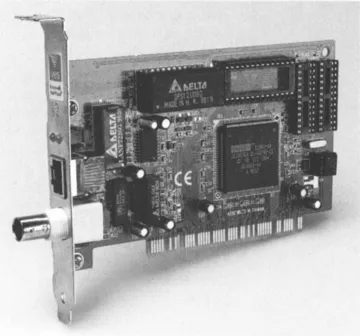
Figure 1-1 A network interface card (Courtesy of Farallon Corp.)
In Figure 1-2 you can see a generalized diagram of how the hardware fits together. Each device you want to connect to a network must have either a network interface card or networking hardware installed on its motherboard. The NIC (or the motherboard) contains a port to which a cable can be attached. That cable runs to the network, connecting to the network tra...
Table of contents
- Cover image
- Title page
- Table of Contents
- Copyright
- Preface
- Part One: Introduction
- Part Two: Design and Connectivity
- Part Three: Making the Network Work
- Part Four: Ethernet Solution Examples
- A: Older Ethernet Standards
- B: TCP and UDP Ports
- C: Products and Vendors
- Glossary
- Index
Trusted by 375,005 students
Access to over 1.5 million titles for a fair monthly price.
Study more efficiently using our study tools.
Frequently asked questions
Yes, you can cancel anytime from the Subscription tab in your account settings on the Perlego website. Your subscription will stay active until the end of your current billing period. Learn how to cancel your subscription
No, books cannot be downloaded as external files, such as PDFs, for use outside of Perlego. However, you can download books within the Perlego app for offline reading on mobile or tablet. Learn how to download books offline
Perlego offers two plans: Essential and Complete
- Essential is ideal for learners and professionals who enjoy exploring a wide range of subjects. Access the Essential Library with 800,000+ trusted titles and best-sellers across business, personal growth, and the humanities. Includes unlimited reading time and Standard Read Aloud voice.
- Complete: Perfect for advanced learners and researchers needing full, unrestricted access. Unlock 1.5M+ books across hundreds of subjects, including academic and specialized titles. The Complete Plan also includes advanced features like Premium Read Aloud and Research Assistant.
We are an online textbook subscription service, where you can get access to an entire online library for less than the price of a single book per month. With over 1.5 million books across 990+ topics, we’ve got you covered! Learn about our mission
Look out for the read-aloud symbol on your next book to see if you can listen to it. The read-aloud tool reads text aloud for you, highlighting the text as it is being read. You can pause it, speed it up and slow it down. Learn more about Read Aloud
Yes! You can use the Perlego app on both iOS and Android devices to read anytime, anywhere — even offline. Perfect for commutes or when you’re on the go.
Please note we cannot support devices running on iOS 13 and Android 7 or earlier. Learn more about using the app
Please note we cannot support devices running on iOS 13 and Android 7 or earlier. Learn more about using the app
Yes, you can access Ethernet Networking for the Small Office and Professional Home Office by Jan L. Harrington in PDF and/or ePUB format, as well as other popular books in Computer Science & Computer Networking. We have over 1.5 million books available in our catalogue for you to explore.