- 730 pages
- English
- ePUB (mobile friendly)
- Available on iOS & Android
eBook - ePub
Primer on the Autonomic Nervous System
About this book
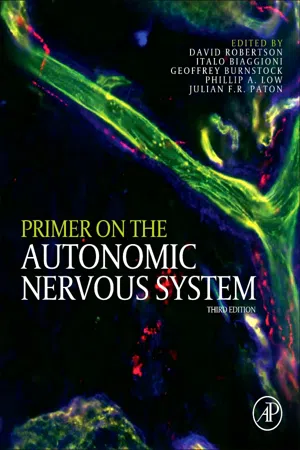
The Primer on the Autonomic Nervous System presents, in a readable and accessible format, key information about how the autonomic nervous system controls the body, particularly in response to stress. It represents the largest collection of world-wide autonomic nervous system authorities ever assembled in one book. It is especially suitable for students, scientists and physicians seeking key information about all aspects of autonomic physiology and pathology in one convenient source. Providing up-to-date knowledge about basic and clinical autonomic neuroscience in a format designed to make learning easy and fun, this book is a must-have for any neuroscientist's bookshelf!
- Greatly amplified and updated from previous edition including the latest developments in the field of autonomic cardiovascular regulation and neuroscience
- Provides key information about all aspects of autonomic physiology and pathology
- Discusses stress and how its effects on the body are mediated
- Compiles contributions by over 140 experts on the autonomic nervous system
Information
Table of contents
- Cover image
- Table of Contents
- Front-matter
- Copyright
- Preface
- List of Contributors
- Chapter 1. Development and Differentiation of Autonomic Neurons
- Chapter 2. Central Autonomic Control
- Chapter 3. Imaging of Brainstem Sites Involved in Cardiovascular Control
- Chapter 4. Peripheral Autonomic Nervous System
- Chapter 5. Cotransmission
- Chapter 6. Noradrenergic Neurotransmission
- Chapter 7. Tyrosine Hydroxylase
- Chapter 8. Antidepressant-Sensitive Norepinephrine Transporters
- Chapter 9. α1-Adrenergic Receptors
- Chapter 10. α2-Adrenergic Receptors
- Chapter 11. β-Adrenergic Receptors
- Chapter 12. Dopaminergic Neurotransmission
- Chapter 13. Dopamine Receptors
- Chapter 14. Cholinergic Neurotransmission
- Chapter 15. Acetylcholine and Muscarinic Receptors
- Chapter 16. Nicotinic Receptors
- Chapter 17. Serotonin Receptors and Neurotransmission
- Chapter 18. Purinergic Neurotransmission and Nucleotide Receptors
- Chapter 19. Adenosine Receptors and Autonomic Regulation
- Chapter 20. Nitric Oxide and Autonomic Regulation
- Chapter 21. Glutamatergic Neurotransmission
- Chapter 22. GABAergic Neurotransmission
- Chapter 23. Renin-Angiotensin
- Chapter 24. Aldosterone and the Mineralocorticoid Receptor
- Chapter 25. Vasopressin and Disorders of Water Homeostasis
- Chapter 26. Calcitonin Gene-Related Peptide and Adrenomedullin
- Chapter 27. Leptin Signaling and Energy Homeostasis
- Chapter 28. The Endothelin System
- Chapter 29. Pharmacology of the Nucleous Tractus Solitarii
- Chapter 30. Entrainment of Sympathetic Rhythms
- Chapter 31. Cross-talk Between Body Systems
- Chapter 32. Circadian Rhythms and Autonomic Function
- Chapter 33. Baroreceptor Reflexes
- Chapter 34. Genetic Determinants of Baroreflex Function
- Chapter 35. Cardiac and Other Visceral Afferents
- Chapter 36. Autonomic Control of the Heart
- Chapter 37. Cardiac Vagal Ganglia
- Chapter 38. Neural Control of Blood Vessels
- Chapter 39. Physiology of Upright Posture
- Chapter 40. Cerebral Circulation
- Chapter 41. Autonomic Control of the Lower Airways
- Chapter 42. Gastrointestinal Function
- Chapter 43. The Splanchnic Circulation
- Chapter 44. Autonomic Control of the Kidney
- Chapter 45. Dopamine Mechanisms in the Kidney
- Chapter 46. Autonomic Control of the Lower Urinary Tract
- Chapter 47. Bladder Function in Health and Disease
- Chapter 48. Physiology and Pathophysiology of Female Sexual Function
- Chapter 49. Control of the Pupil
- Chapter 50. Central Thermoregulation
- Chapter 51. Sweating
- Chapter 52. Regulation of Metabolism
- Chapter 53. Autonomic Innervation of the Skeleton
- Chapter 54. Sex Differences in Autonomic Function
- Chapter 55. Autonomic Control During Pregnancy
- Chapter 56. Aging and the Autonomic Nervous System
- Chapter 57. Exercise
- Chapter 58. Effects of High Altitude
- Chapter 59. Space Physiology
- Chapter 60. Hypothermia and Hyperthermia
- Chapter 61. Psychological Stress and the Autonomic Nervous System
- Chapter 62. Mind–Body Interactions
- Chapter 63. Alpha-Synuclein and Neurodegeneration
- Chapter 64. Insulin Resistance and the Autonomic Nervous System
- Chapter 65. Salt Sensitivity of Blood Pressure
- Chapter 66. Endothelial Dysfunction
- Chapter 67. Inflammation, Immunity and the Autonomic Nervous System
- Chapter 68. Oxygen Sensing
- Chapter 69. Reactive Oxygen Species and Oxidative Stress
- Chapter 70. Neurally Mediated Syncope
- Chapter 71. Sympatho-Vagal Imbalance in Hypertension
- Chapter 72. Baroreflex Failure
- Chapter 73. Blood Pressure Variability
- Chapter 74. Obesity-Associated Hypertension
- Chapter 75. Orthostatic Hypertension
- Chapter 76. Heart Failure
- Chapter 77. Stress Cardiomyopathy and Takotsubo Syndrome
- Chapter 78. Clinical Evaluation of Autonomic Disorders
- Chapter 79. Tilt Table Studies
- Chapter 80. Sympathetic Microneurography
- Chapter 81. Clinical Applications of Microneurography
- Chapter 82. Clinical Sympathetic Imaging
- Chapter 83. Assessment of the Autonomic Control of the Cardiovascular System by a Frequency Domain Approach
- Chapter 84. Assessment of Sudomotor Function
- Chapter 85. Cutaneous Autonomic Innervation
- Chapter 86. Pheochromocytoma
- Chapter 87. Deficiencies of Tetrahydrobiopterin, Tyrosine Hydroxylase and Aromatic L-Amino Acid Decarboxylase
- Chapter 88. Dopamine β-Hydroxylase Deficiency
- Chapter 89. Menkes Disease and Other ATP7A-Related Phenotypes
- Chapter 90. Norepinephrine Transporter Deficiency
- Chapter 91. Monoamine Oxidase Deficiency
- Chapter 92. Congenital Central Hypoventilation Syndrome (CCHS) and PHOX2B Mutations
- Chapter 93. Multiple System Atrophy
- Chapter 94. Parkinson’s Disease
- Chapter 95. Dementia with Lewy Bodies
- Chapter 96. Pure Autonomic Failure
- Chapter 97. Diagnostic Workup of Peripheral Neuropathies with Dysautonomia
- Chapter 98. Diabetic Autonomic Dysfunction
- Chapter 99. Amyloidotic Autonomic Failure
- Chapter 100. Autoimmune Autonomic Ganglionopathy
- Chapter 101. Guillain–Barré Syndrome
- Chapter 102. Hereditary Autonomic Neuropathies
- Chapter 103. Familial Dysautonomia (Riley–Day Syndrome)
- Chapter 104. Autonomic Disturbances in Spinal Cord Injuries
- Chapter 105. Drug-Induced Autonomic Dysfunction
- Chapter 106. Postural Tachycardia Syndrome (POTS)
- Chapter 107. Mechanisms of Postural Tachycardia Syndrome
- Chapter 108. Symptoms and Signs of Postural Tachycardia Syndrome (POTS)
- Chapter 109. Delayed Orthostatic Hypotension
- Chapter 110. Chronic Fatigue Syndrome and the Autonomic Nervous System
- Chapter 111. Joint Hypermobility Syndrome and Dysautonomia
- Chapter 112. Neuroleptic Malignant Syndrome
- Chapter 113. Migraine and the Autonomic Nervous System*
- Chapter 114. Epilepsy and Autonomic Regulation
- Chapter 115. Disorders of Sweating
- Chapter 116. Male Erectile Dysfunction
- Chapter 117. Sleep Apnea
- Chapter 118. Altered Adrenal Function and the Autonomic Nervous System
- Chapter 119. Mastocytosis
- Chapter 120. Cocaine Overdose
- Chapter 121. Complex Regional Pain Syndrome
- Chapter 122. Carcinoid Tumors
- Chapter 123. Paraneoplastic Autonomic Dysfunction
- Chapter 124. Abdominal Pain and Cyclic Vomiting
- Chapter 125. Fecal Incontinence
- Chapter 126. Panic Disorder
- Chapter 127. Physical Measures
- Chapter 128. Water and the Osmopressor Response
- Chapter 129. Droxidopa (L-DOPS)
- Chapter 130. Midodrine, Adrenergic Agonists and Antagonists
- Chapter 131. Agents Potentiating Sympathetic Tone
- Chapter 132. Acetylcholinesterase and its Inhibitors
- Chapter 133. Fludrocortisone
- Chapter 134. Acarbose
- Chapter 135. Erythropoietin in Autonomic Failure
- Chapter 136. Somatostatin Agonists
- Chapter 137. Harnessing the Autonomic Nervous System for Therapeutic Intervention
- Chapter 138. Acupuncture Regulation of Cardiovascular Function
- Chapter 139. Bionic Baroreflex
- Chapter 140. Anesthetic Management in Autonomic Disorders
- Chapter 141. Evolution of the Cardiovascular Autonomic Nervous System in Vertebrates
- Chapter 142. Human Physiome
- Chapter 143. Modeling the Autonomic Nervous System
- Chapter 144. Optogenetics
- Index
Trusted by 375,005 students
Access to over 1.5 million titles for a fair monthly price.
Study more efficiently using our study tools.
Frequently asked questions
Yes, you can cancel anytime from the Subscription tab in your account settings on the Perlego website. Your subscription will stay active until the end of your current billing period. Learn how to cancel your subscription
No, books cannot be downloaded as external files, such as PDFs, for use outside of Perlego. However, you can download books within the Perlego app for offline reading on mobile or tablet. Learn how to download books offline
Perlego offers two plans: Essential and Complete
- Essential is ideal for learners and professionals who enjoy exploring a wide range of subjects. Access the Essential Library with 800,000+ trusted titles and best-sellers across business, personal growth, and the humanities. Includes unlimited reading time and Standard Read Aloud voice.
- Complete: Perfect for advanced learners and researchers needing full, unrestricted access. Unlock 1.5M+ books across hundreds of subjects, including academic and specialized titles. The Complete Plan also includes advanced features like Premium Read Aloud and Research Assistant.
We are an online textbook subscription service, where you can get access to an entire online library for less than the price of a single book per month. With over 1.5 million books across 990+ topics, we’ve got you covered! Learn about our mission
Look out for the read-aloud symbol on your next book to see if you can listen to it. The read-aloud tool reads text aloud for you, highlighting the text as it is being read. You can pause it, speed it up and slow it down. Learn more about Read Aloud
Yes! You can use the Perlego app on both iOS and Android devices to read anytime, anywhere — even offline. Perfect for commutes or when you’re on the go.
Please note we cannot support devices running on iOS 13 and Android 7 or earlier. Learn more about using the app
Please note we cannot support devices running on iOS 13 and Android 7 or earlier. Learn more about using the app
Yes, you can access Primer on the Autonomic Nervous System by Phillip A. Low in PDF and/or ePUB format, as well as other popular books in Biological Sciences & Neuroscience. We have over 1.5 million books available in our catalogue for you to explore.