- 340 pages
- English
- ePUB (mobile friendly)
- Available on iOS & Android
eBook - ePub
System Engineering for IMS Networks
About this book
The IMS is the foundation architecture for the next generation of mobile phones, wireless-enabled PDAs, PCs, and the like. IMS delivers multimedia content (audio, video, text, etc.) over all types of networks. For network engineers/administrators and telecommunications engineers it will be essential to not only understand IMS architecture, but to also be able to apply it at every stage of the network design process. This book will contain pragmatic information on how to engineer IMS networks as well as an applications-oriented approach for the engineering and networking professionals responsible for making IMS function in the real world.
- Describes the convergence of wireless IMS (IP Multimedia Subsystem) with other networks, including wireline and cable
- Discusses building interfaces for end users and IMS applications servers
- Explores network management issues with IMS
Information
Topic
DiseñoSubtopic
Diseño industrialChapter 1
Introduction to IMS
The current generation of wireless cellular networks has relied on a digital network infrastructure to deliver traditional voice and data services. This provides the signaling and switching between the endpoints and various functional elements in the network. In the continued evolution path, wireless standards are focused on building the next-generation all-IP network infrastructure. This helps to provide higher bandwidths, lower the capital and operational costs of the network, offer a new generation of services, and provide seamless convergence with the Internet.
The IP Multimedia Subsystem (IMS) was crafted as a part of the third-generation (3G) network to solve these needs. The value of IMS has, however, grown beyond that. Both service providers and equipment vendors see the potential as a platform to solve other problems in the network. In this process of value-creation, IMS has different interpretations. Is it a technology, a platform, or a service-delivery framework?
1.1 What is IMS?
According to the standards, IMS is defined in the form of a reference architecture to enable delivery of next-generation communication services of voice, data, video, wireless, and mobility over an Internet Protocol (IP) network. It is considered a subsystem, because it exists as part of a complete network. In other words, IMS by itself requires other components such as an access network, to fully function as a system for multimedia service delivery. It is considered a reference architecture, because the implementers build the functional elements conforming to these specifications. One interesting point is that as yet, a checklist has not been established to certify compliance or conformance.
Here are some key features of IMS that differentiate it from other network solutions.
Conceived from the vision of the 3G of cellular networks, the IMS has amassed its own independent status that now makes it the choice for implementing next-generation telecommunication networks. Initially, IMS was seen as a critical component in the evolution of the circuit-switched GSM (Global System for Mobile communications) network to an all-IP network. IMS is seen today as a versatile platform that can launch exciting applications that go beyond voice and data communications.
The standards on IMS are written and maintained by the third-generation partnership project (3GPP), which is a global partnership of organizations collaborating in 3G wireless technology standardization. IMS has, however, paved the way for other networks to evolve to an all-IP infrastructure. While purists may argue as to where IMS really belongs, the different networks in deployment today consider IMS as the next core network. Confluence with IMS is seen as the best option for converging with different networks, as shown in Figure 1.1.
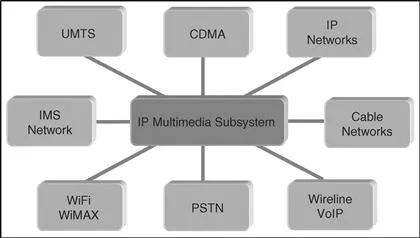
Figure 1.1 IMS as an enabler for convergence.
In contrast to earlier standards that were implemented, the key differentiator in IMS that has enabled this harmonized concept across other standards is Access Network independence. The subsystem retains its own identity as long as an access can be provided by an IP connectivity network. The choice of transport becomes flexible. This has allowed the Code Division Multiple Access (CDMA), cable, and wireline standards to acknowledge the IMS as their IP multimedia platform.
3GPP first introduced the definition of the IMS architecture and its functional elements in their Release 5 for the UMTS (Universal Mobile Telecommunications System) Networks. This was the first step toward the evolution of the circuit-switched core network to an all-IP core. 3GPP2, the standards body for the North American CDMA/ANSI-41 networks, adopted these standards as part of its Multimedia Domain (MMD) specifications.
As noted in Figure 1.2, the GSM radio networks with a circuit-switched core network have evolved to a UMTS/HSPA (High Speed Packet Access) radio network backed by a packet-switched core. This phased evolution as defined by the 3GPP introduced the IMS in Release 5 for the UMTS network standards. The initial release of IMS focused on defining the core functional elements. This laid the foundation of the IMS principles for session control, media processing, application services, access independence, and subscription, to name a few. Each release of 3GPP thereof continued to enrich these features and adapt them to the needs of the evolving network. The notable evolution aspect of IMS has been that the progress from Release 6 onward of the 3GPP standards continues to assimilate suggestions from all the peer standards. The most prominent ones have been the induction of the policy and flow-based charging and integrating Wireless Local Area Network (WLAN) and fixed broadband to provide voice call continuity. As service enablers and new services were introduced with IMS, it saw the induction of service definitions for Push-to-talk over Cellular, Presence, VideoSharing, and so forth. From a standards perspective, at the time of writing, Release 7 provides a stable base of specifications. Release 8 continues to define unaddressed areas such as Operations Administration and Maintenance (OAM) and service brokering, and focuses on optimizing the IMS for adapting it to the needs of fourth-generation (4G) networks.
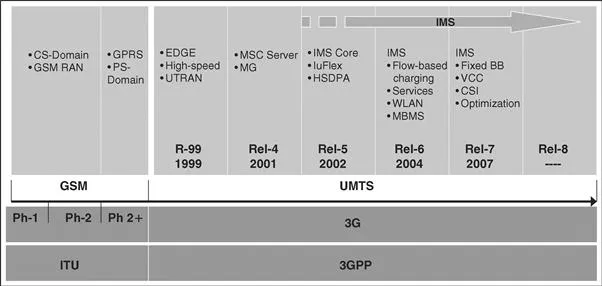
Figure 1.2 Standardization of IMS.
Figure 1.3 depicts the IMS as the core network for the multimedia domain for CDMA, Wireline, and broadband networks. The driving standards behind these networks—3GPP2, European Telecommunication Standards Institute (ETSI)-Telecoms & Internet Converged Services & Protocols for Advanced Networks (TISPAN), and CableLabs—have acknowledged IMS as their step to an all-IP evolution. The Open Mobile Alliance (OMA), which defines the service enablers for interoperable mobile devices, has also contributed to the specification of a rich service-enabling framework for the IMS network. IMS has been unique from its perspective of being able to harmonize and blend with multiple standards.
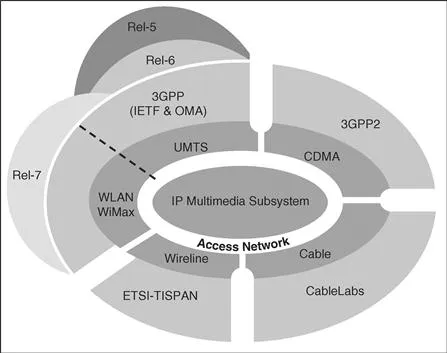
Figure 1.3 The evolution of IMS.
It is important to understand that IMS is not a technology—it is defined as a reference architecture. The principles that have been used for the definition of this architecture have been collated from best-of-breed solutions, as shown in Figure 1.4. These best practices, extended from both standards-based implementations and innovative approaches, have culminated in a system definition that inherits the perfect look.
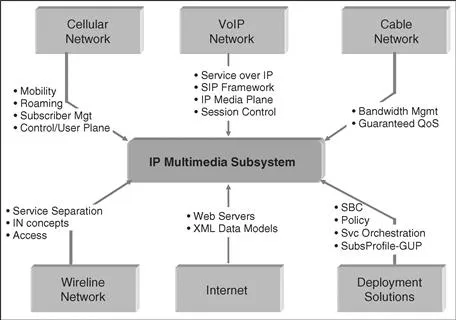
Figure 1.4 Inheriting principles from existing networks.
Since IMS has been defined as an integral part of a cellular network, it inherits the concepts of mobility, roaming, and subscriber management from the proven execution models. The layered approach of separating the signaling (control-plane) and the traffic (user-plane) extends itself into the IMS network. While IMS uses these principles as a base, it acquires the concepts of IP-based communication from the Voice over Internet Protocol (VoIP) network. The capability to deliver a service over IP with a separate session control plane and a media plane using a SIP-based framework is modeled on the lines of the VoIP networks. It addresses the weakness of VoIP networks to provide guaranteed end-to-end QoS by service-based policy and better methods for resource reservation. It is influenced by policy management from cable networks, which help to deliver bandwidth management and QoS.
IMS has also derived the paradigm of the service plane separation and access network partitioning through Intelligent Network (IN). Further, IMS has applied effectively the concept of Web servers, eXtensible markup language (XML) data models, and presence services as they apply to the Internet.
But the most notable are the contributions that are still being fed into the definition of IMS, solving the challenges in deployments that are pronounced due to not being well addressed in the original standards. These are Session Border Control, Policy, Service Orchestration, and Subscriber Generic Profile to name a few.
A salient advantage of this approach is that existing telecommunication infrastructure can be leveraged to a certain extent. Some functional elements in the network such as user databases, session controllers, and so forth may be adapted to conform to this architecture.
What has really driven IMS in the limelight today is the ability of the telecommunication service providers to stay competitive in a disruptive, deflationary, and fragmenting landscape. Providing a telecommunication service is a capital-intensive business model. Unlike the venture capital-funded Internet, the telecom service providers have had to make their investments more judiciously. This means that change has to be better thought of and the evolution of the network clearly understood.
The core network, as we shall see in the next chapter, is evolving from a circuit-switched model to a packet-switched model. IP provides the signaling for this packet core network. Leveraging the core network in its current form, service providers are able to deliver voice, data, video, wireless, and mobility services in single or bundled forms. To do so, they have to resort to solutions with VoIP and broadband combinations. Triple-play systems can bundle voice, data, and video. Quad-play systems can add wireless capability. IMS is viewed as a single service-enabling platform that can launch complete bundled services including mobility, and provide a new dimension of blended or combinational services. This enables a new generation of services with content, IM(Instant Messaging), presence, context-aware, and entertainment for voice-services dominated service providers, as shown in Figure 1.5. IMS potentially enables services across multiple access networks, providing adequate QoS controls are provided. So IMS potentially opens up new ways of structuring the business, which includes the transformation for both the wholesale and retail models.
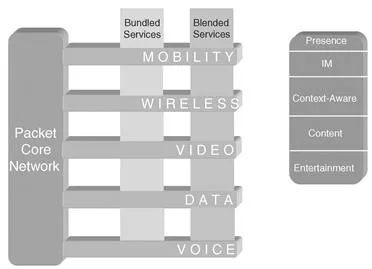
Figure 1.5 IMS as a service-enabling platform.
1.2 A First Look at IMS
IMS is often presented with a complex diagram that is difficult to absorb at a first initiation. Let us take a two-step approach. First we examine IMS conceptually with the help of Figure 1.6, before we drill into details. As we discussed earlier, IMS is about providing the user with a new experience. IMS helps to deliver multimedia services, which include voice, data, video, IM, presence, and context on the h...
Table of contents
- Cover image
- Title page
- Table of Contents
- Copyright
- List of Figures
- List of Tables
- Preface
- Acknowledgements
- Chapter 1. Introduction to IMS
- Chapter 2. Basics of Wireless Networks
- Chapter 3. Basics of IP Networks
- Chapter 4. The IMS-related Protocols
- Chapter 5. Principles of Operation
- Chapter 6. Putting It All Together
- Chapter 7. Services Delivered by IMS
- Chapter 8. The Promise of Convergence
- Chapter 9. Implementing IMS Functional Elements
- Chapter 10. Epilogue: Future Directions for IMS
- Appendix A. Performance of IMS Networks
- Glossary
- References and Further Reading
- Index
Trusted by 375,005 students
Access to over 1.5 million titles for a fair monthly price.
Study more efficiently using our study tools.
Frequently asked questions
Yes, you can cancel anytime from the Subscription tab in your account settings on the Perlego website. Your subscription will stay active until the end of your current billing period. Learn how to cancel your subscription
No, books cannot be downloaded as external files, such as PDFs, for use outside of Perlego. However, you can download books within the Perlego app for offline reading on mobile or tablet. Learn how to download books offline
Perlego offers two plans: Essential and Complete
- Essential is ideal for learners and professionals who enjoy exploring a wide range of subjects. Access the Essential Library with 800,000+ trusted titles and best-sellers across business, personal growth, and the humanities. Includes unlimited reading time and Standard Read Aloud voice.
- Complete: Perfect for advanced learners and researchers needing full, unrestricted access. Unlock 1.5M+ books across hundreds of subjects, including academic and specialized titles. The Complete Plan also includes advanced features like Premium Read Aloud and Research Assistant.
We are an online textbook subscription service, where you can get access to an entire online library for less than the price of a single book per month. With over 1.5 million books across 990+ topics, we’ve got you covered! Learn about our mission
Look out for the read-aloud symbol on your next book to see if you can listen to it. The read-aloud tool reads text aloud for you, highlighting the text as it is being read. You can pause it, speed it up and slow it down. Learn more about Read Aloud
Yes! You can use the Perlego app on both iOS and Android devices to read anytime, anywhere — even offline. Perfect for commutes or when you’re on the go.
Please note we cannot support devices running on iOS 13 and Android 7 or earlier. Learn more about using the app
Please note we cannot support devices running on iOS 13 and Android 7 or earlier. Learn more about using the app
Yes, you can access System Engineering for IMS Networks by Arun Handa in PDF and/or ePUB format, as well as other popular books in Diseño & Diseño industrial. We have over 1.5 million books available in our catalogue for you to explore.