- 230 pages
- English
- ePUB (mobile friendly)
- Available on iOS & Android
eBook - ePub
Understanding Representation
About this book
This is the third book in the 'Understanding the Moving Image' series. Like other books in the series, it aims to provide a strong critical and theoretical base for the study of the media. It has been co-authored by experienced Media and Film Studies tutors, offering fresh and innovative ways of talking about the key concept of representation. How is the world mediated to deliver messages and create beliefs about groups such as the mentally ill, institutions like the family and schools, minority and marginalised people and issues of nation seen through football and films? It also looks outside our ethnocentric mediated world to see how we are represented to others. The choice of texts reflects both an attempt to push the boundaries of the study of representation with new research, but also to make it accessible and stimulating for students coming into this area for the first time. Case studies reflect contemporary concerns in the media, often from different perspectives.
Information
Part One
Messages and Messengers
1. Representation and Theories
WENDY HELSBY
How do we understand the concept of 'representation in Media Studies? Do we look 'through a glass darkly' to see a version of the world constructed for us, or do we see a reflection of reality represented in the mirror of the media world? As the wicked queen in Snow White discovered, sometimes mirrors do not reflect the reality we wish to believe. 'Mirror, mirror on the wall who is the fairest of them all...?'
1.1 Reflection or construction?
The question of whether the media construct or reflect the beliefs, or ideologies, of society is addressed in this book through exploration of relevant contemporary issues. Most readers will be aware of both gender and racial stereotyping that have thrown up images such as the 'blonde bimbo' and the 'coon', which have rightly been challenged and criticised. Sometimes, however, it is not so easy to see and challenge our own more insidious beliefs and contemporary representations that are not often put under a critical microscope.
It is also true that those who challenge the status quo are often vilified as radical or 'loony' by their peers. It has taken many years and considerable pressure for society to accept and to legislate for gender and racial equality. Even legislation may not change deeply entrenched beliefs. The documentary The Secret Policeman (2004, BBC1) illustrated this point graphically. It was a piece of investigative journalism following police recruits in Manchester using hidden cameras, in which the views expressed by some of the trainees were extremely racist. This was in spite of all the messages to the contrary the recruits had been given in the official equal opportunities training initiated by the police following accusations of institutional racism after the Stephen the police were Lawrence enquiry. There is a further discussion of this issue in chapter 4 on the police.
Stephen Lawrence was killed on the street; slow in responding and so failed to get a conviction against the accused racist attackers.
So how powerful are the media in constructing such opinions and beliefs? Or do they merely reflect the views of society? We begin by looking at some of the methodologies adopted in approaching this concept.
1.2 Theories
In any study of the media there is a theoretical underpinning, and here you will come upon the names of influential writers and theorists who have taken various positions when writing about how language and culture have been fundamental in the key concept of representation. The following is a summary of the ideas that inform the discussions in this book.
There are three basic theories of how language and culture connect with representation. First, there is the reflective theory. This states that language reflects the meaning that already exists or imitates (mimesis) the truth or reality that is inherent in the text. A critique of this theory would say that this does not allow for any alternative readings or different uses of codes. Secondly, there is the intentional theory, which states that the individual author of the text intends it to represent certain ideas. This means that each act of communication is unique in some way. A criticism of this theory is that, as we have to enter into the rules and conventions of a social system to be understood by others, the individual communication must inevitably lose some of its 'uniqueness' and must negotiate a shared meaning. Finally, there is the constructionist theory. Most media analysis work explores a constructionist approach, so this is the one on which we focus.
There are two major versions of the constructionist methodology. The first is semiotics, which was originally based upon a linguistic model. This used a scientific approach to analyse the structure of language. Roland Barthes and others developed this study into a wider field of texts to show how languages - visual, verbal and nonverbal - work in society. By extension this incorporated the idea of myth or ideology, and therefore context. Take the simple, often quoted example of the phrase 'a red rose'. Both the words and an image of them tell us about a certain type of flower and its colour. In the Western world if you gave someone a red rose, especially around 14 February, it would incorporate beliefs about romantic love. On the other hand, if you saw a red rose on the shirt of a rugby player it would indicate the English team and beliefs about patriotism would begin to emerge, while someone from Yorkshire would see it as a regional symbol. The red rose is therefore no longer neutral, but now has ideological meanings; it carries mythic significance depending upon the context.
The second constructionist theory is discursive and was suggested by Michel Foucault. This focuses more upon issues of power and knowledge. The emphasis here is upon cultural understanding and shared meanings. This emphasises the production of knowledge through a whole network of relationships (discourse) rather than just the meaning of a text. Thus it is much more rooted in an historical specificity than the linguistic or semiotic approach that tried to find trans-historical roots. Discourse tries to define and produce knowledge. It decides how we talk about a subject and it influences our ideas and practices. The important point is that in discourse there is also a power relationship. It deals with power because it also governs how we regulate others' behaviour and how we think and talk about objects and ideas. This power relationship will appear across a network of texts (intertextuality) and therefore consolidate this particular discourse. The production of discourses can be institutionalised and provide a common idea which Foucault called a 'discursive formation'.
The concept that texts (in the broadest sense) take on meaning and therefore knowledge relationships is the core of the constructionist idea of how representation works. Who produces the knowledge and therefore who controls the message are basic questions that a semiotic analysis would not ask.
Foucault did not, however, see this discourse/knowledge/power relationship in terms of a single classical Marxist idea of oppressive class power.
Marxism was broadened from the class reductionist ideology, most notably by Antonio Gramsci with his definition of ideology as a hegemonic balance. Gramsci saw hegemony as a moving equilibrium and not reducible to class or economics. In this refined Marxist theory social groups negotiate to achieve a form of consent. For some groups the aim is to maintain or gain power in whatever form is most acceptable at the time and through means other than simply repression or revolution. There is in the hegemonic field a consensus or equilibrium constructed through the work of decision opinion formers, including teachers, journalists and the media. The clever use of this hegemony will allow enough leeway to let the balance of power stay within the dominant groups and maintain the dominant ideology and status quo. Sometimes the leaders get this hegemonic balance wrong and a crisis of hegemony occurs, as was the case with Margaret Thatcher and the Poll Tax You may also regard Tony Blair's entry into the second Gulf War as a point of disequilibrium and crisis.
In the discursive approach the application and effectiveness of the power/knowledge link are important. If you possess a particular knowledge and you have the power to express this knowledge, it can become the truth by which others will lead their lives. The knowledge might change over time, and hence the beliefs will change and we will behave differently according to the new ideologies. The person/institution who has the 'knowledge' will also have the power to represent the new truth or discourse. This circulation of discourses can be on the macro or the micro scale. Obviously the larger the body circulating the truth, the more influential it is. For instance, in the past Western countries have created a representation of the developing world as dependent because of mismanagement by its governments. This often failed to acknowledge the part that developed countries have played in this economic decline through their policies and institutions, such as the World Bank and the International Monetary Fund. But discourses can also be localised - for example, beliefs about subcultural groups within a small community such as a school or college.
As in semiotics there is a linguistic base to Foucault's theory. Discourse in its simplest form means verbal expression; however, our selection of language will reveal beliefs that are often subconscious and this is why Foucault suggested that discourse is a major factor in the exercise of power. Having evolved from its original speech-based meaning to become a concept that refers to much wider representations and beliefs, discourse has proved to be effective in deconstructing texts and understanding how these meanings and beliefs become dominant in societies.
These are important methodologies to consider when examining representation in a particular text or a range of texts. They raise questions to be asked both in the semiotic analyses and in the understanding of the discourses circulating around texts.
1.3 Image and representation
The media would claim that they have a function to entertain and are therefore not simply a window on the world or a reflection of the real world; however, the media do provide us with a paradigm of how to view the mediated world (McLuhan called it a 'global village', 1964). Media theorists would see the network of messages or discourses emerging from different sources, of which the media are one of the most powerful, creating a 'mental set'. Repetition of these messages reinforces the beliefs and makes them appear natural, 'just there', and so confirm the dominant world view, or the 'status quo', for their readers.
To take a simple example: at a superficial level we change our clothes from season to season as fashion editors and style leaders tell us what to wear in order to appear 'with it'. Flippant as this example is it can become dangerous if the message is more fundamental in changing attitudes and behaviour. This is exemplified in the attitude that to be fashionable you also have to be thin. People's self-image and self-worth can be seriously affected by the way they identify with those who are represented as style icons. Magazines aimed at preteen and adolescent girls have been criticised on more than one occasion for encouraging, through the images and advice they publish, anorexic and bulimic behaviour in teenage girls that has led in some cases to tragedy.
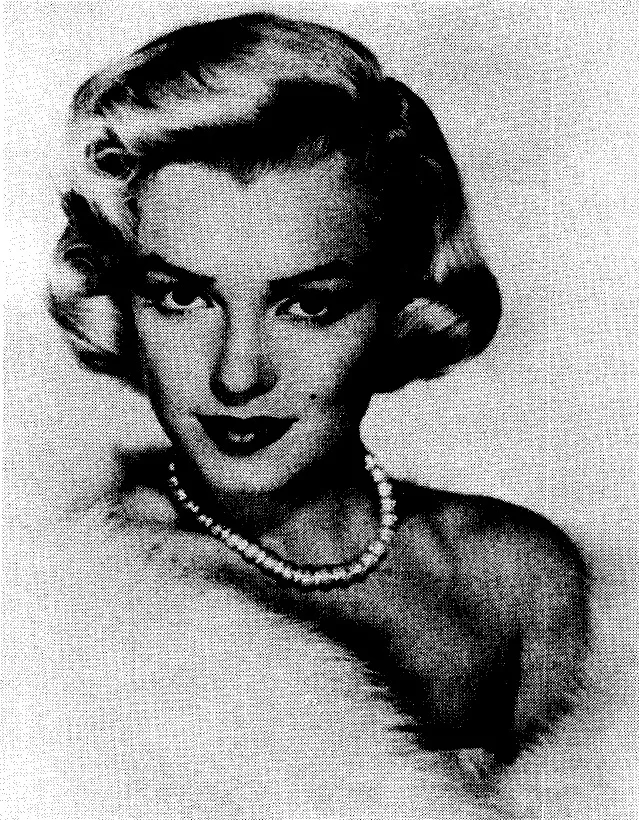
Marilyn Monroe, an iconic blonde, as she appeared in The Seven Year Itch (1995)
Representation is not only about viewing ourselves, but also about viewing others. It is a way of denying individuality by subsuming it into a particular stereotype. A classic example is that of the dumb blonde, who is frequently linked to the child-woman, or 'baby doll', icon. Here an element, blonde hair, is used as a fetish to represent a certain stereotype of femaleness. The Hollywood film star Marilyn Monroe became the icon representing this childlike blonde stereotype in the 1950s and 1960s, although there were many others moulded to play similar roles by the Hollywood system. Others have played upon this stereotype for comedic purposes such as seen in the Bubbles character in the television sitcom Absolutely Fabulous (BBC2 1992-2003) or Alice in The Vicar of Dibley (BBC1 1994-2000). Both Bubbles and Alice would not work as characters, however, unless we already knew about the discourses surrounding blonde women and child women.
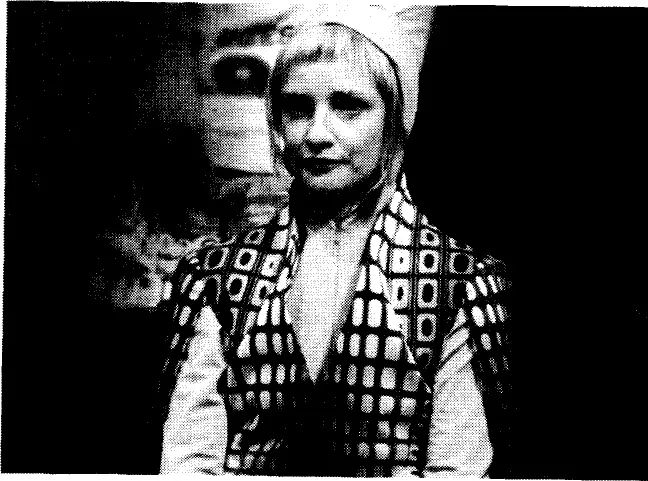
The character of Bubbles from the television sitcom Absolutely Fabulous
With the child-woman example the argument goes that adult women are kept controllable and bidd...
Table of contents
- Cover Page
- Title Page
- Preface
- Contents
- Authors' Note
- Part One - Messages and Messengers
- Part Two - Institutions
- Part Three - Minorities
- Part Four - Images of National Identity
- Part Five - Conclusion
- Glossary
- Index
- eCopyright
Trusted by 375,005 students
Access to over 1.5 million titles for a fair monthly price.
Study more efficiently using our study tools.
Frequently asked questions
Yes, you can cancel anytime from the Subscription tab in your account settings on the Perlego website. Your subscription will stay active until the end of your current billing period. Learn how to cancel your subscription
No, books cannot be downloaded as external files, such as PDFs, for use outside of Perlego. However, you can download books within the Perlego app for offline reading on mobile or tablet. Learn how to download books offline
Perlego offers two plans: Essential and Complete
- Essential is ideal for learners and professionals who enjoy exploring a wide range of subjects. Access the Essential Library with 800,000+ trusted titles and best-sellers across business, personal growth, and the humanities. Includes unlimited reading time and Standard Read Aloud voice.
- Complete: Perfect for advanced learners and researchers needing full, unrestricted access. Unlock 1.5M+ books across hundreds of subjects, including academic and specialized titles. The Complete Plan also includes advanced features like Premium Read Aloud and Research Assistant.
We are an online textbook subscription service, where you can get access to an entire online library for less than the price of a single book per month. With over 1.5 million books across 990+ topics, we’ve got you covered! Learn about our mission
Look out for the read-aloud symbol on your next book to see if you can listen to it. The read-aloud tool reads text aloud for you, highlighting the text as it is being read. You can pause it, speed it up and slow it down. Learn more about Read Aloud
Yes! You can use the Perlego app on both iOS and Android devices to read anytime, anywhere — even offline. Perfect for commutes or when you’re on the go.
Please note we cannot support devices running on iOS 13 and Android 7 or earlier. Learn more about using the app
Please note we cannot support devices running on iOS 13 and Android 7 or earlier. Learn more about using the app
Yes, you can access Understanding Representation by Wendy Helsby in PDF and/or ePUB format, as well as other popular books in Media & Performing Arts & Film & Video. We have over 1.5 million books available in our catalogue for you to explore.