- 96 pages
- English
- ePUB (mobile friendly)
- Available on iOS & Android
eBook - ePub
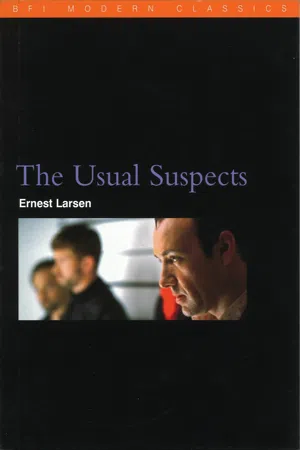
The Usual Suspects
About this book
A heist thriller with a dazzling twist in the tail, this film 'The Usual Suspects' has seen its reputation grow until it is now a major cult movie. Ernest Larsen examines the film's sophistcated narrative structure and the new spin it puts on an old genre.
Information
1 Off-screen, behind the Scenes
Bryan Singer, who directed The Usual Suspects, prodded its scriptwriter Christopher McQuarrie to produce something like nine rewrites before he was satisfied that the story they’d developed was airtight. At the front of each version of the script, according to Singer, they ‘put a quote from “Sympathy for the Devil”: “Please allow me to introduce myself / hope you guess my name. But what is bothering you / is the nature of my game.”’1 In the scene that introduces the finished film just such a crucial guess is made. The rest of the film proceeds to spell out the nature of the game.
The first shot, following the credits and a title (‘San Pedro, California – last night’), is an extreme close-up of an open matchbook set aflame. A cranked audio track makes the sudden flash sound like an explosion. Cut. Dean Keaton (Gabriel Byrne), slumped on the deck of a boat, manages to light a last cigarette with the torched matchbook. Who knows why, but no tough guy is allowed to resist lighting up as the flame of his life is about to be snuffed out. In another offhand and therefore very cool gesture of despair, Keaton then ignites the trail of a fuse only inches away. The camera follows as the path of the moving flame skirts a corpse. Suddenly a stream of liquid douses the flame. The camera tilts up slowly and portentously to the bridge where an unidentifiable man, having pissed out the fire, is busy buttoning his fly. He’s quite a marksman.

The opening conflagration

Since Singer has deliberately begun the scene (and the movie) at the point when the action is all but over, something other than mere action must be at stake. The mystery man approaches Keaton. Keaton looks up. A light dawns in this stricken man’s eyes. He says, ‘Can’t feel my legs… Keyser’, enunciating the name as if for the first time. His paralysis is set off against this mysterious source of power, whose first name puns on Kaiser, the king of kings. The last-second knowledge of the identity of Keyser Soze that Keaton gains is, as it turns out, denied to us until the last seconds of the film itself. The explosions and fires, the twenty-seven dead bodies, the outbreaks and results of violence, are bracketed by the fact that we can’t see what Keaton sees as his life ebbs away.

The moment of recognition
Keyser Soze lights a cigarette, his face still off-screen. Only the most impassive gunmen pause to light up before the act of movie murder. Using his left hand, he pulls a gun out of his coat pocket. He lifts his arm. The butt of the gun is horizontal as he shoots Keaton. Only the most experienced gunmen commit murder with such style, such nonchalance. He walks away, tossing the cigarette he’s just lit onto the fuse without even looking. Once again he hits the mark effortlessly. As he escapes, a series of explosions turns the boat into a floating inferno. The game is on.
January, 1993. Snow is falling on the teeming streets of Park City, Utah, site of the Sundance Film Festival. Christopher McQuarrie is standing in a line outside a theatre waiting for a screening of Public Access, which he co-wrote with his best friend, Bryan Singer, then only twenty-five years old. Somebody asks about his next project. He says he has ‘just seen a column in Spy magazine called “The Usual Suspects” and I thought that would be a neat title for a movie’. What would the movie be about? ‘Well’, McQuarrie says, looking up at the sky as if the answer might be written there, ‘it’s called The Usual Suspects, so I guess it’s about a bunch of criminals who meet in a police lineup.’2 He then describes in detail this imaginary movie’s poster – the image of a lineup. Creating a movie in the space between a neat title and a snappy poster is the stuff of B-movie legend. Both Roger Corman and his sometime producers, Jim Nicholson and Sam Arkoff of American-International, notoriously claimed to pre-sell exploitation flicks on that basis. McQuarrie’s palpable glee in telling this anecdote suggests his strong attraction to the identity of an industry pro.

Impassive, nonchalant
Singer and McQuarrie grew up together in the solidly middle-class, small town of Princeton Junction, New Jersey, which is less than two hours by car from New York City. Singer started making 8mm films when he was thirteen, with a camera borrowed from a friend. So formative was this experience that Singer says that his goal as an adult director ‘is to move the entire crew and cameras with the same agility that I did with my 8mm camera as a boy’.3 Following a stint at the School of Visual Arts in New York City, he transferred to the University of Southern California – majoring in film history, not film-making. After graduation he quickly made a short 16mm film on borrowed money, about six high-school friends who meet six months after their graduation and realise they are no longer so close. Called Lion’s Den, it starred another boyhood friend, Ethan Hawke. Then, with still another friend, John Ottman, in the dual role of editor and composer, they made Public Access, which went on to become co-winner of the grand prize at Sundance.

The lineup
McQuarrie soon began developing the script for The Usual Suspects, but found there wasn’t enough narrative juice to be squeezed from just a title and an image. So he did what screenwriters always do. He stole – not, however, from someone else but from himself, revamping an idea from one of his own unproduced scripts.
What he’d started with was a variation on the heist movie, a noir sub-genre, epitomised by John Huston’s The Asphalt Jungle (1950) and fervidly updated by Quentin Tarantino’s Reservoir Dogs (1992). That was good but it wasn’t enough. In heist movies a bunch of tough but fairly desperate professional crooks get together in the big ugly city and plan one last big score and come as close as you can get to putting it over before everything goes haywire. The variant that McQuarrie had come up with deliberately discarded one key element of the classic scenario: the role of the mastermind. The usual suspects are not – it appears – drawn together by the initiative and brilliance of the criminal mastermind. They’re sitting around fuming in a holding cell and spontaneously decide to take revenge on the cops, a moment of democratic resentment that gives McQuarrie’s premise an initial edge.
The idea that McQuarrie lifted from his own back pocket was the story of a man who cold-bloodedly murders his own family and calmly walks away, disappearing fromview. (Public Access, it’s worth noting, involves the story of a strange young man who wanders into an ordinary suburban town – not unlike Princeton Junction, one suspects – and, apparently without motivation, murders several of its citizens before calmly walking away.) In returning to the idea of the killer Dad,McQuarrie eventually found himself smuggling back into the script the mastermind his initial premise had dispensed with.But at the same time he didn’twant to squander the energy implicit in the idea of the self-motivated team of crooks – so this mastermind character somehowhad to be mated with that premise. His heist narrative, with its distinctively urban realism, is crossed now with a completely different kind of crime story based in the twisted dynamics of a classically patriarchal nuclear family. McQuarriemade up the heist story and along the way carefully adorned it with credible detail. But he didn’t make up the much more sensational family massacre. He knew that story as well as he knew the back of his hand.
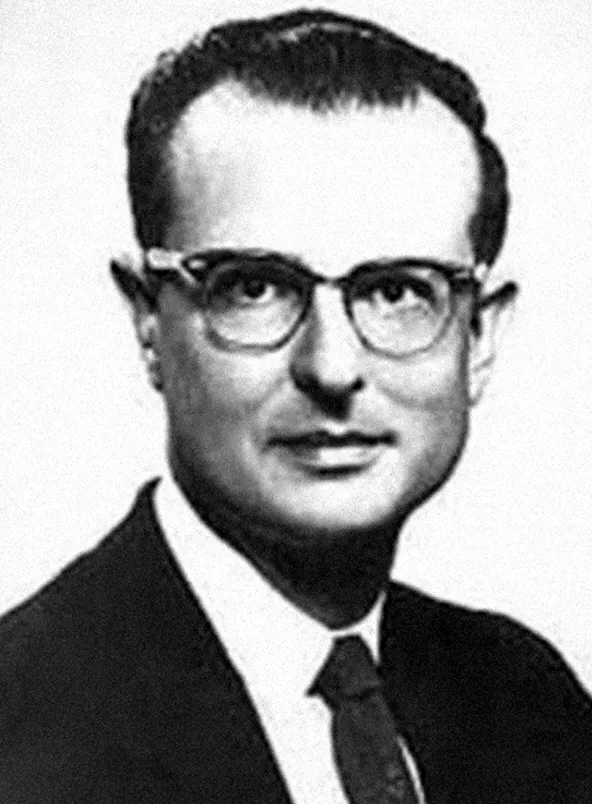
John List
On 9 November 1971, in the affluent town of Westfield, New Jersey, John List, a mild-mannered, devoutly Lutheran accountant, murdered his wife, his mother and his three teenage children. He wrote a series of rambling kiss-off letters on a memo pad labelled ‘A Few Words from John E. List, Career-Builder’.4 Attesting to massive debts, and to his feeling that he wasn’t enough of a man, he considered that his murdered family was best left to God’s care in heaven. His pastor, he wrote, was the one person who would ‘understand’. And finally: ‘P. S. Mother is in the hallway in the attic – 3rd floor. She was too heavy to move.’5 Leaving his nineteen-room mansion behind along with the five bloody bodies, he disappeared. He lived for the next eighteen years as freely as anybody who’s murdered his family could be said to live. Finally, a popular television show, America’s Most Wanted, hired forensic sculptor Frank Bender to create a bust that, combining scientific and artistic techniques, would show what John List might look like in 1989. After airing a story on what was billed as ‘the most infamous murder case in the history of New Jersey’,6 focusing fifteen million eyes on the case, the producers received more than 200 tips. It’s unclear whether List, who was an avid fan of the show, saw that week’s episode or not. On 1 June 1989, John List, remarried and working as an accountant under the alias Robert Clark, was arrested in Richmond, Virginia. Extradited, tried and convicted, he was sentenced to five consecutive life sentences. The Usu...
Table of contents
- Cover
- Title Page
- Contents
- Acknowledgments
- 1 Off-screen, behind the Scenes
- 2 Heist Noir
- 3 On the Side of a Bus
- 4 The Shattered Coffee-cup
- Notes
- Credits
- eCopyright
Trusted by 375,005 students
Access to over 1.5 million titles for a fair monthly price.
Study more efficiently using our study tools.
Frequently asked questions
Yes, you can cancel anytime from the Subscription tab in your account settings on the Perlego website. Your subscription will stay active until the end of your current billing period. Learn how to cancel your subscription
No, books cannot be downloaded as external files, such as PDFs, for use outside of Perlego. However, you can download books within the Perlego app for offline reading on mobile or tablet. Learn how to download books offline
Perlego offers two plans: Essential and Complete
- Essential is ideal for learners and professionals who enjoy exploring a wide range of subjects. Access the Essential Library with 800,000+ trusted titles and best-sellers across business, personal growth, and the humanities. Includes unlimited reading time and Standard Read Aloud voice.
- Complete: Perfect for advanced learners and researchers needing full, unrestricted access. Unlock 1.5M+ books across hundreds of subjects, including academic and specialized titles. The Complete Plan also includes advanced features like Premium Read Aloud and Research Assistant.
We are an online textbook subscription service, where you can get access to an entire online library for less than the price of a single book per month. With over 1.5 million books across 990+ topics, we’ve got you covered! Learn about our mission
Look out for the read-aloud symbol on your next book to see if you can listen to it. The read-aloud tool reads text aloud for you, highlighting the text as it is being read. You can pause it, speed it up and slow it down. Learn more about Read Aloud
Yes! You can use the Perlego app on both iOS and Android devices to read anytime, anywhere — even offline. Perfect for commutes or when you’re on the go.
Please note we cannot support devices running on iOS 13 and Android 7 or earlier. Learn more about using the app
Please note we cannot support devices running on iOS 13 and Android 7 or earlier. Learn more about using the app
Yes, you can access The Usual Suspects by Ernest Larson in PDF and/or ePUB format, as well as other popular books in Media & Performing Arts & Film & Video. We have over 1.5 million books available in our catalogue for you to explore.