This book offers a historical perspective on the changing Hindu–Muslim relationship in India through a study of syncretic traditions in Kurundwad, Maharashtra. It explores the social and cultural dynamics between the two communities and analyses underlying issues of caste hierarchy, Hindu hegemony, and social dominance.
The volume focusses on how the realization of cultural distinctiveness, politics of identity, and the struggle for dominance have played a role in shaping Hindu–Muslim relations in Maharashtra. Through field interviews conducted over three years, the authors contextualise and analyse the nature of cultural hybridity in Kurundwad and how the relationship has changed over the years. The book also focusses on notions of tolerance and inequality, and provides insights into the reasons for the growing distinctiveness in cultural and religious identity in Kurundwad since the 1990s, in the aftermath of the demolition of the Babri Masjid and the Shah Banu verdict.
The book provides a comprehensive framework for understanding the relationship between Hindus and Muslims in India. It will be of great interest to researchers and students of sociology, politics, modern history, cultural studies, minority studies, and South Asian studies.
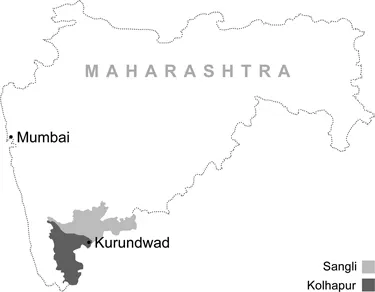
Figure 1.1 Kurundwad, Maharashtra. Copyright 2019 by Amod Damle.
India is home to the world’s third-largest population of Muslims. Except for a small number of Arabs, Turks, and Afghans who first arrived in India more than a millennia ago, most of India’s Muslim population consisted of Hindu converts; Indian Muslims were not (are not) outsiders. Indian Muslims and the nation’s Hindu majority have had a complicated relationship ever since Islam arrived in India in the 7th century. During the best of times, the two communities shared a way of life, and during the worst, committed gruesome violence and spilled each other’s blood. The confluence of Hinduism and Islam and the shared practices that emerged from such a convergence played a vital role in tempering the volatile relationship between Hindus and Muslims. In 1992, with the demolition of the Babri Mosque, the Hindu–Muslim relationship in India reached a new low. Yet, the local newspapers from the Sangli and Kolhapur districts of Maharashtra published accounts of how the Muslim residents of two small villages—Kurundwad and Gotkhindi—housed Ganesh idols in the mosques during the Ganesh festival. The newspapers publish such stories every year during the Ganesh festival (Haygunde, 2010; Zee 24 Taas, 2018).
How could the Hindus and Muslims engage in cultural sharing in Kurundwad and Gotkhindi while communal violence engulfed the rest of India? Under what conditions, we ask, do such shared practices prevail? Does cultural hybridity exemplify some of the noblest human traits—the desire to cooperate and communicate—or, does it hide an inglorious side of human nature. To tackle these questions, in 2016, we embarked on a study of Kurundwad.
Kurundwad is located in the Kolhapur district, in the southern region of Maharashtra, 406 kilometres southeast of Mumbai. Situated at the confluence of the rivers Panchganga and Krishna, Kurundwad was a part of the Deccan States Agency during the British Raj. In addition to Kurundwad, the Deccan States Agency oversaw several other princely states, including Sangli and Kolhapur. Established in 1933, the Deccan States Agency was under the suzerainty of the Bombay Presidency.
Kurundwad was founded in 1733 by Trimbakrao Patwardhan with a jagir from the Peshwas. Serving the Maratha Empire as military commanders, Trimbakrao and his two brothers, Govind Hari and Ramachandra, expanded the southern region of the empire to the river Tungabhadra. Recognising their service to the empire, the Peshwas rewarded each brother with a jagir, or a land grant, which included the region between the rivers Krishna and Tungabhadra. Trimbakrao, Govind Hari, and Ramachandra chose Kurundwad, Miraj, and Tasgaon, respectively, as the capitals of their jagirs (Parasnis, 1917).
In 1812, the Peshwas divided Kurundwad into two regions. In 1850, one of the two areas, known as Shedbal, came under the British government’s authority. In 1854, the British divided the remaining portion of Kurundwad into two branches—Kurundwad Senior and Kurundwad Junior. Hindu Brahmins belonging to the Patwardhan family ruled both branches of Kurundwad. In 1948, both branches joined the Indian union.
Kurundwad is famous for its proximity to Narsobachi Wadi, an important destination for the devotees of Dattaguru. Kurundwad is also known for the peaceful coexistence of its Hindu and Muslim communities. During the Ganesh festival, the Muslims of Kurundwad host Ganesh idols in the Muharram Khanas. A Muharram Khana is where the Muslims install an icon representing a Pir or a Muslim saint during the Muharram festival. The presence of a Ganesh idol in a Muharram Khana is considered a sign of Hindu–Muslim unity. By hosting a Ganesh idol in a Muharram Khana, Muslims not only express their devotion to the Hindu god but also disregard Islam’s prohibition of idolatry.
During the study, we observed that even though the Hindus and Muslims celebrate each other’s holidays, underneath the facade of cooperation, the two communities have begun to drift apart. Increased visibility of Hindu symbols in public places and the adoption of Islamic dress code by a growing number of Muslims indicate that Hindus and Muslims have begun to circumscribe their cultural identities. Historically, the confluence of Hinduism and Islam made the Muslims appear less alien to Hindus. An increased familiarity between Hindus and Muslims allowed Muslims to rule India despite being a minority ethnic group. With the decline of the Mughal Empire and the rise of the East India Company, the differences between the Hindus and Muslims became pronounced. The British government’s balance-and-rule policy posed the Muslims as a counterbalancing force to the Hindus, which threatened the idea that Hinduism alone defined the Indian nation.
We argue that inequality and dominance are inherent cultural dimensions. No culture is monolithic, and yet the dominant group tends to portray their values as the values of society at large. When social change signals to the dominant group that they no longer represent the rest of society, the changing circumstances pose a threat to the dominant group’s status. In other words, the commonness of culture allows the dominant and the subordinate group to maintain the status quo regarding their relationship with each other. When a subordinate group emphasises its distinctiveness, the perceived differences strain the fabric of commonness, which poses a threat to the status of the dominant group. The dominant group responds to the threat by becoming more distinct and by imposing their worldview on the subordinate groups. We suggest that the increased visibility of Hindu symbols in Kurundwad represents a reaction of the Hindu nationalists to the perceived threat of Islam.
We do not claim that underscoring the differences between Hindus and Muslims is the only factor that causes communal conflicts. Understanding the impact of cultural segregation on the Hindu-Muslim relationship remains our primary goal. Yet, in chapter seven, we explore other factors such as urbanization and political competition that escalate tensions between the two communities.
Contextualising the Hindu–Muslim relations in Kurundwad
The politicization of Hindu and Muslim identities and the resulting conflicts, which occurred over the last two centuries, are a relatively recent phenomenon. The term Hindu was used by the Greeks and Muslims to refer to those who lived beyond the river Sindhu (Jaffrelot, 2007; Talbot, 1995). From the Greek and Muslim perspectives, the term Hindu did not denote a homogenous religious group. The people of India did not describe themselves as Hindus until the medieval period.
The first contact between Islam and the earlier population of the Deccan occurred when Alauddin Khalji defeated the Yadava king Ramadeva Yadava in 1294 A.D. Conflicts occurred whenever the advancing Muslim armies encountered the earlier population of India. The people of India were no strangers to conflict. They had seen dynasties, such as the Chalukyas and the Rashtrakutas rise and fall. They had suffered during the violent formative periods of these dynasties. They had also seen the Chalukyas and Rashtrakutas empathise with their subjects after the initial period of conflict. The Muslims were culturally vastly different from the earlier non-Muslim dynasties, which prevented them from fully assimilating with the population of the subcontinent (Kulkarni, 1991–1992).
Although the earlier population of India did not describe themselves as Hindus before the arrival of Islam, they saw themselves as a hierarchical society marked by Brahminical dominance. Islam is a proselytising religion, while Hinduism is not. Those who were not born within the Hindu caste system had no place in Hinduism, which allowed the earlier population of the subcontinent to define Muslims as non-Hindus and, therefore, as outsiders or aliens. The old myths and traditions associated with the Brahminical culture and the realisation that Muslims were different from the local population of India led to the emergence of the Indic, Hindu identity.1 For example, the Vilasa grant,2 a long copperplate grant issued sometime between 1325 and 1350 C.E., compares the Andhra noble Prolaya Nayaka to an incarnation of the god Vishnu in his battle against the evil Muslims. Yet this emerging identity was neither homogeneous nor solely religious. The Hindus remained divided into castes and sects and attributed the differences between the Hindus and Muslims to not just their religions but also their ethnicities. Muslims not only practiced a different religion but also spoke a different language and had distinct dietary habits (Talbot, 1995).
The terms culture, society, and religion are notoriously difficult to define.3 Geertz (1973) considers religion a cultural system that imposes order onto the world and makes the ordering principles appear factual to the believers. Simmel (1950) suggests that cultural and religious beliefs emerge from and shape one another. As a system of beliefs, religion is a subset of a larger body of shared beliefs that we call culture. Thus, everything that is religious is also cultural, but not everything cultural is religious. A Hindu who does not harbour religious beliefs is still a Hindu as long as he or she adheres to the Hindu way of life. In The Discovery of India (1989, originally published in 1946), Jawaharlal Nehru makes a clear distinction between Hinduism as a religion and Hinduism as a way of life.4 Unlike Nehru, the Hindu nationalists conflate the two terms (Varshney, 2002).
The first Muslim invasion of India took place in the 8th century when Muhammad-bin-Qasim defeated king Dahir of Sindh. The Hindus demonised Islam whenever they faced the advancing Muslim armies but later, during the periods of stability, managed to coexist with the Muslims. In the Deccan, during the early days of the Bahmani Empire, the sultans carried out forced conversions, destroyed temples, and imposed the jizya tax—a religious tax on non-Muslims. Once the Bahmani Empire grew stable, the sultans took a different approach to governance. While the Muslim rulers were aware of the expectations of the Islamic orthodoxy, they were also aware of the dangers of imposing their beliefs on the local population. The Muslims could not afford to anger the Hindus because the Hindus outnumbered the Muslims. As a result, the Muslim rulers adopted different policies towards their Muslim and Hindu subjects. While the sultans ensured the Muslims adhered to the Islamic law, they did not impose the Sharia on the Hindu population. A policy of tolerance and the emergence of shared cultural practices played a crucial role in allowing the minority Islamic rule to last for centuries without much opposition (Kulkarni, 1991–1992).
In the Deccan, the development of a new language, Dakhni Urdu, allowed the Sufi saints to become familiar with Hinduism. Before the development of Dakhni Urdu, the Islamic courts used Persian as their official language of business, which was unsuitable as a medium of communication with the common person. Through Dakhni Urdu, Hindu customs and philosophy made their way into Islamic culture. The influence of Marathi and Hindu culture on Dakhni Urdu reached its peak during the rule of Ibrahim Adil Shah the II. Popularly known as Jagat Guru, Adil Shah began initiating all official correspondence with the words “Aja Pooja Saraswati” or “I begin with the prayers of Saraswati, the goddess of learning” (Kulkarni, 1991–1992, p. 506). Adil Shah’s reign was instrumental in bringing Hindus and Muslims closer together. Muslim attire and customs became incorporated into the Hindu way of life. Marathi and Kannada were given the status of the official language during the reigns of the Bahmani, Adil Shahi, and Nizam Shahi rulers, which resulted in bilingual official farmans (Kulkarni, 1991–1992).
The Islamic dynasties of India were astute in recognising that even though they were the ruling class, the Hindus were the dominant force in the subcontinent. With the ascendency of the British, the people of India became exposed to the European perspective on law and justice, which disturbed the existing balance of power between Hindus and Muslims. The Europeans saw law and cultural refinement as the defining characteristics of their civilisation.5 From the European perspective, the law was an instrument for instituting and protecting social equality (Coombe, 1998). Yet, it was not just the European view of the law that prompted the British to remain neutral towards religion in India. What drove the British policy of neutrality was their desire to introduce a rift between the Hindus and Muslims. Before the rebellion of 1857, the British believed that by remaining neutral towards religion and by allowing the Hindus and Muslims to fight among themselves, they could make themselves indispensable as impartial umpires. In February 1857, the refusal of the 19th Bengal Native Infantry to use greased cartridges6 led to a general revolt in north and cent...
Table of contents
Cover
Half Title
Title Page
Copyright Page
Dedication
Table of Contents
List of figures
Acknowledgements
1 Introduction
2 The arrival of Islam in the Deccan
3 Cultural and religious exchange between Hinduism and Islam
4 Cultural change in Kurundwad
5 Why is Kurundwad changing?
6 Culture and inequality
7 The changing Hindu-Muslim relations in Maharashtra
8 Concluding remarks
Index
Trusted by 375,005 students
Access to over 1.5 million titles for a fair monthly price.
Study more efficiently using our study tools.
Frequently asked questions
Yes, you can cancel anytime from the Subscription tab in your account settings on the Perlego website. Your subscription will stay active until the end of your current billing period. Learn how to cancel your subscription
No, books cannot be downloaded as external files, such as PDFs, for use outside of Perlego. However, you can download books within the Perlego app for offline reading on mobile or tablet. Learn how to download books offline
Perlego offers two plans: Essential and Complete
Essential is ideal for learners and professionals who enjoy exploring a wide range of subjects. Access the Essential Library with 800,000+ trusted titles and best-sellers across business, personal growth, and the humanities. Includes unlimited reading time and Standard Read Aloud voice.
Complete: Perfect for advanced learners and researchers needing full, unrestricted access. Unlock 1.5M+ books across hundreds of subjects, including academic and specialized titles. The Complete Plan also includes advanced features like Premium Read Aloud and Research Assistant.
Both plans are available with monthly, semester, or annual billing cycles.
We are an online textbook subscription service, where you can get access to an entire online library for less than the price of a single book per month. With over 1.5 million books across 990+ topics, we’ve got you covered! Learn about our mission
Look out for the read-aloud symbol on your next book to see if you can listen to it. The read-aloud tool reads text aloud for you, highlighting the text as it is being read. You can pause it, speed it up and slow it down. Learn more about Read Aloud
Yes! You can use the Perlego app on both iOS and Android devices to read anytime, anywhere — even offline. Perfect for commutes or when you’re on the go. Please note we cannot support devices running on iOS 13 and Android 7 or earlier. Learn more about using the app
Yes, you can access Culture of Inequality by Amod N. Damle,Nilu H. Damle in PDF and/or ePUB format, as well as other popular books in Politics & International Relations & Politics. We have over 1.5 million books available in our catalogue for you to explore.