eBook - ePub
LPWAN Technologies for IoT and M2M Applications
- 456 pages
- English
- ePUB (mobile friendly)
- Available on iOS & Android
eBook - ePub
LPWAN Technologies for IoT and M2M Applications
About this book
Low power wide area network (LPWAN) is a promising solution for long range and low power Internet of Things (IoT) and machine to machine (M2M) communication applications. The LPWANs are resource-constrained networks and have critical requirements for long battery life, extended coverage, high scalability, and low device and deployment costs. There are several design and deployment challenges such as media access control, spectrum management, link optimization and adaptability, energy harvesting, duty cycle restrictions, coexistence and interference, interoperability and heterogeneity, security and privacy, and others.LPWAN Technologies for IoT and M2M Applications is intended to provide a one-stop solution for study of LPWAN technologies as it covers a broad range of topics and multidisciplinary aspects of LPWAN and IoT. Primarily, the book focuses on design requirements and constraints, channel access, spectrum management, coexistence and interference issues, energy efficiency, technology candidates, use cases of different applications in smart city, healthcare, and transportation systems, security issues, hardware/software platforms, challenges, and future directions.
- One stop guide to the technical details of various low power long range technologies such as LoRaWAN, Sigfox, NB-IoT, LTE-M and others
- Describes the design aspects, network architectures, security issues and challenges
- Discusses the performance, interference, coexistence issues and energy optimization techniques
- Includes LPWAN based intelligent applications in diverse areas such as smart city, traffic management, health and others
- Presents the different hardware and software platforms for LPWANs
- Provides guidance on selecting the right technology for an application
Information
1
Introduction to low-power wide-area networks
Bharat S. Chaudhari1 and Marco Zennaro2, 1School of Electronics and Communication Engineering, MIT World Peace University, Pune, India, 2T/ICT4D Laboratory, The Abdus Salam International Centre for Theoretical Physics, Trieste, Italy
Abstract
With the emergence of the Internet of things (IoT) and machine-to-machine (M2M) communications, massive growth in the sensor node deployment is expected soon. According to IHS Markit forecast, the number of connected IoT devices would grow to 125 billion by 2030. The exponential growth in IoT is impacting virtually all stages of industry and nearly all market areas. It is redefining the ways to design, manage, and maintain the networks, data, clouds, and connections. To support the requirements of new applications, an innovative paradigm called low-power wide-area networks (LPWAN) is evolved. The LPWAN is a class of wireless IoT communication standards and solutions with characteristics such as large coverage areas, low transmission data rates with small packet data sizes, and long battery life operation. The LPWAN technologies are being deployed and have shown enormous potential for the vast range of applications in IoT and M2M, especially in constrained environments. This chapter focuses on a general introduction to LPWANs, innovative applications and services, requirements, wireless access, and characteristics.
Keywords
Internet of things; IoT; M2M; LPWANs; LPWAN applications; wireless access; WPAN; WLAN; WNAN; WWAN
1.1 Introduction
With the emergence of the Internet of things (IoT) and machine-to-machine (M2M) communications, massive growth in the sensor node deployment is expected soon. According to the forecast by Ericsson [1], around 29 billion devices will be connected to the Internet by 2022. These connected IoT devices include connected cars, machines, meters, sensors, point-of-sale terminals, consumer electronics products, wearables, and others. IoT survey reported on the Forbes website [2] forecasts more than 75 billion IoT device connections by 2025. HIS Markit [3] forecasted that the number of connected IoT devices would grow to 125 billion in 2030. The exponential growth in IoT is impacting virtually all stages of industry and nearly all market areas. It is redefining the ways to design, manage, and maintain the networks, data, clouds, and connections.
With highly anticipated developments in the fields of artificial intelligence, machine learning, data analytics, and blockchain technologies, there is immense potential to exponentially grow the deployments and its applications in almost all the sectors of society, profession, and industry. Such progression allows any things such as sensors, vehicles, robots, machines, or any such objects to connect to the Internet. It enables them to send the sensed data and parameters to the remote centralized device or server, which provides intelligence for making an appropriate decision or actuating action.
In general, IoT applications require energy-efficient and low-complexity nodes for a variety of uses that are to be deployed on scalable networks. Currently, wireless technologies such as IEEE 802.11 wireless local area networks (WLAN), IEEE 802.15.1 Bluetooth, IEEE 802.15.3 ZigBee, low-rate wireless personal area networks (LR-WPAN), and others are being used for sensing applications in the short-range environments. In contrast, wireless cellular technologies such as 2G, 3G, 4G, and 5G can be extended to long-range applications. Primarily, WLAN and Bluetooth were designed for high-speed data communication, whereas ZigBee and LR-WPAN were designed for wireless sensing applications in the local environments and are used for low data–rate application for communication distances ranging from a few meters to a few hundred meters, depending on the line of sight, obstacles in the path, interference, transmit power, etc. Wireless cellular networks such as 2G, 3G, and 4G are designed for voice and data communication, not primarily for wireless sensing applications. Although these technologies are used for sensing for one or other ways in some of the applications, their performance in terms of performance metrics used in the wireless sensor networks may not be acceptable.
Hence, to support such requirements, a new paradigm of IoT, called low-power wide-area networks (LPWAN) is evolved. The LPWAN is a class of wireless IoT communication standards and solutions with characteristics such as large coverage areas, low transmission data rates with small packet data sizes, and long battery life operation [4]. The LPWAN technologies are being deployed and have shown enormous potential for the vast range of applications in IoT and M2M, especially in constrained environments.
1.2 Intelligent applications and services
The growing popularity of IoT use cases in domains that rely on connectivity spanning large areas and able to handle a massive number of connections is driving the demand for massive IoT technologies. With the advancement in the field of miniaturized electronics, communication, computing, sensing, actuating, and battery technologies, it is possible to design low-power, long-range networking technologies with many years of battery life and tens of kilometers coverage. These technologies have to be Internet-compatible so that data, device, and network management can be undertaken through cloud-based platforms. The most critical requirements of wireless IoT/M2M devices are low power consumption with extended transmission range, support to massive number of devices, the capability to handle RF interference, low cost, easy deployment, and robust security for the both, applications and network level. LPWAN technologies are promising and can be deployed for a broad range of smart and intelligent applications, including environment monitoring, smart cities, smart utilities, agriculture, health care, industrial automation, asset tracking, logistics and transportation, and many more as given in Table 1–1.
Table 1–1
| Field | Major applications | |
|---|---|---|
| Smart cities | 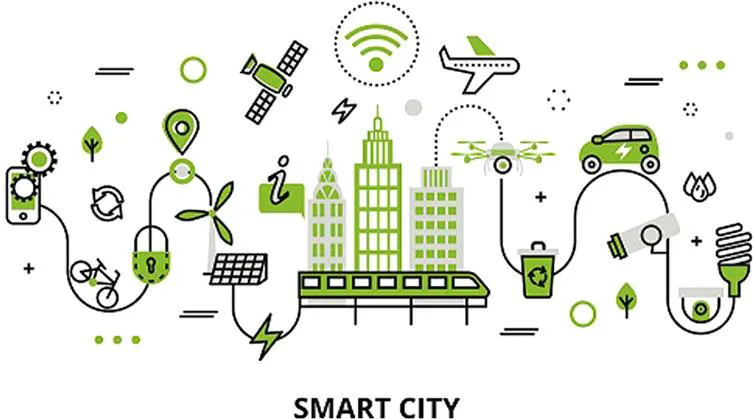 | Smart parking, structural health of the buildings, bridges and historical monuments, air quality measurement, sound noise level measurement, traffic congestion and traffic light control, road toll control, smart lighting, trash collection optimization, waste management, utility meters, fire detection, elevator monitoring and control, manhole cover monitoring, construction equipment and labor health monitoring, environment and public safety |
| Smart environment |  | Water quality, air pollution, temperature, forest fire, landslide, animal tracking, snow level monitoring, and earthquake early detection |
| Smart water | 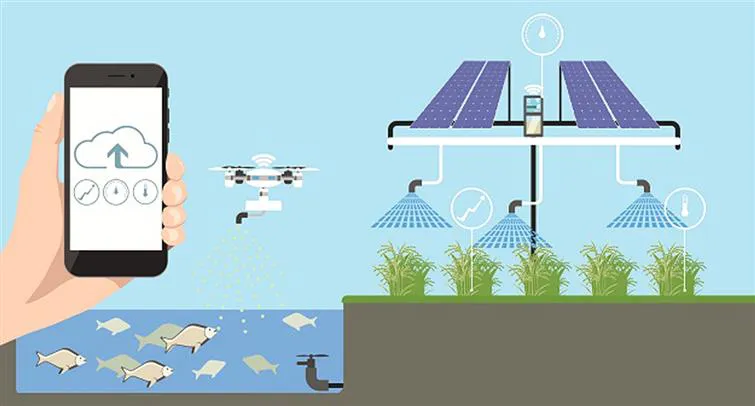 | Water quality, water leakage, river flood monitoring, swimming pool management, and chemical leakage |
| Smart... | ||
Table of contents
- Cover image
- Title page
- Table of Contents
- Copyright
- List of contributors
- About the editors
- Preface
- 1. Introduction to low-power wide-area networks
- 2. Design considerations and network architectures for low-power wide-area networks
- 3. LoRaWAN protocol: specifications, security, and capabilities
- 4. Radio channel access challenges in LoRa low-power wide-area networks
- 5. An introduction to Sigfox radio system
- 6. NB-IoT: concepts, applications, and deployment challenges
- 7. Long-term evolution for machines (LTE-M)
- 8. TV white spaces for low-power wide-area networks
- 9. Performance of LoRa technology: link-level and cell-level performance
- 10. Energy optimization in low-power wide area networks by using heuristic techniques
- 11. Energy harvesting–enabled relaying networks
- 12. Energy-efficient paging in cellular Internet of things networks
- 13. Guidelines and criteria for selecting the optimal low-power wide-area network technology
- 14. Internet of wearable low-power wide-area network devices for health self-monitoring
- 15. LoRaWAN for smart cities: experimental study in a campus deployment
- 16. Exploiting LoRa, edge, and fog computing for traffic monitoring in smart cities
- 17. Security in low-power wide-area networks: state-of-the-art and development toward the 5G
- 18. Hardware and software platforms for low-power wide-area networks
- Index
Trusted by 375,005 students
Access to over 1.5 million titles for a fair monthly price.
Study more efficiently using our study tools.
Frequently asked questions
Yes, you can cancel anytime from the Subscription tab in your account settings on the Perlego website. Your subscription will stay active until the end of your current billing period. Learn how to cancel your subscription
No, books cannot be downloaded as external files, such as PDFs, for use outside of Perlego. However, you can download books within the Perlego app for offline reading on mobile or tablet. Learn how to download books offline
Perlego offers two plans: Essential and Complete
- Essential is ideal for learners and professionals who enjoy exploring a wide range of subjects. Access the Essential Library with 800,000+ trusted titles and best-sellers across business, personal growth, and the humanities. Includes unlimited reading time and Standard Read Aloud voice.
- Complete: Perfect for advanced learners and researchers needing full, unrestricted access. Unlock 1.5M+ books across hundreds of subjects, including academic and specialized titles. The Complete Plan also includes advanced features like Premium Read Aloud and Research Assistant.
We are an online textbook subscription service, where you can get access to an entire online library for less than the price of a single book per month. With over 1.5 million books across 990+ topics, we’ve got you covered! Learn about our mission
Look out for the read-aloud symbol on your next book to see if you can listen to it. The read-aloud tool reads text aloud for you, highlighting the text as it is being read. You can pause it, speed it up and slow it down. Learn more about Read Aloud
Yes! You can use the Perlego app on both iOS and Android devices to read anytime, anywhere — even offline. Perfect for commutes or when you’re on the go.
Please note we cannot support devices running on iOS 13 and Android 7 or earlier. Learn more about using the app
Please note we cannot support devices running on iOS 13 and Android 7 or earlier. Learn more about using the app
Yes, you can access LPWAN Technologies for IoT and M2M Applications by Bharat S Chaudhari,Marco Zennaro,Bharat S. Chaudhari in PDF and/or ePUB format, as well as other popular books in Technology & Engineering & Electromagnetism. We have over 1.5 million books available in our catalogue for you to explore.