- 836 pages
- English
- ePUB (mobile friendly)
- Available on iOS & Android
eBook - ePub
Drug Targeting and Stimuli Sensitive Drug Delivery Systems
About this book
Drug Targeting and Stimuli Sensitive Drug Delivery Systems covers recent advances in the area of stimuli sensitive drug delivery systems, providing an up-to-date overview of the physical, chemical, biological and multistimuli-responsive nanosystems. In addition, the book presents an analysis of clinical status for different types of nanoplatforms. Written by an internationally diverse group of researchers, it is an important reference resource for both biomaterials scientists and those working in the pharmaceutical industry who are looking to help create more effective drug delivery systems.
- Shows how the use of nanomaterials can help target a drug to specific tissues and cells
- Explores the development of stimuli-responsive drug delivery systems
- Includes case studies to showcase how stimuli responsive nanosystems are used in a variety of therapies, including camptothecin delivery, diabetes and cancer therapy
Information
Chapter 1
Treatment strategies in cancer from past to present
Hatice Yildizhan1, Nezehat Pınar Barkan2, Seçil Karahisar Turan2, Özerk Demiralp3, Fatma Duygu Özel Demiralp1, Bengi Uslu1 and Sibel A. Ōzkan1, 1Ankara University, Ankara, Turkey, 2Hacettepe University, Ankara, Turkey, 3HLC Esthetics Surgery Medical Center, Ankara, Turkey
Abstract
For many centuries surgery is the most commonly used cancer management. However curing knew that cancer would come back, with such an invasive method. For this reason, the use of therapeutics were engaged with this need. In the 19th century, regressive effects of hormone therapy on breast and prostate cancers were assessed. The invention of X-rays led to the use of radiation in cancer treatment. After a while, the cancer-causing effect of radiation was recognized and a need for new methodologies arose. For this reason, proton beams were used instead of X-ray radiation and chemical modifiers were developed, both to sensitize tumor cells to radiation and to protect normal cells. Chemical agents have been used since it was noticed during World War II, that they could kill cancer cells by damaging their DNA. Over time, novel chemotherapeutics were designed with minimum side effects and to maximum activity. Synchronous with the improvement of knowledge on cell biology, immunotherapeutic agents were engaged that could mimic normal cell growth process. However, because all these therapeutics have a mortal effect both on healthy and cancer cells, targeted therapies should be preferred. Targeted therapies act by affecting the pathways responsible in cell growth, division, and spread of cancer cells. Following scientific and technological developments, new approaches have arisen, such as gene-therapy, stem cell therapy, immunotherapy, and nanotechnology derived therapies. Combination of chemotherapeutic with nanoparticles is a novel approach that is being used in the treatment of cancer. With the development of imaging technologies and diagnostic methods, many cancer types may be detected in much earlier stages. The more cancer signaling pathways are determined, the better the diagnostics and therapies will be achieved.
Topics in this chapter can be summarized as surgical resection, radiation therapy, chemotherapy, ımmunotherapy, novel and target-specific therapies, and future perspectives. The main aim of this chapter is not to give exact information about survey of the current studies in this area since it is not possible to reach whole information of preclinical or clinical research.
Keywords
The role of diagnosis in treatment; well proven cancer therapies; cancer immunology; targeted therapy; current applications in cancer therapy
1.1 The Importance of Diagnosis in Cancer Therapy
Cancer is known as a kind of genetic disease and can be heritable or directly caused by severe alterations in genomic DNA. Past decades’ research shows us that cancer cannot be generalized for all patients, since there are single nucleotide polymorphism (SNP) factors and heterogenic natures of the tumor. At this point, recent research focused on the idiopathic therapies with the help of high-throughput technologies. This includes sequencing technologies (genomic, transcriptomic, proteomics and metabolomics) and bioinformatic applications. High-throughput applications have vital importance for diagnosis, assessing tumor heterogeneity, classifiying molecular signatures of the patient, and therefore has additional vital importance for the therapy determination and efficacy. Diagnosis is also part of treatment but this chapter would not contain detailed diagnosis strategies.
Even if it is not a good idea to categorize cancer in one way, there are several traditional ways for the classification of cancer. In this section, we cover how physicians decide to use which drugs for the purpose of patient treatment. But to emphasize it can be used again, physicians generally do not assign cancer as one disease; they must consider that each patient has his/her specialized disease. But with the traditional knowledge of cancer, it is identified in several subgroups.
By based on all this knowledge, the physician considers whether the patient has cancerous tissue or not. The next question is how it can be treated in these conditions with the safest drugs. Treatment period is also of vital importance; the patients progress must be followed by clinicians to get a route for future treatment strategies can also be used. At the first stage of treatment, the tumor is categorized as follows:
- • cancerous tissue is indolent (or not),
- • tumor is aggressive (or not), it has potential to metastasize (or not),
- • identification of tumor grade.
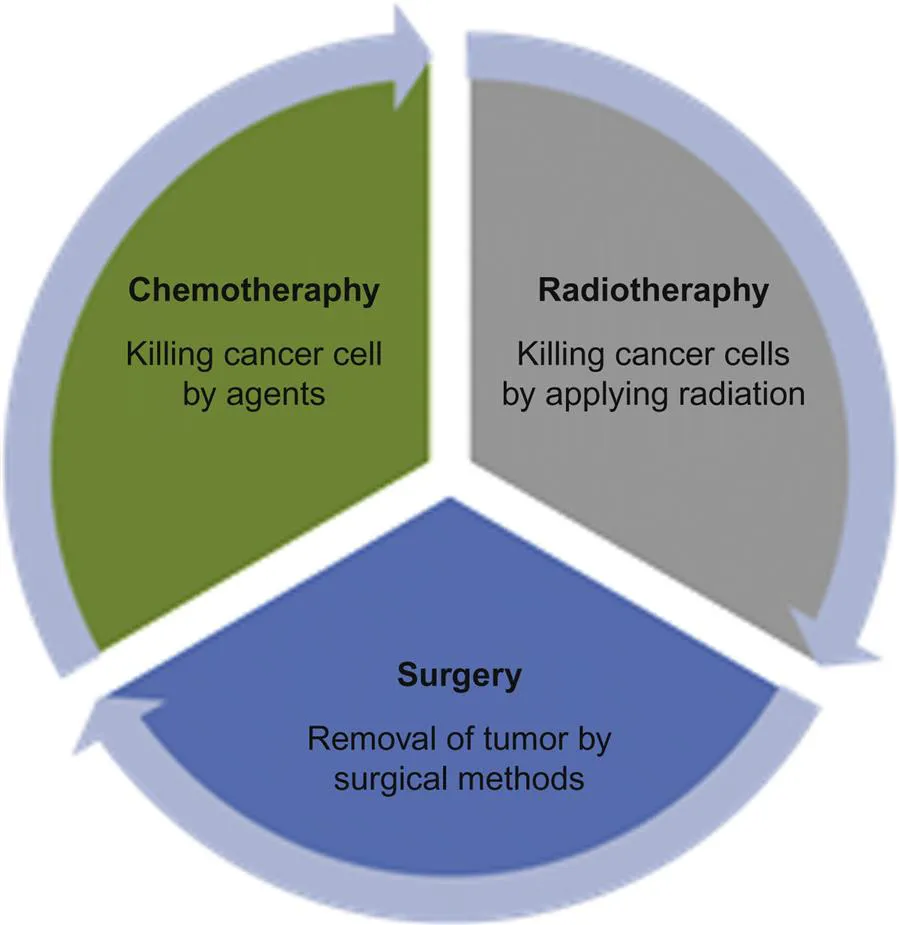
The therapy must be planned by considering different factors, such as prime location of tumor, metastatic region, patient properties (age, gender, health status, etc.), stage of tumor or the cell type in the heterogenous tumor tissue. In addition to that, the therapy must be organized by a clinician and a pathologist, radiation oncologist, radiologist and nuclear medicine specialists, all must participate in the therapy of the patient. The success of the treatment must aim for local-regional control of the disease, prevention of future repetition of metastasizes, improving the life quality of the patient, and to improve long-term survival chances for patient. Possible cancer treatments can be summarized as: surgery, chemotherapy, radiation therapy, immunotherapy, and palliative care. These therapies can be applied alone or in combination, depending on the status of the patient. As expected, to decide which therapy would be applied has vital importance, especially for the patient’s life. During the treatment, numerous side effects can be observed. The most threatening side effect is to increase the incidence of secondary cancer formation. There can be other side effects, which will be explained further in this chapter. Gene expression arrays which are specific expression for a specific biological phenomena, often referred to as the key analytical tools to identify the biomarkers. In addition to that, bioinformatic applications are also very important applications to identify genes, whose expression correlates with a specific biological phenotype, drug responsiveness, or prognosis. After deciding the advantage/disadvantage chart of the therapy, the treatment can then be started by the clinicians.
1.2 Traditional, Well Proven Therapies
This chapter mainly focuses on ongoing fastidiously selected studies about cancer therapy. The main outline of this chapter is the timeline, from traditional applications to up-to-date studies. Traditional well proven therapeutic applications are not point out in detail. These studies are explained in short and studies are summarized in Fig. 1.1.
1.2.1 Surgery
1.2.1.1 Surgery to treat cancer
1.2.1.1.1 Brief outline of the surgical application in cancer theraphy
Surgery has been used for many years as the main treatment to remove cancer tissue away from the body. The earlier a lesion is found, the easier it is to remove it. It also plays an important role for diagnosis and staging.
If cancer has spread from the primary site to other tissues of the body, surgery cannot usually cure it. With some types of cancer, surgery can help people to live for a long time and may sometimes lead to a cure.
1.2.1.2 Methods used in conventional surgery
1.2.1.2.1 Diagnostic
The surgeon removes the tumor and some normal tissue close to the lesion to have a clear margin. This procedure is called biopsy.
There are generally two main types of surgical biopsies.
- 1. Incisional biopsies: removal of a suspicious area for examination;
- 2. Excisio...
Table of contents
- Cover image
- Title page
- Table of Contents
- Copyright
- List of Contributors
- Series Preface: Pharmaceutical Nanotechnology
- Preface
- Chapter 1. Treatment strategies in cancer from past to present
- Chapter 2. Nanotechnology-based drug delivery systems: Challenges and opportunities
- Chapter 3. Nanotechnology applications in drug controlled release
- Chapter 4. Target-specific delivery: An insight
- Chapter 5. Stimuli-responsive nanosystems for drug-targeted delivery
- Chapter 6. Stimuli sensitive ocular drug delivery systems
- Chapter 7. Stimuli-sensitive nanomaterials for antimicrobial drug delivery
- Chapter 8. Stimuli-responsive micelles: A nanoplatform for therapeutic and diagnostic applications
- Chapter 9. Design of targeting peptides for nanodrugs for treatment of infectious diseases and cancer
- Chapter 10. Targeting drugs to cell and organ using nanoparticles
- Chapter 11. Extracellular vesicles as a recipe for design smart drug delivery systems for cancer therapy
- Chapter 12. Advancements in exogeneous techniques for stimuli-sensitive delivery systems
- Chapter 13. Ligand-directed tumor targeting with hybrid viral phage nanoparticles
- Chapter 14. Delivering miRNA modulators for cancer treatment
- Chapter 15. Oral controlled and sustained drug delivery systems: Concepts, advances, preclinical, and clinical status
- Chapter 16. Hydrogels: From simple networks to smart materials—advances and applications
- Chapter 17. Recent advances in understanding of blood–brain tumor barrier (BTB) permeability mechanisms that enable better detection and treatment of brain tumors
- Chapter 18. Polymeric nanocarriers for site-specific gene therapy
- Chapter 19. Cyclodextrin-based polymeric nanosystems
- Chapter 20. Lipid nanoparticles: In vitro and in vivo approaches in drug delivery and targeting
- Index
Trusted by 375,005 students
Access to over 1.5 million titles for a fair monthly price.
Study more efficiently using our study tools.
Frequently asked questions
Yes, you can cancel anytime from the Subscription tab in your account settings on the Perlego website. Your subscription will stay active until the end of your current billing period. Learn how to cancel your subscription
No, books cannot be downloaded as external files, such as PDFs, for use outside of Perlego. However, you can download books within the Perlego app for offline reading on mobile or tablet. Learn how to download books offline
Perlego offers two plans: Essential and Complete
- Essential is ideal for learners and professionals who enjoy exploring a wide range of subjects. Access the Essential Library with 800,000+ trusted titles and best-sellers across business, personal growth, and the humanities. Includes unlimited reading time and Standard Read Aloud voice.
- Complete: Perfect for advanced learners and researchers needing full, unrestricted access. Unlock 1.5M+ books across hundreds of subjects, including academic and specialized titles. The Complete Plan also includes advanced features like Premium Read Aloud and Research Assistant.
We are an online textbook subscription service, where you can get access to an entire online library for less than the price of a single book per month. With over 1.5 million books across 990+ topics, we’ve got you covered! Learn about our mission
Look out for the read-aloud symbol on your next book to see if you can listen to it. The read-aloud tool reads text aloud for you, highlighting the text as it is being read. You can pause it, speed it up and slow it down. Learn more about Read Aloud
Yes! You can use the Perlego app on both iOS and Android devices to read anytime, anywhere — even offline. Perfect for commutes or when you’re on the go.
Please note we cannot support devices running on iOS 13 and Android 7 or earlier. Learn more about using the app
Please note we cannot support devices running on iOS 13 and Android 7 or earlier. Learn more about using the app
Yes, you can access Drug Targeting and Stimuli Sensitive Drug Delivery Systems by Alexandru Mihai Grumezescu in PDF and/or ePUB format, as well as other popular books in Physical Sciences & Physics. We have over 1.5 million books available in our catalogue for you to explore.