- 172 pages
- English
- ePUB (mobile friendly)
- Available on iOS & Android
eBook - ePub
About this book
Medicinal Chemistry: Fundaments presents the cycle of the life of drugs, their physico-chemical properties, and consequences that arise in development. The fundamental concepts of Medicinal Chemistry (pharmacophore, prodrugs, Lipinsky rules) are also presented, including discussions on specific concerns of the European Pharmacopeia – the industrialist's bible – its role, and a description of the monographs of active principles.
- Defines the lifecycle of drugs
- Explains the physico-chemical properties and consequences of a drug
- Studies the fundamental concepts of medicinal chemistry
- Describes the active ingredient monographs
Information
1
Medicines and Drugs
Abstract
The word medicine may be understood differently depending on the discipline at hand. For a chemist, the word corresponds to the active principle (the product responsible for the drug’s activity); for a galenist, it is the active principle and the excipients; for a pharmacist, it is the specialty (the commercial product). We encounter the same problem with the word “drug” which, for a chemist, also represents the active principle; for a pharmacognosy specialist, it is the extraction mixture; and for a galenist, it is the specialty.
Keywords
Anatomical Therapeutic Chemical; Base Claude Bernard; European Medicines Agency; International Union of Pure and Applied Chemistry; Pharmacological filters; Polar Surface Area; Temporary Authorization for Use; Thesorimed; Vidal Medical Dictionary; World Health Organization
1.1 Definition of a drug
The word medicine may be understood differently depending on the discipline at hand. For a chemist, the word corresponds to the active principle (the product responsible for the drug’s activity); for a galenist, it is the active principle and the excipients; for a pharmacist, it is the specialty (the commercial product). We encounter the same problem with the word “drug” which, for a chemist, also represents the active principle; for a pharmacognosy specialist, it is the extraction mixture; and for a galenist, it is the specialty.
Notwithstanding this ambiguity, from a chemist’s point of view, when we speak of drugs/medicines here, we mean the active principle. The usual definition of a drug is as follows:
1.2 A few important dates in the history of drugs
While the history of drugs could be traced back to ancient times, with medicines used by the Ancient Egyptian, Greek and Asiatic civilizations, and all the traditional African and Amazonian medicines, modern medicine was born with Paul Ehrlich’s definition of the pharmacophore [EHR 09] (the part of the molecule which is responsible for its biological activity – see Chapter 9), as well as the pharmacoreceptor in 1909, the understanding of the consequences of the drug–receptor relationship and the development of synthetic chemistry and also extraction chemistry. Figure 1.1 shows a number of the key steps in drug discovery, from the isolation of morphine in 1803, through increasingly complex structures, to the development of teixobactin in recent years.

1.3 Different types of drugs
A drug corresponds to what we call the specialty or magistral preparation. For our purposes, we shall use the term “active principle”, although sometimes, we may use the words “drug” or “medicine”, to the chagrin of galenists or pharmacologists! The active principle is protected by a patent filed by the manufacturer 1 . Protection extends for 20 years from the date of awarding of the patent. The pharmaceutical specialty, for its part, requires marketing authorization which, in France, is issued by the ANMS 2 (Agence Nationale du Médicament et des Produits de Santé, the National Drug and Healthcare Product Authority, formerly the AFSSAPS) for five years, and can be renewed, altered or even withdrawn. Sometimes, in hospitals, in the case of serious illnesses, a product may be given a Temporary Authorization for Use (ATU), provisionally, before applying for marketing authorization.
- – The case of generic drugs is not of interest to us here, as the patent on their active principle has lapsed; the legislation of the specialty is modified, and to a certain extent so too are the excipients, which sometimes poses certain problems such as allergies or other secondary effects due to the alteration of the formula. The definition of these specialties is set out by the decree of April 24, 1996, and the aim is to keep control of public spending on healthcare. They appear on a list established by the Agence du Médicament (Medicines Authority) on the advice of the marketing authorization commission. Thus, for those specialties containing the active principle in question, the matter becomes less complex, because the request for marketing authorization is based on that of the reference specialty (princeps 4 ) with, of course, the same manufacturing processes and the same origin of the active principle. Bioequivalence must be demonstrated by bioavailability studies, in comparison to the reference compound. We say that we have bioequivalence when the active principle enters into general circulation in the same concentration, in the same period of time, from an identical dose, meaning it is absorbed with comparable efficiency. On the other hand, the method of preparation and the composition in terms of excipients (colorings, flavorings, binding agents) may vary. Therefore, substituting the princeps with a generic product may, in certain cases, give rise to side effects due, for example, to the presence of an ingredient to which the patient is allergic and which is not found in the reference specialty. For this reason, the prescribing doctor may specify that the pharmacist is not to substitute the drug with a generic version.
- – The concept must not be confused with a biosimilar drug, which is a biological drug produced by a cell or living organism, for which the patent has lapsed into the public domain. There are relatively few of such drugs in circulation – at the time of writing, only 14 products have been successfully assessed by the European Medicines Agency. One example is somatotropin, which is produced by a modified bacterium.
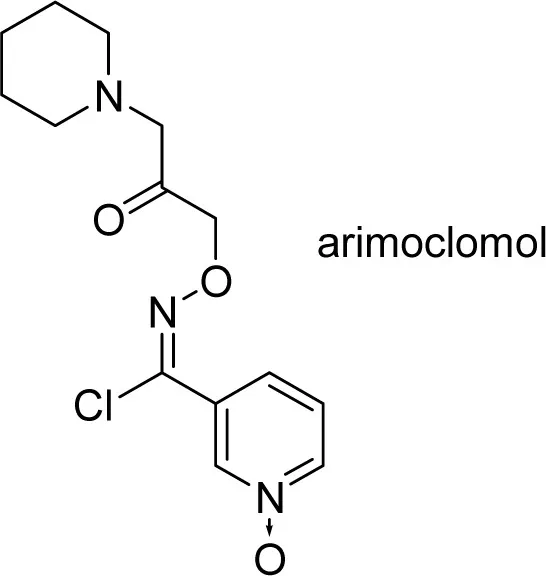
- – An orphan drug is one developed to treat rare diseases. Either the target disease affects only a limited number of people (fewer than 200,000 patients in a country), or it is an illness whose treatment would not produce sales revenue on an industrial scale. An example is inclusion body myositis, which can be treated with arimoclomol. This disease affects only one person in a million. At the European Medicines Agency, there is a special committee in charge of the legislation of these products. As of 2016, there are 14 medicines available on the market as orphan drugs.
Of the vast array of active principles, the World Health Organization (WHO)’s essential medicines are on a list, first drafted in the 1970s and regularly re-evaluated – in particular, to deal with the uncertainty of supply in developing countries. These essential drugs correspond to products which are safe to use (few side-effects or known side-effects, as far as possible) and have a moderate cost. They must be effective against 90% of diseases in normal usage conditions (posology, administration method, and so on) to treat the disease in question. Hence, there are numerous products not included on that list (in particular, in the areas of cardiovascular treatment and antiseptics). On the other hand, some are on the list but are rarely used (for instance, isosorbide din...
Table of contents
- Cover image
- Title page
- Table of Contents
- Dedication
- Copyright
- Preface
- 1: Medicines and Drugs
- 2: Importance and Evaluation of the pKa
- 3: Importance and Evaluation of Lipophilicity
- 4: Importance and Evaluation of Solubility
- 5: Importance and Evaluation of the Polar Surface Area (PSA and TPSA)
- 6: Lipinski’s Rule of Five
- 7: Principle of a Prodrug
- 8: Pharmacophore
- 9: The European Pharmacopoeia
- Glossary
- Bibliography
- Index
Trusted by 375,005 students
Access to over 1.5 million titles for a fair monthly price.
Study more efficiently using our study tools.
Frequently asked questions
Yes, you can cancel anytime from the Subscription tab in your account settings on the Perlego website. Your subscription will stay active until the end of your current billing period. Learn how to cancel your subscription
No, books cannot be downloaded as external files, such as PDFs, for use outside of Perlego. However, you can download books within the Perlego app for offline reading on mobile or tablet. Learn how to download books offline
Perlego offers two plans: Essential and Complete
- Essential is ideal for learners and professionals who enjoy exploring a wide range of subjects. Access the Essential Library with 800,000+ trusted titles and best-sellers across business, personal growth, and the humanities. Includes unlimited reading time and Standard Read Aloud voice.
- Complete: Perfect for advanced learners and researchers needing full, unrestricted access. Unlock 1.5M+ books across hundreds of subjects, including academic and specialized titles. The Complete Plan also includes advanced features like Premium Read Aloud and Research Assistant.
We are an online textbook subscription service, where you can get access to an entire online library for less than the price of a single book per month. With over 1.5 million books across 990+ topics, we’ve got you covered! Learn about our mission
Look out for the read-aloud symbol on your next book to see if you can listen to it. The read-aloud tool reads text aloud for you, highlighting the text as it is being read. You can pause it, speed it up and slow it down. Learn more about Read Aloud
Yes! You can use the Perlego app on both iOS and Android devices to read anytime, anywhere — even offline. Perfect for commutes or when you’re on the go.
Please note we cannot support devices running on iOS 13 and Android 7 or earlier. Learn more about using the app
Please note we cannot support devices running on iOS 13 and Android 7 or earlier. Learn more about using the app
Yes, you can access Medicinal Chemistry by Roland Barret in PDF and/or ePUB format, as well as other popular books in Technology & Engineering & Pharmacology. We have over 1.5 million books available in our catalogue for you to explore.