eBook - ePub
Fighting Forces, Writing Women
Identity and Ideology in the First World War
- 256 pages
- English
- ePUB (mobile friendly)
- Available on iOS & Android
eBook - ePub
About this book
In a period of high idealism, and 'titanic illimitable death' women ofter found themselves longing to play an active role alongside their male compatriots. In this fascinating work, Sharon Ouditt examines the traumatic nature of women's experiences during the Great War, and the complex ideological structures they constructed in order to legitimate their position in the public world of work and politics. Using a wealth of historical material - contemporary propaganda, journals, magazines, memoirs and fiction - Sharon Ouditt challenges the notion that women achieved sudden and unproblematic independence, and demonstrates the ways in which women mediated their attraction to a fixed female identity with their desire for radical social change.
1
NUNS AND LOVERS
Voluntary Aid Detachment nurses in the First World War
‘She called to me from her battle-places’, wrote May Sinclair, echoing the sentiments of many women who felt they could no longer maintain a passive female role in the face of the summons to active service (Jones and Ward 1991: 15). But what was the nature of this call? By whom was it issued? Those who played their part in the war in the uniform of a Voluntary Aid Detachment (VAD) nurse were attracted by the offer of a coherent and authoritative identity, an entrance on to the world stage, a chance to do as their brothers and lovers were doing – ‘Oh, it’s you who have the luck, out there in blood and muck’ (Macaulay 1915; rpt in Reilly 1981: xxxv).1 But this form of public recognition was dependent on a feminine piety that implied deference to masculinity, militarism and the patriarchal nation state. And while VADs were offered something resembling equality, that role was deeply sororial, in the tradition of the upper-class family. They found themselves, then, at an ideological junction between a traditional, idealised value system and a radical new order of experience: a complex and ambiguous subject position that was frequently the source of breakdown.
Sandra Gilbert and Susan Gubar in volume 2 of No Man’s Land (1989) argue that women’s release from social and economic constraints proved an unproblematically liberating move which produced a new, ‘amazonian’ strength and literary self-confidence (cf. Gilbert and Gubar 1989: 259ff). They propose that the war might have threatened a ‘female conquest of men’ (261) and present women’s entry into war work as joyfully liberating, happy and purposeful. Their argument is powerful and, in feminist terms, alluring. But to present the war as the ‘festival of sexual liberation’ of newly-mobilised women who ‘swooped over the waste lands of the war with the energetic love of Valkyries’ (293) is, first, to elide specific historical details which might offer alternative means of understanding these women’s confrontations with profound social change and, second, to present ‘woman’ as a homogeneous category, totalised and glorified. I shall argue that they present only part of the story and are limited by a feminist desire to seek out and celebrate a ‘single battalion of sisters’ that might ‘persist into post-war patriarchy’ (1989: 304).
To attend in detail to the direct accounts of this female experience, as I argue in this chapter, reveals a deeply-structured uncertainty in these women’s consciousnesses that Gilbert and Gubar’s feminist festival will not allow them to admit. Jane Marcus has already offered a detailed critique of their scholarship, but in the service of an argument concerning an alternative feminist history that confronts the masculine paradigm that Gilbert and Gubar appear to accept. Marcus’s argument concerns a neglected ‘plot’: that of the selfrepresentation of women in suffragette iconology, a record that patriarchal propagandists endeavoured to obliterate (Marcus 1989: 53–6). My focus, however, is different, and is directed towards the experiences of women who were not necessarily feminists but who sought female involvement in the war and were willing to negotiate the terms of their entry. I shall present, then, an account of the ambiguous subject identity of war nurses that examines the lure of old certainties in conflict with new circumstances. This specifically involved the collision of established codes of ‘femininity’ with the efforts of the VAD organisation to advance women onto the battlefield by canny manipulation of those very codes. The movement out into this particular moment in history was thus fraught with contradictions in aspirant nurses whose texts articulate the strain produced by their being both ‘in process’ as subjects and ‘on trial’ as women (cf. Kristeva [1974] 1984: 22; [1977] 1980: 135).
Women, of course, were not invited to join the army and scarcely invited to help it in the field. Many of the more wealthy and leisured women defiantly established their own semimilitary organisations,2 but even the suffragist doctor Elsie Inglis was initially advised by the Royal Army Medical Corps to ‘go home and sit still’ (Lawrence 1971: 98). The loudest and most persuasive call to women was to come from the Red Cross and Order of St John via the VAD organisation. In this, women could make their contribution in an acceptable role: as nurses, offering voluntary aid to the sick and wounded under the auspices of the Geneva Convention and at a safe distance from the front line.3 This position was seen by many as women’s nearest equivalent to that of the fighting male; it both supported his idealised aims and acted as an antidote to their gruesome effects. The Red Cross sign came to symbolise this ambivalent cluster of objectives. For the fighting male, the cross signalled sanctuary. For the nurses it was, like the nun’s cross, the badge of their equal sacrifice. In a poem by May Wedderburn Cannan the Red Cross sign is seen to be equivalent to the crossed swords indicating her lover’s death in battle:
And all I asked of fame
A scarlet cross on my breast, my Dear,
For the swords by your name.
(Reilly 1981: 16)
Thus the role of military nurse offered a marginalised identity -one in, but not of, the war – which came under considerable pressure as the gendered idealism that it predicated was undermined by the practical experience of the war zone.
For most, however, the shift in identity that they experienced was at once enabled and limited by discourses of militarism and femininity, and by the operation of social class. The VAD was registered with the War Office as part of a scheme for national defence: as such, its identity was military, and in order for women to gain acceptance in war zones (both geographical and hierarchical) it was crucial that they pay careful attention to the etiquette of military procedures. The liberating appeal of this was circumscribed by the VAD authorities’ invocation of some apparently more permanent aspects of female social organisation: femininity and class. The ‘feminine’ in this construction was informed by the operations of middle- and upper-class households where the servant class and the Nanny respectively assured protection from drudgery and instilled in ‘young ladies’ the principles of obedience and honour. While VADs declared their loyalty to the King, they were simultaneously instructed that their parent organisation was their ‘Mother’.4 The familial metaphor thus domesticated the potentially revolutionary appeal of the VAD, which addressed its members as ‘dutiful daughters’, putting pressure on them to adopt the reverential role of the Mother in obeisance to the Father – the patriarchal nation state. This performed the function of guaranteeing the deeply conventional position of the organisation. The competition between these discourses, though, could be radically unsettling to the young recruits forced to negotiate between the power granted to them by their class and patriotic endeavour and the subordination that was a product of their gender and voluntary status.
VOLUNTARY AID DETACHMENTS: THE MAKING OF AN INSTITUTION
There’s a Rose that grows in ‘No man’s land’,
And it’s wonderful to see,
Tho’ it’s sprayed with tears,
It will live for years In my garden of memory.
It’s the one red rose the soldier knows,
It’s the work of the Master’s Hand;
In the War’s great curse, stood the Red Cross Nurse,
She’s the Rose of ‘No man’s land’.
(J. Caddigan and J. A. Brennan, ‘The Rose of No Man’s Land’ (1918); quoted in Macdonald 1980.)
This song conveys the popular received image of nurses during the First World War: a woman in the Red Cross uniform, suggesting a kind of female St George, braves the crashing artillery on the Western Front. Eyes uplifted, inwardly grieving, yet externally serene and efficient, she tends the wounds of the men of her homeland. This stereotype, widely distributed on posters, was as much iconographic as literary. Women had effectively, quickly and cynically been translated into an efficient aspect of wartime propaganda.
All but the most high-minded, however, were rapidly disabused of this glamorous image by the reality of the situation. The original scheme for voluntary aid to the sick and wounded, far from appealing to the pursuit of ‘heroism in the abstract’ (Brittain 1981: 157), was designed as a practical measure to fill a gap in the Territorial Medical Service between the Clearing Hospitals and the Military Base. The VAD organisation did not emerge in 1914 as a brave young Sisterhood eager to succour the injured heroes in France; rather it was situated very firmly at home as an auxiliary service in case of invasion. In 1909, in the thick of the Arms Race, the War Office issued the ‘Scheme for the Organisation of Voluntary Aid in England and Wales’. A British Red Cross Society (BRCS) document entitled ‘The “VADs”’, and possibly intended as a press release, is keen to emphasise the military connection:
The organisation was to be the technical reserve of the Territorial Force Association for mobilisation in case of invasion. The TFA could delegate the raising of detachments to the British Red Cross Society and later to the Order of St John, but they were registered at the War Office and shown in Army Orders.(Files of the British Red Cross Society, hereafter BRCS, 10 1/6)
In 1910, under the joint administration of these rival voluntary ambulance associations, the organisation eventually came into existence.5
From the outset the movement was successful, largely owing to the eagerness of women to be recognised as responsible figures in the matter of national defence (cf. Summers 1988: 253). There were, however, problems. The organisation, although registered with the War Office, received no government funding. All detachments relied on voluntary contributions. This followed the tradition of women’s involvement in voluntary work in the earlier Victorian period: if women were to contribute to their country’s war effort they could do so, but at their own expense (cf. Summers 1979; Vicinus 1985: 5). In order to become qualified, members were required to sit and pass examinations on home nursing, first aid and hygiene. These naturally required tuition; lectures had to be paid for by the candidates, as did the expenses of sitting the exam. One of the planks of the VAD’s ideological platform had always been that each member should receive training to a uniform standard. From the outset, though, because some detachments inevitably had wealthier and more generous members who were prepared to fund their branch’s activities, this ideal was qualified by the influence of class privilege. It was also required of members that they obtain some voluntary experience in a hospital. Clearly the chance of doing this, too, varied according to local resources and relied on co-operation from professional nurses, with whom, as we shall see, there was often some friction.
A further source of difficulty was to become more acute as the war progressed: the precise function of the VADs in case of national emergency was never entirely clarified – other than to say that they should ‘improvise’. That they were to be merely auxiliary, however, was clear. Thekla Bowser, an Honorary Sister of the Order of St John whose laudatory account of British VAD work in the war was published in 1917, proclaims this as a point of honour:
The highest privilege goes to the man who may fight his country’s battles, give his life for his King, risk living a maimed man to the end of his days; next comes the privilege of being of use to these men who are defending us and all we love.(Bowser 1917: 16)
From this kind of statement it can be seen that the VAD, as a women’s organisation, was not in a position to challenge or change the power system, but, in the name of patriotism and the glorification of man’s role in battle, saw itself as an aid to the country’s war aims at a structurally subordinate and permanently ill-defined level.
In the initial chaos at the outbreak of war, the War Office refused help from the Red Cross and other volunteers with the result that many women joined the French Red Cross in order to gain immediate access to the fighting lines. May Wedderburn Cannan, minor poet and Red Cross enthusiast, writes in disparaging terms of the Liberal government’s organisational ineptitude:
The Medical Services in Whitehall were convinced that they could deal with the situation when actually there was a complete breakdown. … There were no motor ambulances in the advanced zone of the British Army and only one attached to the Military Hospital in Versailles. … The British Red Cross offered two hundred motor ambulances and they were refused; they offered 1,000 trained nurses and they were refused.(Cannan 1976: 71)
Katharine Furse, who was to become the Commandant-in-Chief, puts the alternative (pro-Liberal) case that the VADs were organised to act in case of invasion and, as there was no great fear of invasion in August 1914, the machinery was in need of adjustment before adequate use could be made of available resources. It was clear, however, that women were not at all welcome near the fighting lines, and it was only after a personal letter was written to ‘someone whose husband was in a high place at the War Office’ that any substantial notice of the VAD was taken (Furse 1940: 300–1).
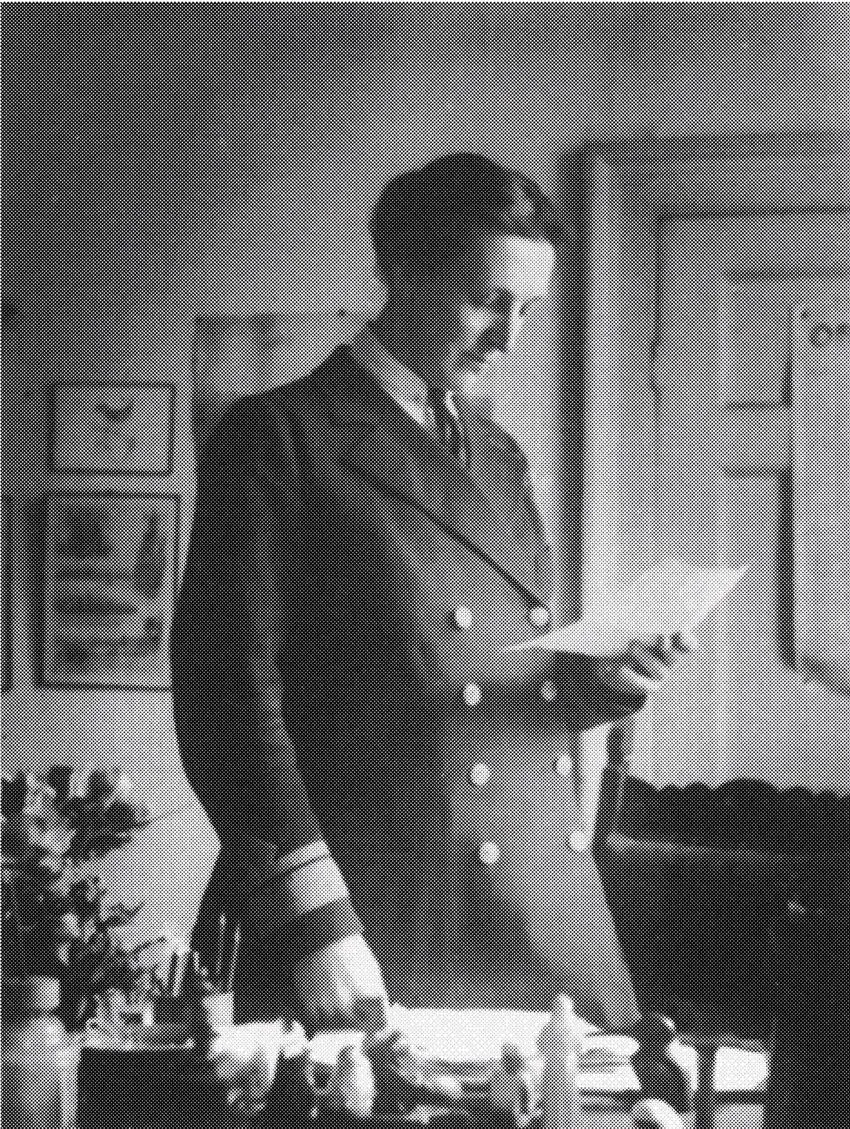
October 1914 saw the first use of British VADs abroad. Katharine Furse, at that time Commandant of the Paddington division, London, left for Boulogne with members from her Division on 19 October, having received orders from the War Office to set up a rest station on the lines of communication on the Western Front (BRCS 10 2/9; BRCS 12 2/2). At first it was not clear whether these upper-class first-aiders would be wanted, but with the first battle of Ypres (October 1914) they were rapidly called upon to help in improvised wards crammed with stretchers – until the trained nurses arrived, at which point the VADs were dispensed with. Following this, they improvised a highly successful rest station, converting railway trucks into storehouses, packing-cases into furniture and condensed milk cans into mugs. Furse records the dismissive attitude with which they were greeted: ‘women were such a nuisance in war time and who were these odd women in uniform, anyway?’ (Furse 1940: 309). But the success of the rest station, which was to become one of many on the lines of communication, providing drinks and cigarettes for the fighting forces, signalled progress. In January 1915 Furse was recalled to England to found the Central VAD Head Quarters Office at Devonshire House, London. Meanwhile, in France, it was under the supervision of Rachel Crowdy that the network of rest stations, hospitals and hostels – for the relatives of the sick and dying and for ill or overtired nursing staff – were set up along with canteens for convalescents and clubs for trained nurses. In 1916, the first VAD motor ambulance convoy was established (BRCS 12 2/2).
The organisation, until the war, had been entirely voluntary and dependent on contributions. In 1915, however, the War Office recognised that there were insufficient trained nurses for the military hospitals and suggested supplying VADs as probationary nurses to be paid and housed by the military authorities (BRCS 10 2/9). The terms of service were that a fully qualified member should do one month’s probation in a hospital and if considered suitable should sign a contract for a further six months’ service in the same hospital. An allowance was given for food, quarters, washing and travelling and the pay for the first seven months was at the rate of £20 per annum with increments of £2.10s for every subsequent six months agreed to. While this salary marked an important stage in the state recognition of the VADs’ contribution to the military enterprise, it is worth noting that they were paid less than some servants (at the time a cook earned approximately £30, a parlourmaid £25 and a housemaid £14 (Terry 1988: 21)) and dramatically less than women munitions workers, whose pay was said to vary between £50 and £250 per annum (see Chapter 2). Their rate of pay, in fact, was approximately the same as that of privates in the army, who also received a separation allowance for their families.6 This poor remuneration was to become a powerful grievance for some who resented the implication that, where ‘ladies’ were concerned, patriotism should be its own reward.
Recruitment, however, soared. The age-limit (23–42 for foreign service, 21–48 for home service) inevitably led to attempts at deception from enthusiastic prospective candidates, as was indeed the case with males wanting to join the army. The 20-year-old Vera Brittain was not the only one to be delighted at being taken for 23 by a severe-looking Matron (cf. Brittain [1933] 1979: 180). Soon after war broke out as many as 600 members per week were appointed to military hospitals a...
Table of contents
- Cover
- Half Title
- Title Page
- Copyright Page
- Dedication
- Table of Contents
- List of Plates
- Acknowledgements
- Introduction
- 1 Nuns and Lovers: Voluntary Aid Detachment nurses in the First World War
- 2 Country and Town, Agriculture and Munitions: The proper lady and the woman worker
- 3 Women at Home: Romance or realism?
- 4 Reactionary or Revolutionary? The maternal pacifist
- 5 Woolf, War and Writing: New words, new methods
- Conclusion
- Notes
- Bibliography
- Index
Trusted by 375,005 students
Access to over 1.5 million titles for a fair monthly price.
Study more efficiently using our study tools.
Frequently asked questions
Yes, you can cancel anytime from the Subscription tab in your account settings on the Perlego website. Your subscription will stay active until the end of your current billing period. Learn how to cancel your subscription
No, books cannot be downloaded as external files, such as PDFs, for use outside of Perlego. However, you can download books within the Perlego app for offline reading on mobile or tablet. Learn how to download books offline
Perlego offers two plans: Essential and Complete
- Essential is ideal for learners and professionals who enjoy exploring a wide range of subjects. Access the Essential Library with 800,000+ trusted titles and best-sellers across business, personal growth, and the humanities. Includes unlimited reading time and Standard Read Aloud voice.
- Complete: Perfect for advanced learners and researchers needing full, unrestricted access. Unlock 1.5M+ books across hundreds of subjects, including academic and specialized titles. The Complete Plan also includes advanced features like Premium Read Aloud and Research Assistant.
We are an online textbook subscription service, where you can get access to an entire online library for less than the price of a single book per month. With over 1.5 million books across 990+ topics, we’ve got you covered! Learn about our mission
Look out for the read-aloud symbol on your next book to see if you can listen to it. The read-aloud tool reads text aloud for you, highlighting the text as it is being read. You can pause it, speed it up and slow it down. Learn more about Read Aloud
Yes! You can use the Perlego app on both iOS and Android devices to read anytime, anywhere — even offline. Perfect for commutes or when you’re on the go.
Please note we cannot support devices running on iOS 13 and Android 7 or earlier. Learn more about using the app
Please note we cannot support devices running on iOS 13 and Android 7 or earlier. Learn more about using the app
Yes, you can access Fighting Forces, Writing Women by Sharon Ouditt in PDF and/or ePUB format, as well as other popular books in History & Women in History. We have over 1.5 million books available in our catalogue for you to explore.