- 286 pages
- English
- ePUB (mobile friendly)
- Available on iOS & Android
eBook - ePub
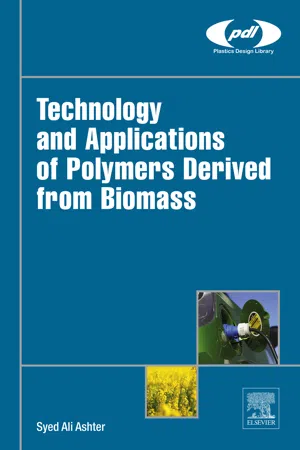
Technology and Applications of Polymers Derived from Biomass
About this book
Technology and Applications of Polymers Derived from Biomass explores the range of different possible routes from biomass to polymeric materials, including the value and limitations of using biomass in material applications and a comparison of petrochemical-derived polymers and bio-based polymers. The book discusses biomass sources, types, chemistry and handling concerns. It covers the manufacture of industrial chemicals from biomass and the derivation of monomers and polymers from biomass. It also details the processing and applications of biomass-derived polymers to enable materials scientists and engineers realize the potential of biomass as a sustainable source of polymers, including plastics and elastomers.
The book is a one-stop-shop reference—giving students a basic understanding of the technology and how the material can be applied to industrial processes they will face in the workforce, and giving materials engineers and product designers the information they need to make more informed material selection decisions.
- Provides fundamental understanding of an increasingly important approach to sourcing polymeric materials
- Includes actionable, relevant information to enable materials engineers and product designers consider biomass-derived polymers in the products they are developing
- Discusses the environmental impact of biomass conversion to help readers improve the sustainability of their operations
- Compares petrochemical-derived polymers with bio-based polymers
Information
1
Introduction
Abstract
With the increasing in cost of fossil fuels and concern over the environmental impact, energy generated from biomass is gaining popularity and is predicted for a strong future in renewable energy production. Biomass is a renewable and sustainable source of energy developed from mixture of organic materials. It consists of all the earth's living plants and animals as well as their remains. These organic materials are composed of hydrogen, oxygen, and nitrogen. When biomass is burned, it is converted into energy in the form of heat or electricity.
Developing countries like United States and Canada have an abundance resource available and suitable land for growing energy crops. This opens an opportunity for bioenergy to positively impact global warming and economic growth. Though biomass have numerous advantages over fossil fuel, it has limitation toward its commercialization.
In this chapter, discussion on ways to convert biomass into energy, applications of biomass, global biomass markets, current market trends, and limitations toward biomass commercialization will be covered.
Keywords
Biomass; Bioenergy; Gasification; Bio-oil; Bio-char; Anaerobic digestion; Anaerobic fermentation
1.1 Background
Biomass is a renewable and sustainable source of energy developed from mixture of organic materials [1]. This mixture of organic molecules contains hydrogen, oxygen, and nitrogen. Biomass is primarily categorized into five categories as shown in Fig. 1 [2–7]. They are as follows:

1. Wood
2. Energy crops
3. Agricultural residues
4. Food waste
5. Industrial waste and coproducts
1.2 Applications of biomass
Biomass can be as a replacement for products that can be made from fossil fuels. For example, fuels and power production. Overall considering the scope of the applications of biomass, they can be divided in two types: (1) energy and transportation, and (2) kind of products.
1.2.1 Energy and transportation
The main biomass feedstocks for power are paper mill residue, lumber mill scrap, and municipal waste. Many traditional food crops, such as corn, sugar, and vegetable oils, are also some of the most commonly used energy feedstocks. Furthermore, agricultural land may be shifted from producing food to the production of dedicated energy crops.
Fig. 2 shows commonly used biomass sources for energy and transportation applications [8]. Typically, there are six main sources of biomass:

1. Agricultural crops and residues
2. Sewage waste
3. Municipal solid waste
4. Animal residues
5. Industrial residues
6. Forestry crops and residues
These feedstocks are used to generate three different types of biofuels:
1. Solid biofuels—wood pellets, wood chips, briquettes, and firewood
2. Liquid biofuels—biodiesel, bioethanol, and advanced biofuels
3. Gaseous biofuels—biogas, biomethane, and syngas
1.2.2 Products
For many industrial products made from fossil-based fuel, biomass can be a renewable substitute. Some of the examples include bio-based foams, plastics, fertilizers, lubricants, and industrial chemicals (Fig. 3) [9–13].

1.3 Understanding global markets
Biomass has major benefits over other renewable resources such as solar, wind, and hydropower because of its extensive natural resources. It provides practical solution to fossil-based fuels, especially in (a) wood bioenergy market, (b) power sector, and (c)...
Table of contents
- Cover image
- Title page
- Table of Contents
- Copyright
- Dedication
- Preface
- Acknowledgment
- 1: Introduction
- 2: Biomass and its sources
- 3: Chemistry of biomass
- 4: Chemistry of cellulosic polymers
- 5: Biomass conversion approaches
- 6: Manufacturing Industrial Chemicals from Biomass
- 7: Derivation of monomers from biomass
- 8: Polymerization of biomass-based-monomers
- 9: Direct derivatives of polymers from biomass
- 10: Processing of biomass-derived polymers
- 11: Material and energy balance for conversion of biomass materials
- 12: Applications of biomass-derived polymers and chemicals
- 13: Environmental impact of biomass conversion
- Index
Trusted by 375,005 students
Access to over 1.5 million titles for a fair monthly price.
Study more efficiently using our study tools.
Frequently asked questions
Yes, you can cancel anytime from the Subscription tab in your account settings on the Perlego website. Your subscription will stay active until the end of your current billing period. Learn how to cancel your subscription
No, books cannot be downloaded as external files, such as PDFs, for use outside of Perlego. However, you can download books within the Perlego app for offline reading on mobile or tablet. Learn how to download books offline
Perlego offers two plans: Essential and Complete
- Essential is ideal for learners and professionals who enjoy exploring a wide range of subjects. Access the Essential Library with 800,000+ trusted titles and best-sellers across business, personal growth, and the humanities. Includes unlimited reading time and Standard Read Aloud voice.
- Complete: Perfect for advanced learners and researchers needing full, unrestricted access. Unlock 1.5M+ books across hundreds of subjects, including academic and specialized titles. The Complete Plan also includes advanced features like Premium Read Aloud and Research Assistant.
We are an online textbook subscription service, where you can get access to an entire online library for less than the price of a single book per month. With over 1.5 million books across 990+ topics, we’ve got you covered! Learn about our mission
Look out for the read-aloud symbol on your next book to see if you can listen to it. The read-aloud tool reads text aloud for you, highlighting the text as it is being read. You can pause it, speed it up and slow it down. Learn more about Read Aloud
Yes! You can use the Perlego app on both iOS and Android devices to read anytime, anywhere — even offline. Perfect for commutes or when you’re on the go.
Please note we cannot support devices running on iOS 13 and Android 7 or earlier. Learn more about using the app
Please note we cannot support devices running on iOS 13 and Android 7 or earlier. Learn more about using the app
Yes, you can access Technology and Applications of Polymers Derived from Biomass by Syed Ali Ashter in PDF and/or ePUB format, as well as other popular books in Technology & Engineering & Engineering General. We have over 1.5 million books available in our catalogue for you to explore.