eBook - ePub
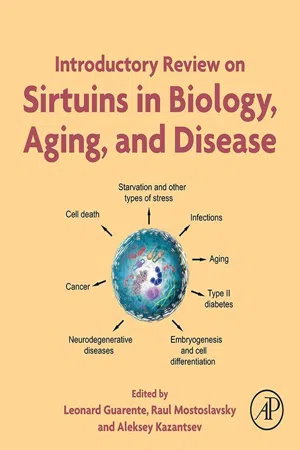
Introductory Review on Sirtuins in Biology, Aging, and Disease
- 220 pages
- English
- ePUB (mobile friendly)
- Available on iOS & Android
eBook - ePub
Introductory Review on Sirtuins in Biology, Aging, and Disease
About this book
Introductory Review on Sirtuins in Biology and Disease provides key insights for scientists and advanced students who need to understand sirtuins and the current research in this field. This book is ideal for pharmaceutical companies as they develop novel targets using sirtuins for metabolic diseases, cancer and neurodegenerative illnesses. Sirtuins are a diverse family of proteins, with several members in mammals. The functional diversity of sirtuins is rather broad, and they have been implicated in various central biological processes. Thus, they are also highly relevant in the context of various human diseases, from cancer to neurodegeneration.
- Covers both the general and specific aspects of sirtuin proteins and their role in biology, aging and disease
- Presents a top quality collection of leading experts who contribute on a wide range of sirtuin-related topics
- Ideal resource for pharmaceutical companies as they develop novel targets using sirtuins for metabolic diseases, cancer and neurodegenerative illnesses
Information
Chapter 1
Sirtuins, NAD+, Aging, and Disease
A Retrospective and Prospective Overview
Leonard Guarente, MIT, Cambridge, MA, United States
Abstract
Sirtuins and NAD+ are key mediators of health maintenance. This article traces the historical path linking sirtuins and NAD+ to diseases of aging, and summarizes current advances in the field.
Keywords
Sirtuins; NAD+; historical development of the field; health maintenance
Acknowledgments
I wish to thank all my colleagues in the sirtuins/NAD+ field over the years, including students, postdocs, and colleagues in other labs for making this a most exciting and gratifying journey. Work in my lab has been funded by the NIH and by the Glenn Foundation for Medical Research.
Over the past 20 years, sirtuins have emerged as a major pathway regulating aging and age-related diseases in organisms ranging from yeast to mammals. When we started working on aging of yeast mother cells in 1991, our primary goals were to determine if the earlier claims that yeast mother cells really have a fixed life span (i.e., their cumulative number of replicative divisions to give daughter cells) were correct, and assuming this were the case, to try to identify what determined that life span. I personally was worried that it might not be possible to identify genes that regulated the process, because aging might be hopelessly complicated. I would have considered it a great success if we could identify any gene that regulated yeast aging, and assumed our findings would not have relevance for higher organisms. After years of slogging through genetic screens, students Brian Kennedy and Nic Austriaco identified a long-lived mutant that ultimately traced a path to sirtuins and indicated a link between aging, diet, metabolism, and epigenetics, as discussed below.
SIR2, SIR3, and SIR4 were first identified as yeast proteins that determined epigenetic silencing at repeated DNA sequences (telomeres, extra copies of mating type loci, and ribosomal DNA or rDNA). The SIR2/3/4 complex is required to silence at telomeres and extra mating type copies, while SIR2, but not SIR3 or SIR4, is required for silencing at the rDNA. SIR2 turned out to be universally conserved in all organisms ranging from bacteria to mammals, while SIR3 and SIR4 are found only in fungi. SIR2 homologs across all organisms have come to be called sirtuins. In mammals there are seven sirtuins termed SIRT1–7, where the T stands for “two.” These seven proteins are not redundant, because they are found in different cellular compartments and display different tissue distributions. SIRT1, SIRT6, and SIRT7 are present in the nucleus, SIRT 3, SIRT4, and SIRT5 reside in the mitochondria (although encoded by nuclear genes), and SIRT2 is cytoplasmic, but has access to nuclear proteins during mitosis. SIRT1 has the broadest tissue expression pattern of all seven sirtuin genes, and SIRT1 knockout mice have the strongest phenotype.
We originally obtained several different yeast mutants that were long-lived, but were most intrigued by one of them because it caused sterility. This interesting mutant turned out to harbor a gain-of-function mutation in SIR4 that eliminated silencing at telomeres and mating type loci (thereby causing sterility), but reinforced silencing at the 150 or so tandem copies of ribosomal DNA or rDNA repeats on chromosome 12. This was because in this mutant the SIR2/3/4 complex was no longer tethered at telomeres and mating type loci and all of the cell’s SIR2/3/4 was redirected to the rDNA. Silencing at these repeated loci was known to be important to repress recombination, an event which would result in genome instability at that locus and loss of rDNA genes. This finding suggested that increasing silencing at the rDNA beyond that of wildtype cells in the SIR4 mutant is what increased their life span. Since only SIR2 (and not SIR3 or SIR4) was required for normal silencing at the rDNA, we reasoned that simply increasing SIR2 levels in cells, e.g., by inserting into yeast a second copy of the gene, would also increase rDNA silencing and extend the life span. Indeed, elevating SIR2 activity alone increased the life span of yeast mother cells, while knocking out SIR2 had the opposite effect.
A further analysis of silencing in the rDNA by postdoc David Sinclair led us to an understanding of an important cause of aging, which limited the life span of yeast mother cells. Recombination in the nine kilobase units of repeated rDNA could led to formation of rDNA circles, which would replicate each cell division along with the resident chromosomes of the cell. Remarkably, we found that the rDNA circles stayed exclusively confined to mother cells at cell division, rendering all of the daughter cells pristine and capable of enjoying a full life span. Therefore, if a mother cell sustained a recombination event at say generation five, in 10 generations, the copy number of rDNA circles in that cell would rise to 1000 in 10 generations and in 20 generations to 1,000,000. The burden imposed by all of these extra rDNA copies (titration of replication or transcription factors, unbalancing the RNA and protein subunits of the ribosome, etc.) would then lead to senescence of the mother cell. For a while, we thought that this molecular mechanism might be a universal feature of aging. Disappointingly, this particular mechanism did not seem to apply to higher organisms, since we did not observe the accumulation of rDNA in circular or any other form in aging mammalian tissue.
These findings reinforced my earlier view that yeast aging mechanisms and, in particular, the key role played by SIR2 in yeast aging would be idiosyncratic for that organism. However, contrary to these expectations, SIR2 orthologs were subsequently shown to extend the life span in Caenorhabditis elegans, Drosophila, mice, and perhaps humans. In mice, increased expression of SIRT1 in brain and SIRT6 globally extend the life span, as do compounds that activate SIRT1 or NAD+ precursors (see below). It should be noted that there was a brief period of panic issuing from a highly visible 2011 report that sirtuins had nothing to do with aging. This erroneous report had the benefit of stimulating another round of studies on sirtuins and aging in yeast, C. elegans, Drosophila, and mice that resoundingly validated the earlier claims linking sirtuins and aging. Obviously, the mechanisms by which SIR2 orthologs counter aging in these other organisms must have evolved, which is now understandable with the knowledge that sirtuins are actually enzymes that alter protein modifications, and as such they should be able to evolve to have new protein substrates as dictated by evolutionary pressures.
Thus, one of the most important features of sirtuins is their unique biochemical activity, NAD+-dependent deacylation of histones and other proteins. SIRT4 and SIRT6 can also catalyze ADP-ribosylation of proteins using NAD+ as cosubstrate. SIRT5 actually removes longer-chain acyl groups from proteins, such as succinyl or malonyl groups, while SIRT6 can also remove still longer chains, such as myristyl groups. The finding that sirtuins are NAD+-dependent deacetylases was indeed a fortuitous one. Postdoc Shin Imai and I searched for years for a robust biochemical activity for the purified yeast SIR2 and mammalian SIRT1 proteins in vitro. Since deacetylation at certain residues of histones H3 and H4 was associated with silencing, labs were searching for a deacetylase activity for SIR2. Indeed, Jim Broach’s lab showed that overexpression of SIR2 in yeast cells led to a global deacetylation of H3 and H4. However, all attempts to demonstrate such an activity with purified SIR2 in vitro were not successful. We were intrigued by the demonstration by Roy Fry that SIR2 could transfer ADP ribose (albeit feebly) from NAD+ to BSA. We set upon studying this reaction using histone substrates, and confirmed Fry’s feeble ADP-ribose transfer. But in the course of conducting this work, we stumbled into the true activity of SIR2 and SIRT1—namely NAD+-dependent protein deacetylation—which contrary to the feeble transfer of ADP-ribose, occurred in a robust fashion. In this unique enzymatic reaction, the acetyl group is removed from lysines in the amino terminal tails of H3 and H4, and the NAD+ is concomitantly cleaved into O-acetyl ADP-ribose and nicotinamide. The reason nobody had found this activity previously, is that no sane person would have considered including NAD+ in the reaction. To wit, deacetylation is an energetically downhill reaction, and, moreover, a different class of protein deacetylases, the HDACs, had been shown to have no cofactor requirements. So there was no earthly reason for us to associate NAD+ with protein deacetylation, and indeed we actually thought we were studying ADP ribosylation when we discovered this unusual deacetylase activity.
The deacetylation of histones by sirtuins renders these proteins key mediators of epigenetics in yeast and higher organisms. The implications of this feature of sirtuins has probably not yet been fully fleshed out, in my opinion. For example, one of the defining traits of epigenetics, is that an epigenetic state, e.g., deacetylated histones and silenced genes, can be long-lived and may even be heritable. High fat diets lead to obesity in pregnant mothers and can result in poor glucose and lipid homeostasis and poor health in progeny. Since sirtuins promote metabolic health (see below), might this be due to down regulation of sirtuins in the mother leading to epigenetic changes that persist in the offspring? Might it be preventable by interventions that leverage what we have learned about sirtuin biology?
Beyond histones, mammalian nuclear sirtuins SIRT1, SIRT6, and SIRT7 deacetylate scores of other protein substrates to coordinate numerous physiological pathways that mediate mitochondrial function, DNA repair, cell survival, stress tolerance, metabolic strategies, and more. The cytosolic SIRT2 is important in numerous processes, including controlling the cell cycle via deacetylation of proteins during mitosis. The mitochondrial resident sirtuins SIRT3, SIRT4, and SIRT5 play crucial roles in driving catabolic processes, such as fatty acid oxidation, and also maintain optimal structural and functional integrity in that organelle. The role of SIRT3 is especially telling in determining the acetylation levels of proteins in the mitochondria, since it is the only HDAC there and there are no known histone acetyl transferases. Indeed, hundreds of mitochondrial proteins are acetylated, and SIRT3 can deacetylate a large fraction of these proteins. This may be an especially important buffer during calorie restriction (CR), which leads to a large increase in the concentration of mitochondrial acetyl-CoA, which drives the acetylation of mitochondrial proteins by mass action. The nuclear SIRT1 is also critical in mitochondrial biology, since it deacetylates and upregulates PGC-1-α. The latter protein is a coactivator that drives mitochondrial biogenesis, ATP production, and quality control. Meanwhile, SIRT6 downregulates glycolysis, the alternative cellular pathway that produces ATP. Therefore, it seems likely that the combined action of nuclear and mitochondrial sirtuins, which is focused on mitochondria, contributes to the regulation of aging and the diseases that occur later in life. As an example, numerous genetic diseases with features of premature aging are due to DNA repair defects in the nucleus. Remarkably, much of the pathogenesis in mouse models of these diseases appears to be due to mitochondrial deficits resulting from NAD+ depletion and sirtuin inactivation. NAD+ becomes depleted in these animals due to the chronic activation of poly ADP-ribose polymerases or PARPs, which consume NAD+ in response to DNA damage by decorating the damage site with polyADP-ribose. Indeed, these mice are partially rescued by dietary treatments that boost NAD+ levels in the animals (see below).
As mentioned above, the NAD+ link to sirtuins is unique in that NAD+ actively participates in the chemistry of deacetylation and is cleaved in each reaction cycle. Since the HDACs do not require any cofactors, one surmises that the NAD+ requirement of sirtuins is playing a regulatory role. It was suggested that this NAD+ requirement may link sirtuins to cellular metabolism, and that they are actively involved in mediating the extension of life span by CR. Previously it was thought by some that CR extended life by a passive mechanism, such as by slowing metabolism. Indeed, sirtuins are activated by a low-calorie diet, in part by elevated levels of NAD+, which makes biological sense because sirtuins drive oxidative mitochondrial electron transport and this mechanism generates much more ATP per molecule of glucose than glycolysis. In support of a key role for sirtuins in CR, knockout mice that lack a sirtuin (e.g., SIRT1 or SIRT3) are defective in responding to many features of CR, and transgenic mice sporting elevated levels of sirtuins (e.g., SIRT1 or SIRT6) show partial overlap with CR phenotypes. How does a mitochondrial strategy of metabolism promote health and long life? It turns out that sirtuin activation not only enhances mitochondrial oxidative metabolism but also induces resistance to oxidative and other stressors, which may help explain the life extension by CR. A good example is SOD2, which is induced at the expression level by the SIRT1/PGC-1-α axis, and is further activated at the enzymatic level by SIRT3-mediated deacetylation.
CR is associated with many health benefits in animals, including resistance to many of the common diseases of aging. If CR works by raising the activities of sirtuins, it follows that other interventions that raise activity of sirtuins should also mediate these benefits, even on a normal diet. In many studies, manipulating sirtuins genetically or pharmacologically (see below) has protective effects in mice against diabetes, cardiovascular disease, cancer, kidney disease, fatty liver, neurodegenerative diseases, proinflammatory diseases, osteoporosis, hearing loss, etc. Many of the chapters in this book will describe studies that show how manipulation of sirtuins can affect specific organ systems, and frame disease areas for this kind of intervention to improve human health. What makes sirtuins particularly suitable as targets in human diseases is not only their proven benefit in preclinical studies, but also the advanced stage of the translational research that has occurred in this space. This area is now discussed below and in greater detail in other chapters of this book.
The finding that SIRT1 was an NAD+-dependent deacetylase opened up the potential for screening for small molecules that could affect its specific activity. We started this approach at Elixir Pharmaceuticals, only to be discouraged by an influential advisor to our venture partner (VP) investors. Soon thereafter, Howich, Sinclair, and colleagues identified molecules of the polyphenol class that would activate SIRT1 in vitro by lowering the km for the binding of the protein substrate. The most famous compound in this category was resveratrol. In vivo studies of resveratrol show health benefits in mice and nonhuman primates, but in humans the results have been disappointing. The problem with this compound is that it is poorly available in people and also subject to oxidation. Another...
Table of contents
- Cover image
- Title page
- Table of Contents
- Copyright
- Dedication
- List of Contributors
- Biographies
- Introduction
- Chapter 1. Sirtuins, NAD+, Aging, and Disease: A Retrospective and Prospective Overview
- Chapter 2. Regulation of Sirtuins by Systemic NAD+ Biosynthesis
- Chapter 3. NAD+ Modulation: Biology and Therapy
- Chapter 4. The Enzymatic Activities of Sirtuins
- Chapter 5. Structural and Mechanistic Insights in Sirtuin Catalysis and Pharmacological Modulation
- Chapter 6. Pharmacological Approaches for Modulating Sirtuins
- Chapter 7. Reactive Acyl-CoA Species and Deacylation by the Mitochondrial Sirtuins
- Chapter 8. Mitochondrial Sirtuins: Coordinating Stress Responses Through Regulation of Mitochondrial Enzyme Networks
- Chapter 9. Multitasking Roles of the Mammalian Deacetylase SIRT6
- Chapter 10. Chromatin and Nuclear Signaling: SIRT7 Function in the Nucleolus and Beyond
- Chapter 11. Mammalian Sirtuins, Cellular Energy Regulation, and Metabolism, and Carcinogenesis
- Chapter 12. Roles for Sirtuins in Cardiovascular Biology
- Chapter 13. Sirtuins in Brain and Neurodegenerative Disease
- Index
Trusted by 375,005 students
Access to over 1.5 million titles for a fair monthly price.
Study more efficiently using our study tools.
Frequently asked questions
Yes, you can cancel anytime from the Subscription tab in your account settings on the Perlego website. Your subscription will stay active until the end of your current billing period. Learn how to cancel your subscription
No, books cannot be downloaded as external files, such as PDFs, for use outside of Perlego. However, you can download books within the Perlego app for offline reading on mobile or tablet. Learn how to download books offline
Perlego offers two plans: Essential and Complete
- Essential is ideal for learners and professionals who enjoy exploring a wide range of subjects. Access the Essential Library with 800,000+ trusted titles and best-sellers across business, personal growth, and the humanities. Includes unlimited reading time and Standard Read Aloud voice.
- Complete: Perfect for advanced learners and researchers needing full, unrestricted access. Unlock 1.5M+ books across hundreds of subjects, including academic and specialized titles. The Complete Plan also includes advanced features like Premium Read Aloud and Research Assistant.
We are an online textbook subscription service, where you can get access to an entire online library for less than the price of a single book per month. With over 1.5 million books across 990+ topics, we’ve got you covered! Learn about our mission
Look out for the read-aloud symbol on your next book to see if you can listen to it. The read-aloud tool reads text aloud for you, highlighting the text as it is being read. You can pause it, speed it up and slow it down. Learn more about Read Aloud
Yes! You can use the Perlego app on both iOS and Android devices to read anytime, anywhere — even offline. Perfect for commutes or when you’re on the go.
Please note we cannot support devices running on iOS 13 and Android 7 or earlier. Learn more about using the app
Please note we cannot support devices running on iOS 13 and Android 7 or earlier. Learn more about using the app
Yes, you can access Introductory Review on Sirtuins in Biology, Aging, and Disease by Leonard Guarente,Raul Mostoslavsky,Aleksey Kazantsev in PDF and/or ePUB format, as well as other popular books in Biological Sciences & Genetics & Genomics. We have over 1.5 million books available in our catalogue for you to explore.