- 488 pages
- English
- ePUB (mobile friendly)
- Available on iOS & Android
eBook - ePub
Lipid Oxidation
About this book
In this second edition, Edwin Frankel has updated and extended his now well-known book Lipid oxidation which has come to be regarded as the standard work on the subject since the publication of the first edition seven years previously. His main objective is to develop the background necessary for a better understanding of what factors should be considered, and what methods and lipid systems should be employed, to achieve suitable evaluation and control of lipid oxidation in complex foods and biological systems.
The oxidation of unsaturated fatty acids is one of the most fundamental reactions in lipid chemistry. When unsaturated lipids are exposed to air, the complex, volatile oxidation compounds that are formed cause rancidity. This decreases the quality of foods that contain natural lipid components as well as foods in which oils are used as ingredients. Furthermore, products of lipid oxidation have been implicated in many vital biological reactions, and evidence has accumulated to show that free radicals and reactive oxygen species participate in tissue injuries and in degenerative disease.
Although there have been many significant advances in this challenging field, many important problems remain unsolved. This second edition of Lipid oxidation follows the example of the first edition in offering a summary of the many unsolved problems that need further research. The need to understand lipid oxidation is greater than ever with the increased interest in long-chain polyunsaturated fatty acids, the reformulation of oils to avoid hydrogenation and trans fatty acids, and the enormous attention given to natural phenolic antioxidants, including flavonoids and other phytochemicals.
Information
Chapter 1
Free radical oxidation
Publisher Summary
Autoxidation is the direct reaction of molecular oxygen with organic compounds under mild conditions. Oxygen has a special nature in behaving as a biradical by having two unpaired electrons (‘O–O’) in the ground state and is said to be in a triplet state. The oxidation of lipids proceeds like that of many other organic compounds by a free radical chain mechanism, which can be described in terms of initiation, propagation, and termination processes. These processes often consist of a complex series of sequential and overlapping reactions. Many of the classical mechanistic concepts of lipid oxidation were formulated on the basis of kinetic studies. Later developments in support of the general free radical mechanism of oxidation were based on structural studies of the primary hydroperoxide products. To simplify the kinetics of linoleate oxidation, the reactions were studied at early stages of oxidation, at low levels of conversion, at lower temperatures, and in the presence of an appropriate initiator. Under these conditions, the propagation reactions producing hydroperoxides in high yields are emphasized and the decomposition of hydroperoxides is minimized or considered insignificant. However, the kinetics becomes much more complex when autoxidation is carried out to high conversions, or at elevated temperatures, or in the presence of metals.
A Mechanism
Autoxidation is the direct reaction of molecular oxygen with organic compounds under mild conditions. Oxygen has a special nature in behaving as a biradical by having two unpaired electrons (·O–O·) in the ground state and is said to be in a triplet state. The oxidation of lipids proceeds like that of many other organic compounds by a free radical chain mechanism, which can be described in terms of initiation, propagation, and termination processes. These processes often consist of a complex series of sequential and overlapping reactions.
1 Initiation
In the presence of initiators (I), unsaturated lipids (LH) lose a hydrogen radical (H·) to form lipid free radicals (L·).
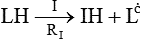
The direct oxidation of unsaturated lipids by triplet oxygen (3O2) is spin forbidden because the lipid ground state of singlet multiplicity has an opposite spin direction from that of oxygen of triplet multiplicity. This spin barrier between lipids and oxygen can be readily overcome in the presence of initiators that can produce radicals by different mechanisms.
(a) thermal dissociation of hydroperoxides (LOOH) present as impurities:

(b) decomposition of hydroperoxides catalysed by ubiquitous redox metals (M) of variable valency:


(c) exposure to light in the presence of a sensitizer such as a ketone (RCOR):

Because the reaction of unsaturated lipids with singlet oxygen (1O2) (Chapter 3) occurs at a significantly greater rate than their reaction with normal triplet oxygen (3O2), the hydroperoxides that are rapidly formed under photosensiti...
Table of contents
- Cover image
- Title page
- Table of Contents
- Also in the Oily Press Lipid Library
- Copyright
- Preface
- Introduction
- Chapter 1: Free radical oxidation
- Chapter 2: Hydroperoxide formation
- Chapter 3: Photooxidation of unsaturated fats
- Chapter 4: Hydroperoxide decomposition
- Chapter 5: Methods to determine extent of oxidation
- Chapter 6: Research methods for lipid oxidation
- Chapter 7: Stability methods
- Chapter 8: Control of oxidation
- Chapter 9: Antioxidants
- Chapter 10: Oxidation in multiphase systems
- Chapter 11: Foods
- Chapter 12: Frying fats
- Chapter 13: Biological systems
- Glossary
- Abbreviations
- Index
Trusted by 375,005 students
Access to over 1.5 million titles for a fair monthly price.
Study more efficiently using our study tools.
Frequently asked questions
Yes, you can cancel anytime from the Subscription tab in your account settings on the Perlego website. Your subscription will stay active until the end of your current billing period. Learn how to cancel your subscription
No, books cannot be downloaded as external files, such as PDFs, for use outside of Perlego. However, you can download books within the Perlego app for offline reading on mobile or tablet. Learn how to download books offline
Perlego offers two plans: Essential and Complete
- Essential is ideal for learners and professionals who enjoy exploring a wide range of subjects. Access the Essential Library with 800,000+ trusted titles and best-sellers across business, personal growth, and the humanities. Includes unlimited reading time and Standard Read Aloud voice.
- Complete: Perfect for advanced learners and researchers needing full, unrestricted access. Unlock 1.5M+ books across hundreds of subjects, including academic and specialized titles. The Complete Plan also includes advanced features like Premium Read Aloud and Research Assistant.
We are an online textbook subscription service, where you can get access to an entire online library for less than the price of a single book per month. With over 1.5 million books across 990+ topics, we’ve got you covered! Learn about our mission
Look out for the read-aloud symbol on your next book to see if you can listen to it. The read-aloud tool reads text aloud for you, highlighting the text as it is being read. You can pause it, speed it up and slow it down. Learn more about Read Aloud
Yes! You can use the Perlego app on both iOS and Android devices to read anytime, anywhere — even offline. Perfect for commutes or when you’re on the go.
Please note we cannot support devices running on iOS 13 and Android 7 or earlier. Learn more about using the app
Please note we cannot support devices running on iOS 13 and Android 7 or earlier. Learn more about using the app
Yes, you can access Lipid Oxidation by Edwin N. Frankel in PDF and/or ePUB format, as well as other popular books in Technology & Engineering & Biochemistry. We have over 1.5 million books available in our catalogue for you to explore.