- 256 pages
- English
- ePUB (mobile friendly)
- Available on iOS & Android
eBook - ePub
Fire Pump Arrangements at Industrial Facilities
About this book
Fire Pump Arrangements at Industrial Facilities, Third Edition delivers a practical reference from an author with a successful professional career in fire protection and loss prevention engineering in the oil and gas industry.
While most regulatory standards are left to interpretation and try to cover multiple industries in one location, this book focuses on the equipment, standards and operations specific to the petroleum industry, covering quality controls, pump drivers and scheduled maintenance and audits so the equipment remains in safety compliance.
Enhanced with new sections on human factors, case studies for modeling fire accidents and a look at recent events that have further shaped the safety and testing of fire pumps, the book provides the engineer and manager with a critical oil and gas resource for every aspect of firewater pumps.
- Remains the go-to reference for loss prevention specialists and fire engineering specific to the oil and gas industry
- Enhanced with new sections on quality audits and new case studies that evaluate operational issues and applications
- Fills in the practical hands-on information gap not covered in the regulatory standards
Information
Chapter One
Historical Applications of Firewater Pumping Systems
Summary
This chapter describes the development of firewater pumps throughout history from ancient hand mechanisms, wind- and water-powered devices, to the modern engine and electrical motor centrifugal pumps. Additional information is provided on the development and provision of water mains, their materials of construction, and provision of fire hydrants. Firewater provisions for offshore facilities are also highlighted.
Keywords
Ancient water pumps; reciprocating hand fire pumps; steam-driven fire pumps; rotary pump; centrifugal pump; municipal water plants; fire mains; offshore facilities
A pump is a device that utilizes energy to raise, transport or compress fluids. The term pump is used for liquid handling devices, whereas a compressor is used when the pressure of a gas is increased. The term “fire engine” was classically referred to any device that was used to extinguish fires. Current English language linguistics refers to fire engines as mobile fire apparatus (i.e., pumpers) while firewater pumping systems are commonly referred to when fixed installations are involved.
Pumping devices have been in use for thousands of years and applied to a variety of uses. Most of the technological improvements made in water pumping systems have occurred within the last hundred years. The version of the pump that is commonly employed today for firewater service, i.e., the centrifugal pump was invented during the industrial revolution of the 1800s and is now almost universally adopted. Prior to this, reciprocating or rotary water pumps were used that were operated by hand, wind, or steam power.
Ancient Water Pumps
Probably the first type of “pump” was used by the ancient Egyptians sometime around 2,000 BC. They used water wheels with buckets to provide for agricultural irrigation. In the third century BC, Ctesibius of Alexandria invented a water pump for fire extinguishment. Apparently, Alexandria had some type of hand operated fire engine, similar to those used in Europe and America of the eighteenth century. Subsequently also around 200 BC, the Greeks invented a reciprocating pump.
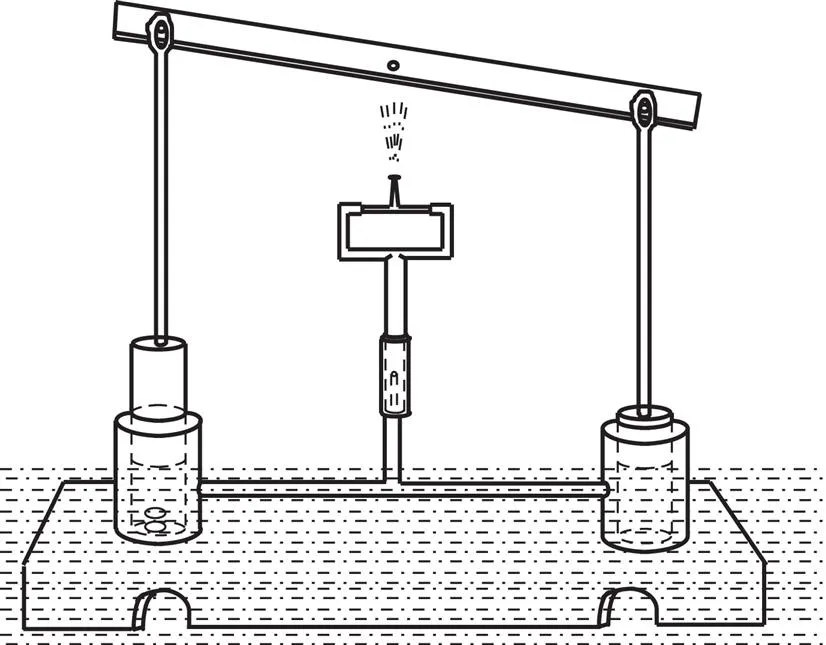
In the first century BC, Heron of Alexandria is credited with producing an improved type of reciprocating fire pump based on the pump by Ctesibius. This pump was essentially a suction lift pump, but modified to a cylinder force pump. The pump had two pistons, each within its own cylinder that had a foot valve. The pistons were connected by a rocker arm that pivoted on a center post. The cylinders were supplied water through a foot valve located at the bottom of the cylinder. By alternatively lifting and forcing the pistons down with the rocker arm, water was lifted and force was applied so that it could be “pushed” out a nozzle connected to the top of the cylinder. The nozzle was mounted so that it could pivot and swivel in any direction. This allowed for water application on a nearby fire incident (see Fig. 1.1). Piston pumps were also reportedly also used as flame throwers that Greek ships used as weapons. Pliny (23–79 AD) also mentions the use of “fire engines” in ancient Rome.
With the fall of the Roman Empire, large cities disappeared in the West and therefore the simultaneous destruction of a large number of valuable buildings by fires did not occur. The development of a fire pump was therefore not in demand. When larger cities again appeared in the Middle Ages, the destruction of a city by conflagration resumed. It was not until the end of the Fifteenth century that the reciprocating fire pump was reinvented. The rapid industrialization of the 17th, 18th, and 19th centuries and the ensuing frequent conflagrations of large cities, found the development of many types and applications of pumps and water distribution systems specifically for firefighting.
Reciprocating Hand and Steam Driven Fire Pumps
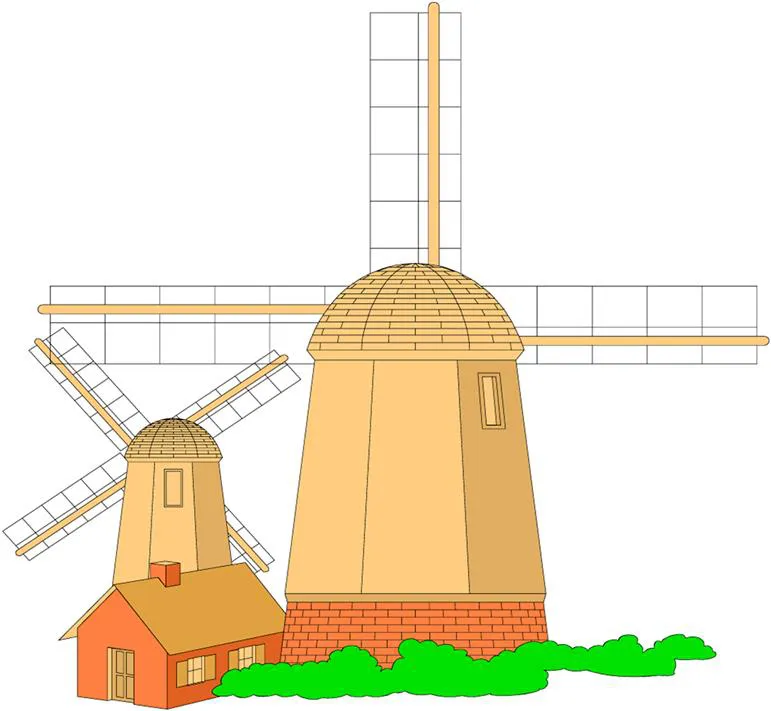
The reciprocating water pump remained in service until late in the industrial revolution. The main reason for this was the lack of a high-power source. Most industrial energy sources up to that time were of approximately 7.5 kW (10 hp) or less capacity (i.e., windmills, waterwheels, animal and human efforts, etc.). Without a sufficient power source to rapidly move water supplies, only limited capacities could be achieved.
The fire pump of this time was commonly mounted on a cart or carriage and brought to the scene of a fire by a team of horses. A tub or reservoir of water was provided on the carriage at the base of the pump. This reservoir was fill by the means of a bucket brigade by the local populace. Later with the provision of street water mains, fire engines connected directly to fire hydrants. This type of mobile fire pump was used and improved upon until the late 1800s. When steam power was developed, it was applied to drive the reciprocating firewater pump in lieu of men.
Reciprocating hand pumps for supplying water to extinguish fires (or pump bilge water/wash the decks) were also an essential part of the fittings available to late 18th-century English ships (i.e., circa 1772). The first fireboats in the United States appeared in 1800 for New York City. They used a hand-operated pump and were imported from England at a cost of, at the time, of $4000 each.
The first fire engine made in America was built for the city of Boston It was made in 1654 by Joseph Jencks, an iron maker of Lynn, Massachusetts, and was operated by relays of men at handles. The procurement of this fire engine was the result of disastrous fire suffered by the city in January of 1653. By 1715 Boston had six fire companies with engines of English manufacture. The steam-pump fire engine was introduced in London in 1829 by John Ericsson and John Braithwait. It was in use in many large cities by the 1850 s. Most steam pumpers were equipped with reciprocating piston pumps, although a few rotary pumps were also used. Some were self-propelled, but most used horses for propulsion, conserving the steam pressure for the pump. The first practical fire engine in America was the “Uncle Joe Ross” invented by Alexander Bonner Latta. It was constructed in 1852 in Cincinnati, Ohio. It weighed approximately four tons and required four horses to pull it and used its own power. It was provided with three wheels and had a square firebox boiler. It could provide up to six streams of water. A single stream of 4.4 cm (1¾ inch) diameter, it had a reach of 73 meters (240 ft.). The first steam fire engine in America was designed and built in 1841 by Paul R. Hodge. It was 4.3 meters (14 ft.) long and weighed 7257 kgs (8 tons). Because of its weight and the sparks from its stack, it was abandoned. A steam fire engine remained in use by the New York Fire Department as late as 1932.
Rotary Pumps
An early centrifugal type rotary pump was made in the early 17th century. It could pump water about 9 m (30 ft.). A more effective rotary pump was made by a Frenchman named Dietz in the late 19th century. A pump similar to Dietz’s was shown at the London Great Exposition of 1851 and received wide acclaim.
Invention of Centrifugal Pump
The true centrifugal pump was not developed until late in the 1600s. Denis Papin (1647–c. 1712), a French physicist and inventor produced a centrifugal pump with straight vanes. In 1851, John G. Appold, who was British engineer and inventor, introduced a curved-vane centrifugal pump. Finally, another British engineer, Osborne Reynolds (1842–1912), built the first turbine or centrifugal pump in 1875. Reynolds is more famous for his study of fluid dynamics, having the “Reynolds Number” named for him in relation to turbulence in water flow analysis.
In general, modern centrifugal water pumps operate at speeds much higher (e.g., 1800 or 3600 rpm) than were easily obtainable before the advent of steam or internal combustion engines and electrical motors. Therefore, centrifugal pumps were not technologically feasible or commercially viable before these devices were invented and readily available.
Modern Fire Pumps
Initially the first industrial firewater pumps were of the wheel and crank reciprocating model that were driven by mill machinery powered by a water wheel or windmill. This arrangement was not a practical advantage, as if the mill waterwheel or windmill stopped; the fire pump would also stop. The English engineer, Thomas Savery (c. 1650–1715) patented the steam pump in 1698, after Denis Papin developed a first crude model in 1690. These first steam driven pumps were initially applied to remove water from coal mines in England but were later adapted to a wide variety of uses including the provision of fire pumps for municipal and industrial applications.
The first steam engine in America was imported from England in 1753. It was used to pump water from a copper mine in New Jersey. In 1795, the first practical steam engine was manufactured in the America by Oliver Evans of Philadelphia, Pennsylvania. He later improved on it in 1799 with a high-pressure steam engine. It was particularly suited to the needs of the “colonial” industries of the time. Steam generation soon replaced or supplemented waterwheels or harnessed animals as an industrial power source.
Up until the later 1800 s, almost all industrial firewater pumping systems were supplied with reciprocating steam driven water pumps. The reciprocating steam engine dominated power generation for stationary and transportation services for more than a century until the development of the steam turbine and the internal combustion engine. These engines were of heavy cast iron construction had a relatively low piston speed (600–1200 ft/m) and low turning speeds (50–500 r/min) but were available up to capacities of 18,642 kW (25,000 hp).
With the provision of automatic sprinklers requiring a more reliable water source, rotary pumps were used that were connected to the water wheel of the mill. When steam supplies were provided to these locations, it replaced the water drive for the pumps and the reciprocating steam pump came to use. As a result, the “Underwriters duplex,” a double acting, direct steam-driven pump was universally provided as the standard fire pump for industry. As the name implies, these pumps were endorsed by the insurance carriers of the time and therefore were quite popular with industrial users.
When practical large capacity electrical motors and internal combustion engines were available in the early 1900 s, the application of the centrifugal pump came into full industrial use. Internal combustion engines or motors were readily applied as the driver of centrifugal fire pumps due to their high speed of rotation and ease of installation.
Today the centrifugal fire water pump is considered the most practical type of pump. It has the compactness, reliability, low maintenance, hydraulic characteristics, and flexibility that have made earlier pump types obsolete for firewater use. Centrifugal firewater pumps are routinely specified for the protection of industrial facilities worldwide. They are found in both onshore and offshore facilities and may even be located underground.
Municipal Water Pumping Plants and Mains
Ancient civilizations generally used water buckets and large syringes to carry water from river or wells to a fire. When no readily available source was available, they probably did what firemen in London did early in the early fourteenth century, they dug a hole in the street and waited for it to fill with ground water.
In 1562, the first municipal pumping waterworks was completed in London, England. A waterwheel pumped river water to a reservoir about 37 m (about 120 ft) above the level of the Thames River. Water was distributed by gravity from the reservoir through lead pipes to buildings in the vicinity. By the late 1700s, steam engines pumped water in most European cities. The first water pumping plant to supply water for municipal purposes in the America was installed in Bethlehem, Pennsylvania in 1755. The water was pumped into a water tower through wooden pipes made from hemlock logs.
Wooden logs had long been in use as a method to supply water since the Middle Ages. Hollow bamboo was also used in the Far East (the Chinese even used bamboo pipe to transmit natural gas to light their capital, Peking, as early as 400 BC). After the decay of the Roman Empire, the Church took over the responsibility to supply water and maintain the old Roman aqueducts in some areas. Because of the tremendous task, the aqueducts fell into disrepair after a few hundred years; however, under the protection of the Church a guild of specialists in water supply had been created. Their technology spread over Europe with the simultaneous spread of the monastic orders. Their system of water pipelines...
Table of contents
- Cover image
- Title page
- Table of Contents
- Copyright
- Dedication
- List of Figures
- List of Tables
- About the Author
- Preface
- Acknowledgments
- Notice
- Introduction
- Chapter One. Historical Applications of Firewater Pumping Systems
- Chapter Two. Philosophy of Protection
- Chapter Three. Firewater Flow Requirements
- Chapter Four. Duration of Firewater Supplies
- Chapter Five. Sources of Firewater Pump Supply
- Chapter Six. Pump Types and Applications
- Chapter Seven. Pump Installation, Piping Arrangements, and Accessories
- Chapter Eight. Materials of Construction
- Chapter Nine. Pump Drivers and Power Transmission
- Chapter Ten. Firewater Pump Controllers
- Chapter Eleven. Reliability
- Chapter Twelve. Classified Area Pump Installations
- Chapter Thirteen. Firewater Pump Acceptance and Flow Testing
- Chapter Fourteen. Human Factors, Quality Control, and Audits
- Appendix A. Selected Major Incidents Affecting the Performance of Firewater Pumping Systems
- Appendix B. Purchase Data/Specification Sheet
- Acronyms
- Glossary
- Bibliography
- Index
Trusted by 375,005 students
Access to over 1.5 million titles for a fair monthly price.
Study more efficiently using our study tools.
Frequently asked questions
Yes, you can cancel anytime from the Subscription tab in your account settings on the Perlego website. Your subscription will stay active until the end of your current billing period. Learn how to cancel your subscription
No, books cannot be downloaded as external files, such as PDFs, for use outside of Perlego. However, you can download books within the Perlego app for offline reading on mobile or tablet. Learn how to download books offline
Perlego offers two plans: Essential and Complete
- Essential is ideal for learners and professionals who enjoy exploring a wide range of subjects. Access the Essential Library with 800,000+ trusted titles and best-sellers across business, personal growth, and the humanities. Includes unlimited reading time and Standard Read Aloud voice.
- Complete: Perfect for advanced learners and researchers needing full, unrestricted access. Unlock 1.5M+ books across hundreds of subjects, including academic and specialized titles. The Complete Plan also includes advanced features like Premium Read Aloud and Research Assistant.
We are an online textbook subscription service, where you can get access to an entire online library for less than the price of a single book per month. With over 1.5 million books across 990+ topics, we’ve got you covered! Learn about our mission
Look out for the read-aloud symbol on your next book to see if you can listen to it. The read-aloud tool reads text aloud for you, highlighting the text as it is being read. You can pause it, speed it up and slow it down. Learn more about Read Aloud
Yes! You can use the Perlego app on both iOS and Android devices to read anytime, anywhere — even offline. Perfect for commutes or when you’re on the go.
Please note we cannot support devices running on iOS 13 and Android 7 or earlier. Learn more about using the app
Please note we cannot support devices running on iOS 13 and Android 7 or earlier. Learn more about using the app
Yes, you can access Fire Pump Arrangements at Industrial Facilities by Dennis P. Nolan in PDF and/or ePUB format, as well as other popular books in Technology & Engineering & Chemical & Biochemical Engineering. We have over 1.5 million books available in our catalogue for you to explore.