- 332 pages
- English
- ePUB (mobile friendly)
- Available on iOS & Android
eBook - ePub
Recent Trends in Cold-Formed Steel Construction
About this book
Recent Trends in Cold-Formed Steel Construction discusses advancements in an area that has become an important construction material for buildings. The book addresses cutting-edge new technologies and design methods using cold-formed steel as a main structural material, and provides technical guidance on how to design and build sustainable and energy-efficient cold-formed steel buildings.
Part One of the book introduces the codes, specifications, and design methods for cold-formed steel structures, while Part Two provides computational analysis of cold-formed steel structures. Part Three examines the structural performance of cold-formed steel buildings and reviews the thermal performance, acoustic performance, fire protection, floor vibrations, and blast resistance of these buildings, with a final section reviewing innovation and sustainability in cold-formed steel construction.
- Addresses building sciences issues and provides performance solutions for cold-formed buildings
- Provides guidance for using the next generation design method, computational tools, and technologies
- Edited by an experienced researcher and educator with significant knowledge on new developments in cold-formed steel construction
Information
1
Introduction to recent trends in cold-formed steel construction
L.W. Williams Steel Framing Industry Association Falls Church, VA, United States
Abstract
Cold-formed steel (CFS) as we know it today is one of the newest structural systems employed in residential and nonresidential construction, but in a few short decades it has become one of the most commonly used materials in developed economies around the world. The chapter introduces CFS and discusses its features.
As the use of CFS framing has grown, new technologies and construction methods have been developed to exploit the capabilities and characteristics of this product to the full. These are also reviewed in this chapter.
Keywords
Cold-formed steel; Galvanization; Sawmills; Wall-framing system; Postwar boom; LathCold-formed steel (CFS) as we know it today is one of the newest structural systems used in residential and nonresidential construction, but in a few short decades has grown into one of the most commonly used materials in developed economies around the world. Countries experiencing rapid economic and industrial development, including China (Fig. 1.1), India, and throughout the Middle East, South America, and Africa, are increasingly looking to CFS because it allows builders to erect new homes (Fig 1.2) and offices (Fig. 1.3) in a fraction of the time compared with traditional construction materials.
1.1. The history of cold-formed steel
The use of CFS as a construction material dates back into the 1800s, although in shapes and dimensions that are quite unlike the typical framing members we see today. Corrugated iron makers started using mild steel in the 1890s, and when cold-rolled and hot-dipped galvanized it became an ideal cladding and structural sheathing for a wide range of building types in a variety of conditions and climates around the world.
The transition to the current shapes and applications for steel in construction followed the revolutionary change that occurred when builders recognized that the heavy timber commonly used for building frames could be replaced by smaller closely spaced wood members. This helped reduce the manpower required for assembling the building frame, but also made it possible to maximize the yield from a stand of trees which contributed to lower material costs for frames. Widespread adoption of this technique in the 1880s was further facilitated by the development of hydraulically powered sawmills and manufacturing techniques that could inexpensively produce wood framing and nails.
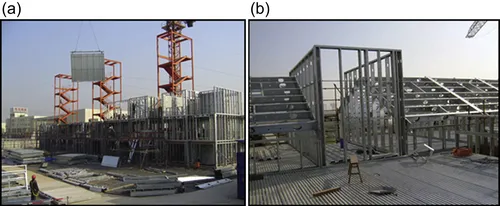
Figure 1.1(a,b) Cold-formed steel construction methods in China (shown here) follow the same general principles as in all other countries around the world.
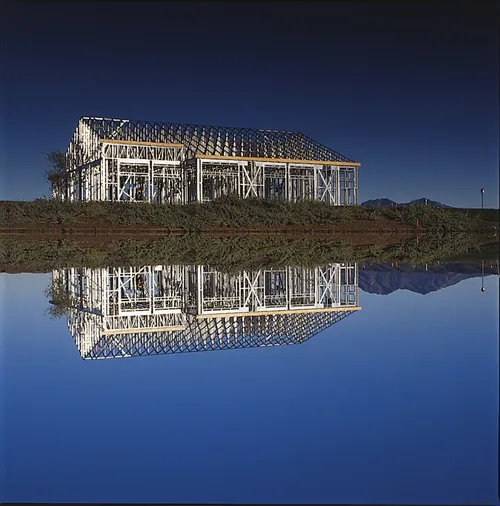
Figure 1.2 Residential.
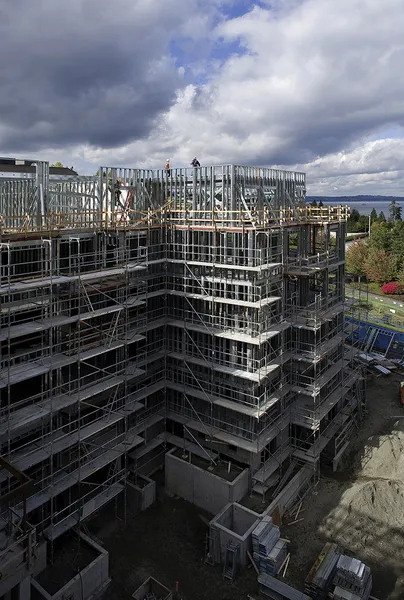
Figure 1.3 Nonresidential. Steel Framing Industry Association. cfsteel.org.
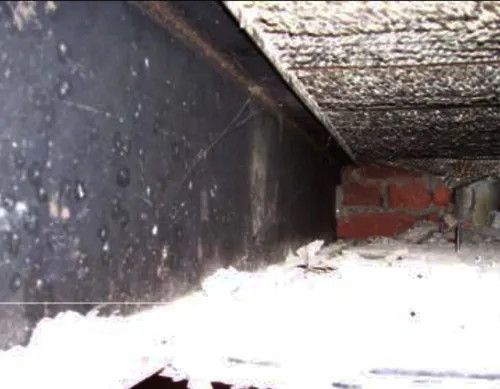
Figure 1.4 Virginia Baptist Hospital.
A recognizable form of CFS framing appeared in the early 20th century, most likely to mimic the dimensioned wood studs that had become the common construction method for shelter. While there are a few vague claims as to who built the first structure with CFS—an architect in Berlin… a house builder in upstate New York… an apartment complex in France—it appears that the first documented use of CFS as a building material is the Virginia Baptist Hospital (Fig. 1.4) built around 1925 in Lynchburg, Virginia. The walls were load-bearing masonry, with a floor system framed with double back-to-back CFS lipped channels. A site observation during a recent renovation confirmed that these joists from the “roaring twenties” are still supporting loads.
CFS finally made a grand debut in 1933 at the Chicago Century of Progress Exposition (World's Fair). Here the “home of the future” exhibit area featured three homes that either made extensive use of cold-formed shapers or were completely framed with steel: the General Houses home, the Armco-Ferro house (Fig. 1.5), and the Good Housekeeping/Stran-steel house (Fig. 1.6). CFS materials were also used as a nonstructural material in the Hall of Science. This new material was also touted in the official program of the World's Fair: “the genius of man has provided factory-made parts, wall materials pre-fabricated in shops, steel frames and clips and screws for quick assembly, and new compositions, all to permit the building of staunch structures…”
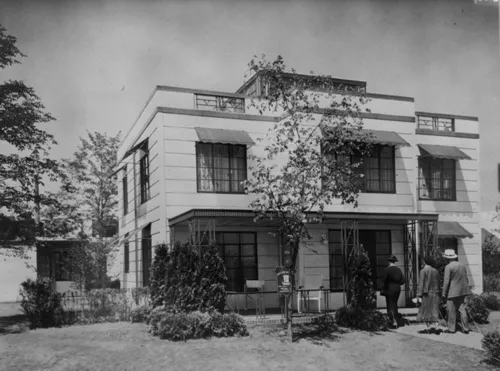
Figure 1.5 Armco-Ferro house.
Sadly, this enthusiasm for steel-framed homes never translated into new demand from the residential market. The primary reason was that costs were much hig...
Table of contents
- Cover image
- Title page
- Table of Contents
- Related titles
- Copyright
- List of contributors
- Woodhead Publishing Series in Civil and Structural Engineering
- Preface
- 1. Introduction to recent trends in cold-formed steel construction
- Part One. Codes, specifications and design methods for cold-formed steel structures
- Part Two. Computational analysis of cold-formed steel structures
- Part Three. The structural performance of cold-formed steel buildings
- Part Four. Innovation and sustainability in cold-formed steel construction
- Index
Trusted by 375,005 students
Access to over 1.5 million titles for a fair monthly price.
Study more efficiently using our study tools.
Frequently asked questions
Yes, you can cancel anytime from the Subscription tab in your account settings on the Perlego website. Your subscription will stay active until the end of your current billing period. Learn how to cancel your subscription
No, books cannot be downloaded as external files, such as PDFs, for use outside of Perlego. However, you can download books within the Perlego app for offline reading on mobile or tablet. Learn how to download books offline
Perlego offers two plans: Essential and Complete
- Essential is ideal for learners and professionals who enjoy exploring a wide range of subjects. Access the Essential Library with 800,000+ trusted titles and best-sellers across business, personal growth, and the humanities. Includes unlimited reading time and Standard Read Aloud voice.
- Complete: Perfect for advanced learners and researchers needing full, unrestricted access. Unlock 1.5M+ books across hundreds of subjects, including academic and specialized titles. The Complete Plan also includes advanced features like Premium Read Aloud and Research Assistant.
We are an online textbook subscription service, where you can get access to an entire online library for less than the price of a single book per month. With over 1.5 million books across 990+ topics, we’ve got you covered! Learn about our mission
Look out for the read-aloud symbol on your next book to see if you can listen to it. The read-aloud tool reads text aloud for you, highlighting the text as it is being read. You can pause it, speed it up and slow it down. Learn more about Read Aloud
Yes! You can use the Perlego app on both iOS and Android devices to read anytime, anywhere — even offline. Perfect for commutes or when you’re on the go.
Please note we cannot support devices running on iOS 13 and Android 7 or earlier. Learn more about using the app
Please note we cannot support devices running on iOS 13 and Android 7 or earlier. Learn more about using the app
Yes, you can access Recent Trends in Cold-Formed Steel Construction by Cheng Yu in PDF and/or ePUB format, as well as other popular books in Technology & Engineering & Architecture Methods & Materials. We have over 1.5 million books available in our catalogue for you to explore.