
- 124 pages
- English
- ePUB (mobile friendly)
- Available on iOS & Android
eBook - ePub
Diversity and the Effective Corporate Board
About this book
The book discusses the various aspects of diversity of corporate boards in terms of gender, age, nationality, tenure, education, experience and personalities. It enumerates the need for such diversity in each category and related concerns. Statistics from around the world support the authors' claims. The nine chapters in this short book have not been previously published.
- Explains the dimensions of board diversity and ways to use them to increase effectiveness
- Supports its findings with statistics from around the world
- Relevant for researchers and professionals working in corporate governance and corporate finance
Information
Chapter 1
Diversity—Toward an Effective Board
“Diversity is the art of thinking independently together”
—Malcolm Stevenson Forbes, Publisher of Forbes magazine
1.1 Corporate Boards
1.2 Board Diversity—A Must for Effective Board Performance
1.3 Rationale for Board Diversity
1.3.1 Rationale 1: Innovation and Creative Problem Solving
1.3.2 Rationale 2: Acquiring Talent and Employee Relationships
1.3.3 Rationale 3: Understanding the Business Marketplace
1.3.4 Rationale 4: Access to Resources and Networks
1.3.5 Rationale 5: Reputation Enhancer
1.4 Constraints of Board Diversity
1.4.1 Constraint 1: Group Conflict
1.4.2 Constraint 2: Limited Talent
1.5 Types of Diversity
1.5.1 Observable Diversity
1.5.2 Nonobservable Diversity
1.5.3 Personality Diversity
References
1.1 Corporate Boards
A board of directors is a group of persons elected or appointed by the shareholders to oversee the activities of a company. They are entrusted with the overall direction of the enterprise. The board’s powers and duties are determined by corporate laws and the bylaws of the organization.
Does the board actually run the business? The company is owned by shareholders, who elect the board of directors to act as trustees and protect their investment and interests. The board of directors in turn appoints the management team, who have operational responsibility of the organization. The management periodically reports to the board of directors on the functioning of the organization. The board is answerable to the shareholders (see Figure 1.1).
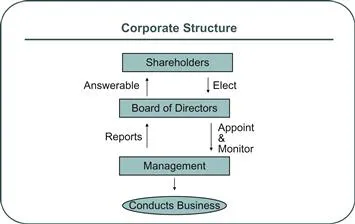
Fig. 1.1 Corporate Structure.
The responsibility of the board is to “manage the organization,” and the responsibility of managers (i.e. the CEO and his team) is to “manage the day-to-day activities or work of the organization” based on guidelines, policies, and objectives laid down by the board.
The objective of a company is long-term growth and sustainability. To this end, as representatives of the shareholders, the purpose of the board it is to oversee the functioning of the organization and ensure that it continues to operate in the best interests of all stakeholders. The roles of a corporate board of directors are three-fold (Figure 1.2) to:
• Govern
• Direct
• Supervise
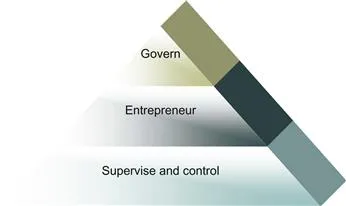
Fig. 1.2 Role of Board.
1. The board is responsible for governance, that is, ensuring the organization operates properly and effectively, and achieves its agreed objectives. Governance involves:
• Setting a framework, system, procedures, and policies that fulfills the objectives of the organization and needs of all stakeholders
• Building the ethos and values that underpin the organization, enabling and ensuring transparent and accountable decision making
• Compliance with the laws and regulatory environment
2. The directors are responsible for giving strategic direction to the organization. This entrepreneurial role involves:
• Maintaining a long-term overview of the organization and all its work
• Making strategic and major decisions toward achieving the organization’s objectives
• Establishing operational policies and providing adequate resources for business activities
• Appointing the CEO and management team and establishing management goals
3. Finally, the directors must constantly monitor the progress of the company toward its objectives as defined by shareholders. Supervising encompasses:
• Establishing control and accountability systems that enable risk to be assessed and managed
• Monitoring use of the firm’s resources or wealth
• Assessing the progress of implementation of the strategy
• Monitoring management activities and achievement of the targets that are set
These roles require directors to hold three perspectives (Figure 1.3).
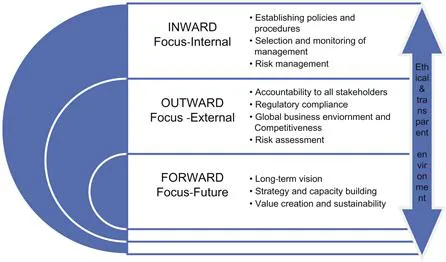
Fig. 1.3 Directors’ Perspectives and Role.
The inward perspective allows directors to create the necessary policies and processes within the organization and choose the right people to run the business smoothly.
The outward dimension requires directors to step outside the organization and take care of the concerns of government, customers, and society at large. By looking at what’s happening around them, the board will be able to appreciate the external environment and its impact on company’s business.
A forward-looking board will be able to build the long-term vision and strategy for the company. Although no one may be able to see the future, it is the role of the board to make certain that the necessary capabilities in terms of people, intellectual property, and processes are in place for the company to face new challenges.
This requires a perceptive, level-headed, and well-balanced board with clairvoyant-like abilities. Only a very vibrant and multiperspective board can successfully carry out such a wide range of responsibilities.
1.2 Board Diversity—A Must for Effective Board Performance
The performance of corporate boards is dependent on directors effectively executing their roles and carrying out their responsibilities. Board dynamism has been a matter of great concern of late. A company’s success and long-term survival is dependent on the board’s decisions. These decisions impact shareholders, employees, customers, and all other stakeholders. Being a top performer in a highly complex and competitive environment is a major challenge.
To achieve this, the board must comprehend the global environment, political and economic conditions in different countries, the industry’s competitiveness and nuances, the market situation, financial and legal aspects, and the latest technology, and it must have the ability to innovate and overcome challenges faced in turbulent times. Thus, the board must possess a wide range of knowledge, expertise, skills, and perspectives. Such “completeness” is possible if the directors come from different backgrounds in terms of education, experience, nationality, and time periods.
Thus, a significant factor influencing board performance is its composition—the type of directors who form the board. There is a growing consensus that diversity in board composition is necessary for effective board performance.
Board diversity refers to the heterogeneous composition of the board in terms of gender, age, race, education, experience, nationality, lifestyle, culture, religion, and many other facets that make each of us unique as individuals.
A well-performing board needs diversity of knowledge, skills, and perspectives. Dr. Yılmaz Argüden [1] rightly commented that if everybody thinks in the same way, what is the need of a board? It may as well be a one-man show. Diversity for its own sake, however, is not an improvement in governance; what matters is the combination of complementary talents and experiences of the members that enables boards to steer the company toward success and long-term stability.
1.3 Rationale for Board Diversity
“The test of a first-rate [board] intelligence is the ability to hold two opposing ideas in mind at the same time, and still retain the ability to function.”
F. Scott Fitzgerald [2]
Great ideas come from differences. Differences can be created by diversity among the directors—demographic (gender, race), multi-disciplinary, and functional, and in terms of roles (visionary, executor). Scholars and regulators have been advocating board diversity as leading to enhanced board effectiveness, thereby improving corporate success. Heterogeneous boards with dissimilar opinions and approaches foster critical thinking and creative problem solving to effect better decision making, allow active monitoring, and boost strategic direction—all the components essential for corporate success.
1.3.1 Rationale 1: Innovation and Creative Problem Solving
People from different backgrounds and with different life experiences are likely to approach similar problems in different ways. Evidence indicates that more diverse groups foster creativity and produce a greater range of perspectives and solutions to problems. That is, diverse groups are less likely to suffer from groupthink.
1.3.2 Rationale 2: Acquiring Talent and Employee Relationships
Companies are facing a talent crunch that goes right up to the top. Hiring women, minorities, and people from different parts of the world can increase the talent pool of corporate boards. A diverse board facilitates policies and procedur...
Table of contents
- Cover image
- Title page
- Table of Contents
- Copyright
- Dedication
- Introduction
- Chapter 1. Diversity—Toward an Effective Board
- Chapter 2. Women on Boards
- Chapter 3. Gender Diversity—India and Singapore
- Chapter 4. As Companies Go Global, Boards Must Follow
- Chapter 5. Board Composition: Veteran or Novice
- Chapter 6. Age Diversity—Toward a Balanced Board
- Chapter 7. Skill Diversity
- Chapter 8. Blend of Diverse Personalities
- Chapter 9. Building an Effective Board
Trusted by 375,005 students
Access to over 1.5 million titles for a fair monthly price.
Study more efficiently using our study tools.
Frequently asked questions
Yes, you can cancel anytime from the Subscription tab in your account settings on the Perlego website. Your subscription will stay active until the end of your current billing period. Learn how to cancel your subscription
No, books cannot be downloaded as external files, such as PDFs, for use outside of Perlego. However, you can download books within the Perlego app for offline reading on mobile or tablet. Learn how to download books offline
Perlego offers two plans: Essential and Complete
- Essential is ideal for learners and professionals who enjoy exploring a wide range of subjects. Access the Essential Library with 800,000+ trusted titles and best-sellers across business, personal growth, and the humanities. Includes unlimited reading time and Standard Read Aloud voice.
- Complete: Perfect for advanced learners and researchers needing full, unrestricted access. Unlock 1.5M+ books across hundreds of subjects, including academic and specialized titles. The Complete Plan also includes advanced features like Premium Read Aloud and Research Assistant.
We are an online textbook subscription service, where you can get access to an entire online library for less than the price of a single book per month. With over 1.5 million books across 990+ topics, we’ve got you covered! Learn about our mission
Look out for the read-aloud symbol on your next book to see if you can listen to it. The read-aloud tool reads text aloud for you, highlighting the text as it is being read. You can pause it, speed it up and slow it down. Learn more about Read Aloud
Yes! You can use the Perlego app on both iOS and Android devices to read anytime, anywhere — even offline. Perfect for commutes or when you’re on the go.
Please note we cannot support devices running on iOS 13 and Android 7 or earlier. Learn more about using the app
Please note we cannot support devices running on iOS 13 and Android 7 or earlier. Learn more about using the app
Yes, you can access Diversity and the Effective Corporate Board by Ram Kumar Mishra,Shital Jhunjhunwala in PDF and/or ePUB format, as well as other popular books in Business & Human Resource Management. We have over 1.5 million books available in our catalogue for you to explore.