eBook - ePub
Human Fatigue Risk Management
Improving Safety in the Chemical Processing Industry
- 282 pages
- English
- ePUB (mobile friendly)
- Available on iOS & Android
eBook - ePub
Human Fatigue Risk Management
Improving Safety in the Chemical Processing Industry
About this book
Human Fatigue Risk Management: Improving Safety in the Chemical Processing Industry teaches users everything they need to know to mitigate the risk of fatigued workers in a plant or refinery. As human fatigue has been directly linked to several major disasters, the book explores the API RP 755 guidelines that were released to reduce these types of incidents. This book will help users follow API RP 755 and/or implement a fatigue risk management system in their organization.
Susan Murray, a recognized expert in the field of sleep deprivation and its relation to high hazard industries, has written this book to be useful for HSE managers, plant and project managers, occupational safety professionals, and engineers and managers in the chemical processing industry. As scheduling of shifts is an important factor in reducing fatigue and accident rates, users will learn the benefits of more frequent staff rotation and how to implement an ideal scheduling plan.
The book goes beyond API RP 755, offering more detailed understanding of why certain measures for managing fatigue are beneficial to a company, including examples of how theory can be put into practice. It is a simple, digestible book for managers who are interested in addressing human factor issues at their workplace in order to raise safety standards.
- Covers sleep, sleep disorders, and the consequences of fatigue as related to high-hazard industries
- Helps improve safety standards at the plant level
- Provides information on how to comply with API RP 755 and related OSHA 29CFR1910 articles
- Relates fatigue and human performance to accidents, helping readers make a case for implementing a human fatigue risk management policy, which, in turn, prevents loss of property and life
Information
Chapter 1
The consequences of fatigue in the process industries
Abstract
This chapter introduces the danger of sleep-deprived and fatigued workers in the industrial workplace. An example of horrific accidents including the Bhopal tragedy and the BP Texas City explosion is included. This chapter explores the motivation behind fatigue risk management systems, which are a data-driven approach to minimize the hazard of errors and poor decisions made by tired workers.
Keywords
BP Texas City explosion
fatigue risk management systems
sleep deprivation
1.1. BP Texas City
On Mar. 23, 2005 the BP Texas City Refinery suffered an industrial accident that killed 15 people, injured another 180, and resulted in financial losses exceeding $1.5 billion [1]. The incident occurred when the raffinate splitter tower in the isomerization (ISOM) unit was overfilled with a flammable liquid hydrocarbon. The chain of events leading to this deadly accident spanned several hours. Operational procedures were violated. Critical alarms and control instrumentation provided false indications that failed to alert the operators of the overfill situation. The refinery control room was understaffed and those who were there were exhausted and thoroughly sleep-deprived. When a pressure relief device released flammables there was a lethal series of explosions and fires.
Due to the significance of the disaster, the US Chemical Safety and Hazard Investigation Board (CSB) investigated the BP Texas City facility (the third-largest oil refinery in the United States), management at BP’s corporate level, the effectiveness of the Occupational Safety and Health Administration (OSHA), and the industry as a whole. The CSB concluded that the Texas City disaster was due to organizational, safety culture, and human factors at varying corporate levels. Repeated warning signs had been present for years, yet steps were not taken by BP to effectively prevent the tragedy that ultimately happened. The serious safety culture deficiencies were further documented when the refinery experienced two additional serious incidents just a few months after the 2005 explosion. A pipe failure caused a reported $30 million in damage in one accident and the other resulted in a $2 million property loss. In each incident, community shelter-in-place orders were issued [1]. The CSB’s 2007 Final Report included a strong focus on causes beyond faulty equipment and operator errors. It was an admonition for the processing industry to improve safety by understanding the human element and to consider workers’ limitations.
The CSB’s Final Report contained the one of the strongest analyses of human factors as an industrial accident cause. It explored the connections between human fatigue, human performance, and industrial safety in a very detailed fashion. The report established that the individuals working at the time of the accident were clearly severely sleep-deprived and that fatigue risk management was a safety issue that needed to be addressed in the chemical processing industry (Fig. 1.1).
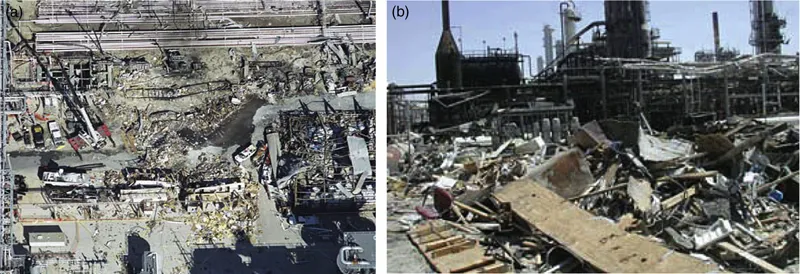
Figure 1.1 Photo of BP Texas City after the accident.
(a) From the CSB website. (b) From the final report. (Sources: Part a: http://www.csb.gov/bp-texas-city-investigative-photos/. Part b: http://www.csb.gov/bp-america-refinery-explosion/.)
(a) From the CSB website. (b) From the final report. (Sources: Part a: http://www.csb.gov/bp-texas-city-investigative-photos/. Part b: http://www.csb.gov/bp-america-refinery-explosion/.)
1.2. Human factors and the BP Texas City accident
During normal operations a total of four crews worked rotating 12-h shifts at the BP Texas City Plant. Prior to the accident, the ISOM unit was shut down and operators were split into two crews working 12-h shifts during the turnaround operations [1]. On the day of the accident, the day board operator was likely experiencing both acute sleep loss and cumulative sleep debt. He had worked 12-h shifts for 29 consecutive days and generally slept 5–6 h per 24-h period. The day lead operator—who was overloaded training two new operators, dealing with contractors, and working on the ISOM turnaround—had been on duty for 37 consecutive days without a day off prior to the accident. The crew members had a significant commute to and from the refinery. It was common for them to only get 5–6 h of sleep a night.
Fatigue can increase errors, delay reactions, and hamper decision-making [2]. The CSB concluded that fatigue caused by sleep deprivation among the operators working that day degraded the cognitive abilities and performance in solving the overfilling situation. The report [1] stated:
In the hours preceding the incident, the tower experienced multiple pressure spikes. In each instance, operators focused on reducing pressure: they tried to relieve pressure, but did not effectively question why the pressure spikes were occurring. They were fixated on the symptom of the problem, not the underlying cause and, therefore, did not diagnose the real problem (tower overfill).
Tower overfill was not discussed by the operators during their troubleshooting before the explosion. This type of focused attention to the exclusion of other critical information is called cognitive tunneling and is a common effect of fatigue.
Another key finding from the report was that BP has no fatigue prevention policy or regulations for operators. The contract between the United Steelworkers Union and BP provides a minimum number of hours per work week requirement, but not a maximum. According to BP, “operators were expected to work” the 12-h, 7-days-a-week turnaround schedule, although they were allowed time off if they had scheduled vacation, used personal/vacation time, or had extenuating circumstances that would be considered on a “case-by-case” basis. The company did have fatigue prevention policies that addressed motor vehicle transportation. The BP document states that when multiple fatigue factors are present, a strong argument can be made that fatigue contributes to accidents [3].
Table of contents
- Cover
- Title page
- Table of Contents
- Copyright
- About the Authors
- Foreword
- Acknowledgments
- Chapter 1: The consequences of fatigue in the process industries
- Chapter 2: Basics of sleep biology
- Chapter 3: Circadian rhythms and sleep–circadian interactions
- Chapter 4: Sleep hygiene recommendations
- Chapter 5: Sleep disorders
- Chapter 6: Fatigue and human performance
- Chapter 7: Fatigue and accidents
- Chapter 8: Fatigue-related regulations and guidelines
- Chapter 9: Fatigue counter measures
- Chapter 10: Work shifts
- Chapter 11: Work environment
- Chapter 12: Work task design
- Chapter 13: Employee training
- Chapter 14: Naps
- Chapter 15: Compounds that alter sleep and wakefulness
- Chapter 16: Creating a fatigue risk management system (FRMS)
- Chapter 17: Accident investigation
- Index
Trusted by 375,005 students
Access to over 1.5 million titles for a fair monthly price.
Study more efficiently using our study tools.
Frequently asked questions
Yes, you can cancel anytime from the Subscription tab in your account settings on the Perlego website. Your subscription will stay active until the end of your current billing period. Learn how to cancel your subscription
No, books cannot be downloaded as external files, such as PDFs, for use outside of Perlego. However, you can download books within the Perlego app for offline reading on mobile or tablet. Learn how to download books offline
Perlego offers two plans: Essential and Complete
- Essential is ideal for learners and professionals who enjoy exploring a wide range of subjects. Access the Essential Library with 800,000+ trusted titles and best-sellers across business, personal growth, and the humanities. Includes unlimited reading time and Standard Read Aloud voice.
- Complete: Perfect for advanced learners and researchers needing full, unrestricted access. Unlock 1.5M+ books across hundreds of subjects, including academic and specialized titles. The Complete Plan also includes advanced features like Premium Read Aloud and Research Assistant.
We are an online textbook subscription service, where you can get access to an entire online library for less than the price of a single book per month. With over 1.5 million books across 990+ topics, we’ve got you covered! Learn about our mission
Look out for the read-aloud symbol on your next book to see if you can listen to it. The read-aloud tool reads text aloud for you, highlighting the text as it is being read. You can pause it, speed it up and slow it down. Learn more about Read Aloud
Yes! You can use the Perlego app on both iOS and Android devices to read anytime, anywhere — even offline. Perfect for commutes or when you’re on the go.
Please note we cannot support devices running on iOS 13 and Android 7 or earlier. Learn more about using the app
Please note we cannot support devices running on iOS 13 and Android 7 or earlier. Learn more about using the app
Yes, you can access Human Fatigue Risk Management by Susan L. Murray,Matthew S. Thimgan in PDF and/or ePUB format, as well as other popular books in Technology & Engineering & Insurance. We have over 1.5 million books available in our catalogue for you to explore.