- 396 pages
- English
- ePUB (mobile friendly)
- Available on iOS & Android
eBook - ePub
Global Energy Interconnection
About this book
Global energy network is an important platform to guarantee effective exploitation of global clean energy and ensure reliable energy supply for everybody. Global Energy Interconnection analyzes the current situation and challenges of global energy development, provides the strategic thinking, overall objective, basic pattern, construction method and development mode for the development of global energy network. Based on the prediction of global energy and electricity supply and demand in the future, with the development of UHV AC/DC and smart grid technologies, this book offers new solutions to drive the safe, clean, highly efficient and sustainable development of global energy.
The concept and development ideas concerning global energy interconnection in this book are based on the author's thinking of strategic issues about China's and the world's energy and electricity development for many years, especially combined with successful practices of China's UHV development. This book is particularly suitable for researchers and graduated students engaged in energy sector, as well as energy economics researchers, economists, consultants, and government energy policy makers in relevant fields.
- Based on the author's many years' experience in developing Smart Grid solutions within national and international projects.
- Combines both solid background information and cutting-edge technology progress, coupled with a useful and impressive list of references.
- The key energy problems which are challenging us nowadays are well stated and explained in this book, which facilitates a better understanding of the development of global energy interconnection with UHV AC/DC and smart grid technologies.
Information
Chapter 1
Global Energy Development: The Reality and Challenges
Abstract
Energy security carries socioeconomic implications. Global energy development is closely linked with resource endowment. The Earth is endowed with not only plenty of fossil energy, that is, coal, oil, and natural gas, but also with large quantities of renewable clean energy, such as hydro, wind, and solar power. Global energy development has traditionally depended excessively on fossil energy, resulting in a host of increasingly prominent problems, such as resource constraints, climate change, and environmental pollution, which severely threaten human existence and development. In response to the challenges of the situation, mankind must develop a good understanding of the new features of globalization on the economic development, resource allocation and environmental fronts to set the stage for secure, clean, efficient and sustainable development of world energy.
Keywords
energy development
global energy interconnection
energy supply
fossil energy
clean energy
energy environment
1. Global Energy Development: the Reality
Global energy development has gone through a course of evolution from firewood to coal and further to oil, gas, and electricity. Currently, world energy supply is dominated by fossil fuels as a gigantic motive force for economic development. Meanwhile, hydro, wind, solar power, and other clean energy alternatives are being developed and applied at increasingly high speeds to accommodate future energy demands, thereby playing an increasingly significant part in ensuring security of global energy supply and promoting clean energy.
1.1. Background
Total world energy consumption has maintained a long-standing growing trend with constant adjustments to the energy structure. In the mid-nineteenth century, firewood was the primary source of energy consumed by humans, compared to coal that accounted for a less than 20% share of total energy consumption. With the progress of the Industrial Revolution, the proportion of coal consumption soared significantly to more than 70% till the beginning of the twentieth century. In the twentieth century, the share of coal consumption plummeted along with the growing popularity of oil and natural gas. In the 1960s, oil surpassed coal as the most widely used energy source. The proportion of oil consumption peaked in 1973 before gradually falling after the two global oil crises from the 1970s to the 1980s. In the meantime, natural gas consumption rose constantly, while coal consumption rebounded slightly. It is most notable that profound changes in the global energy structure in the recent two decades have brought about a new pattern marked by equal predominance of coal, oil, and natural gas as well as rapid development of clean energy. See Fig. 1.1 for the changes in the composition of world energy consumption since 1850.
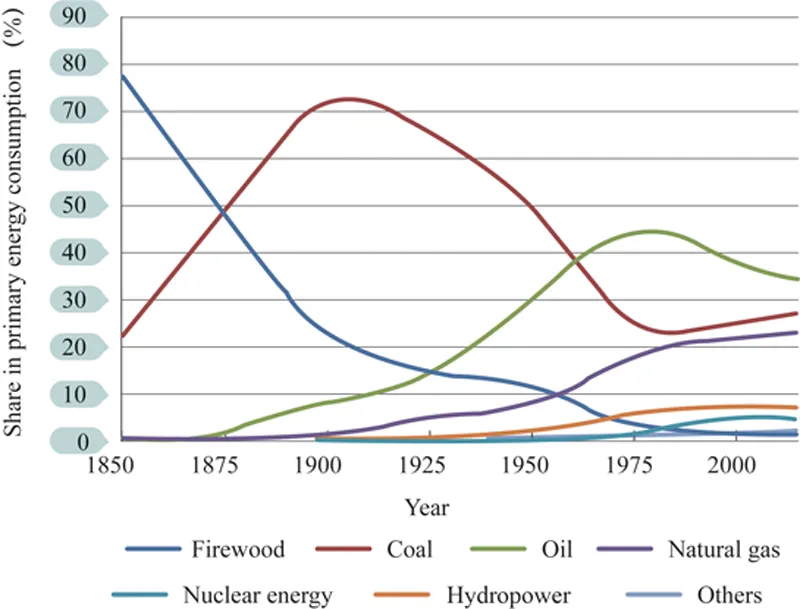
Figure 1.1 Changes in the Composition of World Energy Consumption Since 1850 Source: Ref. [23].
1.1.1. Energy Resources
Global energy resources include primarily fossil fuels (e.g., coal, oil, and natural gas) and clean energy (e.g., hydro,1 wind, solar, and marine energy). Despite its massive fossil energy resources, the world is facing many practical problems, such as serious resource depletion and waste emissions, which are the legacy of large-scale exploration since the Industrial Revolution a couple of centuries ago. By contrast, clean energy is abundant, low-carbon, environment-friendly and renewable, with huge potential for future development.
By 2013, the world’s remaining proven recoverable reserves of coal, oil, and natural gas were estimated at 891.5, 238.2 billion tons, and 186 trillion m3, respectively, accounting for 52.0, 27.8, and 20.2%, respectively, of a total of 1.2 trillion tons of standard coal.2 Based on the current average mining intensity, the global reserves of coal, oil, and natural gas can sustain 113, 53, and 55 years, respective...
Table of contents
- Cover
- Title page
- Table of Contents
- IFC
- Copyright
- Foreword
- About the Book
- Chapter 1: Global Energy Development: The Reality and Challenges
- Chapter 2: Clean Energy Replacement and Electricity Replacement
- Chapter 3: A Global Energy Outlook
- Chapter 4: Supply and Demand of Global Energy and Electricity
- Chapter 5: Building Global Energy Interconnection
- Chapter 6: Innovation in Global Energy Interconnection Technologies
- Chapter 7: R&D on Global Energy Interconnection and Practice
- Chapter 8: Global Energy Interconnection Changes the World
- References
- Postscript
- Index
Trusted by 375,005 students
Access to over 1.5 million titles for a fair monthly price.
Study more efficiently using our study tools.
Frequently asked questions
Yes, you can cancel anytime from the Subscription tab in your account settings on the Perlego website. Your subscription will stay active until the end of your current billing period. Learn how to cancel your subscription
No, books cannot be downloaded as external files, such as PDFs, for use outside of Perlego. However, you can download books within the Perlego app for offline reading on mobile or tablet. Learn how to download books offline
Perlego offers two plans: Essential and Complete
- Essential is ideal for learners and professionals who enjoy exploring a wide range of subjects. Access the Essential Library with 800,000+ trusted titles and best-sellers across business, personal growth, and the humanities. Includes unlimited reading time and Standard Read Aloud voice.
- Complete: Perfect for advanced learners and researchers needing full, unrestricted access. Unlock 1.5M+ books across hundreds of subjects, including academic and specialized titles. The Complete Plan also includes advanced features like Premium Read Aloud and Research Assistant.
We are an online textbook subscription service, where you can get access to an entire online library for less than the price of a single book per month. With over 1.5 million books across 990+ topics, we’ve got you covered! Learn about our mission
Look out for the read-aloud symbol on your next book to see if you can listen to it. The read-aloud tool reads text aloud for you, highlighting the text as it is being read. You can pause it, speed it up and slow it down. Learn more about Read Aloud
Yes! You can use the Perlego app on both iOS and Android devices to read anytime, anywhere — even offline. Perfect for commutes or when you’re on the go.
Please note we cannot support devices running on iOS 13 and Android 7 or earlier. Learn more about using the app
Please note we cannot support devices running on iOS 13 and Android 7 or earlier. Learn more about using the app
Yes, you can access Global Energy Interconnection by Zhenya Liu in PDF and/or ePUB format, as well as other popular books in Politics & International Relations & Energy Industry. We have over 1.5 million books available in our catalogue for you to explore.