eBook - ePub
Hydraulic Rubber Dam
An Effective Water Management Technology
- 142 pages
- English
- ePUB (mobile friendly)
- Available on iOS & Android
eBook - ePub
Hydraulic Rubber Dam
An Effective Water Management Technology
About this book
Hydraulic Rubber Dam: An Effective Water Management Technology is the go-to source for information on the materials, manufacture, mechanics and functional benefit of rubber dams in water management. Readers will find a detailed background on water conservation and coverage, how inflatable rubber dam technology contributes to the picture, and information on the proper manufacture and use of rubber dams to increase water storage for release and delivery during drought. In addition, the book presents tactics on the even distribution of water across populations, how to increase water use efficiency, conservation, and how to prevent flooding.
In particular, this book details specialist manufacturing techniques, including the development of rubber compounds and fabric, the bonding and anchoring systems which hold the rubber dam to the underlying concrete structure, and inflation and deflation mechanisms for rubber dams. The book provides a holistic lifecycle assessment of rubber dams to give additional insight to readers looking to deploy rubber dam technology.
- Demonstrates the proper use of rubber dams in water management, especially in flood prevention and water conservation during drought
- Includes guidance on the materials engineering of rubber and technical fabrics involved in the construction of dams, bonding and anchoring systems, and inflation and deflation mechanisms
- Presents thorough coverage of modelling and stress analysis, along with lifecycle assessment of inflatable rubber dams
Information
1
Rubber Dam—An Introduction
Ajay Vasudeo Rane1, Surendra Thakur2 and Rookmoney Thakur3, 1Composite Research Group, Department of Mechanical Engineering, Durban University of Technology, Durban, South Africa, 2Centre for Continuous & Professional Education, Durban University of Technology, Durban, South Africa, 3International Centre of Non-Violence, Durban University of Technology, Durban, South Africa
Abstract
Former United Nations Secretary-General Boutros Ghali (1985) warned: “the wars in the future are likely to be fought over water.” For centuries, warfare and conflict has been interrelated to the protection of water resources. Water is a source of life. And like oil and other natural resources, it follows that the availability of water is every bit as vital to human improvement as energy security, however, with one huge limitation: unlike oil, water has no known substitutes. As such, no nation can afford to suffer a calamitous loss of water resources. For years experts have warned that this limited resource is fast becoming more critical with the changing requirement of an expanding global populace and effects of climate change around its availability. Many countries in the Middle East, Africa, Central and South Asia—for example, Afghanistan, Pakistan, China, Kenya, Egypt, and India—are already feeling the direct consequences of the water scarcity—with the competition for water leading to social unrest, conflict, and migration. Water is an essential entity to sustain human life and other living organism. The conflict between human population and earth’s unchanging supply of fresh water is worsening every year, which possess a challenge in meeting the water needs of an increasing human population while parting an amount for environmental life cycles. To overcome the problem of water shortage “dams” are an appropriate solution for water conservation.
Keywords
Rubber dam; air filled; water filled; check dam
Former United Nations Secretary-General Boutros Ghali (1985) warned: “the wars in the future are likely to be fought over water.” For centuries warfare and conflict has been interrelated to the protection of water resources (Shiva, 2016). Water is a source of life. And like oil and other natural resources, it follows that the availability of water is every bit as vital to human improvement as energy security, however, with one huge limitation: unlike oil, water has no known substitutes. As such, no nation can afford to suffer a calamitous loss of water resources. For years experts have warned that this limited resource is fast becoming more critical with the changing requirement of an expanding global populace and effects of climate change around its availability. Many countries in the Middle East, Africa, Central and South Asia—for example, Afghanistan, Pakistan, China, Kenya, Egypt, and India—are already feeling the direct consequences of the water scarcity—with the competition for water leading to social unrest, conflict and migration.
The one idea that standout for its simplicity, efficacy and affordability is rain water harvesting. Capture rain water, store it and use it—it is as simple that. If appropriate technologies are built around this simple idea, they can provide decentralized, local—level solutions that can considerably meet the drinking water needs of our urban and rural populations.
– Atal Bihari Vajpayee, Prime Minister of India, 2000 as cited in the book of Patrick McCully, Silenced Rivers (McCully, 2001).
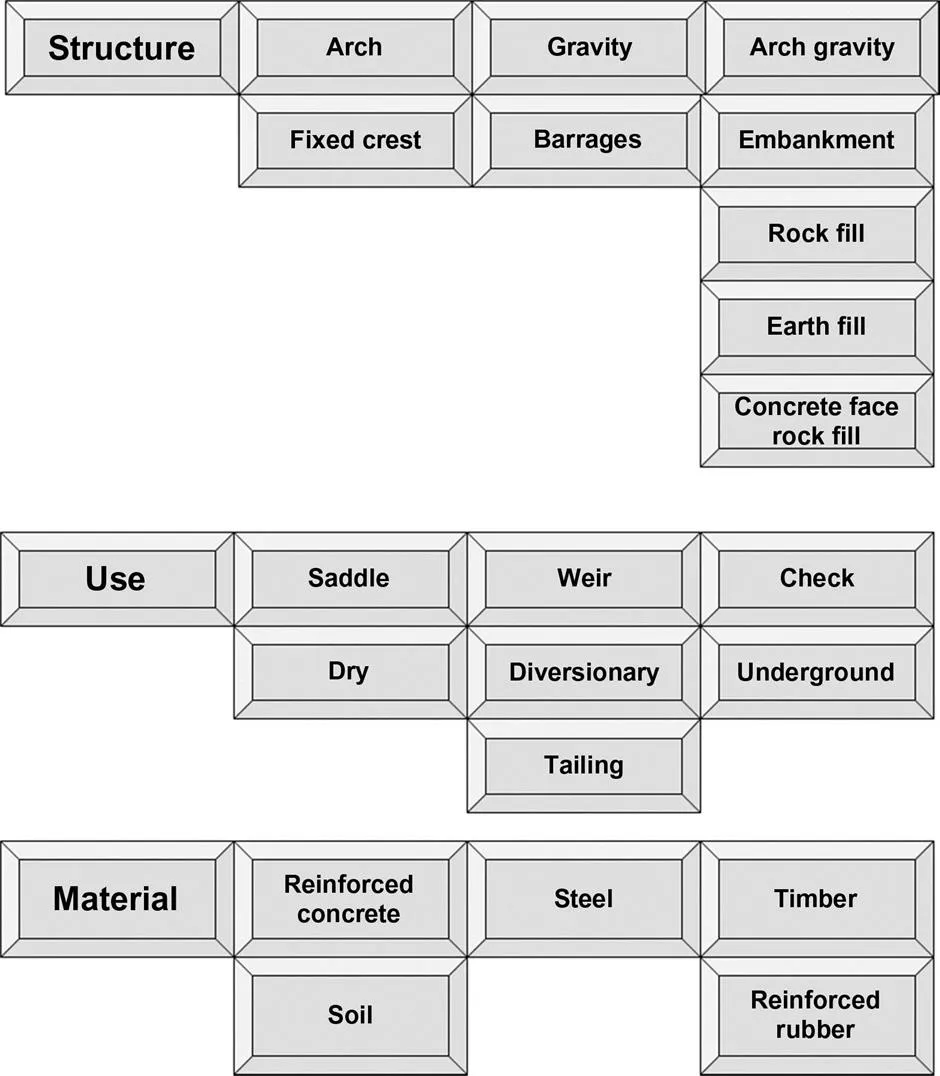
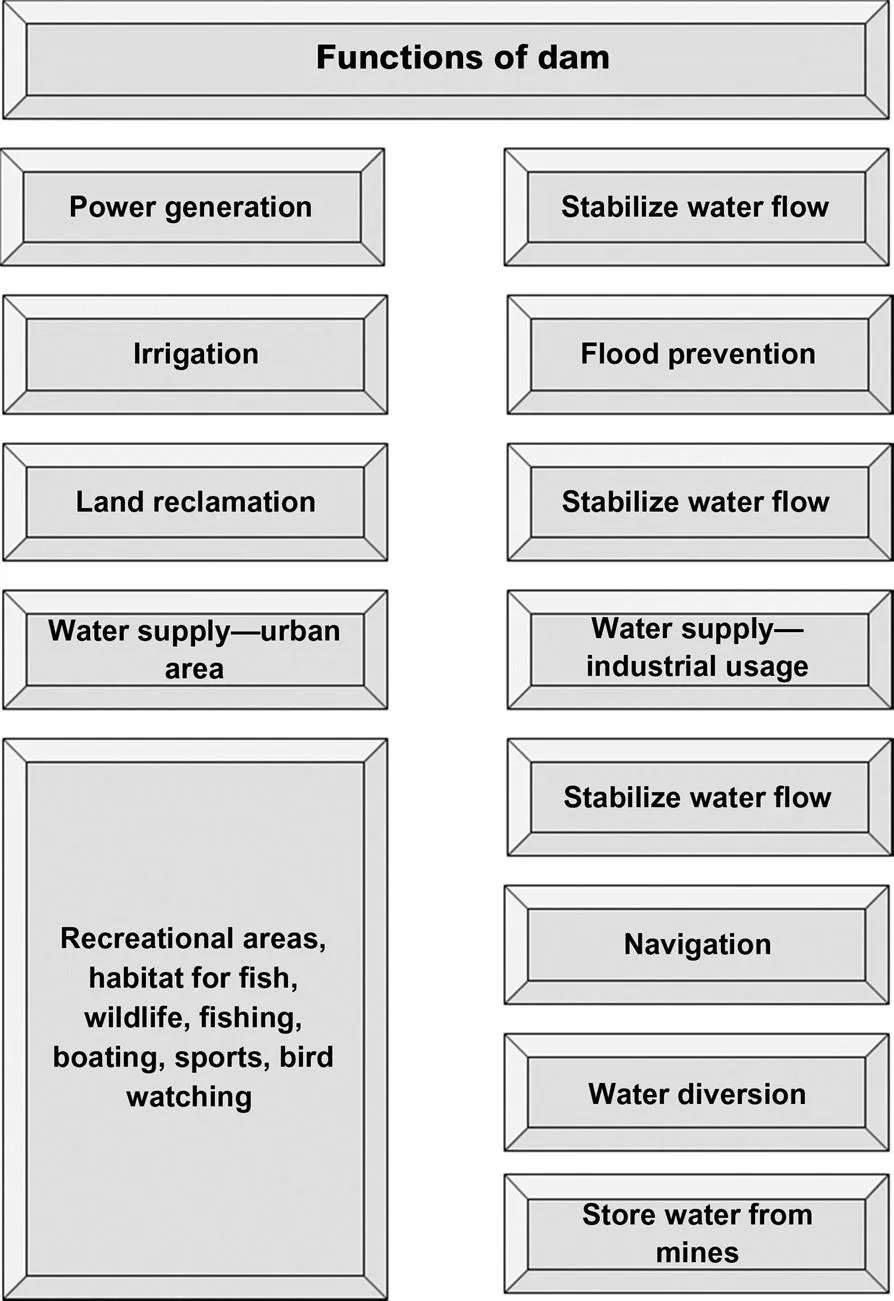
As mentioned earlier, water is one of the most important substances on earth. All plants and animals must have water to survive; if there was no water, there would have been no life on earth (http://www.health.gov.au/internet/publications/publishing.nsf/Content/ohpenhealth-manual-atsi-cnt-l~ohp-enhealth-manual-atsi-cnt-l-ch6~ohp-enhealth-manual-atsi-cnt-l-ch6.1). Water is an essential entity to sustain human life and other living organisms. The conflict between human population and the earth’s unchanging supply of fresh water is worsening every year which possess a challenge in meeting the water needs of an increasing human population while parting an amount for environmental life cycles. To overcome the problem of water shortage, “dams” are an appropriate solution for water conservation. The history of dams has been traced to about 2900 BC when a 49-ft high masonry structure was built on the Nile at Kosheish to supply water to King Mene’s capital at Memphis. The oldest dam still in use is a rock fill structure about 20 ft high on Orontes in Syria, built during 1300 BC (http://en.banglapedia.org/index.php?title=Dam). The word dam has synonyms like barrage, barrier, wall, embankment, levee, barricade, obstruction, hindrance, and blockage. In water conservation—a dam is a barrier that stops and restricts the flow of water or underground streams, that is, to collect water which is then evenly distributed between locations. The primary purpose of dams is to retain water while structures like levees prevent water flow into specific land regions. Dams are typically categorized as per Fig. 1.1. Fig. 1.2 provides the detailed classification of dams, based on structure, use, and materials. Fig. 1.3 classifies the function of dams.

With the development of polymer composites, there is a new type of hydraulic structures, which is the inflatable rubber dam belongs to the flexible wall structure. Inflatable rubber dams have been used as water control structures for more than 50 years. The world’s first inflatable rubber dam was installed in Los Angeles Country in the United States in the mid-1950s. In those days, inflatable rubber dams were viewed much as they are today as relatively inexpensive versatile structures capable of creating pondage and/or controlling flow in a particular water course (Technical Manual). Rubber dam is long tubular-shaped fabric (coated with rubber) and sand witched between rubber sheets and used as a water control structure since 1950. Rubber dams are seamless structures fixed to a reinforced concrete using accessories like clamp plates and anchor bolts, the rubber dams are then inflated with air or water as per designed (for pressure and height) to raise the upstream water level (https://en.wikipedia.org/wiki/Dam). Rubber dams has numerous advantages over other types of water control gate, such as simple and inexpensive operating system, can be installed on almost any channel cross-section shape, relatively low capital cost, perfect sealing, that is, no leakage, virtually maintenance free, that is, no moving parts and no painting, long spans up to 100 m and multiple spans of several hundred meters, easily designed to accept loading in both directions, light structure, clean operation (no hydraulic required), can always be opened (deflated) and no possibility of jamming (Technical Manual).
The construction cost of the inflatable rubber dam is low. According to information available, the average investment can be reduced by 30%–70%. The construction period is not very long, and most of the inflatable rubber dams can be completed in the year of construction (http://www.rubberdam.org/product/water-filled-rubber-dam.html). As the inflatable rubber dam has a flexible structure and is economical; hence, it can effectively buffer the impact of water, resist earthquakes, and so on (http://www.rubberdam.org/product/water-filled-rubber-dam.html). It can also be applied to garden projects in urban areas and has a wide range of applications to retain water, divert water for irrigation, create pondage, control flood, control water, erosion control, tidal barriers, raise existing dams, develop water entertainment, power generation, urban landscaping, ground water recharging, sewage treatment, adjust water level, generate hydroelectric power, shipping, increase reservoir capacity, ecological protection, antitide, erosion control, river regulation prevention of overtopping, and chemical spillage in streams (Technical Manual).
The key element of the inflatable rubber dam is the rubber body (Technical Manual). Rubber dams are made of multilayer fabric comprising strength, canvas, and rubber layers, which consist of outer, middle, and inner layers which serves their function during field performance. Rubber compound for outer layer is formulated to impart excellent ultraviolet (UV), heat, ozone, and abrasion resistance. The outer rubber layer has excellent weathering, aging, abrasion, sunlight, UV, ...
Table of contents
- Cover image
- Title page
- Table of Contents
- Copyright
- List of Contributors
- 1. Rubber Dam—An Introduction
- 2. Water Conservation Technologies
- 3. Raw Materials—Rubber Dam
- 4. Manufacturing Process—Reinforced Rubber Sheet for Rubber Dam
- 5. Bonding and Anchoring System for Rubber Dam
- 6. Inflation and Deflation of Rubber Dam
- 7. Life Cycle Assessment of Rubber Dam
- Index
Trusted by 375,005 students
Access to over 1.5 million titles for a fair monthly price.
Study more efficiently using our study tools.
Frequently asked questions
Yes, you can cancel anytime from the Subscription tab in your account settings on the Perlego website. Your subscription will stay active until the end of your current billing period. Learn how to cancel your subscription
No, books cannot be downloaded as external files, such as PDFs, for use outside of Perlego. However, you can download books within the Perlego app for offline reading on mobile or tablet. Learn how to download books offline
Perlego offers two plans: Essential and Complete
- Essential is ideal for learners and professionals who enjoy exploring a wide range of subjects. Access the Essential Library with 800,000+ trusted titles and best-sellers across business, personal growth, and the humanities. Includes unlimited reading time and Standard Read Aloud voice.
- Complete: Perfect for advanced learners and researchers needing full, unrestricted access. Unlock 1.5M+ books across hundreds of subjects, including academic and specialized titles. The Complete Plan also includes advanced features like Premium Read Aloud and Research Assistant.
We are an online textbook subscription service, where you can get access to an entire online library for less than the price of a single book per month. With over 1.5 million books across 990+ topics, we’ve got you covered! Learn about our mission
Look out for the read-aloud symbol on your next book to see if you can listen to it. The read-aloud tool reads text aloud for you, highlighting the text as it is being read. You can pause it, speed it up and slow it down. Learn more about Read Aloud
Yes! You can use the Perlego app on both iOS and Android devices to read anytime, anywhere — even offline. Perfect for commutes or when you’re on the go.
Please note we cannot support devices running on iOS 13 and Android 7 or earlier. Learn more about using the app
Please note we cannot support devices running on iOS 13 and Android 7 or earlier. Learn more about using the app
Yes, you can access Hydraulic Rubber Dam by Sabu Thomas,Ajay Vasudeo Rane,Abitha VK,Krishnan Kanny,Aastha Dutta in PDF and/or ePUB format, as well as other popular books in Technology & Engineering & Engineering General. We have over 1.5 million books available in our catalogue for you to explore.