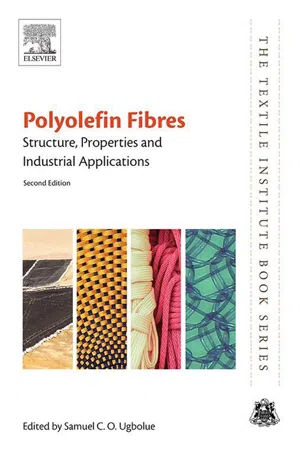
Polyolefin Fibres: Structure, Properties and Industrial Applications, Second Edition, explores one of the most widely used commercial polymers, with a focus on the most important polyolefins, namely polyethylene, polypropylene, and polyolefin bicomponent fibres. These versatile fibres are durable, chemically resistant, lightweight, economical, and functional. This new edition has been updated and expanded to include cutting-edge research on a broad range of advanced applications.
Part I covers the structure and properties of polyolefin fibres, incorporating a new chapter on the environmental aspects of polyolefin use. Part II examines the methods for improving the functionality of polyolefins, providing essential information for those engaged in developing high-performance materials. A final group of chapters addresses how polyolefin fibres can be incorporated into specific textile applications, such as automotive, geotextile, biomedical, and hygiene products, and explores potential future development.
This book is an essential reference for textile technologists and manufacturers, polymer and fibre scientists, yarn and fabric manufacturers, biomedical and device engineers, and industrialists and researchers.
- Introduces the types, properties and structure of polyolefin fibers for readers new to the polyolefins field
- Examines methods to improve the functionality of polyolefin fibers, providing essential information for textile technologists and research and development managers engaged in developing high-performance materials
- Presents existing and potential applications of polyolefin fibers, exploring how they can expand the range of commercial polyolefin-based products
A. Crangle, Formerly of University of Ulster at Belfast, United Kingdom
Abstract
This chapter discusses the chemistry of olefin monomers, their role in stereospecific addition polymerization, the chain conformation or tacticity of resultant polymers and the influence of macromolecular structure on the physical characteristics of polyethylene, polypropylene and other alpha polyolefins, when used as textile materials. The characteristics of other polyolefin fibres produced from olefin copolymers or miscible blends and bicomponent filament structures are reported. Polyolefin textiles are classified in terms of their structure and chemical nomenclature, fibre processing technology or application of the textile material. The progressive commercial introduction of polyolefins fibres and textiles and future trends is reviewed.
Keywords
Chemistry of olefin monomers; chain conformation or tacticity; polyolefin textiles are classified; structure and chemical nomenclature; polyolefin; fibres and textiles
1.1 Introduction
Polyolefin polymers and the resultant textiles made there from have, over the last 50 years or so, progressively replaced both natural and other man-made fibres in many day-to-day applications. In addition, they have consistently been the polymeric textile of choice for many progressive and innovative textile developments and applications that, in 2007, are generally taken for granted by the general public. The European Association of Textile Polyolefins (EATP) eloquently describes polyolefin textiles in the following manner [1]:
In homes and automobiles, clothing and carpeting, health care and industry, polyolefin is quietly at work in thousands of applications around the world. This versatile, high-tech fiber is durable, colorfast and chemically resistant, yet economical and environmentally friendly. Polyolefin consistently outperforms other fiber materials. From its discovery in 1954 by Nobel prize-winning chemist Giulio Natta, polypropylene has proven that it is a hard-working polymer.
Polyolefin plastics and fibers keep our carpeting clean and transport moisture away from the body to keep our active wear dry. They protect sterile environments and soak up industrial spills. PP is literally ‘on the job’ in our homes, cars and businesses, each and every day.
While the main topic of this chapter is ‘Types of polyolefins’, it is the author’s opinion that it is important to understand some of the basics relating to the chemistry of alkenes (alpha olefin monomers), and, in particular, how the stereochemistry of these basic polymer building blocks has an important part to play with respect to addition polymerization at a catalyst surface and, subsequently, on the physical characteristics of the bulk polymeric material.
The commercially important polyolefin fibres, polypropylene and polyethylene, are discussed in terms of their basic structure. A brief review of their development and commercial introduction is also included. The other poly (alpha olefins) are discussed in terms of their use as fibrous materials. Polyolefin fibres produced from copolymers or blends or as bicomponent fibrous materials are reviewed. To accommodate the various aspects of the polyolefin textiles industry, classification has been dealt with in terms of the structure/chemical nomenclature of the polymer, the fibre processing technology or the application of the textile material. A brief survey of possible future trends followed by conclusions and sources of further reading complete the chapter.
1.2 Definitions of polymers, fibres and polyolefins
A polymer is a large molecule built up by the repetition of small, simple chemical units [2]. In some cases the repetition is linear, as in a chain composed of a succession of links or they may be branched or interconnected to form three-dimensional networks. This repetitive structure is called the repeat unit and polymers may be made from a single type of repeat unit or a combination, of a limited number, of types of repeat units. Such polymers are referred to as homo-polymers and co-polymers, respectively. Polymers in fibres will have at least 100 repeating units in the chain, although most will have thousands [3]. If one regards atoms as the smallest unit of construction for molecules, then the large, mainly linear, polymeric macromolecules are the essential building blocks for the construction of natural or man-made fibres [3].
With the exception of carbon fibres, glass fibres, metallic fibres and ceramic fibres, the majority of natural or man-made fibres in general commercial use are organic structures with a carbon–carbon chain backbone [4]. Polyolefin polymers are essentially high molar mass, saturated, aliphatic hydrocarbons, some of which can be conveniently spun into fibres. The terms ‘polyolefin fibres’ and ‘olefin fibres’ are the generic names approved by the United States Federal Trade Commission to describe a manufactured fibre in which the fibre forming substance is any long-chain synthetic polymer composed of at least 85% by mass of ethene (ethylene), propene (propylene), or other olefin units of general formula (CH2
CH
X), where X represents an alkyl chain [4].
The term polyolefin also includes the International Standards Organisation (ISO) generic names of polypropylene (PP) and polyethylene (PE) as defined in ISO 2706, although the correct chemical names should be poly(propene) and poly(ethene), respectively, propene and ethene being the modern chemical names for propylene and ethylene [4]. The structure of the repeat unit is usually equivalent to that of the monomer, or the starting material from which the polymer is formed. Thus the repeat unit of polypropylene is [
CH2CH(
CH3)
] and the monomer is propene (or propylene), CH2
CH
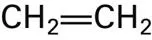
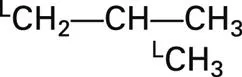
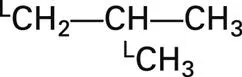
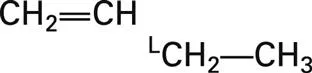
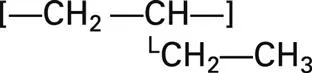
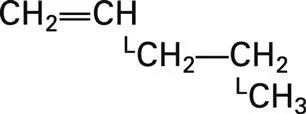
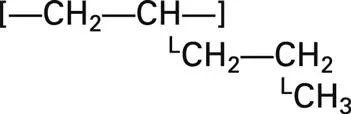
CH3. The monomers and equivalent repeat units for selected polyolefins are shown in Table 1.1.
Table 1.1
Structures of some polyolefins and their equivalent repeat units
Polymer
Alkene monomer
Polyolefin repeat unit
Poly(ethylene)
Poly(propylene)
Poly(4-methylpent-1-ene)
Poly(1-butene)
Poly(methyl-1-butene)
1.3 Chemistry of alkene (olefin) monomers
To understand ‘what polyolefin...
Table of contents
Cover image
Title page
Table of Contents
Copyright
List of Contributors
Preface
Part I: Structure and properties of polyolefin fibres
Part II: Improving the functionality of polyolefins
Part III: Enhanced applications and uses of polyolefin fibres
Index
Trusted by 375,005 students
Access to over 1.5 million titles for a fair monthly price.
Study more efficiently using our study tools.
Frequently asked questions
Yes, you can cancel anytime from the Subscription tab in your account settings on the Perlego website. Your subscription will stay active until the end of your current billing period. Learn how to cancel your subscription
No, books cannot be downloaded as external files, such as PDFs, for use outside of Perlego. However, you can download books within the Perlego app for offline reading on mobile or tablet. Learn how to download books offline
Perlego offers two plans: Essential and Complete
Essential is ideal for learners and professionals who enjoy exploring a wide range of subjects. Access the Essential Library with 800,000+ trusted titles and best-sellers across business, personal growth, and the humanities. Includes unlimited reading time and Standard Read Aloud voice.
Complete: Perfect for advanced learners and researchers needing full, unrestricted access. Unlock 1.5M+ books across hundreds of subjects, including academic and specialized titles. The Complete Plan also includes advanced features like Premium Read Aloud and Research Assistant.
Both plans are available with monthly, semester, or annual billing cycles.
We are an online textbook subscription service, where you can get access to an entire online library for less than the price of a single book per month. With over 1.5 million books across 990+ topics, we’ve got you covered! Learn about our mission
Look out for the read-aloud symbol on your next book to see if you can listen to it. The read-aloud tool reads text aloud for you, highlighting the text as it is being read. You can pause it, speed it up and slow it down. Learn more about Read Aloud
Yes! You can use the Perlego app on both iOS and Android devices to read anytime, anywhere — even offline. Perfect for commutes or when you’re on the go. Please note we cannot support devices running on iOS 13 and Android 7 or earlier. Learn more about using the app
Yes, you can access Polyolefin Fibres by S C O Ugbolue in PDF and/or ePUB format, as well as other popular books in Technology & Engineering & Materials Science. We have over 1.5 million books available in our catalogue for you to explore.