- 272 pages
- English
- ePUB (mobile friendly)
- Available on iOS & Android
eBook - ePub
About this book
Energy and the environment are inextricably linked to the economy. Thermodynamics therefore seems to be a privileged tool in overcoming the constraints associated with optimization.This first volume reports on an original, contemporary approach leading to optimal solutions in the form of trend models, proving the existence of solutions which can then be refined in a more complete and sophisticated manner.The validation of the proposed methodology is realized through real-life examples (engines, heat pumps, refrigeration systems, etc.). However, the more fundamental aspects linked to the dynamics of the transfer and conversion of energy and matter are also explored, as well as the evolution which characterizes the second law of thermodynamics.This book presents recent advances, often still undergoing research, as well as structured exercises, and is therefore aimed at both students and researchers in the field of energetics.
- It proposes a view of the evolution of knowledge regarding the thermodynamics modeling of systems and processes
- It shows results and also the existence of optimum all and along the development
- It focuses on multidisciplinary approach that characterizes thermodynamics
Trusted by 375,005 students
Access to over 1.5 million titles for a fair monthly price.
Study more efficiently using our study tools.
Information
Topic
Physical SciencesSubtopic
Thermodynamics1
From Thermostatics to Non-equilibrium Thermodynamics
Abstract
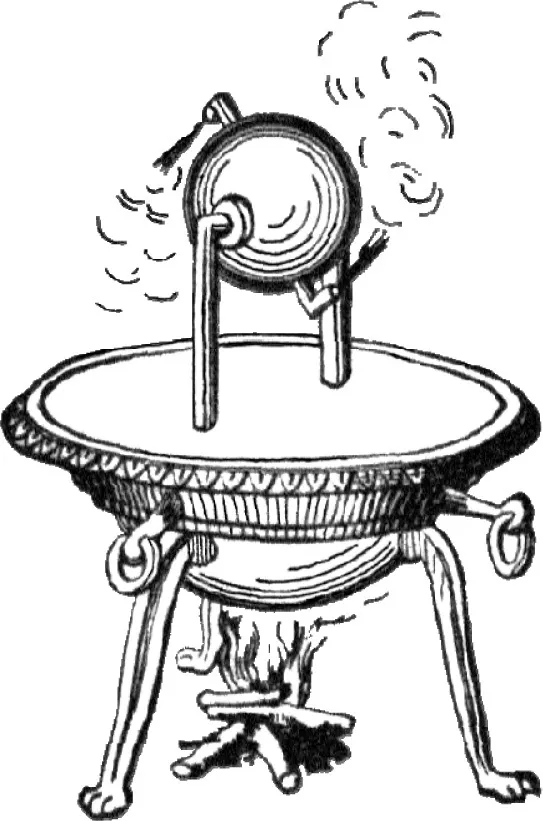
Equilibrium thermodynamics (ET) should be called thermostatics. It is a young science, with a particularly marked development around 1800, though it appears that the first thermomechanical machine in the form of an aeolipile (steam turbine dating from around the 1st Century AD) was invented by Heron of Alexandria.
Keywords
Calorimetry; Carnot; Entropy balance; Mass transfers; Matter; Real fluids; Steam engines; Temperature; Thermochemistry; Thermokinetics; Thermostatics
1.1 Equilibrium thermodynamics, a brief history
Equilibrium thermodynamics (ET) should be called thermostatics. It is a young science, with a particularly marked development around 1800, though it appears that the first thermomechanical machine in the form of an aeolipile (steam turbine dating from around the 1st Century AD) was invented by Heron of Alexandria.
The view elaborated here does not claim to be historical truth. It is a non-chronological report that means no offence to the many well-known contributors who have not been mentioned, and whom the reader is encouraged to research independently, as an exercise.
1.1.1 Temperature and its measurement
The notions of hot and cold are well known to human beings. The experience of touch, in relation to body temperature, is common to all. It leads directly to what is known as the zeroth law of thermodynamics. This can be stated as follows:
Two systems that are each in thermal equilibrium with a third system are in thermal equilibrium with each other.
In practice, this principle has enabled the development of solid, liquid and gas thermometers, which use the size variations of substances in relation to various scales, one of the most common being temperature measured in degrees Celsius (°C). Over time, the measurement process has made use of many other thermophysical properties, such as thermoelectric properties (Seebeck effect), which are exploited in thermocouples.
C...
Table of contents
- Cover
- Title page
- Table of Contents
- Copyright
- Preface
- Acknowledgements
- List of Notations and Acronyms
- 1: From Thermostatics to Non-equilibrium Thermodynamics
- 2: Heat Exchangers
- 3: From Carnot Cycle to Carnot Heat Engine: A Case Study
- 4: Internal Combustion Engines Revisited
- 5: Combustion Turbines and Other Heat Engines
- 6: Reverse Cycle Machines
- Conclusion and Perspectives
- Appendix 1: Fluids
- Appendix 2: Mathematics
- Bibliography
- Index
Frequently asked questions
Yes, you can cancel anytime from the Subscription tab in your account settings on the Perlego website. Your subscription will stay active until the end of your current billing period. Learn how to cancel your subscription
No, books cannot be downloaded as external files, such as PDFs, for use outside of Perlego. However, you can download books within the Perlego app for offline reading on mobile or tablet. Learn how to download books offline
Perlego offers two plans: Essential and Complete
- Essential is ideal for learners and professionals who enjoy exploring a wide range of subjects. Access the Essential Library with 800,000+ trusted titles and best-sellers across business, personal growth, and the humanities. Includes unlimited reading time and Standard Read Aloud voice.
- Complete: Perfect for advanced learners and researchers needing full, unrestricted access. Unlock 1.5M+ books across hundreds of subjects, including academic and specialized titles. The Complete Plan also includes advanced features like Premium Read Aloud and Research Assistant.
We are an online textbook subscription service, where you can get access to an entire online library for less than the price of a single book per month. With over 1.5 million books across 990+ topics, we’ve got you covered! Learn about our mission
Look out for the read-aloud symbol on your next book to see if you can listen to it. The read-aloud tool reads text aloud for you, highlighting the text as it is being read. You can pause it, speed it up and slow it down. Learn more about Read Aloud
Yes! You can use the Perlego app on both iOS and Android devices to read anytime, anywhere — even offline. Perfect for commutes or when you’re on the go.
Please note we cannot support devices running on iOS 13 and Android 7 or earlier. Learn more about using the app
Please note we cannot support devices running on iOS 13 and Android 7 or earlier. Learn more about using the app
Yes, you can access Finite Physical Dimensions Optimal Thermodynamics 1 by Michel Feidt in PDF and/or ePUB format, as well as other popular books in Physical Sciences & Thermodynamics. We have over 1.5 million books available in our catalogue for you to explore.