eBook - ePub
Biomaterials in Plastic Surgery
Breast Implants
- 240 pages
- English
- ePUB (mobile friendly)
- Available on iOS & Android
eBook - ePub
About this book
Employed for both cosmetic and reconstructive purposes, breast implants are one of the most widely-used and controversial prostheses available. The development of safe, reliable products is vital to the future of this important field of surgery. Biomaterials in plastic surgery reviews the history, materials and safety issues associated with breast implants.Beginning with an introduction to the history of biomaterials used for breast augmentation, Biomaterials in plastic surgery goes on to discuss development issues. It then discusses the chemistry and physical properties of biomedical silicones before reviewing cohesive gel and polyurethane foam implants. The book concludes by analysing the epidemiological evidence on the safety issues relating to breast implants, followed by a review of retrieval and analysis of breast implants emphasizing strength, durability and failure mechanisms.With its distinguished editors and international team of expert contributors, Biomaterials in plastic surgery is an important guide for surgeons, manufacturers and all those researching this important field.
- Comprehensively examines the history, materials and safety issues associated with breast implants
- Provides an overview of the history of biomaterials used for breast augmentation and goes on to discuss the development and chemical and physical properties of biomedical silicones
- Reviews cohesive gel breast implants and polyurethane foam breast implants
Information
1
The history of biomaterials used for breast augmentation
W. Peters, University of Toronto, Canada
Abstract:
There is probably no other surgical procedure that has a history as fascinating and as terrifying as breast augmentation. This mchapter traces the evolution of the biomaterials that have been used for breast augmentation from 1899 to the present time. There have been three main eras of biomaterials: injectable materials, sponges, and breast implants. Within each era, there have been a number of categories of materials. The current study reviews the biomaterials that have been used in each of these eras, and provides the current status of each.
Key words
silicone gel
breast implants
augmentation
moratorium
history
1.1 Introduction
There is probably no other surgical procedure that has a history as fascinating and as terrifying as breast augmentation. This chapter will review the evolution of biomaterials that have been used for breast augmentation from 1899 to the present time. There have been three main eras of biomaterials:
| • | Injectable materials | 1899–2010 |
| • | Sponges | 1899–2010 |
| • | Breast implants | 1963–2010 |
This chapter reviews the biomaterials used in each of these eras, and provides the current status of each.
1.2 Injectable materials
There have been four main groups of injectable materials for breast augmentation:
| • | Paraffin | 1899–1914 |
| • | Other materials | 1915–1943 |
| • | Liquid silicone | 1944–1991 |
| • | Polyacrylamide hydrogel (PAH) | 1988–2009 |
1.2.1 Paraffin, 1899–1914
Paraffin is a group of hydrocarbons, which is saturated with carbon to hydrogen bonds, making them relatively inert. The basic repeating unit in the polymers is: –(CH2)n–. Paraffin exists as a hard form (wax) and a soft form (vaseline). Waxes are long-chain hydrocarbons, with n > 20. The softer form of paraffin, vaseline, is composed of shorter molecules. It looks and feels like the product that goes by that trade name today. Both the soft and hard forms of paraffin have a low melting point. Prior to injection, they were heated inside a chamber surrounded by warm water (Fig. 1.1), to form semi-liquid material, which allowed easier injection (Kolle, 1911).
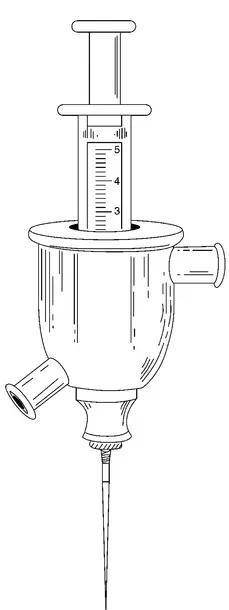
Fig. 1.1 Warming chamber for liquefaction of paraffin prior to injection.
The first published report of paraffin injections into a patient dates back to a report by Gersuny of Vienna, in 1903. This patient was a young man, ho had undergone a bilateral orchiectomy for tuberculous disease. Gersuny injected paraffin into his scrotum in 1899, so that the patient could pass the physical examination necessary to join the army. Paraffin injections were subsequently used extensively from 1899 until 1914, primarily for breast augmentation.
The early results of paraffin injections were often quite acceptable. The complications usually did not show up until 5–10 years later. Kolle’s 1911 textbook, Plastic and Cosmetic Surgery, contained a whole section on the complications of paraffin injections. These complications included: pulmonary embolism, migration, ulceration, fistulae, infection, necrosis, and death. These complications would frequently lead to breast amputation. Figure 1.2 shows the clinical status of a woman in our practice, who had received paraffin injections in the Far East 40 years earlier. She had undergone multiple debridements and bilateral mastectomies over the years to treat multiple ulcers and fistulae. She continued to suffer from ulcers, and fistulae.
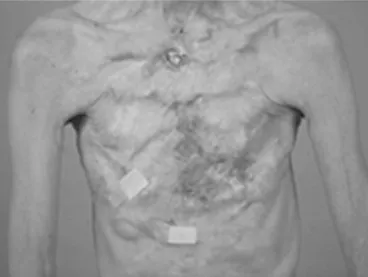
Fig. 1.2 Clinical status of a woman who had received paraffin injections in the Far East 40 years previously. She has had many operations over the years, including bilateral mastectomies, to treat ulcers and fistulae. She continues to suffer from these problems.
In his 1926 textbook, H. Lyons Hunt called paraffin injections an ‘inexcusable practice’ and blamed ‘beauty doctors and other such imposters’ for its continued use (Matton, 1985). However, in the Far East, the practice was continued into the 1950s and 1960s. Deaths continued to be sporadically reported after paraffin injections. In Europe and the United States, a number of patients injected themselves with paraffin, as a self-inflicted injury to escape the military service or deportation. Other patients injected themselves, to enlarge their penis or breasts. The disastrous experience with paraffin was to live on for a century, in the collective memory of the plastic surgery profession.
1.2.2 Other injectable materials, 1915–1943
After the paraffin saga, there was a period of about 30 years, when a huge plethora of materials was used for breast augmentation. The list of these materials was limited only by the extent of man’s imagination. Injectable materials included: vegetable oils, mineral oil, lanolin, beeswax, shellac, epoxy resin, goat’s milk, soybean oil and peanut oil (Bondurant et al., 1999). During this same time interval, many solid materials were also implanted to augment women’s breasts. These materials included: ivory balls, glass balls, silk fabric, epoxy resin, ground rubber, ox cartilage, sponges, sacs, rubber, Teflon, and glazier’s putty. Like the injectable materials, the outcome with each of these materials was similar, with chronic inflammation, severe tissue reactions, and infections. Ultimately, none of these materials proved to be useful for breast augmentation.
1.2.3 Liquid silicone injections, 1944–1991
Surely the terrifying history of paraffin injections should have taught both physicians and patients to be wary of injectable materials for breast augmentation. However, in the 1940s and 1950s, many physicians and lay clinics turned to liquid silicone injections for breast augmentation (Duffy, 1998; Milojevic, 1982). Silicones are extensively cross-linked polymers of dimethyl siloxane. Their basic repeating unit is:

In 1943, the Dow Corning Corporation and Corning Glass formed a joint venture in the United States, to develop silicone products to be used for military purposes during World War II (Peters, 2009). Ultimately, these silicones were used for waterproofing equipment, to prepare high temperature grease and oil products for aircraft, to insulate electrical transformers, and to prepare high-temperature resistant rubbers. When the war came to an end, Dow Corning redirected their efforts to the formulation of medical grade silicone. Medical grade refers to material that is pure in quality, sterile, and of constant viscosity.
Near the end of World War II, prostitutes in Japan began to use industrial grade liquid silicone injections. United States servicemen preferred women with larger breasts than those of Asian women. Barrels of industrial grade silicone began to mysteriously disappear from Japanese docks, destined for injection into the breasts of these enterprising ladies, to cater to their potential clients. These injections were done with industrial grade liquid silicone, which was never intended to be injected into the body. Medical grade silicone was not available until 1960.
Many of the complications of paraffin were repeated, a half-century later, with silicone injections. Some of them were even worse, because of impurities and additives in the silicone preparations. In many of the preparations, contaminants were purposely added to the liquid silicone (Vinnick, 1978), to cause a sclerosis reaction, in an attempt to restrict migration to other sites. Common sclerosing agents included croton oil, cobra venom, olive oil and peanut oil. The adverse effects of injected liquid silicone were very similar to those of paraffin. These included: migration to other parts of the body, inflammation, discoloration, granulomas, ulceration, fistulae, and infection.
In 1960, Dow Corning developed its first commercial medical grade silicone, which was known as ‘Dow Corning 360’. It was marketed under t...
Table of contents
- Cover image
- Title page
- Table of Contents
- Copyright
- Contributor contact details
- Woodhead Publishing Series in Biomaterials
- Introduction
- Chapter 1: The history of biomaterials used for breast augmentation
- Chapter 2: The development of breast implants
- Chapter 3: The chemistry and physical properties of biomedical silicones
- Chapter 4: Cohesive gel breast implants
- Chapter 5: Polyurethane foam covered breast implants
- Chapter 6: The safety of breast implants: epidemiologic studies
- Chapter 7: Retrieval and analysis of breast implants emphasizing strength, durability, and failure mechanisms
- Index
Trusted by 375,005 students
Access to over 1.5 million titles for a fair monthly price.
Study more efficiently using our study tools.
Frequently asked questions
Yes, you can cancel anytime from the Subscription tab in your account settings on the Perlego website. Your subscription will stay active until the end of your current billing period. Learn how to cancel your subscription
No, books cannot be downloaded as external files, such as PDFs, for use outside of Perlego. However, you can download books within the Perlego app for offline reading on mobile or tablet. Learn how to download books offline
Perlego offers two plans: Essential and Complete
- Essential is ideal for learners and professionals who enjoy exploring a wide range of subjects. Access the Essential Library with 800,000+ trusted titles and best-sellers across business, personal growth, and the humanities. Includes unlimited reading time and Standard Read Aloud voice.
- Complete: Perfect for advanced learners and researchers needing full, unrestricted access. Unlock 1.5M+ books across hundreds of subjects, including academic and specialized titles. The Complete Plan also includes advanced features like Premium Read Aloud and Research Assistant.
We are an online textbook subscription service, where you can get access to an entire online library for less than the price of a single book per month. With over 1.5 million books across 990+ topics, we’ve got you covered! Learn about our mission
Look out for the read-aloud symbol on your next book to see if you can listen to it. The read-aloud tool reads text aloud for you, highlighting the text as it is being read. You can pause it, speed it up and slow it down. Learn more about Read Aloud
Yes! You can use the Perlego app on both iOS and Android devices to read anytime, anywhere — even offline. Perfect for commutes or when you’re on the go.
Please note we cannot support devices running on iOS 13 and Android 7 or earlier. Learn more about using the app
Please note we cannot support devices running on iOS 13 and Android 7 or earlier. Learn more about using the app
Yes, you can access Biomaterials in Plastic Surgery by W Peters,H Brandon,K L Jerina,C Wolf,V L Young in PDF and/or ePUB format, as well as other popular books in Technology & Engineering & Medical Technology & Supplies. We have over 1.5 million books available in our catalogue for you to explore.