- 228 pages
- English
- ePUB (mobile friendly)
- Available on iOS & Android
eBook - ePub
About this book
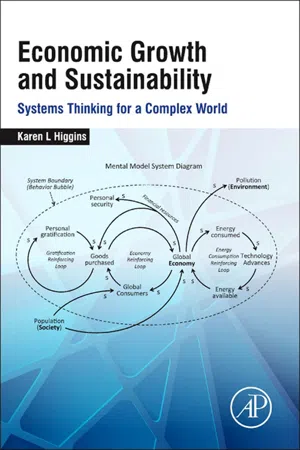
How to sustain our world for future generations has perplexed us for centuries. We have reached a crossroads: we may choose the rocky path of responsibility or continue on the paved road of excess that promises hardship for our progeny. Independent efforts to resolve isolated issues are inadequate. Different from these efforts and from other books on the topic, this book uses systems thinking to understand the dominant forces that are shaping our hope for sustainability. It first describes a mental model - the bubble that holds our beliefs - that emerges from preponderant world views and explains current global trends. The model emphasizes economic growth and drives behavior toward short-term and self-motivated outcomes that thwart sustainability. The book then weaves statistical trends into a system diagram and shows how the economic, environmental, and societal contributors of sustainability interact. From this holistic perspective, it finds leverage points where actions can be most effective and combines eight areas of intervention into an integrated plan. By emphasizing both individual and collective actions, it addresses the conundrum of how to blend human nature with sustainability. Finally, it identifies primary three lessons we can learn by applying systems thinking to sustainability. Its metaphor-rich and accessible style makes the complex topic approachable and allows the reader to appreciate the intricate balance required to sustain life on Earth.
- Highlights the application of system thinking in economics
- Identifies systemic leveraging actions for achieving sustainability
- Outlines a comprehensive and integrated plan for achieving sustainable stewardship in the future
Information
Chapter 1
The Secret’s in the Overlap: Sustainability as an Integrated System
Abstract
Sustainability’s long history has deep roots in ancient civilizations. Its importance again emerges in the environmental movements of the past century. The goal of sustainability is to maintain balance among economy, environment, and society, and to ensure that today’s needs are met without compromising the needs of future generations. This goal is perfectly suited for systems thinking – an integrative way to view the relationships among elements of a large and complex issue. This chapter introduces systems thinking, describes constructs used in the book, and teaches the reader the rudiments of feedback loops, boundaries, limits, and delays. This systems approach is a unique and differentiating feature of the book.
Keywords
sustainability
systems thinking
feedback loops
limits
delays
complexity
We are born from the earth, supported by the earth, and return to the earth, and we need the earth to live.
—Michael Stone (Stone, 2009)
By taking a comprehensive look at the interconnections among ecological, economic and equity issues …we are more likely to seek and implement lasting solutions.
—Andres Edwards (Edwards, 2005)
The notion of sustainability has a long history. The Old Kingdom of ancient Egypt strived to take its civilization into eternity through customs, culture, religion, and irrigation technology. Millennia later and nearly halfway around the world, the Mayans of southern Mexico practiced ecological engineering to conserve water and food, and to preserve a way of life for their descendants. The sophistication of these future-thinking civilizations is apparent from their once vibrant physical remains (see Fig. 1.1).
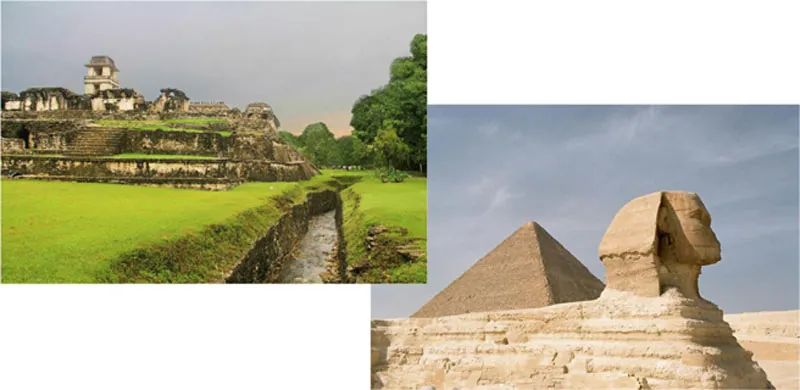
Figure 1.1 Mayan ruins (left) and Egyptian ruins (right). Source: Palenque, Mexico by Ricraider (2012), retrieved from <http://en.wikipedia.org/wiki/File:The_Palenque_Palace_Aqueduct.webp>; Sphinx and pyramid in Cairo by Przemyslaw Idzkiewicz (2005), retrieved from <http://en.wikipedia.org/wiki/File:Cairo,_Gizeh,_Sphinx_and_Pyramid_of_Khufu,_Egypt,_Oct_2004.webp>.
In more recent times, naturalists Ralph Waldo Emerson and Henry David Thoreau in the 1800s and John Muir in the early 1900s championed a close relationship with Earth. Their writings recognized that harmony between man and nature was possible. About 90 years ago, Russian biogeologist Vladimir Vernadsky was one of the first modern-day scientists to acknowledge the implications of this interdependence. His eureka that Earth is a self-contained sphere which supports life and that “life exists only in the biosphere” (Vernadsky, 1998) was soon followed by other researchers’ “big” ideas.
Prescient in her awareness of this interdependence, marine biologist Rachel Carson made the relationship between humans and Earth more concrete. She identified the destructive effects of the man-made pesticide DDT on the world’s food supply. At the time, the chemical industry denounced her 1962 book Silent Spring, asserting that its findings would hurt hundreds of thousands of people if farmers could not use DDT. Even so, she changed our perception of man’s relationship with the environment. These forays into a new way of thinking set the stage for greater consciousness of life’s interdependence with Earth.
1.1. Environmentalism and sustainability
In the mid-nineteenth century – the same century that these philosophers and scientists connected the consequences of man’s actions on Earth – a social movement called “Environmentalism” emerged. This movement evolved from the vital need to decrease the ruinous air pollution and chemical wastes produced by technological advances of the Industrial Revolution. These early environmental concerns were a forerunner of the “Sustainability Revolution” that we know today (Edwards, 2005).
1.1.1. The Sustainability Revolution
Over the past decades, the term “sustainability” has almost become a household word like “kleenex” or “bandaids” that began as brand names and ended up as the generic description of a product. Ecologically speaking, sustainability refers to how organisms remain diverse and adaptive; it means that they are able to endure over time. In today’s vernacular, however, sustainability often takes on the simpler definition of what has been called “sustainable development,” that is, the ability to meet “the needs of the present without compromising the ability of future generations to meet their own needs.”1 In this book, we refer to this latter definition when we talk about sustainability.
The first Earth Day in 1970 marked our entrée into contemporary sustainability with formal discussions that united environment and economy. International conferences, new regulations, and organizations such as the Environmental Protection Agency appeared in the 1970s and the 1980s. Concerns escalated into an overarching goal to create a high-quality environment and healthy economy for all people. In 1969, the International Union for Conservation of Nature extended the bounds of environmentalism with a mandate to achieve the “highest sustainability of life on our world” (Adams, 2006). World leaders formed the Brundtland Commission in 1983 to focus on sustainability issues.2 They introduced the concept of three overlapping areas – economy, environment, and society – to describe sustainability (see Fig. 1.2). The secret to sustainability, they suggest, is to maintain balance, that is, to give these areas equal weight in our decisions and actions.
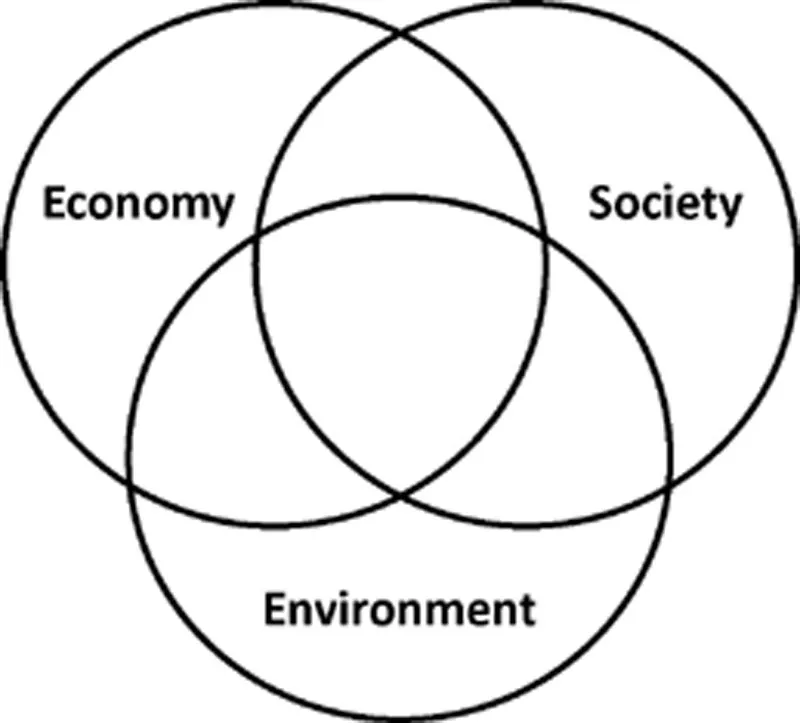
Figure 1.2 Overlapping circles of sustainability. Source:...
Table of contents
- Cover
- Title page
- Table of Contents
- Dedication
- Copyright
- Preface
- About the Author
- Introduction – the Looming Challenge of Sustainability
- Chapter 1: The Secret’s in the Overlap: Sustainability as an Integrated System
- Chapter 2: Living in a Bubble: A Mental Model of How the World Works
- Chapter 3: The Ant Who Lives Forever: A Systems Interpretation of Our Mental Model
- Chapter 4: Addicted to Growth: Economic Growth Promises Happiness and Well-Being
- Chapter 5: Two Faces of Happiness: Instant Gratification versus Sustainable Well-being
- Chapter 6: The Bubble Bursts: Population and Pollution Become Our Concern
- Chapter 7: Applying the Brakes: Factors That Limit Growth
- Chapter 8: The “I”s Have It: A Systems View of Sustainability
- Chapter 9: Creating Balance: Effective Interventions
- Chapter 10: Pieces of the Puzzle Level I: Paradigm Shifts
- Chapter 11: Pieces of the Puzzle Level II: Structural Changes
- Chapter 12: Pieces of the Puzzle Level III: Transition to the Future
- Chapter 13: From Bud to Blossom: Nurturing Sustainable Stewardship
- Chapter 14: The Global Commons and the Uncommon Globe: System Insights and Conclusions
- Glossary
- Index
Trusted by 375,005 students
Access to over 1.5 million titles for a fair monthly price.
Study more efficiently using our study tools.
Frequently asked questions
Yes, you can cancel anytime from the Subscription tab in your account settings on the Perlego website. Your subscription will stay active until the end of your current billing period. Learn how to cancel your subscription
No, books cannot be downloaded as external files, such as PDFs, for use outside of Perlego. However, you can download books within the Perlego app for offline reading on mobile or tablet. Learn how to download books offline
Perlego offers two plans: Essential and Complete
- Essential is ideal for learners and professionals who enjoy exploring a wide range of subjects. Access the Essential Library with 800,000+ trusted titles and best-sellers across business, personal growth, and the humanities. Includes unlimited reading time and Standard Read Aloud voice.
- Complete: Perfect for advanced learners and researchers needing full, unrestricted access. Unlock 1.5M+ books across hundreds of subjects, including academic and specialized titles. The Complete Plan also includes advanced features like Premium Read Aloud and Research Assistant.
We are an online textbook subscription service, where you can get access to an entire online library for less than the price of a single book per month. With over 1.5 million books across 990+ topics, we’ve got you covered! Learn about our mission
Look out for the read-aloud symbol on your next book to see if you can listen to it. The read-aloud tool reads text aloud for you, highlighting the text as it is being read. You can pause it, speed it up and slow it down. Learn more about Read Aloud
Yes! You can use the Perlego app on both iOS and Android devices to read anytime, anywhere — even offline. Perfect for commutes or when you’re on the go.
Please note we cannot support devices running on iOS 13 and Android 7 or earlier. Learn more about using the app
Please note we cannot support devices running on iOS 13 and Android 7 or earlier. Learn more about using the app
Yes, you can access Economic Growth and Sustainability by Karen L. Higgins in PDF and/or ePUB format, as well as other popular books in Economics & Development Economics. We have over 1.5 million books available in our catalogue for you to explore.