eBook - ePub
Practical Aviation Security
Predicting and Preventing Future Threats
- 520 pages
- English
- ePUB (mobile friendly)
- Available on iOS & Android
eBook - ePub
About this book
The second edition of Practical Aviation Security is a complete guide to the aviation security system, from crucial historical events to the policies, policymakers, and major terrorist and criminal acts that have shaped the procedures in use today. The tip-of-the-spear technologies that are shaping the future are also addressed.
This text equips readers in airport security or other aviation management roles with the knowledge to implement the effective security programs, to meet international guidelines, and to responsibly protect facilities or organizations of any size. Using case studies and practical security measures now in use at airports worldwide, readers learn the effective methods and the fundamental principles involved in designing and implementing a security system.
The aviation security system is comprehensive and requires continual focus and attention to stay a step ahead of the next attack. Practical Aviation Security, Second Edition helps prepare practitioners to enter the industry, and helps seasoned professionals prepare for new threats and prevent new tragedies.
- Covers commercial airport security, general aviation and cargo operations, threats, and threat detection and response systems, as well as international security issues
- Lays out the security fundamentals that can ensure the future of global travel and commerce
- Applies real-world aviation experience to the task of anticipating and deflecting threats
Information
1
Overview of the Aviation Industry and Security in the Post-9/11 World
Objectives
This chapter provides an overview of the national aviation system and an introduction to the development and environment of aviation security since the September 11, 2001, terrorist attacks (9/11). Readers will gain insight to the national aviation system and its importance to society. A fundamental framework describing the roles of airports, aircraft operators, and regulatory agencies involved in sustaining effective aviation security is presented. Fundamental to modern aviation security strategies and methods are lessons learned from the 9/11 attacks. Aviation security practitioners and students of aviation security should have at least an elementary understanding of the circumstances surrounding 9/11. Therefore, a case study describing the events of 9/11 and integrating concerns of aviation security is also provided.
Introduction
Throughout most of the history of aviation, terrorists and criminals have used aircraft and airports to conduct many forms of unlawful activity. Examples include special-interest groups or terrorists using aviation to gain geopolitical attention and criminals using commercial or general aviation to smuggle drugs. In these cases, aviation has provided a public stage for the former and an expedient distribution channel for the latter. Aviation is essential to sustaining the economic viability of world commerce, the movement of people and cargo, and the flow of information and knowledge throughout society. Therefore, it is essential that those responsible for protecting the aviation industry are proactive in developing and implementing strategic and tactical systems that are effective in helping to mitigate criminal and terrorist activity.
The aviation industry is composed of a series of overlapping operational areas or “systems of systems” that security personnel must protect. Examples include the management of passenger needs, such as parking, baggage check-in, screening (Figure 1.1), and other requirements (health concerns, guarding secured areas, etc.). Those responsible for each area must work in harmony to maintain aviation as an effective form of global transportation. Evaluating effectiveness in aviation security requires a variety of methods—from ratios used to develop metrics (baggage throughput, passenger flow, etc.), to extensive security evaluations conducted by various government agencies and private corporations.

Figure 1.1 Passengers go through security screening at Denver International Airport.
Aviation is an effective and efficient mode of transportation affecting worldwide social and economic stability. As such, aviation is a target that both terrorists and criminals highly desire.
The ability of aviation to move people and property faster than competing forms of transportation is essential to its economic viability. The Internet and related technologies such as videoconferencing and telecommuting provide additional options to transport information, knowledge, or products and services. The advantage aviation has over rail, trucking, and watercraft is speed, whereas its advantage over videoconferencing is that people still generally prefer face-to-face communication.
Sustained criminal or terrorist activity on aviation could cause a shift in passenger demand from airline travel, of which business travel is a significant percentage, to alternate forms of interaction or travel, such as videoconferencing or privately owned or chartered aircraft. These types of changes in demand for transporting people, cargo, or information could present airlines with serious economic challenges.
If business travelers switch to alternate modes of travel, commercial airlines will have to increase the cost of tickets to those passengers (usually leisure travelers) who cannot afford business rates. As costs increase, leisure travelers may not be able to afford air travel, resulting in more “staycations,” which do not require air travel. Airlines would then have to raise prices to compensate as more leisure flyers switch to ground transportation. Additionaly, many industries, such as the hotel, rental, and tourist industries, rely heavily on air transportation for their businesses to be successful. Repeated attacks on aviation could lead to a significant restructuring of commercial aviation.
Aviation Industry: An Overview
Despite its complex nature, the aviation industry’s primary infrastructure consists of aircraft operations, airports, and supporting agencies. Many types of aircraft are used in various operations around the world. These are commonly categorized as commercial service, private operations (i.e., general aviation, or GA), and military operations. Airports are usually categorized as commercial service, general aviation, private, or military.
Aviation Security and Responding to Threats
The terrorist attacks in the United States on September 11, 2001 (9/11), were designed to damage global security and the U.S. economy—an economy reliant on aviation. A critical strategy for responding to terrorist threats is to moderate the response so it is appropriate and does not cause further deterioration to the economy or stability of a society. Terrorist organizations understand that they usually do not have the forces or resources to defeat an enemy in a traditional military conflict. Therefore, terrorists operate more asymmetrically, striking in ways that cause targeted countries or societies to incur loss of life, economic damage, changes in policies, or other effects. These attacks are usually designed with the hope that countries or societies will overreact in ways that further diminish the ability to protect or sustain safety and economic viability. Terrorists also know that with each subsequent attack, the targeted populace gives up more of its freedom through changes in laws and policies or by accepting that intrusion into private lives is unavoidable and required. In these ways, terrorists can cause economic and social degradation within nations and societies.
In addition to appropriate responses to terrorist or criminal attacks, those charged with protecting aviation must ensure that strategies and technologies remain current and viable for defending against new threats. Security practitioners employing outdated strategies and tactics create opportunities for terrorists to use these systems to their advantage. For instance, the 9/11 attacks showed ingenuity and were organized using modern technologies (e.g., the Internet) to defeat what was then a 1970’s aviation security system.
Flawed management in designing and implementing modern security systems can also create opportunity for criminals or terrorists. For example, industry is responding to terrorism by investing billions of dollars in research and development for improved explosives detection equipment. Of concern is that much of this technology has not undergone extensive testing before deployment. Although technologies used in various explosives detection equipment1 are mostly valid, the mean time before failure for these technologies is often low when used in a nonairport environment. The deployment of the PTDs proved to be ineffective when the units were not resilient enough to handle the airport environment. Many early-model explosive detection devices were not designed or tested to sustain the day-to-day usage at commercial service airport screening checkpoints. The industry is still catching up in developing other security strategies, such as employee security awareness and passenger profiling—strategies that other nations have used since the 1980s—and, perhaps most critically, the ability of our intelligence agencies to penetrate groups that represent credible threats. The increased focus on tracking and either arresting or eliminating known threats, such as the attack on and subsequent death of Osama bin Laden and Anwar al-Awlaki, have weakened one of aviation’s primary enemies, al-Qaeda, but others will take their place.
In response to the challenges in aviation security, the U.S. National 9/11 Commission on Terrorist Attacks upon the United States (the 9/11 Commission)2 and other security and policy experts developed and recommended strategies that should be effectively and efficiently implemented. However, implementing new aviation security methods has traditionally been reactive rather than proactive. Those charged with protecting the aviation industry must adopt a philosophy of sustained proactive improvement. Therefore, a premise to the knowledge presented in this text is as follows:
In aviation security, we must not stop moving forward in implementing proactive forms of security—our foes are committed to their cause and we must be exceedingly committed to ours.
Although time is of the essence in commerce, it is critical in the aviation industry. Passengers must travel safely and efficiently. However, reasonable compromises need to be made for the system to continue functioning. A terrorist attack may be devastating and certainly tragic. Nevertheless, it would be even more tragic to allow such an attack to cause further economic and social damage by impeding global aviation. The ability of a security system to appropriately respond and quickly recover is a fundamental principle in planning and managing aviation security systems.
As discussed, aviation is vital to the survival and growth of the world’s economy (Figure 1.2). Aviation is also a symbol of prosperity and stability among societies. An essential responsibility of those charged with protecting aviation is to balance responses to threats with the requirement to facilitate safe, secure, and efficient transportation of passengers.
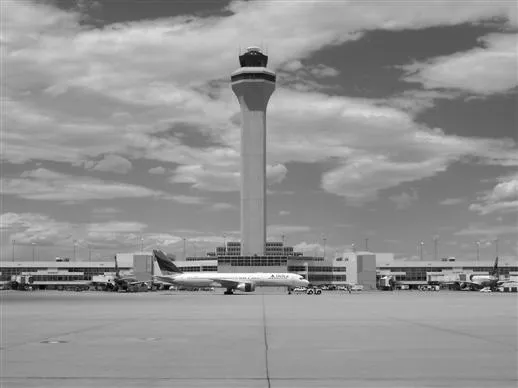
Figure 1.2 Aviation security embraces the protection of passengers, airports, airlines, and the national aviation system.
Aviation Economics
According to a study by DRI-WEFA, Inc. (2002), the economic impact of civil aviation within the United States exceeds $900 billion and provides 11 million jobs. This represents 9% of the U.S. gross domestic product (FY 2000). Commercial aviation is responsible for 88% of this contribution, and general aviation for 12% (p. 7). Commercial airlines carry between 600 and 800 million people per year and move 20–25 billion tons of cargo. Additionally, more than 160 million people travel on general aviation aircraft every year within the United States (DRI-WEFA, Inc., 2002).
The United States is geographically (and socially) oriented to rely on air travel. Unlike many countries with well-organized systems that enable efficient travel internally and internationally by rail (and thus have less of a need for air travel), the United States has no national high-speed railway system. Additionally, the United States shares borders with Canada and Mexico only, further limiting opportunities for international commerce by land. As a result, the United States relies on air travel to enable commerce with the rest of the world.
Although most of the world’s freight still moves via sea, the demand of just-in-time goods delivery is increasing. The primary advantages of just-in-time shipping are that it allows for shorter production and development cycles and eliminates excessive inventory. DRI-WEFA, Inc. (2002) also provides this summary of the influence of aviation on the world economy:
Aviation is the primary means for economic growth with a significant influence on the quality of life of populations around the globe. Aviation facilitates the world economy and promotes the international exchange of people, products, investment, and ideas. Indeed, to a very large extent, civil aviation has enabled small community and rural populations to enter the mainstream of global commerce by linking such communities with worldwide population, manufacturing, and cultural centers. (p. 3)
The impact of 9/11 on the aviation industry was devastating. Overall, the aviation industry experienced direct losses of $330 million per day (Kumar et al., 2003). Not included in this figure are losses to rental car, hotel, and tourist industries dependent on the aviation industry for customers. In addition to the direct loss of revenue, airlines and airports had to bear an increased cost of doing business to meet government-mandated security improvements. The costs to airports of purchasing new security technology and reconfiguring terminals to accept the larger security screening devices have caused airport operators to shift money from other airport capital improvement projects, such as runway and taxiway maintenance and expansion, to security measures. Additionally, airport operators lost revenue-producing space to accommodate new Transportation Security Administration (TSA) equipment and personnel, and with the deployment of advanced ...
Table of contents
- Cover image
- Title page
- Table of Contents
- Copyright
- Dedication
- Foreword from the First Edition
- Foreword
- Preface
- Acknowledgments
- Companion Website
- 1. Overview of the Aviation Industry and Security in the Post-9/11 World
- 2. Crime and Terrorism in Aviation: A Retrospective
- 3. Policies and Procedures: The Development of Aviation Security Practices
- 4. The Role of Government in Aviation Security
- 5. Commercial Aviation Airport Security
- 6. Introduction to Screening
- 7. Passenger and Baggage Screening
- 8. Commercial Aviation Aircraft Operator Security
- 9. General Aviation Security
- 10. Air Cargo Security
- 11. The Threat Matrix
- 12. Security Operations
- Index
Trusted by 375,005 students
Access to over 1.5 million titles for a fair monthly price.
Study more efficiently using our study tools.
Frequently asked questions
Yes, you can cancel anytime from the Subscription tab in your account settings on the Perlego website. Your subscription will stay active until the end of your current billing period. Learn how to cancel your subscription
No, books cannot be downloaded as external files, such as PDFs, for use outside of Perlego. However, you can download books within the Perlego app for offline reading on mobile or tablet. Learn how to download books offline
Perlego offers two plans: Essential and Complete
- Essential is ideal for learners and professionals who enjoy exploring a wide range of subjects. Access the Essential Library with 800,000+ trusted titles and best-sellers across business, personal growth, and the humanities. Includes unlimited reading time and Standard Read Aloud voice.
- Complete: Perfect for advanced learners and researchers needing full, unrestricted access. Unlock 1.5M+ books across hundreds of subjects, including academic and specialized titles. The Complete Plan also includes advanced features like Premium Read Aloud and Research Assistant.
We are an online textbook subscription service, where you can get access to an entire online library for less than the price of a single book per month. With over 1.5 million books across 990+ topics, we’ve got you covered! Learn about our mission
Look out for the read-aloud symbol on your next book to see if you can listen to it. The read-aloud tool reads text aloud for you, highlighting the text as it is being read. You can pause it, speed it up and slow it down. Learn more about Read Aloud
Yes! You can use the Perlego app on both iOS and Android devices to read anytime, anywhere — even offline. Perfect for commutes or when you’re on the go.
Please note we cannot support devices running on iOS 13 and Android 7 or earlier. Learn more about using the app
Please note we cannot support devices running on iOS 13 and Android 7 or earlier. Learn more about using the app
Yes, you can access Practical Aviation Security by Jeffrey Price,Jeffrey C. Price in PDF and/or ePUB format, as well as other popular books in Technology & Engineering & Criminology. We have over 1.5 million books available in our catalogue for you to explore.