- 124 pages
- English
- ePUB (mobile friendly)
- Available on iOS & Android
eBook - ePub
About this book
Comprehensive Utilization of Citrus By-products provides comprehensive knowledge and information on the development and utilization of citrus by-products, including the types, preparation, and determination of their main functional components. As one of the most popular fruits in the world, the processing of citrus fruits produces a great deal of citrus peel, a primary by-product. Current treatments of citrus peel pollute the environment and waste resources so eco-friendly solutions are sought.
This book reflects research, trends and attitudes in the field, presenting a wide overview including extraction processes for functional components; isolation and structural identification; synthesis of new compounds; and the research and development of citrus by-products, their biodegradable transformation, and processing equipment. This valuable reference book can be used by scientists, scholars, and students working on citrus, dietitians and nutritionists, citrus processing enterprises, and farmers from cooperative organizations related to citrus processing.
- Offers a comprehensive presentation of the functional components in citrus by-products and their utilization
- Illustrates the determination methods of, and extraction processes for, functional components, as well as the isolation, identification, and synthesis of new compounds
- Reviews the research and development of citrus by-products, their biodegradable transformation, and processing equipment
- Provides a valuable reference for scientists, scholars, and students working on citrus, dietitians and nutritionists, citrus processing enterprises, and farmers from cooperative organizations related to citrus processing
Information
Subtopic
AgricultureChapter 1
Functional Components of Citrus Peel
Abstract
During citrus processing, a large amount of citrus peel is produced, which comprises approximately 25% of the total weight of citrus fruit. Citrus peel contains several functional components, such as essential oil, pectin, carotenoids, hesperidin, and limonin, which are important raw materials in the chemical and pharmaceutical industries. The utilization of functional components of citrus peel has become an important part of the citrus-processing industry.
Keywords
Comprehensive utilization of by-products; Essential oils; Flavonoids; Functional components; Monoterpenes; Pectin
During citrus processing, a large amount of citrus peel is produced, which comprises approximately 25% of the total weight of citrus fruit. Citrus peel contains several functional components, such as essential oil, pectin, carotenoids, hesperidin, and limonin, which are important raw materials in the chemical and pharmaceutical industries. The utilization of functional components of citrus peel has become an important part of the citrus-processing industry. The following discussion describes the types, applications, and utilization status of the functional components of citrus peel.
1. Essential Oils
An essential oil is a concentrated hydrophobic liquid that evaporates at room temperature. It contains volatile aromatic compounds from plants. Oil cells in citrus peel are rich in essential oil, which comprises approximately 0.5–2% of the fresh weight of the peel. Essential oil can be used as a flavoring and perfuming agent in alcohol and tobacco products, beverages, condiments, candies, and pastries. It is also used extensively in the production of daily consumables, essences, and pesticides. The essential oil from citrus peel also has a sedative effect on the human central nervous system, which can mitigate stress and remove fatigue. Moreover, despite its trace levels in essential oil, coumarin has an obvious anticancer effect; it probably acts by decomposing the toxic functional groups in carcinogenic substances and inhibiting the metabolism of cancer cells. Previous studies have demonstrated that the essential oil from citrus peel also plays roles as an expectorant, cough inhibitor, gastrointestinal motility promoter, and digestive juice secretion enhancer. It also alleviates pain, dissolves gallstones, and relieves inflammation. In addition, the essential oil from citrus peel has obvious efficacy in human beauty and health care.
According to statistical analyses, essential oils are added to products that account for sales of $500 billion throughout the world, where the value of the essential oils is estimated to be $16–20 billion. The annual global production of citrus essential oil is approximately 16,000 tons, and its cost on the international market is $14,000/ton. Therefore, citrus essential oil is in great demand in the international market and has promising market prospects.
2. Monoterpenes
Monoterpenes are widely distributed in various citrus peels, especially in the essential oil from citrus peel. d-limonene and d-carvone are the two most important types of monocyclic terpene compounds in citrus (Fig. 1.1). d-limonene is a specific major aromatic component of citrus. Citrus fruits (especially citrus peel) contain a high essential oil content. In lemon and orange peels, the mass fraction of the limonene content of essential oil is up to 90–95% (w/w).
Limonene is an effective natural solvent for removing grease and dirt. In most cases, limonene can be applied in home and mechanical devices as a substitute for corrosive alkaline detergents. In addition, it can be used as an important component of strong delousing agents. Previous studies have confirmed its function in inhibiting the excessive excitation of the central nervous system. Recent studies have also demonstrated that limonene has a role in reducing stress. Because limonene can inhibit the activity of HMG-CoA reductase as a rate-limiting enzyme, it is possible that it inhibits cholesterol synthesis. Another study found that the administration of a mixture containing 97% d-limonene via biliary drainage could effectively dissolve the remaining cholesterol gallstones in patients subjected to surgery. Moreover, the anticancer effect of limonene is attracting increasing attention. An increasing number of studies have shown that monoterpenes from citrus have an obvious inhibitory effect on tumors caused by chemical carcinogens. Increasing evidence also supports the role of limonene in cancer prevention and treatment, which has been validated by its chemopreventive roles during the initiation or development stage in various in vivo tumor systems, such as rodent models of breast, skin, liver, and lung cancers, as well as a precancerous model induced by chemical carcinogens.
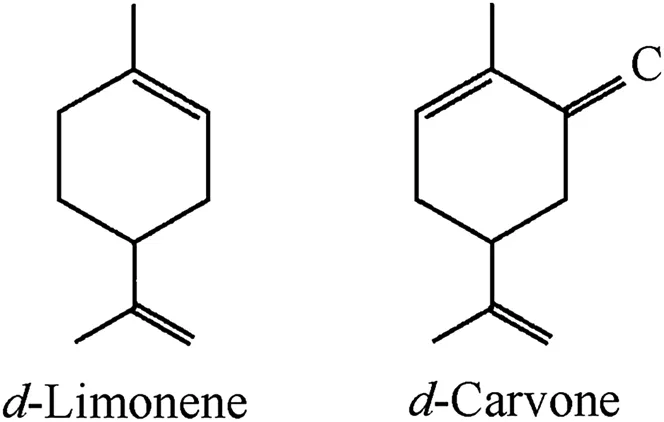
Figure 1.1 Major monoterpene compounds in citrus.
3. Pectin
The yellow skin, white skin, flesh, juice sac, and central column of citrus fruits contain an abundance of pectin, which exists in the form of propectin. The pectin contents of different tissues and varieties differ considerably. In decreasing order, the pectin content and quality are as follows: lime...
Table of contents
- Cover image
- Title page
- Table of Contents
- Copyright
- Preface
- Chapter 1. Functional Components of Citrus Peel
- Chapter 2. Methods for Determining the Functional Components of Citrus Peel
- Chapter 3. Extraction Processes of Functional Components From Citrus Peel
- Chapter 4. Isolation and Structural Identification of Flavonoids From Citrus
- Chapter 5. Five Types of Semisynthetic Bioactive Flavonoids From Hesperidin
- Chapter 6. Drying of Citrus Peel and Processing of Foods and Feeds
- Chapter 7. Biotransformation of Citrus Peel
- Chapter 8. Production of Biodegradable Packages Using Citrus Peel
- Chapter 9. Processing Equipment for Citrus Peel By-products
- Appendix
- References
- Index
Trusted by 375,005 students
Access to over 1.5 million titles for a fair monthly price.
Study more efficiently using our study tools.
Frequently asked questions
Yes, you can cancel anytime from the Subscription tab in your account settings on the Perlego website. Your subscription will stay active until the end of your current billing period. Learn how to cancel your subscription
No, books cannot be downloaded as external files, such as PDFs, for use outside of Perlego. However, you can download books within the Perlego app for offline reading on mobile or tablet. Learn how to download books offline
Perlego offers two plans: Essential and Complete
- Essential is ideal for learners and professionals who enjoy exploring a wide range of subjects. Access the Essential Library with 800,000+ trusted titles and best-sellers across business, personal growth, and the humanities. Includes unlimited reading time and Standard Read Aloud voice.
- Complete: Perfect for advanced learners and researchers needing full, unrestricted access. Unlock 1.5M+ books across hundreds of subjects, including academic and specialized titles. The Complete Plan also includes advanced features like Premium Read Aloud and Research Assistant.
We are an online textbook subscription service, where you can get access to an entire online library for less than the price of a single book per month. With over 1.5 million books across 990+ topics, we’ve got you covered! Learn about our mission
Look out for the read-aloud symbol on your next book to see if you can listen to it. The read-aloud tool reads text aloud for you, highlighting the text as it is being read. You can pause it, speed it up and slow it down. Learn more about Read Aloud
Yes! You can use the Perlego app on both iOS and Android devices to read anytime, anywhere — even offline. Perfect for commutes or when you’re on the go.
Please note we cannot support devices running on iOS 13 and Android 7 or earlier. Learn more about using the app
Please note we cannot support devices running on iOS 13 and Android 7 or earlier. Learn more about using the app
Yes, you can access Comprehensive Utilization of Citrus By-Products by in PDF and/or ePUB format, as well as other popular books in Technologie et ingénierie & Agriculture. We have over 1.5 million books available in our catalogue for you to explore.