- 560 pages
- English
- ePUB (mobile friendly)
- Available on iOS & Android
eBook - ePub
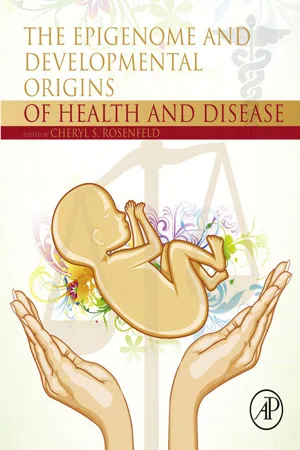
The Epigenome and Developmental Origins of Health and Disease
About this book
Winner of 2016 BMA Medical Award for Basic and Clinical Sciences
The Epigenome and Developmental Origins of Health and Disease synthesizes the existing knowledge on how the in utero environment could be the most important environment in shaping later risk for various diseases or to conversely promote the health of the offspring.
The book mines the existing literature from a variety of disciplines from toxicology to nutrition to epigenetics to reveal how contrasting maternal in utero environmental changes might be leading to epigenetic convergence and the resulting deleterious phenotypic and physiological effects in our offspring.
It is increasingly becoming apparent that even subtle changes in the mother's diet, stress, and exposure to low concentrations of toxic chemicals at levels deemed safe by the EPA and FDA, such as endocrine disrupting compounds (EDC), can dramatically impact the health of our children, possibly leading to metabolic, cardiovascular, immunological, neurobehavioral disorders, and increased risk for cancer to list but a few examples.
- Informs how everyday choices pregnant women make can impact child development
- Ties together how in utero environmental changes may be inducing epigenetic changes in the offspring leading to overlapping phenotypes regardless of the initial insult (toxic, nutrition, or stress)
- Includes a boxed-in area in each chapter for further references and resources to keep up with the field
- Features video interviews with the authors and other key leaders in the field
Information
Chapter 1
The Developmental Origins of Health and Disease (DOHaD) Concept
Past, Present, and Future
Peter D. Gluckman1, Tatjana Buklijas1, and Mark A. Hanson2 1Liggins Institute, The University of Auckland, Auckland, New Zealand 2Institute of Developmental Sciences, University of Southampton and NIHR Nutrition Biomedical Research Centre, University Hospital Southampton, Southampton, UK
Abstract
The “developmental origins of health and disease” (DOHaD) is a concept that has emerged over the past 50 years, linking the state of health and risk from disease in later childhood and adult life with the environmental conditions of the early life. Originally based on epidemiologic observations, the concept has given rise to a field that brings together clinical studies in a range of specialties, public and global health, experimental physiology, molecular biology (especially epigenetics), developmental biology, anthropology, the social sciences, and evolutionary biology. This chapter examines the evolution of thinking about the relationship between developmental influences and later-life health and disease; examines the establishment of DOHaD as a conceptual framework and a research field in its own right; discusses criticisms of DOHaD and barriers to its acceptance within the broader research community as well as to its recent integration into public health policy; and, finally, considers future directions that the field may take.
Keywords
Development; Developmental origins of health and disease; Disease; Epigenetics; Fetal physiology; History; Life courseIntroduction
The overarching argument of the conceptual paradigm and the research field of developmental origins of health and disease (DOHaD) is that the state of health and risk from disease in later childhood and adult life is significantly affected by environmental factors acting during the preconceptional, prenatal, and/or early postnatal periods. The emphasis has been on obesity, type 2 diabetes mellitus, and cardiovascular disease, but a significant body of work has also been focused on endocrine cancers, osteoporosis and frailty in the elderly, mental health, cognitive function, respiratory disease, immune function, and allergy. While the field as currently constructed is just over two decades old, it is based on research that goes back to the 1930s. In this chapter, we bring together research traditions, concepts, and approaches that, over the last 80 years, have explored the question of prenatal and early postnatal environmental influences that impact health and disease in later life and look forward to emergent areas of attention and application of the concept.
The Origins of the Field
The idea that experiences in early life influence health in later life may be found throughout the history of Western medicine: well into the 1800s, it was believed that anything that a mother saw, touched, ate, or even imagined—collectively known as “maternal impressions”—had a capacity to permanently influence the developing organism [1,2]. In the early 1800s, the common view was that a new organism was created in a process called “generation,” out of maternal and paternal contributions as well as various experiences that the mother had during (and even before) pregnancy [3]. But in the nineteenth century, “generation” was replaced with “reproduction,” built on the new idea of “heredity.” The noun “heredity” was first used in the 1830s, to describe the transmission of parental qualities during conception, and at the same time to make a distinction between those inherited qualities and the properties that emerged during development [4]. Scientists studied where heredity resided within the cell; how hereditary particles were distributed among cells and their quantity was prevented from doubling in each successive generation; and to what extent were hereditary elements in the cells sensitive to developmental influences [5]. August Weismann’s work provided the conceptual basis for new thinking about heredity and development: while germ cells produced somatic cells, he argued, they were not affected by anything that somatic cells acquired or learned [6]. It followed that each individual was born with a certain predisposition toward disease; no environmental modifications could improve one’s outlook. The best one could do to improve one’s offspring’s chances was to reproduce with a person of “better heredity.”
The early 1900s were the heyday of “hard heredity,” exemplified by the emergence of genetics, an experimental discipline concerned with mechanisms of heredity, and the dominance of the social program of eugenics, seeking to reform society through rationalizing human reproduction [7]. But the deep economic crisis of the 1930s made it obvious that environmental conditions had a strong influence on the emergence and prevalence of disease [8]. New epidemiological work suggested that the conditions of early life played a role at least as important as heredity. A landmark paper by the Scottish epidemiologist William Ogilvy Kermack and colleagues in 1934 argued that “the data behaved as if the expectation of life was determined by the conditions existing during the years 0–15 (…) the health of the man is determined preponderantly by the physical constitution which the child has built up” [9]. The recognition of the importance of environmental conditions and the apparent demise of eugenics did not, however, mean the fall of the genetic model, which remained dominant through the twentieth century [8].
The Second World War was a pivotal event in the making of the developmental approach to the study of health and disease, conceptualized in the early twenty-first century as DOHaD. Even before the war, physiologists, teratologists, and agricultural scientists collected experimental evidence showing that manipulating the life conditions of pregnant animals permanently affected the patterns of growth and the phenotype of their offspring [10–12]. Interventions in humans were, for obvious reasons, too subtle to produce substantial differences, and they also focused on maternal mortality and morbidity rather than longer-term outcomes in the offspring [13]. But wartime famines provided rare “natural experiments” by exposing thousands of women to periods of severe undernutrition, in some cases sharply delineated [14,15]. The longest and the most severe famine took place in Leningrad under German siege (between September 1941 and January 1944) [14], but the clearest data came from Rotterdam and The Hague, two cities in northwestern Holland that had suffered food shortages during German reprisals from September 1944 to May 1945, in what became known as the Dutch Winter Famine [15,16]. Data collected showed that starvation in the last trimester of pregnancy caused a reduction in the birth weight of the offspring, while famine around conception increased the chance of miscarriage and malformation. Postwar Germany provided an opportunity for the British team working on the intersection of physiology, nutritional science, and pediatrics (Robert McCance, Elsie Widdowson, and Rex Dean) to study how low food rations and lack of food variety influenced lactation in new mothers, infant birth weight, and childhood growth [17]. Back in their Cambridge laboratories, Widdowson and McCance tested their clinical findings in animal experiments and demonstrated that the size of the litter and the rate of offspring growth depended on maternal nutrition. Interestingly, prenatal and early postnatal (preweaning) nutrition did not affect just the weight that the pups attained by adulthood: it also influenced susceptibility to infections, body proportions, and timing of reproductive maturation, as well as behavior [18]. Their results supported the theory of “critical” or “sensitive periods,” popular across disciplines as diverse as ethology (behavioral studies), linguistics, child psychology, and physiology, according to which each organ or tissue has a distinctive period of critical differentiation as well as a period of maximum growth, during which these organs and tissues are highly sensitive to injury [11].
But, as the world recovered from the wartime trauma, in the 1960s and 1970s interest in the relationship between prenatal and perinatal influences and later health and disease waned. In this period, fetal physiologists largely focused on questions that emphasized fetal autonomy rather than interplay between the environment and the developing organism. They studied, for example, fetal respiratory movements, fetal endocrine growth mechanisms, or fetal control of the onset of labor [19]. It was mostly researchers with a strong interest in socioeconomic determinants of health inequalities who pursued questions of the interaction between environment and development. At the University of Birmingham’s Department of Social Medicine, under Professor Thomas McKeown, a young David Barker completed his PhD thesis on “Prenatal influences and subnormal intelligence” (1966) [20]. He found that children of all levels of “subnormal” intelligence (classified as IQ under 75) had a birth weight lower than expected. Interestingly, the “normal” siblings of all but the most severely “subnormal” children (IQ less than 50) were born at low birth weight too. These low birth weights of both “normal” and “subnormal” children, Barker suggested, reflected “influences which affect the intra-uterine lives of all children in their families.”
At the same time, a pair of South African political immigrants to the United States (via the University of Manchester’s Department of Social Medicine), the Columbia University epidemiologists Zena Stein and Mervyn Susser, undertook a large program of study of the influence of maternal nutrition on “mental competence” [21,22]. One...
Table of contents
- Cover image
- Title page
- Table of Contents
- Copyright
- Dedication
- List of Contributors
- Acknowledgments
- Chapter 1. The Developmental Origins of Health and Disease (DOHaD) Concept: Past, Present, and Future
- Chapter 2. Historical Perspective of Developmental Origins of Health and Disease in Humans
- Chapter 3. DOHaD and the Periconceptional Period, a Critical Window in Time
- Chapter 4. Introduction to Epigenetic Mechanisms: The Probable Common Thread for Various Developmental Origins of Health and Diseases Effects
- Chapter 5. Perinatal Neurohormonal Programming and Endocrine Disruption
- Chapter 6. Parental Nutrition and Developmental Origins of Health and Disease
- Chapter 7. Maternal Prenatal Stress and the Developmental Origins of Mental Health: The Role of Epigenetics
- Chapter 8. Epigenetics in the Developmental Origin of Cardiovascular Disorders
- Chapter 9. Developmental Effects of Endocrine-Disrupting Chemicals in the Ovary and on Female Fertility
- Chapter 10. Developmental and Epigenetic Origins of Male Reproductive Pathologies
- Chapter 11. Developmental Origins of Childhood Asthma and Allergic Conditions—Is There Evidence of Epigenetic Regulation?
- Chapter 12. Immune Disorders, Epigenetics, and the Developmental Origins of Health and Disease
- Chapter 13. Neurobehavioral Disorders and Developmental Origins of Health and Disease
- Chapter 14. Metabolic Disorders and Developmental Origins of Health and Disease
- Chapter 15. The Developmental Origins of Renal Dysfunction
- Chapter 16. Cancer and Developmental Origins of Health and Disease—Epigenetic Reprogramming as a Mediator
- Chapter 17. Epigenetic Regulation of Gastrointestinal Epithelial Barrier and Developmental Origins of Health and Disease
- Chapter 18. How the Father Might Epigenetically Program the Risk for Developmental Origins of Health and Disease Effects in His Offspring
- Chapter 19. Linkage between In Utero Environmental Changes and Preterm Birth
- Chapter 20. Sexual Dimorphism and DOHaD through the Lens of Epigenetics: Genetic, Ancestral, Developmental, and Environmental Origins from Previous to the Next Generation(s)
- Chapter 21. Transgenerational Epigenetic Inheritance: Past Exposures, Future Diseases
- Chapter 22. The Placenta and Developmental Origins of Health and Disease
- Chapter 23. The Moral and Legal Relevance of DOHaD Effects for Pregnant Mothers
- Chapter 24. Introduction to Moms in Motion (MIM)
- Chapter 25. Reversing Harmful Developmental Origins of Health and Disease Effects
- Chapter 26. Informational Resources for Developmental Origins of Health and Disease Research
- Index
Trusted by 375,005 students
Access to over 1.5 million titles for a fair monthly price.
Study more efficiently using our study tools.
Frequently asked questions
Yes, you can cancel anytime from the Subscription tab in your account settings on the Perlego website. Your subscription will stay active until the end of your current billing period. Learn how to cancel your subscription
No, books cannot be downloaded as external files, such as PDFs, for use outside of Perlego. However, you can download books within the Perlego app for offline reading on mobile or tablet. Learn how to download books offline
Perlego offers two plans: Essential and Complete
- Essential is ideal for learners and professionals who enjoy exploring a wide range of subjects. Access the Essential Library with 800,000+ trusted titles and best-sellers across business, personal growth, and the humanities. Includes unlimited reading time and Standard Read Aloud voice.
- Complete: Perfect for advanced learners and researchers needing full, unrestricted access. Unlock 1.5M+ books across hundreds of subjects, including academic and specialized titles. The Complete Plan also includes advanced features like Premium Read Aloud and Research Assistant.
We are an online textbook subscription service, where you can get access to an entire online library for less than the price of a single book per month. With over 1.5 million books across 990+ topics, we’ve got you covered! Learn about our mission
Look out for the read-aloud symbol on your next book to see if you can listen to it. The read-aloud tool reads text aloud for you, highlighting the text as it is being read. You can pause it, speed it up and slow it down. Learn more about Read Aloud
Yes! You can use the Perlego app on both iOS and Android devices to read anytime, anywhere — even offline. Perfect for commutes or when you’re on the go.
Please note we cannot support devices running on iOS 13 and Android 7 or earlier. Learn more about using the app
Please note we cannot support devices running on iOS 13 and Android 7 or earlier. Learn more about using the app
Yes, you can access The Epigenome and Developmental Origins of Health and Disease by Cheryl S. Rosenfeld in PDF and/or ePUB format, as well as other popular books in Biological Sciences & Epidemiology. We have over 1.5 million books available in our catalogue for you to explore.