- 284 pages
- English
- ePUB (mobile friendly)
- Available on iOS & Android
eBook - ePub
Systems Biology in Toxicology and Environmental Health
About this book
Systems Biology in Toxicology and Environmental Health uses a systems biological perspective to detail the most recent findings that link environmental exposures to human disease, providing an overview of molecular pathways that are essential for cellular survival after exposure to environmental toxicants, recent findings on gene-environment interactions influencing environmental agent-induced diseases, and the development of computational methods to predict susceptibility to environmental agents. Introductory chapters on molecular and cellular biology, toxicology and computational biology are included as well as an assessment of systems-based tools used to evaluate environmental health risks. Further topics include research on environmental toxicants relevant to human health and disease, various high-throughput technologies and computational methods, along with descriptions of the biological pathways associated with disease and the developmental origins of disease as they relate to environmental contaminants.
Systems Biology in Toxicology and Environmental Health is an essential reference for undergraduate students, graduate students, and researchers looking for an introduction in the use of systems biology approaches to assess environmental exposures and their impacts on human health.
- Provides the first reference of its kind, demonstrating the application of systems biology in environmental health and toxicology
- Includes introductions to the diverse fields of molecular and cellular biology, toxicology, and computational biology
- Presents a foundation that helps users understand the connections between the environment and health effects, and the biological mechanisms that link them
Information
Topic
MedicineChapter 1
Systems Biology in Toxicology and Environmental Health
Andrew E. Yosim, and Rebecca C. Fry
Abstract
Systems biology is the integrative study of the interactions of various components of the cell. Understanding the manner in which these components interact, particularly in response to toxic substances in the environment, will facilitate a deeper understanding of biological mechanisms underlying disease. This enhanced understanding is critical for advances in environmental science, toxicology, and clinical medicine. Moreover, the identification of the key components of the systems that mediate cellular responsivity to toxic substances will help to reveal novel targets for disease prevention. The following chapter provides an overview of systems biology including a brief history of the development of this field. A description of the potential integration of systems biology to various disciplines of interest is provided.
Keywords
Epigenomics; Genomics; Metabolomics; Proteomics; Systems biologySystems Biology Defined
Systems biology is the integrated study of the properties and interactions of the components of the cell. It represents a holistic approach to studying complex biological phenomena [1]. Such a research framework has been enabled by technological advances and the development of high-throughput tools and technologies and their accompanying bioinformatics approaches. Together, systems biology provides a novel framework and methodology for collecting and analyzing data in order to understand complex biological structures and their interactions.
Historically, the biological sciences have been largely driven by a reductionist approach focusing on individual genes, molecules (proteins, lipids, etc.), and pathways to determine their function, role, and activity [2]. Differing from this reductionist approach, a systems biology view seeks to understand how the constituent parts of the system interact. Fundamental to the power of the systems biology approach is the integration of two separate modes of conducting science: discovery science and hypothesis-driven science [1]. Discovery science seeks to assess and enumerate all the components and interactions within a biological system. Hypothesis-driven science is the approach by which scientists make predictions about how a biological system works or might respond to change and then test their hypothesis via experimentation. By integrating these two research frameworks, a systems biology-based approach is an iterative process in which system-level data are collected to produce an accurate model that can be used to design experiments to test new hypotheses or to fill in gaps in the model (Figure 1). There are four main steps involved in conducting research using a systems biology approach: (1) formation of a model of the system and all constituent parts; (2) systematic perturbation of the system and discovery; (3) assessment of perturbation data within the framework of the original model; and (4) formulation of new experiments based on hypotheses derived from step 3 [3]. The formation of a model requires that the researcher designates the components, structures, and molecules to be studied within the target system. These data can then be used to develop a mathematical or computational model detailing how the components interact with each other and quantifying how the expression or activity of one component is influenced by or related to changes in the other components. Once this initial model is formulated, systematic perturbations can begin. Using exogenous agents or experimental conditions, the homeostasis of the system can be perturbed, allowing for the collection of data detailing how each of the components responds to such perturbations. Following this, large-scale data sets can be assessed to determine whether the perturbations are in line with predictions made by the model. The last step, and arguably the most critical, is to use the observations from the assessment of the perturbation studies to design further studies testing the newly revised model created by reconciling the data from the previous perturbation studies.
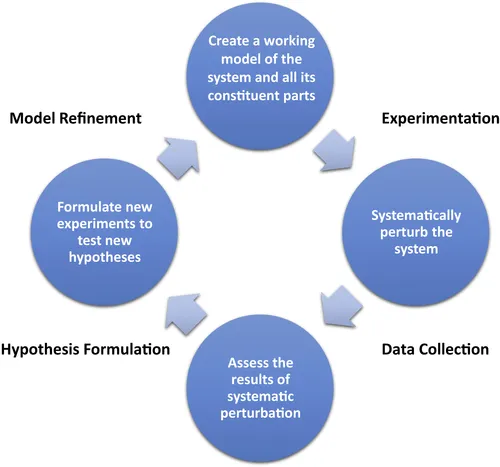
Figure 1 Steps involved in conducting research using a systems biology-based approach.
Technologies Utilized in Systems Biology
The human genome was first sequenced in 2003. The project lasted more than 13 years and required more than 3 billion US dollars to complete [4]. Today, genome-wide deoxyribonucleic acid (DNA) sequencing can be performed in less than a day for less than 1000 US dollars. This unbelievable pace of technological improvement has far outpaced Moore’s law [5] and has largely driven many of the research advancements in systems biology. As a result of these technological advancements, researchers are now able to query ever increasingly large collections of genomic, transcriptomic, proteomic, metabolomic, and epigenomic data sets.
The study of these “-omics” data sets can be organized based on the central dogma of biology, which states that molecular information flows in a hierarchical manner: DNA → RNA → protein (Figure 2). An organism’s genome, or genetic material, consists of all the genes as well as noncoding sequences of DNA. The transcriptome includes the messenger ribonucleic acids (mRNAs) which are transcribed from DNA by RNA polymerases which encode proteins as well as other RNAs such as noncoding RNAs. The proteome refers to the entire set of proteins within cells that are produced by the translation of mRNAs into amino acids. These amino acids are combined to form a diverse number of proteins. The metabolome represents all the small molecule chemicals (such as metabolites). Metabolites are highly dynamic, and measurements of their levels at a particular point in time can be used to produce a metabolic “signature,” providing a snapshot of cellular function or insight into an individual’s metabolic response to exogenous/endogenous substances or cellular processes.
The ability to generate multicomponent data sets informs our understanding of biological systems and network interactions. However, the sheer magnitude of data can present a practical problem that complicates the research. For example, the accumulation of systems-level data resulted in data sets composed of millions or billions of discrete data points (the human genome, for example, contains approximately 3.2 billion base pairs). Very few researchers could afford the storage capabilities and computing power necessary to analyze the gigabytes or terabytes of data. Over time the pace of technological advancement simultaneously reduced the expense associated with such large datasets and introduced novel technologies and applications to collect, store, and analyze such datasets.
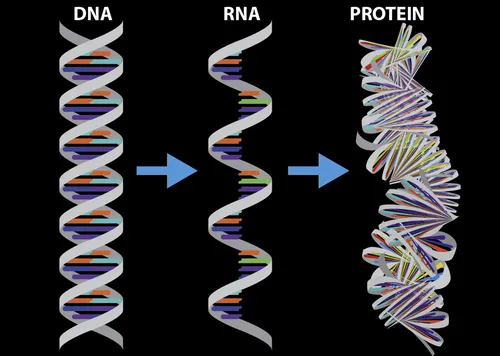
Figure 2 The Central Dogma. Flow of molecular information from DNA to RNA to protein.
In addition to advances in processing power and data storage, other commonly utilized technologies for assessing biological systems have improved, most notably relating to high-throughput technologies. Building on the work of the Human Genome Project, genome- and epigenome-wide association studies (GWAS and EWAS, respectively) enable researchers to investigate the entire genome for single nucleotide polymorphisms (SNPs) or epigenetic marks that may be associated with disease [6,7]. Unlike study designs that investigate a particular health condition or phenotype tied to a single polymorphism or epigenetic mark, GWAS and EWAS can be utilized to assess the entire genome to pinpoint which SNPs or epigenetic alterations may be tied to a particular disease or may affect susceptibility to that disease. The high-throughput nature of such technologies has uncovered thousands of polymorphisms and alterations linked to discrete health outcomes [8,9], and is a cost-effective means of assessing specific health conditions for possible therapeutic interventions.
Another high-throughput technology driving systems biology, the microarray, allows researchers to assess thousands of genes, proteins, or other analytes through a variety of means including direct hybridization [10]. For example, DNA microarrays enable the assessment of genome-wide gene expression [11], while various DNA methylation arrays currently allow the assessment of hundreds of thousands of methylation probes located throughout the genome [12]. It is predicted that as microarray technology continues to develop, the number of other epigenetic modifications, proteins, and small molecules that can be queried simultaneously will continue to increase. In addition to microarray technology, recent technological advancements have dramatically reduced the cost of next-generation sequencing (NGS). NGS, which allows the sequencing of nucleic acids in millions of parallel reactions, is relatively inexpensive, scalable, and can quickly sequence billions or trillions of bases. The rise of NGS has increased the high-throughput capabilities of a number of analyses, such as DNA/RNA–protein interactions (chromatin immunoprecipitation sequencing) and gene expression (RNA sequencing). Additionally, there have been advancements in other technologies including nuclear magnetic resonance spectroscopy, gas chromatography–mass spectrometry, and liquid chromatography–mass spectrometry, enabling researchers to quickly collect system-level data in order to understand complex biological and cellular processes and interactions.
In addition to the technologies described above, systems biology relies on a variety of in silico tools in order to assess and ultimately model biological networks or pathways [13]. One of the central tenets of systems biology is that observations or data enable the creation of system-level networks which can then be utilized to inform the next set of hypothesis-driven experiments. As this approach has gained in popularity, so too have the numbers and diversity of computational tools which are used to interpret such large-scale data. Tools such as kinetic modeling assist in unraveling how the genes, proteins, cells, or molecules of a system interact and respond to environmental perturbations [14]. These mathematical models are currently being used to predict experimental outcomes such as how chemicals with similar physical or chemical properties, or how different exposure concentrations of the same agent, may affect the system.
While these technologies have resulted in significant contributions to the field, one of the greatest technological advancements in systems biology has been the refinement of in vitro model systems. The introduction of high-throughput human in vitro assays has substantially increased the rate at which researchers assess chemical interactions or cellular changes in response to certain stim...
Table of contents
- Cover image
- Title page
- Table of Contents
- Copyright
- Contributors
- Preface
- Chapter 1. Systems Biology in Toxicology and Environmental Health
- Chapter 2. The Cell: The Fundamental Unit in Systems Biology
- Chapter 3. Systems Biology and the Epigenome
- Chapter 4. Omics Technologies Used in Systems Biology
- Chapter 5. Computational Methods Used in Systems Biology
- Chapter 6. Priority Environmental Contaminants: Understanding Their Sources of Exposure, Biological Mechanisms, and Impacts on Health
- Chapter 7. Environmental Contaminants and the Immune System: A Systems Perspective
- Chapter 8. The Role of Apoptosis-Associated Pathways as Responders to Contaminants and in Disease Progression
- Chapter 9. Systems Biology of the DNA Damage Response
- Chapter 10. Hormone Response Pathways as Responders to Environmental Contaminants and Their Roles in Disease
- Chapter 11. Developmental Origins of Adult Disease: Impacts of Exposure to Environmental Toxicants
- Index
Trusted by 375,005 students
Access to over 1.5 million titles for a fair monthly price.
Study more efficiently using our study tools.
Frequently asked questions
Yes, you can cancel anytime from the Subscription tab in your account settings on the Perlego website. Your subscription will stay active until the end of your current billing period. Learn how to cancel your subscription
No, books cannot be downloaded as external files, such as PDFs, for use outside of Perlego. However, you can download books within the Perlego app for offline reading on mobile or tablet. Learn how to download books offline
Perlego offers two plans: Essential and Complete
- Essential is ideal for learners and professionals who enjoy exploring a wide range of subjects. Access the Essential Library with 800,000+ trusted titles and best-sellers across business, personal growth, and the humanities. Includes unlimited reading time and Standard Read Aloud voice.
- Complete: Perfect for advanced learners and researchers needing full, unrestricted access. Unlock 1.5M+ books across hundreds of subjects, including academic and specialized titles. The Complete Plan also includes advanced features like Premium Read Aloud and Research Assistant.
We are an online textbook subscription service, where you can get access to an entire online library for less than the price of a single book per month. With over 1.5 million books across 990+ topics, we’ve got you covered! Learn about our mission
Look out for the read-aloud symbol on your next book to see if you can listen to it. The read-aloud tool reads text aloud for you, highlighting the text as it is being read. You can pause it, speed it up and slow it down. Learn more about Read Aloud
Yes! You can use the Perlego app on both iOS and Android devices to read anytime, anywhere — even offline. Perfect for commutes or when you’re on the go.
Please note we cannot support devices running on iOS 13 and Android 7 or earlier. Learn more about using the app
Please note we cannot support devices running on iOS 13 and Android 7 or earlier. Learn more about using the app
Yes, you can access Systems Biology in Toxicology and Environmental Health by Rebecca Fry in PDF and/or ePUB format, as well as other popular books in Medicine & Public Health, Administration & Care. We have over 1.5 million books available in our catalogue for you to explore.