eBook - ePub
Intellectual Property and Assessing its Financial Value
- 200 pages
- English
- ePUB (mobile friendly)
- Available on iOS & Android
eBook - ePub
Intellectual Property and Assessing its Financial Value
About this book
This book covers the different aspects, such as patents, trademarks and copyright of Intellectual Property (IP) from a more practical business perspective. Intellectual Property and Assessing its' Financial Value describes the differences between regions, mainly the differences between the US and EU. In addition, several tools are presented for assessing the value of new IP, which is of importance before engaging on a new project that could result in new IP or for licensing purposes. The first chapter introduces the different types of IP and illustrating the business importance of capturing and safeguarding IP, the second chapter discusses patents and other forms of IP with subsequent chapters exploring copyright and trademarks in more detail, and a concluding chapter on the future of systems that can assess new IP value.
- Introduces IP and various features from a business perspective
- Includes tools to assess the value of new IP
- Provides a comprehensive and practical insight into IP
- Explores other forms of IP including designs, models, breeders rights, and domain names
- Offers an applied approach to IP and systems to evaluate the value of new IP
Information
1
Overview
Abstract
Most people know a few forms of intellectual property (IP), such as patents or copyright, but there are many others. This chapter provides an overview of the different types of IP, illustrated via the history of the scientist Dr L. Baekeland, who turned several of his innovations into commercial successes. In addition, several tools are presented for maintaining confidentiality to safeguard possible new IP.
Key words
intellectual property
definitions
overview
confidentiality
NDA
CDA
MTA
Introduction
Creativity is the base of innovation and leads to economic value and competitive advantage. This maxim holds true equally in life sciences as for other areas or industries. Such value may come from a new product/technology, edging out competitors in a market, creating a revenue stream in new territories, or increasing market reputation. This book provides an introduction to intellectual property (IP), assessing its financial value and valorization as applied to life-sciences-related industries, such as biotechnology, food, feed, medicine, and pharmacy. This area of law provides the legal framework for bridging creativity and the value that may come from it. Through the proper use of IP, one has a significantly better chance of converting creativity into economic value.
Intellectual property law recognizes a creator’s rights in ideas, creations, innovations, and goodwill. Being intangible, IP differs from real property (land) or personal property (your possessions) that is secured, controlled, and protected using physical means such as fences, alarms, and security staff. Because intellectual property is a product of the mind, there is often no easy way to build a “fence” around it. Protecting IP is very subtle.
Many scientists are good at doing science, but in some (unfortunately rare) cases they also have a good business sense. A nice example is Leo Baekeland (Figure 1.1).
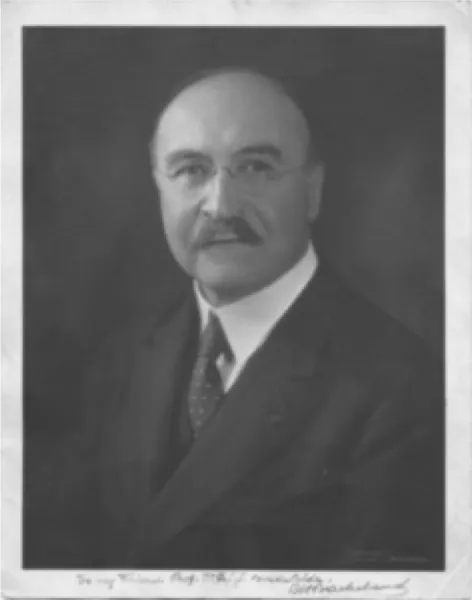
Figure 1.1 Leo Baekeland (1863–1944) Source: Science Museum, Ghent University.
Leo Hendrik Baekeland was born in Sint-Martens-Latem, Belgium, on 14 November 1863. He obtained a PhD in chemistry at Ghent University in 1884, then raised significant funds from various investors and started a company in 1893. The logo of his company, Nepera Chemical, is based on the von Liebig type of kali equipment, often used in chemistry labs (Figure 1.2). Baekeland had a broad range of interests in the use of chemistry for various applications, and in 1893 filed a first patent on the use of fluoride containing salts for the preservation of meat and fish (Figure 1.3).
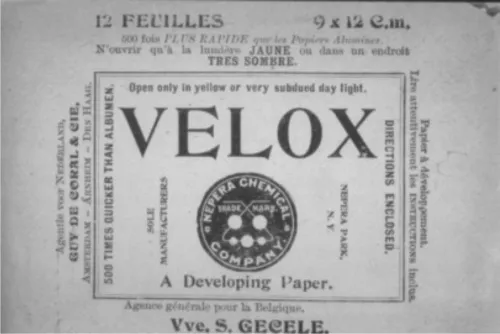
Figure 1.2 The logo of Baekeland’s first company on a package of Velox paper Source: Science Museum, Ghent University.
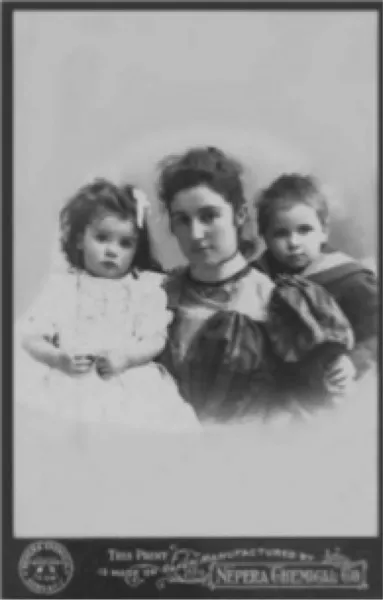
Figure 1.3 Baekeland’s family on Velox photographic paper
He also worked on improving the production and quality of photographic paper. His improved paper with the brand name “Velox” could be developed using artificial light, which was a significant advantage over the old photographic paper that needed to be developed using sunlight, which of course depended on the weather conditions (Figure 1.4).
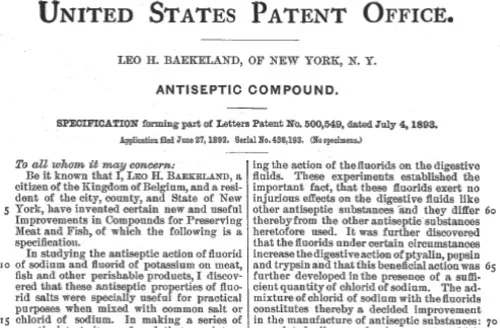
Figure 1.4 Baekeland’s patent regarding an antiseptic compound, 4 July 1893
Baekeland sold his company in 1899 to Eastman Kodak for US$750,000 and, inspired by Benjamin Franklin, moved to the United States. He reinvested his money, bought a large estate in Yonkers, New York, and formed a research team of 40 chemists to study the chemical reaction of phenols and formaldehyde (Figure 1.5).
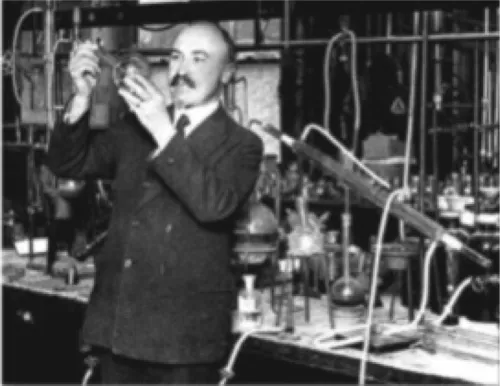
Figure 1.5 Baekeland in his lab.
On 7 December 1909 his famous patent was issued for the production of the first true “plastic” ever (Figure 1.6), which was later given the brand name “Bakelite” (Figure 1.7).
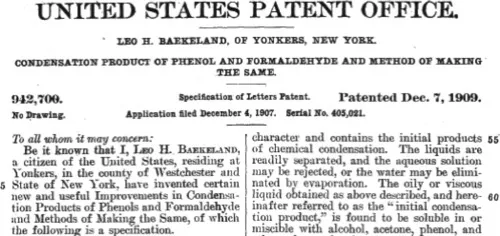
Figure 1.6 The famous Bakelite patent, dated 7 December 1909
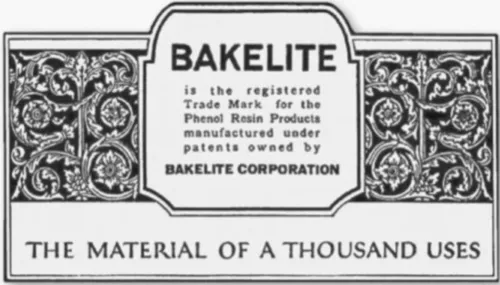
Figure 1.7 The trademark for Bakelite
Baekeland subsequently filed several other patents on the use of Bakelite®, such as the production of “sound records” using Bakelite (patent dated 30 December 1913, Figure 1.8). He also designed a lot of lab equipment using Bakelite for his friends at Ghent University.
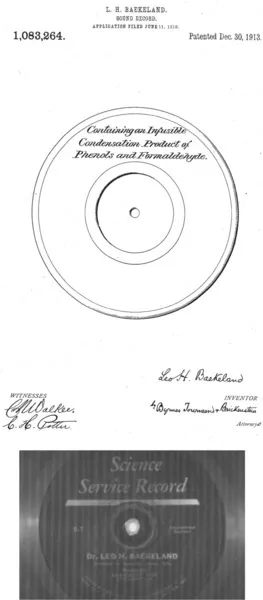
Figure 1.8 Patent dated 30 December 1913 on the use of Bakelite for the production of sound records, and photo of a record with the voice of Baekeland Source: Science Museum, Ghent University.
In 1910 Baekeland established the General Bakelite Company, which in 1939 was sold to and merged with the Union Carbide Carbon Corporation to form the Union Carbide Plastics Company. For this transaction, Baekeland received US$51.5 million. By the time he died in 1944 the production of Bakelite and/or analogues had reached 175,000 tons, which was used by over 35 other large companies to produce more than 15,000 different objects in Bakelite material (Figure 1.9).
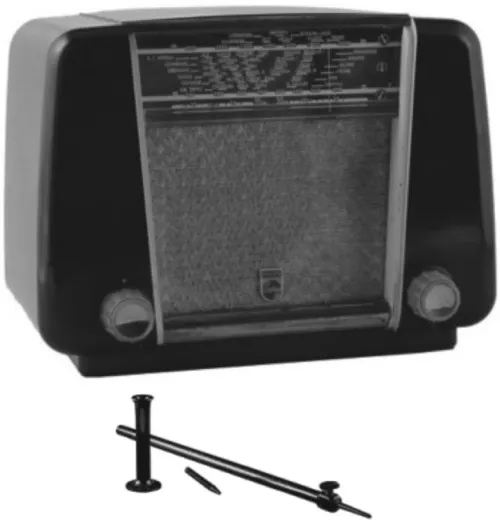
Figure 1.9 A radio case and scientific instruments made out of Bakelite Source: Science Museum, Ghent University.
In this story of Baekeland, we come across several types of IP.
■ Patent. Patents may be granted for the invention of any new, economically relevant, and useful product, process, or machine, or any new, useful improvement thereof. A patent is a property right that grants the inventor or owner the right to exclude others from producing, using, selling, or advertising the invention as defined by the patent’s claims in a specific country or territory for a period of 20 years.
■ Trade secret. Generally, a trade secret is any formula, manufacturing process, method of business, technical know-how, etc. that gives its holder a competitive advantage and is secret. The legal definition of a trade secret and the protection afforded to its owner vary from country to country, and generally the owner needs to demonstrate established protocols to maintain secrecy. The most famous examples are the ingredients and production of Coca-Cola®.
■ Trademark. A trademark is a word, phrase, design, or combination thereof which identifies and distinguishes the source of the products or services of one party in comparison to others – Coca-Cola is again an example. Trademarks can build brands, corporate identity, and competitive advantage. Domain names for websites are related to trademarks.
■ Copyright. Copyrights protect original works of authorship fixed in a tangible, reproducible form. Copyrighted works include literary, dramatic, and musical compositions, movies, photos, artwork, computer programs, cooking recipes, etc. Copyright protects the expression of an idea, but not the idea itself. Software and databases are specific cases related to copyright.
■ Designs and models. These are protected in the United States as design patents and in the European Union as registered Community designs.
Depending on the industry, there are sometimes additional types of IP rights available.
■ Recognition of traditional foods. To improve recognition of traditional food products relating to a specific region, the European Union has cre...
Table of contents
- Cover image
- Title page
- Table of Contents
- Copyright page
- List of figures and tables
- About the authors
- List of acronyms
- 1: Overview
- 2: Patents
- 3: Trade secrets
- 4: Trademarks
- 5: Copyrights
- 6: Assessing the financial value of IP
- References and further reading
- Useful websites
- Appendix 1: An example of a CDA
- Appendix 2: An example of an MTA
- Appendix 3: Invention disclosure form
- Index
Trusted by 375,005 students
Access to over 1.5 million titles for a fair monthly price.
Study more efficiently using our study tools.
Frequently asked questions
Yes, you can cancel anytime from the Subscription tab in your account settings on the Perlego website. Your subscription will stay active until the end of your current billing period. Learn how to cancel your subscription
No, books cannot be downloaded as external files, such as PDFs, for use outside of Perlego. However, you can download books within the Perlego app for offline reading on mobile or tablet. Learn how to download books offline
Perlego offers two plans: Essential and Complete
- Essential is ideal for learners and professionals who enjoy exploring a wide range of subjects. Access the Essential Library with 800,000+ trusted titles and best-sellers across business, personal growth, and the humanities. Includes unlimited reading time and Standard Read Aloud voice.
- Complete: Perfect for advanced learners and researchers needing full, unrestricted access. Unlock 1.5M+ books across hundreds of subjects, including academic and specialized titles. The Complete Plan also includes advanced features like Premium Read Aloud and Research Assistant.
We are an online textbook subscription service, where you can get access to an entire online library for less than the price of a single book per month. With over 1.5 million books across 990+ topics, we’ve got you covered! Learn about our mission
Look out for the read-aloud symbol on your next book to see if you can listen to it. The read-aloud tool reads text aloud for you, highlighting the text as it is being read. You can pause it, speed it up and slow it down. Learn more about Read Aloud
Yes! You can use the Perlego app on both iOS and Android devices to read anytime, anywhere — even offline. Perfect for commutes or when you’re on the go.
Please note we cannot support devices running on iOS 13 and Android 7 or earlier. Learn more about using the app
Please note we cannot support devices running on iOS 13 and Android 7 or earlier. Learn more about using the app
Yes, you can access Intellectual Property and Assessing its Financial Value by Benedikt Sas,Stanislas De Vocht,Philippe Jacobs in PDF and/or ePUB format, as well as other popular books in Languages & Linguistics & Library & Information Science. We have over 1.5 million books available in our catalogue for you to explore.