
eBook - ePub
Thermoforming of Single and Multilayer Laminates
Plastic Films Technologies, Testing, and Applications
- 352 pages
- English
- ePUB (mobile friendly)
- Available on iOS & Android
eBook - ePub
Thermoforming of Single and Multilayer Laminates
Plastic Films Technologies, Testing, and Applications
About this book
Thermoforming of Single and Multilayer Laminates explains the fundamentals of lamination and plastics thermoforming technologies along with current and new developments. It focuses on properties and thermoforming mechanics of plastic films and in particular single and multilayered laminates, including barrier films.
For environmental and economic reasons, laminates are becoming increasingly important as a replacement for solid sheets and paint finishes in many industries, including transportation, packaging, and construction. Yet the processes of film formability during the extensive deformation and elevated temperatures experienced in conventional processing technologies, such as thermoforming, are poorly understood by most engineers.
This book covers production processes, such as extrusion, calendaring, and casting, as well as mechanical and impact testing methods. It also describes how testing protocols developed for metals can be leveraged for plastic films and laminates, and includes a thorough discussion on methods for performing optical strain analysis.
Applications in transportation vehicles and packaging, including packaging for food, medical and electronics applications, sports equipment, and household appliances, are discussed. Safety, recycling and environmental aspects of thermoforming and its products complete the book.
- First comprehensive source of information and hands-on guide for the thermoforming of multilayered laminates
- Covers applications across such sectors as automotive, packaging, home goods, and construction
- Introduces new testing methods leveraging protocols used for metals
Information
1
Introduction to Thermoforming
Thermoforming is a primary polymer conversion process in which a plastics sheet is heated to its rubbery state and by either mechanical or pneumatic means formed into a three-dimensional object. Today, it is one of the fastest growing segments of the plastics industry. This has been brought on by the development of new materials and techniques, coupled with innovative production and specialized equipment capable of providing manufacturing efficiency for the industry. The major advantages of thermoforming are its cost-effective thermoforming tools, reasonably priced thermoforming machines, the possibility for processing even multilayered materials, foams and preprinted forming materials. This chapter primarily gives an overview of the history of thermoforming, thermoforming markets and applications.
Keywords
Thermoforming; One-step forming; Vacuum forming; Keratin; Cellulose nitrate
Chapter Outline
1.1 History
1.2 Market and Applications
References
Success to any manufacturing process is directly linked to cost-effective production of parts, or at similarly high production costs, but at an improved part quality. There are areas of applications, where injection molding competes with thermoforming, but where packaging technology is concerned, thermoforming is the process of choice with little competition.
The shaping of plastic films and sheets has been known by many names over the years. Originally, shaping was considered one of a variety of fabrication techniques available to transform plastic sheets into finished products. The sheets-plastics industry has grown rapidly in recent years, and is still growing. The modification of older materials and the introduction of new ones led to new applications and new techniques being introduced, but the industry eventually settled on the term thermoforming.
Thermoforming is a primary polymer conversion process in which a plastic sheet is heated to its rubbery state and by either mechanical or pneumatic means formed into a three-dimensional object. Today, it is one of the fastest growing segments of the plastics industry. This has been brought on by the development of new materials and techniques, coupled with innovative production and specialized equipment capable of providing the manufacturing efficiency for the industry. The major advantages of thermoforming are its cost-effective thermoforming tools, reasonably priced thermoforming machines and the possibility for processing even multi-layered materials, foams and preprinted forming materials.
As the thermoforming process has become more important, emphasis has been focused on producing sheets to overcome thermoforming market demands. Most of the materials are available from suppliers as granules or as sheets. Sheets are commercially available in sizes required for producing parts. Thinner sheeting of many materials, produced by extrusion or calendering is available in rolls several hundred feet in length. Most suppliers provide data on the physical properties of their materials.
In principle every thermoplastic sheet can be thermoformed. However, high-impact polystyrene (HIPS) has become the resin of choice. High-density polyethylene (HDPE) is also used, due to its toughness and low cost. Although you can find products made of polypropylene (PP), its low use rates are due to processing difficulties in both sheet extrusion and forming. Over the years, there have been major efforts to develop thermoformable grades of PP by modifying its molecular structure.
Some of the earliest thermoformed products were produced using one-step forming. In this approach, heavy-gauge sheets were simply heated until soft and then formed. The most common example of one-step forming is vacuum forming, which involves controlled heating of a thermoplastic material to a temperature where its shape can be molded. The physical change to the preheated thermoplastic is accomplished by the use of vacuum pressure. It is an economical process for producing large-sized, low-volume parts at a reasonable price.
The advantages of vacuum forming are the capability to form large parts without expensive equipment and tooling. Vacuum forming also allows for large production runs and inexpensive mold and design modifications. Other one-step forming processes include drape forming, free forming, non-uniform heating, matched-mold forming, autoclave forming and diaphragm forming [1]. For all deep-drawn parts, one-step forming yields parts with variable wall thicknesses.
To address issues with unacceptable thicknesses in deep-drawn parts, a two-step forming process was realized. It involves manipulation of a hot sheet prior to its contact with the mold surface. Although there are many two-step forming processes, pressure forming has been widely used in industry [1]. The sheet is locked in a frame around its periphery and is preheated to a predetermined temperature for a predetermined time. Positive air pressure is then applied by flowing compressed air against the top of the sheet to force it against the mold. Differential pressure across the sheet thickness can exceed 15 psi. Pressure forming offers a faster production cycle, greater part definition and greater dimensional control.
This chapter primarily gives an overview of the history of thermoforming. Then thermoforming market and applications are reviewed.
1.1 History
Thermoforming is considered one of the oldest methods of forming useful articles of plastic [1]. It is a simple approach to shaping sheets of thermoplastic materials. The plastic sheet is heated until it becomes soft and pliable. This hot, now flexible material is drawn against the steel mold until it cools. When cooled, the plastic retains the shape and details of the mold. Historically, keratin [2,3], a derivative found in tortoise shells (Fig. 1.1), was one of the first materials to be thermoformed. The Romans imported tortoise shell from the Orient and used hot oil to shape this thermoplastic material into food utensils. Later, Native Americans used natural cellulose to make canoes.
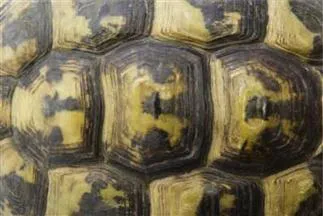
Figure 1.1 Tortoise shell [4].
Even though the technology was used, it was only applied to metal, glass and natural fiber. There were attempts made by researchers from across the world to form cellulose nitrate, but it wasn’t until the late 1800s that Hyatt thermoformed the first cellulose nitrate sheets into desired shapes. Celluloid baby rattles with intricate details were thermoformed in 1890 [5].
In the early twentieth century, more and more products were thermoformed. Sharps piano keys drape formed over captive wooden cores were formed in 1910. Development of thermoplastics (flexible PVC, PS, CA and PMMA) started in the early 1930s saw continued growth during and after World War II.
Thermoforming reached a new height with the development of acrylic aircraft cockpit enclosures, canopies, turrets, domes, relief maps and many other items that were vacuum formed. Bottles formed from two thermoformed halves were developed by Fernplas Corp. in 1933. In 1948, in England, cast acrylic bathtubs were thermoformed by the Troman brothers, and in 1954, skin-packaged products were first shown at hardware manufacturer association trade shows. During this period, PVC and cellulose acetate (CA) were the materials of choice [1]. During the era of industrial growth (1960s), major developments were made in the area of blister and food packaging. Danafilms developed ...
Table of contents
- Cover image
- Title page
- Table of Contents
- Copyright
- Dedication
- Preface
- Acknowledgments
- 1. Introduction to Thermoforming
- 2. The Thermoforming Process
- 3. Review of Characteristics of Common Plastics for Thermoforming
- 4. Lamination
- 5. New Developments
- 6. Mechanics of Materials
- 7. Characterization
- 8. Matching Material Characteristics to Commercial Thermoforming
- 9. Safety, Recycling and Environmental Issues of Thermoforming and its Products
- 10. Other Processing Approaches
- 11. Modeling of Thermoforming: A Literature Review
- 12. Troubleshooting
- Index
Trusted by 375,005 students
Access to over 1.5 million titles for a fair monthly price.
Study more efficiently using our study tools.
Frequently asked questions
Yes, you can cancel anytime from the Subscription tab in your account settings on the Perlego website. Your subscription will stay active until the end of your current billing period. Learn how to cancel your subscription
No, books cannot be downloaded as external files, such as PDFs, for use outside of Perlego. However, you can download books within the Perlego app for offline reading on mobile or tablet. Learn how to download books offline
Perlego offers two plans: Essential and Complete
- Essential is ideal for learners and professionals who enjoy exploring a wide range of subjects. Access the Essential Library with 800,000+ trusted titles and best-sellers across business, personal growth, and the humanities. Includes unlimited reading time and Standard Read Aloud voice.
- Complete: Perfect for advanced learners and researchers needing full, unrestricted access. Unlock 1.5M+ books across hundreds of subjects, including academic and specialized titles. The Complete Plan also includes advanced features like Premium Read Aloud and Research Assistant.
We are an online textbook subscription service, where you can get access to an entire online library for less than the price of a single book per month. With over 1.5 million books across 990+ topics, we’ve got you covered! Learn about our mission
Look out for the read-aloud symbol on your next book to see if you can listen to it. The read-aloud tool reads text aloud for you, highlighting the text as it is being read. You can pause it, speed it up and slow it down. Learn more about Read Aloud
Yes! You can use the Perlego app on both iOS and Android devices to read anytime, anywhere — even offline. Perfect for commutes or when you’re on the go.
Please note we cannot support devices running on iOS 13 and Android 7 or earlier. Learn more about using the app
Please note we cannot support devices running on iOS 13 and Android 7 or earlier. Learn more about using the app
Yes, you can access Thermoforming of Single and Multilayer Laminates by Syed Ali Ashter in PDF and/or ePUB format, as well as other popular books in Technology & Engineering & Industrial Engineering. We have over 1.5 million books available in our catalogue for you to explore.