- 243 pages
- English
- ePUB (mobile friendly)
- Available on iOS & Android
eBook - ePub
Chirality in Drug Design and Synthesis
About this book
Chirality in Drug Design and Synthesis is a collection of papers that discusses the property of asymmetry in the structural and synthetic chemistry of natural products, including the significance of chirality in medicinal chemistry. These papers examine the need for the preparation and study of pure enantiomers of chiral drug substances and their mechanism of interaction with enzymes and receptors. These papers also investigate the techniques in studying these interactions, as well as analyze the methods for their synthesis in enantiomerically pure form. One paper discusses the pharmacological and pharmacokinetic analyses made that point to the differences in the activity and disposition of enantiometric pairs. Another paper reviews the implications of the neglect of stereoselectivity at the different levels during the examination process of racemic drugs. Since no general guidelines exists for the development of drugs with chiral centers, one paper suggests a case-by-case approach in evaluating the safety and efficacy of drugs, particularly as regards how isomers differ in their effects. This collection is suitable for the pharmacologist, medicinal chemists, toxicologists, mechanistic chemists and synthetic organic chemists.
Information
1
Chirality: Pharmacological Action and Drug Development
MARTHA HYNECK, JOHN DENT and JERRY B. HOOK, Research and Development, Smith Kline Beecham Pharmaceuticals, 709 Swedeland Road, King of Prussia, Pennsylvania 19406–2799, USA
Publisher Summary
This chapter discusses that optical activity is caused by molecular asymmetry and that nonsuperimposable mirror-image structures results from this molecular asymmetry. There is a hypothesis that the chiral nature of compounds is because of the fact that carbon constituents can have a non-planar spatial arrangement giving rise to nonsuperimposable mirror images. Most naturally occurring medicinal agents exist in their optically active or single isomer form, such as quinidine and quinine, (-)-morphine, and (+)-digitoxin. However, many synthetic chemicals are produced as the optically inactive racemate. Because of potential pharmacological, pharmacokinetic, and toxicological issues, some scientists suggest that only single isomers should be considered for drug development and regulatory approval. Pharmacokinetic investigations into the disposition of enantiomers have enhanced the understanding of racemic drug action and have helped to understand previously inexplicable pharmacodynamic outcomes following administration of racemates to patients.
Introduction
The field of stereochemistry has been developing since the early 1800s when Jean-Baptiste Biot, a French physicist, discovered optical activity in 1815. By the middle of the 19th century, Louis Pasteur had performed the first resolution of a racemic mixture, d- and l-tartaric acid. From this work Pasteur made the remarkable proposal that optical activity was caused by molecular asymmetry and that nonsuperimposable mirror-image structures resulted from this molecular asymmetry. Despite considerable scepticism within the community of chemists, scientists from several countries continued exploring this new field and with each new scientific contribution the relationship between optical activity and molecular asymmetry unfolded. By the end of the 18th century, Van’t Hoff of Holland and Le Bel of France strengthened Pasteur’s proposal by hypothesizing that the chiral nature of compounds was due to the fact that carbon constituents could have a non-planar spatial arrangement giving rise to nonsuperimposable mirror images (Drayer, 1988a).
Today we realize that most naturally occurring medicinal agents exist in their optically active or single isomer form, such as quinidine and quinine (Fig. 1), (–)-morphine and (+)-digitoxin. However, many synthetic chemicals are produced as the optically inactive racemate. According to a survey reported in 1984, nearly 400 racemates were prescribed for patients in the 1970s and 1980s (Mason, 1984). The fact that so many drugs are administered as racemic mixtures has led to considerable concern and debate (Ariens, 1984; Caldwell et al., 1988). Because of potential pharmacological, pharmacokinetic and toxicological issues, some scientists suggest that only single isomers should be considered for drug development and regulatory approval. In support of racemic drug development, proponents cite examples of racemic compounds that have been administered for years without untoward effects, and the technical difficulties associated with large-scale production of single isomers.
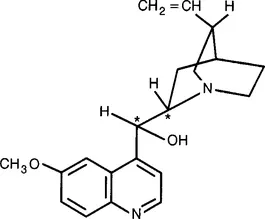
Fig. 1 Structure of quinidine and quinine.
In the past few decades pharmacological and toxicological investigations have clearly demonstrated significant differences in the biological activity of some isomeric pairs. Recently, pharmacokinetic investigations into the disposition of enantiomers have enhanced our understanding of racemic drug action and have helped us to understand previously inexplicable pharmacodynamic outcomes following administration of racemates to patients.
2 Terminology
A myriad of terms in stereochemistry are used to define molecules and to describe the relationship between molecules and receptors in the body (Wainer and Marcotte, 1988; Caldwell et al., 1988). This section is not meant to be an exhaustive review of the field, but to cover the major terms and concepts to be used.
Isomers are unique molecular entities composed of the same chemical constituents with common structural characteristics. Stereoisomers are those isomers whose atoms, or groups of atoms, differ with regard to spatial arrangement of the ligands. Stereoisomers can be either geometric or optical isomers. Geometric isomers are stereoisomers without optically active centres; for these compounds terminology such as cis or Z isomer (meaning together or same side), and trans or E isomer (meaning opposite side) are used to describe the spatial arrangement.
Optical isomers are a subset of stereoisomers, from which at least two isomers are optically active; these compounds are said to possess chiral or asymmetrical centres. The most common chiral centre is carbon, but phosphorus, sulphur and nitrogen can also form chiral centres. If the isomer and its mirror image are not superimposable, the pair are referred to as enantiomers or optical antipodes. A mixture of equal portions (50/50) of each enantiomer is called a racemate. Optical isomers that are not enantiomers are called diastereoisomers or diastereomers. One type of diastereomer is a molecule with two chiral centres; all four isomers of this diastereomer are not superimposable mirror images of each other. Whereas enantiomers have physically identical characteristics such as lipid solubility and melting/ boiling points, diastereomers can have different chemical and physical characteristics.
The earliest method of differentiating one enantiomer from its antipode was to assign the d or (+) designation to stereoisomers which caused a clockwise rotation of a beam of polarized light, and l or (–) to stereoisomers which cause a counterclockwise rotation of the polarized light. Since this system did not describe the actual spatial arrangement, the Fischer convention was developed (Wichelhaus et al., 1919; Freudenberg, 1966). In this system, the molecule had to be converted to a compound of known configuration, such as (+)-glyceraldehyde and then named accordingly. Due to the difficulty of the chemical transformation, the awkwardness of the convention in some situations (i.e. diastereomers) and the confusion between small and capital letter system (d and d), the convention has fallen into disfavour.
The Cahn–Ingold–Prelog convention is currently recommended for specifying the configuration of the isomers (Cahn et al., 1966). In this method, the ligands around the chiral centre are ‘sized’ according to their atomic number (Fig. 2). The molecule is then positioned with the smallest ligand(s) away from the viewer (‘into the page’). If the sequence of the remaining three ligands are arranged so that the largest (L) to the smallest (S) size is in a clockwise manner, the molecule is assigned the R or rectus; the counterclockwise sequencing is given the S or sinister designation.
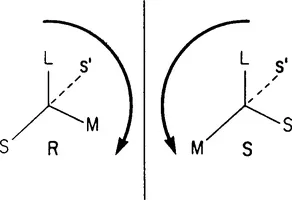
Fig. 2 The Cahn–Ingold-Prelog convention. Reprinted from Wainer and Marcotte (1988) by courtesy of Marcel Dekker Inc.
Two other terms may be used to compare the pharmacological activity of ...
Table of contents
- Cover image
- Title page
- Table of Contents
- Dedication
- Copyright
- Contributors
- Foreword
- Introduction
- Chapter 1: Chirality: Pharmacological Action and Drug Development
- Chapter 2: Racemic Therapeutics—Problems all Along the Line
- Chapter 3: Chirality, Drug Metabolism and Action
- Chapter 4: From Enzyme Mimics to Molecular Self-Assembly Processes
- Chapter 5: Modelling of Drug–Receptor Interactions: Stereoselectivity of 5-Hydroxytryptamine and Dopamine Receptors in the Brain
- Chapter 6: Molecular Basis of the Activity of Antibiotics of the Vancomycin Group: Guides for Peptide–Peptide Binding
- Chapter 7: Recent Developments in the Use of Enzyme-Catalysed Reactions in Organic Synthesis
- Chapter 8: Recent Progress in Research on the Immunosuppressant FK-506
- Chapter 9: A Practical, Enantioselective Synthesis of [R-(R*, S*)]-β-[(2-Carboxyethyl)thio]-α-hydroxy-2-(8-phenyloctyl)-benzenepropanoic Acid (SK&F 104353), a Potent LTD4 Antagonist
- Chapter 10: Chirality Recognition in Synthesis
- Chapter 11: Sultam-directed asymmetric syntheses of α-amino acids
- Appendix: Abstracts of Posters
- Index
Trusted by 375,005 students
Access to over 1.5 million titles for a fair monthly price.
Study more efficiently using our study tools.
Frequently asked questions
Yes, you can cancel anytime from the Subscription tab in your account settings on the Perlego website. Your subscription will stay active until the end of your current billing period. Learn how to cancel your subscription
No, books cannot be downloaded as external files, such as PDFs, for use outside of Perlego. However, you can download books within the Perlego app for offline reading on mobile or tablet. Learn how to download books offline
Perlego offers two plans: Essential and Complete
- Essential is ideal for learners and professionals who enjoy exploring a wide range of subjects. Access the Essential Library with 800,000+ trusted titles and best-sellers across business, personal growth, and the humanities. Includes unlimited reading time and Standard Read Aloud voice.
- Complete: Perfect for advanced learners and researchers needing full, unrestricted access. Unlock 1.5M+ books across hundreds of subjects, including academic and specialized titles. The Complete Plan also includes advanced features like Premium Read Aloud and Research Assistant.
We are an online textbook subscription service, where you can get access to an entire online library for less than the price of a single book per month. With over 1.5 million books across 990+ topics, we’ve got you covered! Learn about our mission
Look out for the read-aloud symbol on your next book to see if you can listen to it. The read-aloud tool reads text aloud for you, highlighting the text as it is being read. You can pause it, speed it up and slow it down. Learn more about Read Aloud
Yes! You can use the Perlego app on both iOS and Android devices to read anytime, anywhere — even offline. Perfect for commutes or when you’re on the go.
Please note we cannot support devices running on iOS 13 and Android 7 or earlier. Learn more about using the app
Please note we cannot support devices running on iOS 13 and Android 7 or earlier. Learn more about using the app
Yes, you can access Chirality in Drug Design and Synthesis by C. Brown in PDF and/or ePUB format, as well as other popular books in Social Sciences & Biophysics. We have over 1.5 million books available in our catalogue for you to explore.