eBook - ePub
Surface Production Operations: Volume III: Facility Piping and Pipeline Systems
- 1,090 pages
- English
- ePUB (mobile friendly)
- Available on iOS & Android
eBook - ePub
Surface Production Operations: Volume III: Facility Piping and Pipeline Systems
About this book
Surface Production Operations: Facility Piping and Pipeline Systems, Volume III is a hands-on manual for applying mechanical and physical principles to all phases of facility piping and pipeline system design, construction, and operation. For over twenty years this now classic series has taken the guesswork out of the design, selection, specification, installation, operation, testing, and trouble-shooting of surface production equipment.
The third volume presents readers with a "hands-on" manual for applying mechanical and physical principles to all phases of facility piping and pipeline system design, construction, and operation. Packed with charts, tables, and diagrams, this authoritative book provides practicing engineer and senior field personnel with a quick but rigorous exposition of piping and pipeline theory, fundamentals, and application.
Included is expert advice for determining phase states and their impact on the operating conditions of facility piping and pipeline systems; determining pressure drop and wall thickness; and optimizing line size for gas, liquid, and two-phase lines. Also included are a guide to applying international design codes and standards, and guidance on how to select the appropriate ANSI/API pressure-temperature ratings for pipe flanges, valves, and fittings.
- Covers new and existing piping systems including concepts for expansion, supports, manifolds, pigging, and insulation requirements
- Presents design principles for a pipeline pigging system
- Teaches how to detect, monitor, and control pipeline corrosion
- Reviews onshore and offshore safety and environmental practices
- Discusses how to evaluate mechanical integrity
Information
1
Overview of facility piping and pipeline systems
Abstract
This chapter introduces the reader to process plant piping and pipeline systems design. At the outset, one must ask the following questions: What fluids are conveyed?, What do we want to do with the fluid?, How will we do what?, What materials, size, and thickness are required?, What is the layout?, and How will the piping be supported? Final design emerges from familiarity with piping and pipeline systems, equipment, instrumentation, plan design, and related disciplines.
Once fluid properties and general piping system components are identified, the next step is to design the facility that includes defining facility layout, developing engineering drawings, and specifying the facility piping and pipeline systems. With the ever-increasing amount of the world’s crude oil and gas coming from offshore fields, a growing amount of engineering effort is being expended on offshore facility designs. Therefore, a brief discussion of platforms that accommodate simultaneous drilling and production operations are discussed.
Keywords
Fluid characteristics
Flowlines
Trunklines
Manifolds
Production header (and/or test header)
Gathering system
Separation station
Compressor station
Pumping station
Production facility
Facility (on-plot) interconnecting piping
Transmission line
Injection system
Facility concept
Block diagram
Process flow diagram
Piping and instrumentation diagram (P&IDs)
Plot plan
Design and analysis
Isometric drawings
1.1 Overview
After wells are successfully drilled and completed, the fluid produced must be transported to a facility where it separated into oil, water, and gas; conditioned to meet process input requirements; treated to remove impurities such as H2S, CO2, H2O, and solids; processed into specific end products, for example, NGL and LPG; measured; and refined or stored for eventual sales. Figure 1.1 is a simplified block diagram that illustrates the basic “wellhead to sales” concept. The diagram begins with wellhead choke which is used to control the rate of flow from each well. The fluid from the well travels through a flowline to the production facility where the fluid is separated, conditioned, treated, processed, measured, refined, or stored. Detailed discussions concerning oil, gas and water handling, conditioning, and processing facilities are covered in Volumes 1 and 2; pumps, compressors, and drivers are covered in Volume 4; and sizing, selecting, designing, installing, and operating process equipment-pressure vessels, heat exchangers, and storage tanks are covered in Volume 5.
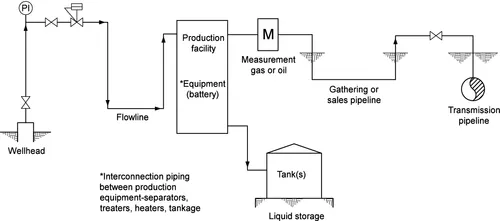
Figure 1.1 Block diagram of “wellhead to sales” concept.
Volume 1: Design of Oil-Handling Systems and Facilities and Volume 2: Design of Gas-Handling Systems and Facilities of the Surface Production Operations series present the basic concepts and techniques necessary to select, specify, size, operate, and troubleshoot oil, water and gas handling, conditioning, and processing facilities. Volume 3: Facility Piping and Pipeline Systems builds upon the information that is presented in Volumes 1 and 2.
Chapter 1 provides an introduction of piping design and projects, types and functions of facility and pipeline systems and facility design considerations. The Chapter also reviews a typical facility piping design project and reviews specific considerations related to offshore operations. Chapter 2 reviews piping standards, codes, and recommended practices for both facility piping and pipeline systems. This chapter discusses both ASME and other international piping standards. Chapter 3 reviews ASME Piping Code material requirements for ferrous, nonferrous, and plastic pipe. High- and low-temperature service material requirements and insulating materials are also discussed. Chapter 4 covers piping system components such as the various methods of connecting pipe, expansion joints and flexible piping, fittings, valves, valve specifications, and pressure ratings. Engineering drawings, data sheets, piping drafting symbols, and flow plan arrangement are discussed in Chapter 5. Chapter 6 discusses fluid flow and pressure drop determination, while Chapter 7 discusses the parameters that need to be considered when choosing a line size and code requirements when determining the wall thickness. Chapter 8 covers relief device selection, sizing, installation and relief, and vent and flare disposal system design. Facility piping system design, piping details, layout, supports, and vessel and piping equipment are covered in Chapter 9. Chapter 10 discusses expansion piping and flexibility considerations. Chapter 11 reviews all phases of both onshore and offshore pipeline engineering, pipeline mechanical design, pipeline construction considerations, and unique offshore pipeline considerations. Chapter 12 discusses facility piping and pipeline system pressure testing and nondestruction examination requirements. Chapter 13 discusses reasons for pigging a pipeline, designing a pipeline for pigging, pig traps and pigging stations, pig types and uses, and in-line inspection tools. Pipeline operations, integrity assessment, and pipeline emergencies and repairs are covered in Chapter 14.
1.2 Introduction to piping design and projects
There are many commercial and industrial fluid handling applications conveying fluid from one location to another. At the outset, one must ask the following questions:
• What fluids must be conveyed?

Table of contents
- Cover image
- Title page
- Table of Contents
- Copyright
- Dedication
- Preface
- Acknowledgments
- 1: Overview of facility piping and pipeline systems
- 2: Piping standards, codes, and recommended practices
- 3: Material requirements: Piping materials
- 4: Piping system components
- 5: Engineering drawings: data sheets and symbols
- 6: Fluid flow and pressure drop
- 7: Choosing a line size and wall thickness
- 8: Relief, vent and flare disposal systems
- 9: Piping system design: Layout, supports, and piping vessels and equipment
- 10: Pipe expansion and flexibility
- 11: Pipeline systems
- 12: Pressure testing and nondestructive examination
- 13: Pipeline pigging
- 14: Pipeline operations
- Appendix 1
- Appendix 2
- Appendices 3A–3G
- Appendix 4
- Appendix 5
- Appendix 6
- Appendix 7
- Appendix 8
- Appendix 9
- Appendix 10
- Appendix 11
- Appendix 12
- Appendix 13
- Appendix 14
- Index
Trusted by 375,005 students
Access to over 1.5 million titles for a fair monthly price.
Study more efficiently using our study tools.
Frequently asked questions
Yes, you can cancel anytime from the Subscription tab in your account settings on the Perlego website. Your subscription will stay active until the end of your current billing period. Learn how to cancel your subscription
No, books cannot be downloaded as external files, such as PDFs, for use outside of Perlego. However, you can download books within the Perlego app for offline reading on mobile or tablet. Learn how to download books offline
Perlego offers two plans: Essential and Complete
- Essential is ideal for learners and professionals who enjoy exploring a wide range of subjects. Access the Essential Library with 800,000+ trusted titles and best-sellers across business, personal growth, and the humanities. Includes unlimited reading time and Standard Read Aloud voice.
- Complete: Perfect for advanced learners and researchers needing full, unrestricted access. Unlock 1.5M+ books across hundreds of subjects, including academic and specialized titles. The Complete Plan also includes advanced features like Premium Read Aloud and Research Assistant.
We are an online textbook subscription service, where you can get access to an entire online library for less than the price of a single book per month. With over 1.5 million books across 990+ topics, we’ve got you covered! Learn about our mission
Look out for the read-aloud symbol on your next book to see if you can listen to it. The read-aloud tool reads text aloud for you, highlighting the text as it is being read. You can pause it, speed it up and slow it down. Learn more about Read Aloud
Yes! You can use the Perlego app on both iOS and Android devices to read anytime, anywhere — even offline. Perfect for commutes or when you’re on the go.
Please note we cannot support devices running on iOS 13 and Android 7 or earlier. Learn more about using the app
Please note we cannot support devices running on iOS 13 and Android 7 or earlier. Learn more about using the app
Yes, you can access Surface Production Operations: Volume III: Facility Piping and Pipeline Systems by Maurice Stewart in PDF and/or ePUB format, as well as other popular books in Technology & Engineering & Chemical & Biochemical Engineering. We have over 1.5 million books available in our catalogue for you to explore.