
- 304 pages
- English
- ePUB (mobile friendly)
- Available on iOS & Android
eBook - ePub
Intruder Alarms
About this book
Intruder Alarms provides a definitive and fully up-to-date guide to the specification, systems design, integration, installation and maintenance of intruder alarm systems. It has been written to be the essential handbook for installation engineers and security professionals working in this rapidly expanding and developing area.The second edition includes new material on the use of remote signalling and networking and an expanded section on the integration of security systems, including real-world case studies. Information on police response policy, and the use of confirmed alarm technology has been updated, along with coverage of accreditation systems, NSI and ICON.This book has been endorsed by SITO (the UK's Security Industry Training Organisation) as a suitable text for students following the relevant SITO courses including the SITO / City & Guilds scheme 1851: Knowledge of Security and Emergency Alarm Systems.* The practical guide for installation engineers and security professionals* Essential reading for anyone responsible for the commissioning and maintenance of security alarm systems* New edition covers networking and integration issues
Information
1
Intruder alarm systems
This chapter concentrates on the fact that intruder alarms form only one part of a much greater security industry. The need for confidentiality in the industry cannot be overemphasized. Technicians need to be aware of the risk to themselves, their employers and of course their customers, and it is important to understand each person’s role in the intruder alarm industry sector.
It is certainly true to say that the last few years have seen many changes in the security industry, and advanced technologies combined with stricter standards and working practices will continue this trend. Technologies in the security industry will become more complementary, and the engineer involved with alarms must understand how this will affect him or her and what can be expected in the long term.
The industry for installers has changed dramatically to the extent that we have seen the introduction of the Association of Chief Police Officers (ACPO) Security Systems Policy 2000. This is a revision of previous versions of the policy and is concerned with all security systems that may generate an ‘electronic call for help’. The ideal is to reduce false alarm activations that are passed to the police but with the emphasis being placed on the industry itself to provide solutions. In keeping with the aims of the policy the security systems sector is expected to create standards and codes of practice to achieve results by means of the current technologies available. Within this DD243: 2002 has been introduced as a code of practice to give guidance and advice on the design, installation and configuration of intruder alarm systems which signal confirmed alarm signals to an alarm receiving centre (ARC). This new policy places great emphasis on the use of such confirmed alarm technology in seeking the verification of alarms on monitored systems.
We have also seen the creation of the National Security Inspectorate (NSI) and many changes within the schemes that provide the inspection services for companies installing electronic security devices. In addition the security industry has shown great progress in the development of educational systems and qualification frameworks in tandem with the changes in the industry. How can we expect the installer’s role to develop in the next decade? The verification of alarms and integration with closed-circuit television (CCTV) and access control is certainly apparent as is also a higher emphasis on the external protection of sites, whereas the past has seen a greater use of internal protection systems. More capital is expected to be spent on making sites more secure, and training will become more important as customers look for management systems. These buyers are already seeking more computer-based systems, and so this is a natural progression.
Certainly there is an increased demand for perimeter intruder detection systems (PIDSs), which offer an earlier warning of potential crime than purely internal detection. Integration will also play a major role in the security industry, and stand-alone technologies will become outdated, certainly in the commercial and industrial market. It will then progress into the residential domestic arena. We will, additionally, witness a growing use of personal computers (PCs) in the installation business: initially the security industry used DOS basics but Windows-based systems are becoming more common. Indeed, as more computer-based systems come on line the days of traditional programming are now numbered, and software development will be achieved remotely by central offices using modems for uploading and downloading programs.
Standards, policies and regulations will all change radically as Euro Norms (EN standards) are adopted, but as policies and regulations are enhanced it will be necessary to dedicate more time to administrative work. As the equipment becomes increasingly technical there must be a corresponding increase in training, particularly with more PC-based work. System types must surely become large, and with these being PC derived the complexity will escalate. The technology we expect to see developing through the coming years will certainly be the observation system integrated with intruder functions. The systems will become increasingly refined as prices of surveillance components fall, and the development of new technologies will enable high-resolution kits to be more affordable. Certainly there will be a huge amount of domestic premises boasting CCTV-type systems in the not-too-distant future. Intruder alarm systems with video access control and similar technologies are definitely something that architects and planners must now consider, and the provision of this security within new buildings will become a ‘must’.
Intruder alarm systems will become a part of building management systems or intelligent buildings, and the emphasis will not only come from the security industry but from architects, planners and developers. The security installer must ensure that he or she fits into this scheme, and the developments, or face losing the market to electricians and builders.
Changes in technology will lead to changes in the knowledge that is required by the installer, and it is important to predict the route that security installations will take in the coming years. Eventually the communication side of the industry will be changed dramatically and there will be a great deal of emphasis on the uploading and downloading of data. Those installing alarms must diversify. And as far as equipment is concerned, its reliability must improve. So there it remains: we must expect integration and technological advancement. The market for intruder alarms will continue to grow but as an integrated technique with true compatibility of system hardware.
1.1 A complementary part of the security industry
Security systems range through intruder alarms to access control and CCTV but with an interest also in lighting methods to embrace automatic detection, occupancy and emergency. There is also a small level of integration with call systems, including nurse call systems plus manual and automatic fire detection and associated alarms.
No matter how we look at intruder alarms we can certainly see how they become involved with access control and CCTV as Figure 1.1 shows.
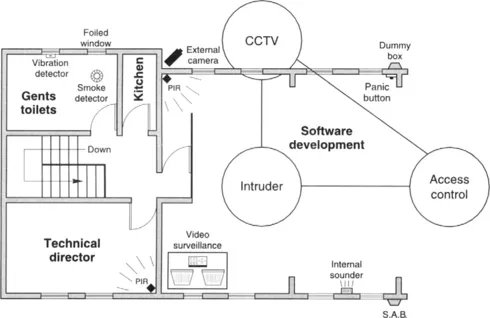
Figure 1.1 Intruder/access control/C CTV
Different lighting forms are often integrated with the three principal systems, be it occupancy, automatic or emergency, and fire detection then becomes a related subject.
In practice it will be found that an installation company performing the fitting of intruder alarms will recognize the importance of being aware of access control and CCTV, and will be familiar to some extent with call and fire alarms plus lighting methods.
In reality, outputs may be taken from a system to activate another. Remote signalling equipment provides different channels for the various functions transmitted to alarm receiving centres (ARCs), and verification of intruder alarms can be achieved by the use of lighting and CCTV. In cases where no specific outputs exist, electromagnetic relays can be energized to open or close circuit loops. These relays are discussed later. The integration of systems is wide ranging, and although the application of BS 4737: ‘Intruder Alarm Systems in Buildings’ and BS 5839: ‘Fire Detection and Alarm Systems in Buildings’ follow somewhat different practices, an understanding of one helps to bring an understanding of the other. The description of line monitoring and switching techniques in either standard facilitate an understanding of why these practices are adopted for alarm systems ...
Table of contents
- Cover image
- Title page
- Table of Contents
- Copyright
- Foreword
- Preface
- Acknowledgements
- Chapter 1: Intruder alarm systems
- Chapter 2: Intruder alarm system circuitry
- Chapter 3: Intruder alarm detection devices
- Chapter 4: Power supplies
- Chapter 5: Intruder alarm control equipment
- Chapter 6: Signalling systems and confirmed alarms
- Chapter 7: Intruder alarm wiring systems
- Chapter 8: Inspection and testing of the low-voltage (mains) supply
- Chapter 9: Commissioning, maintenance (servicing) and fault location
- Chapter 10: Reference information
- Index
Trusted by 375,005 students
Access to over 1.5 million titles for a fair monthly price.
Study more efficiently using our study tools.
Frequently asked questions
Yes, you can cancel anytime from the Subscription tab in your account settings on the Perlego website. Your subscription will stay active until the end of your current billing period. Learn how to cancel your subscription
No, books cannot be downloaded as external files, such as PDFs, for use outside of Perlego. However, you can download books within the Perlego app for offline reading on mobile or tablet. Learn how to download books offline
Perlego offers two plans: Essential and Complete
- Essential is ideal for learners and professionals who enjoy exploring a wide range of subjects. Access the Essential Library with 800,000+ trusted titles and best-sellers across business, personal growth, and the humanities. Includes unlimited reading time and Standard Read Aloud voice.
- Complete: Perfect for advanced learners and researchers needing full, unrestricted access. Unlock 1.5M+ books across hundreds of subjects, including academic and specialized titles. The Complete Plan also includes advanced features like Premium Read Aloud and Research Assistant.
We are an online textbook subscription service, where you can get access to an entire online library for less than the price of a single book per month. With over 1.5 million books across 990+ topics, we’ve got you covered! Learn about our mission
Look out for the read-aloud symbol on your next book to see if you can listen to it. The read-aloud tool reads text aloud for you, highlighting the text as it is being read. You can pause it, speed it up and slow it down. Learn more about Read Aloud
Yes! You can use the Perlego app on both iOS and Android devices to read anytime, anywhere — even offline. Perfect for commutes or when you’re on the go.
Please note we cannot support devices running on iOS 13 and Android 7 or earlier. Learn more about using the app
Please note we cannot support devices running on iOS 13 and Android 7 or earlier. Learn more about using the app
Yes, you can access Intruder Alarms by Gerard Honey in PDF and/or ePUB format, as well as other popular books in Computer Science & Cyber Security. We have over 1.5 million books available in our catalogue for you to explore.