eBook - ePub
Thyroiditis and Thyroid Function
Clinical, Morphological, and Physiopathological Studies
- 356 pages
- English
- ePUB (mobile friendly)
- Available on iOS & Android
eBook - ePub
Thyroiditis and Thyroid Function
Clinical, Morphological, and Physiopathological Studies
About this book
Modern Trends in Physiological Sciences, Volume 36: Thyroiditis and Thyroid Function: Clinical, Morphological, and Physiopathological Studies presents a detailed understanding of the incipient stages of hypothyroidism that have important clinical connections with atherosclerosis and obesity. This book provides an overall view of iodine metabolism and pituitary thyroid relationships. Organized into 15 chapters, this volume begins with an overview of the role of the thyroid in converting inorganic iodine into thyroid hormones. This text then discusses the concept of autoimmunity, with emphasis on the immunizing mechanisms to combat the foreign agents invading the body. Other chapters consider the possible relationship with autoimmune processes of the struma fibrosa giant-cell variant. This book discusses as well several case studies concerning chronic lymphocytic thyroiditis, Hashimoto's disease, and autoimmune thyroiditis. The final chapter deals with the pathogenic importance of each type of autoimmune thyroiditis. This book is a valuable resource for thyroid specialists, endocrinologist, and physicians.
Information
Topic
MedicineSubtopic
Clinical MedicineCHAPTER 1
Structure and Function of the Normal Thyroid Gland
A.M. ERMANS, P. NÈVE and P.A. BASTENIE
Publisher Summary
This chapter discusses the currently held concepts on the 10 different stages of iodine metabolism. It focuses on certain parameters that are critically altered in thyroiditis. The morphological unit of the thyroid gland is represented by the thyroid follicle that is made up of a single layer of cells surrounding a mass of colloid. Some controversy exists about the arrangement and the interlinking of the follicles in the thyroid gland. Certain authors hold that the follicles are always isolated, whereas others maintain that they communicate with each other via a central duct. The chapter reports that the follicular lumen and colloid masses are rarely connected: Almost all the follicles are, therefore, individual, consisting of epithelial cells completely surrounding the colloid. On the other hand, epithelial contacts exist between the follicles that, thus, form a chain and only retain their individuality by virtue of their own lumen. Apart from the follicular cells proper, there are some parafollicular cells also referred to by the name of light cells. They occupy an extrafollicular position and produce calcitonine, a factor that lowers serum calcium. There are two fundamental stages of thyroid hormone synthesis: the first leads to the formation of mono-iodotyrosine (MIT) and di-iodotyrosine (DIT); the second to that of triiodothyronine (T3) and thyroxine (T4). These four end-products are obtained as a result of the following processes: (1) the oxidation of iodide into iodine, (2) the iodination of tyrosyl groups and formation of MIT, (3) the further iodination of the iodotyrosyl group and formation of DIT, (4) the condensation of two molecules of DIT into 3:5:3’: 5’-tetraiodothyronine or thyroxine, and (5) the condensation of one DIT molecule and one MIT molecule to form 3:5:3’-tri-iodothyronine.
1 Introduction
The role of the thyroid is to convert inorganic iodine into thyroid hormones and to maintain a sufficient quantity of these hormones in the tissues. The gland performs this role by a complex mechanism which is at present only partially understood; the main stages are sketched out in Fig. 1.1.
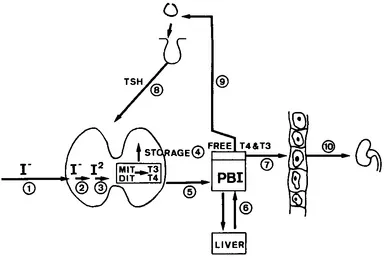
FIG. 1.1 Schematic representation of thyroid physiology.
The thyroid concentrates the iodide ion of the circulating blood during its passage through the gland (phase 1). The iodine is then oxidized (phase 2) and bound to the “tyrosyl” or “iodotyrosyl” groups of thyroglobulin. Inside this large molecule, the iodotyrosyl groups of amino acids are converted into thyroxine and triiodothyronine, i.e. into metabolically active hormones (phase 3). The thyroglobulin accumulates in the follicular lumen in the form of colloid (phase 4). The hormone compounds are released by a process of enzymatic proteolysis and secreted into the circulation (phase 5), where they are almost totally bound to blood proteins and constitute the organic iodine of the plasma (PBI). These hormones are concentrated partially in the liver (phase 6). A very small non-protein-bound fraction penetrates the peripheral tissues by unknown mechanisms (phase 7) and there produces a characteristic metabolic effect.
The speed and duration of certain of these phases are partly governed by the hypophysial thyrotropic hormone (TSH) (phase 8), whose secretion is itself dependent on a hypothalamic centre. The quantity of thyroid hormones in the circulation controls the degree of thyrotropic stimulation through the intermediary of the hypothalamo-hypophysial axis (phase 9).
The physiological or biochemical effect of the thyroid hormones is influenced by the interference of other hormonal factors such as cortisone, epinephrine, and oestrogens.
Finally, the principal pathway competing with the thyroid iodide cycle is represented by the renal clearance and urinary excretion (phase 10).
Currently held concepts on these different stages of iodine metabolism will be briefly reviewed in this chapter: special attention is given to certain parameters which are critically altered in thyroiditis.
2 Morphology
Human thyroid tissue, even under normal conditions, displays a less uniform structure than that of thyroid glands of the usual laboratory animals. The morphological unit of the thyroid gland is represented by the thyroid follicle, made up of a single layer of cells surrounding a mass of colloid. Some controversy exists about the arrangement and the interlinking of the follicles in the thyroid gland. Certain authors hold that the follicles are always isolated whereas others maintain that they communicate with each other via a central duct.(62,78,121)
A recent study(94) using three-dimensional models reconstructed from serial sections of rat thyroid tissue seems to solve this controversy. The authors report that the follicular lumen and colloid masses are rarely connected: almost all the follicles are therefore individual, consisting of epithelial cells completely surrounding the colloid. On the other hand, epithelial contacts exist between the follicles, which thus form a chain and only retain their individuality by virtue of their own lumen.
Apart from the follicular cells proper, there are some parafollicular cells also referred to by the name of “light cells”. They occupy an extrafollicular position and produce calcitonine, a factor which lowers serum calcium.(22,151,152) Finally, in rats and mice, there exists a second system of follicles alongside the classic thyroid follicles. The structure of the second series is very special, often with desquamation of the cell debris into the colloid.(93,134,208,214) These follicles, sometimes termed “ultimobranchial follicles” have...
Table of contents
- Cover image
- Title page
- Table of Contents
- Copyright
- Foreword
- Acknowledgements
- Introduction
- Chapter 1: Structure and Function of the Normal Thyroid Gland
- Chapter 2: Thyroid Autoimmunity
- Chapter 3: Subacute and Chronic Granulomatous Thyroiditis
- Chapter 4: Invasive Fibrous Thyroiditis (Riedel)
- Chapter 5: Struma Lymphomatosa (Hashimoto)
- Chapter 6: Focal Lymphocytic Thyroiditis in Simple Goitre
- Chapter 7: Chronic Lymphocytic Thyroiditis and Cancer of the Thyroid
- Chapter 8: Lymphocytic Thyroiditis and Thyrotoxicosis
- Chapter 9: Thyroiditis and Acquired Hypothyroidism in Adults
- Chapter 10: Asymptomatic Atrophic Thyroiditis
- Chapter 11: Diseases Associated with Autoimmune Thyroiditis
- Chapter 12: Atrophic Thyroiditis, Hypertension and Coronary Heart Disease
- Chapter 13: Thyroiditis and Chromosomal Anomalies
- Chapter 14: Heredity of Autoimmune Thyroiditis
- Chapter 15: The Significance of Lymphocytic Thyroiditis
- APPENDIX: Patients and Methods
- Index
- Other Titles in the Division Modern Trends in Physiological Sciences
Trusted by 375,005 students
Access to over 1.5 million titles for a fair monthly price.
Study more efficiently using our study tools.
Frequently asked questions
Yes, you can cancel anytime from the Subscription tab in your account settings on the Perlego website. Your subscription will stay active until the end of your current billing period. Learn how to cancel your subscription
No, books cannot be downloaded as external files, such as PDFs, for use outside of Perlego. However, you can download books within the Perlego app for offline reading on mobile or tablet. Learn how to download books offline
Perlego offers two plans: Essential and Complete
- Essential is ideal for learners and professionals who enjoy exploring a wide range of subjects. Access the Essential Library with 800,000+ trusted titles and best-sellers across business, personal growth, and the humanities. Includes unlimited reading time and Standard Read Aloud voice.
- Complete: Perfect for advanced learners and researchers needing full, unrestricted access. Unlock 1.5M+ books across hundreds of subjects, including academic and specialized titles. The Complete Plan also includes advanced features like Premium Read Aloud and Research Assistant.
We are an online textbook subscription service, where you can get access to an entire online library for less than the price of a single book per month. With over 1.5 million books across 990+ topics, we’ve got you covered! Learn about our mission
Look out for the read-aloud symbol on your next book to see if you can listen to it. The read-aloud tool reads text aloud for you, highlighting the text as it is being read. You can pause it, speed it up and slow it down. Learn more about Read Aloud
Yes! You can use the Perlego app on both iOS and Android devices to read anytime, anywhere — even offline. Perfect for commutes or when you’re on the go.
Please note we cannot support devices running on iOS 13 and Android 7 or earlier. Learn more about using the app
Please note we cannot support devices running on iOS 13 and Android 7 or earlier. Learn more about using the app
Yes, you can access Thyroiditis and Thyroid Function by P. A. Bastenie,A. M. Ermans, P. Alexander,Z. M. Bacq in PDF and/or ePUB format, as well as other popular books in Medicine & Clinical Medicine. We have over 1.5 million books available in our catalogue for you to explore.