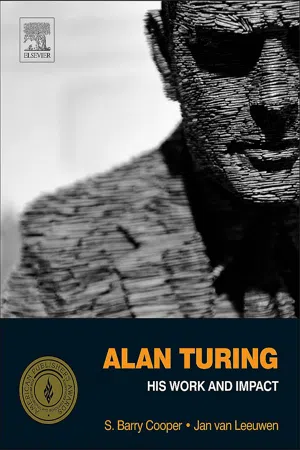
- 944 pages
- English
- ePUB (mobile friendly)
- Available on iOS & Android
eBook - ePub
About this book
In this 2013 winner of the prestigious R.R. Hawkins Award from the Association of American Publishers, as well as the 2013 PROSE Awards for Mathematics and Best in Physical Sciences & Mathematics, also from the AAP, readers will find many of the most significant contributions from the four-volume set of the Collected Works of A. M. Turing. These contributions, together with commentaries from current experts in a wide spectrum of fields and backgrounds, provide insight on the significance and contemporary impact of Alan Turing's work.
Offering a more modern perspective than anything currently available, Alan Turing: His Work and Impact gives wide coverage of the many ways in which Turing's scientific endeavors have impacted current research and understanding of the world. His pivotal writings on subjects including computing, artificial intelligence, cryptography, morphogenesis, and more display continued relevance and insight into today's scientific and technological landscape. This collection provides a great service to researchers, but is also an approachable entry point for readers with limited training in the science, but an urge to learn more about the details of Turing's work.
- 2013 winner of the prestigious R.R. Hawkins Award from the Association of American Publishers, as well as the 2013 PROSE Awards for Mathematics and Best in Physical Sciences & Mathematics, also from the AAP
- Named a 2013 Notable Computer Book in Computing Milieux by Computing Reviews
- Affordable, key collection of the most significant papers by A.M. Turing
- Commentary explaining the significance of each seminal paper by preeminent leaders in the field
- Additional resources available online
Information
Part I
How Do We Compute? What Can We Prove?
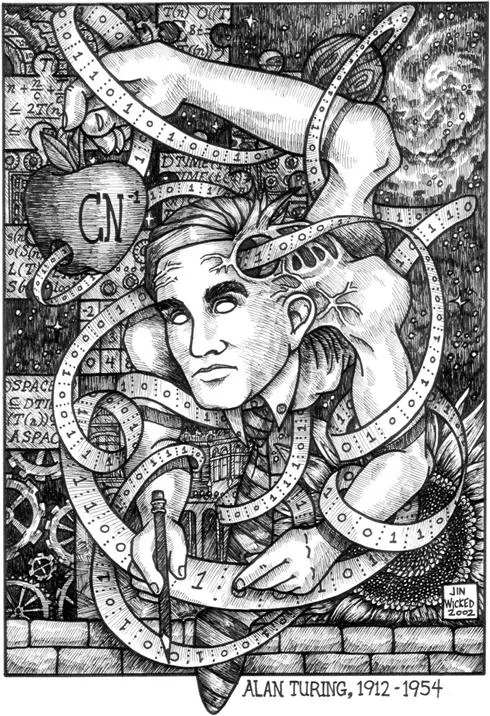
Part II
Hiding and Unhiding Information: Cryptology, Complexity and Number Theory

Part III
Building a Brain: Intelligent Machines, Practice and Theory
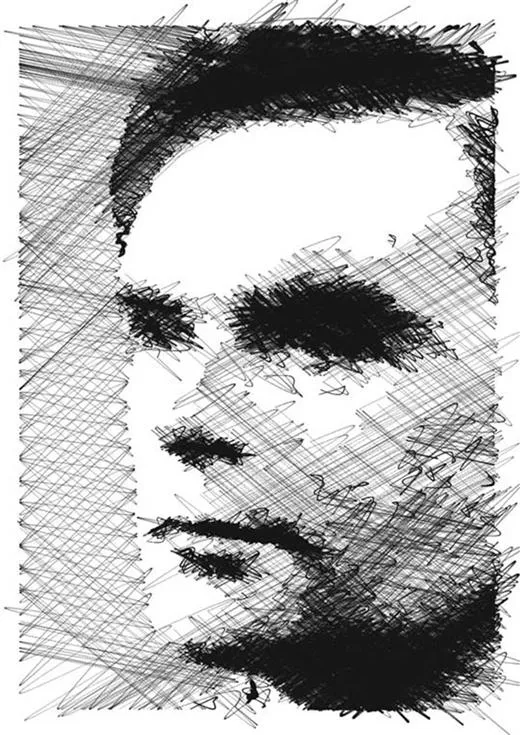
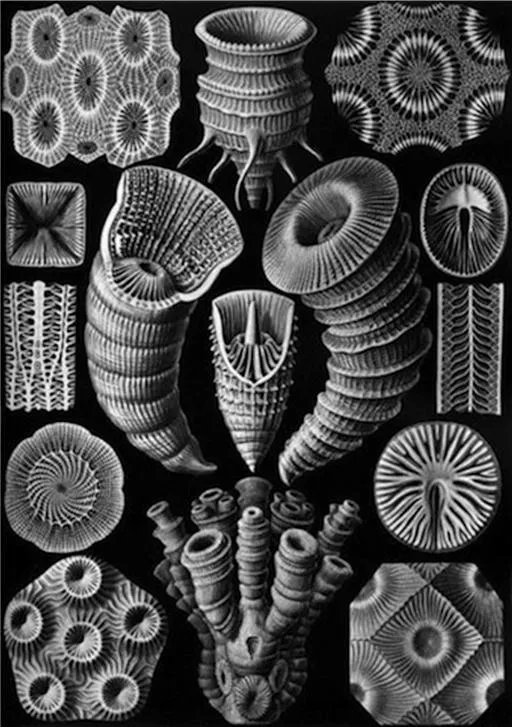
Part IV
The mathematics of emergence: the mysteries of morphogenesis
Alan Mathison Turing by Max Newman
(Bibliographic Memoirs of the Fellows of the Royal Society, vol. 1 (Nov. 1955), pp. 253–263)
Andrew Hodges Contributes: A Comment on Newman’s Biographical Memoir
Newman had to comply with official secrecy and said virtually nothing regarding Turing’s work from 1939 to 1945. Although the words ‘Foreign Office’ would have conveyed ‘codes and ciphers’ to all but the most naive readers, nothing went beyond this to convey scale or significance or scientific content. Indeed Newman’s account went further than suppressio veri and led into a suggestio falsi. The expression ‘mild routine’ probably reinforced the prevalent impression of Bletchley Park as the resort of leisured time-wasters. Turing’s work had been far from routine, involving real-time day and night work on the U-boat messages, and hair-raising missions to France, the United States, and Germany. It also required great intellectual originality. Newman could probably have given a clue to its content by making a reference to I. J. Good’s 1950 book Probability and the weighing of evidence. But there was no such hint, and the 1955 reader could never have guessed that Newman had headed the section that used the most advanced electronic technology and Turing’s statistical theory to break Hitler’s messages.
A more surprising feature of Newman’s account is the claim that ‘the designers’ of ‘the new automatic computing machines’ had worked in ignorance of Turing’s universal machine. This is an odd expression since Turing himself was one such designer, as Newman’s reference to ‘the first plan of the ACE’ makes clear, and obviously he knew of his own theory. Moreover, this plan was a very early one submitted to the NPL in March 1946. Newman can therefore only have meant that von Neumann’s report of June 1945 was written in ignorance of Turing’s work. The origin of the digital computer is a major point of interest in the history of science, and it seems strange that Newman lent his authority to such an oblique and vague comment on it, with an implicit assertion about von Neumann that is at variance with other evidence. Newman’s statement is also misleading in its implication that Turing only turned his attention to computers in the summer of 1945 after learning of von Neumann’s design. As it happens, Newman had actually written to von Neumann on 8 February 1946 with a sharply worded statement about British developments, asserting their early start and intellectual independence.1 Already he was applying to the Royal Society for a large grant to fund what became the Manchester computer. ‘By about 18 months ago’, he wrote, ‘I had decided to try my hand at starting up a machine unit... This was before I knew anything of the American work... I am of course in close touch with Turing...’ The date of ‘18 months ago’ is that of August 1944. In the light of what was revealed over 20 years later, it seems obvious that the success of the electronic Colossus after D-Day prompted discussion between Turing and Newman of how the logic of the universal machine could be implemented in a practical form. All this pre-1945 history was obliterated by Newman’s account in 1955. It is of course very possible that the overpowering nature of official secrecy deterred Newman from giving even the faintest hint of his own and Turing’s wartime experience at Bletchley Park. Unfortunately this omission contributed to a distortion of the historical record.
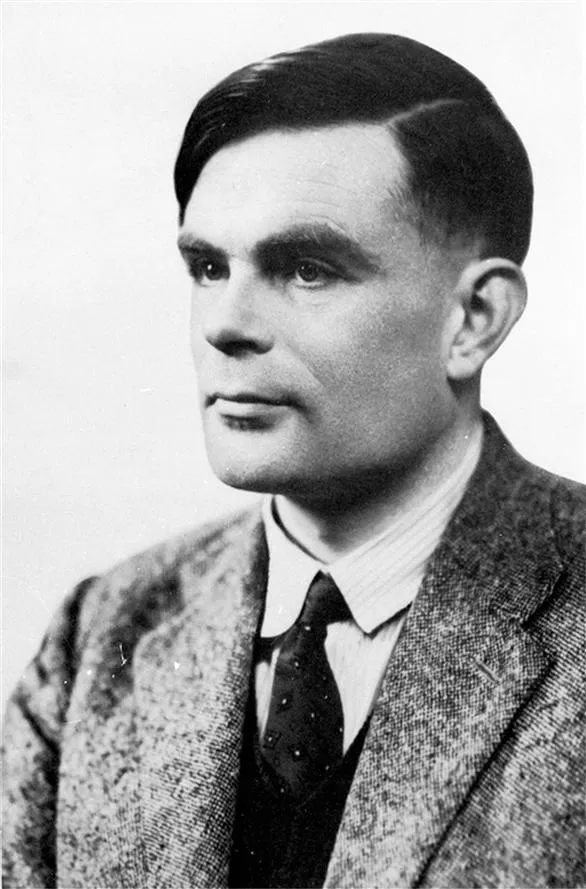
By courtesy of the National Portrait Gallery, London
Alan Mathison Turing: 1912–1954a
The sudden death of Alan Turing on 7 June 1954 deprived mathematics and science of a great original mind at the height of its power. After some years of scientific indecision, since the end of the war, Turing had found, in his chemical theory of growth and form, a theme that gave the fullest scope for his rare combination of abilities, as a mathematical analyst with a flair for machine computing, and a natural philosopher full of bold original ideas. The preliminary report of 1952, and the account that will appear posthumously, describe only his first rough sketch of this theory, and the unfulfilled design must remain a painful reminder of the loss that his early death has caused to science.
Alan Mathison Turing was born in London on 23 June 1912, the son of Julius Mathison Turing, of the Indian Civil Service, and of Ethel Sara Turing (née Stoney). The name ‘Turing’ is of Scottish, perhaps ultimately of Norman origin, the final g being an addition made by Sir William Turing, of Aberdeenshire, in the reign James VI and I. The Stoneys, an English-Irish family of Yorkshire origin, produced some distinguished physicists and engineers in the nineteenth century, three of whom became Fellows of the Society; and Edith A. Stoney was one of the early women equal-towranglers at Cambridge (bracketed with 17th Wrangler, 1893).
Alan Turing’s interest in science began early and never wavered. Both at his preparatory schools and later at Sherborne, which he entered in 1926, the contrast between his absorbed interest in science and mathematics, and his indifference to Latin and ‘English subjects’ perplexed and distressed his teachers, bent on giving him a well-balanced education. Many of the characteristics that were strongly marked in his later life can already be clearly seen in remembered incidents of this time: his particular delight in problems, large or small, that enabled him to combine theory with the kind of experiments he could carry out with his own hands, with the help of whatever apparatus was at hand; his strong preference for working everything out from first principles instead of borrowing from others—a habit which gave freshness and independence to his work, but also undoubtedly slowed him down, and later on made him a difficult author to read. At school homemade experiments in his study did not fit well into the routine of the house: a letter from his housemaster mentions ‘Heaven knows what witches’ brew blazing on a naked wooden window sill’. But before he left school his abilities, and his obvious seriousness of purpose, had won him respect and affection, and even tolerance for his own peculiar methods.
In 1931 he entered King’s College, Cambridge, as a mathematical scholar. A second class in Part I of the Tripos showed him still determined not to spend time on subjects that did not interest him. In Part II he was a Wrangler, with ‘b*’, and he won a Smith’s Prize in 1936. He was elected a Fellow of King’s in 1935, for a dissertation on the Central Limit Theorem of probability (which he discovered anew, in ignorance of recent previous work).
It was in 1935 that he first began to work in mathematical logic, and almost immediately started on the investigation that was to lead to his best known results, on computable numbers and the ‘Turing machine’. The paper attracted attention as soon as it appeared and the resulting correspondence led to his spending the next two years (1936–8) in Princeton, working with Professor Alonzo Church, the second of them as Proctor Fellow.
In 1938 Turing returned to Cambridge; in 1939 the war broke out. For the next six years he was fully occupied with his duties for the Foreign Office. These years were happy enough, perhaps the happiest of his life, with full scope for his inventiveness, a mild routine to shape the day, and a congenial set of fellow-workers. But the loss to his scientific work of the years between the ages of 27 and 33 was a cruel one. Three remarkable papers written just befo...
Table of contents
- Cover image
- Title page
- Table of Contents
- Copyright
- List of Contributors
- Introduction
- Part I. How Do We Compute? What Can We Prove?
- Part II. Hiding and Unhiding Information: Cryptology, Complexity and Number Theory
- Part III. Building a Brain: Intelligent Machines, Practice and Theory
- Part IV. The mathematics of emergence: the mysteries of morphogenesis
- Alan Mathison Turing by Max Newman
- On Computable Numbers, with an Application to the Entscheidungsproblem – A Correction
- On Computable Numbers, with an Application to the Entscheidungsproblem by A. M. Turing – Review by: Alonzo Church
- Computability and λ-Definability
- The -Function in λ-K Conversion
- Systems of Logic Based on Ordinals
- Practical Forms of Type Theory
- The use of Dots as Brackets in Church’s System
- The Reform of Mathematical Notation and Phraseology
- On the Gaussian error function
- Some Calculations of the Riemann Zeta function: On a Theorem of Littlewood
- Solvable and Unsolvable Problems
- The Word Problem in Semi-Groups with Cancellation
- On Permutation Groups
- Rounding-off Errors in Matrix Processes
- A Note on Normal Numbers
- Turing’s Treatise on the Enigma (Prof’s Book)
- Speech System ‘Delilah’ – Report on Progress
- Checking a Large Routine
- Excerpt from: Programmer’s Handbook for the Manchester Electronic Computer Mark II: Local Programming Methods and Conventions
- Turing’s Lecture to the London Mathematical Society on 20 February 1947
- Intelligent Machinery
- Computing Machinery and Intelligence
- Digital Computers Applied to Games
- Can Digital Computers Think?: Intelligent Machinery: A Heretical Theory: Can Automatic Calculating Machines Be Said To Think?
- The Chemical Basis of Morphogenesis
- The Morphogen Theory of Phyllotaxis: I. Geometrical and Descriptive Phyllotaxis: II. Chemical Theory of Morphogenesis: III. (Bernard Richards) A Solution of the Morphogenical Equations for the Case of Spherical Symmetry
- Outline of the Development of the Daisy
- Afterword
- Bibliography
- Index
Trusted by 375,005 students
Access to over 1.5 million titles for a fair monthly price.
Study more efficiently using our study tools.
Frequently asked questions
Yes, you can cancel anytime from the Subscription tab in your account settings on the Perlego website. Your subscription will stay active until the end of your current billing period. Learn how to cancel your subscription
No, books cannot be downloaded as external files, such as PDFs, for use outside of Perlego. However, you can download books within the Perlego app for offline reading on mobile or tablet. Learn how to download books offline
Perlego offers two plans: Essential and Complete
- Essential is ideal for learners and professionals who enjoy exploring a wide range of subjects. Access the Essential Library with 800,000+ trusted titles and best-sellers across business, personal growth, and the humanities. Includes unlimited reading time and Standard Read Aloud voice.
- Complete: Perfect for advanced learners and researchers needing full, unrestricted access. Unlock 1.5M+ books across hundreds of subjects, including academic and specialized titles. The Complete Plan also includes advanced features like Premium Read Aloud and Research Assistant.
We are an online textbook subscription service, where you can get access to an entire online library for less than the price of a single book per month. With over 1.5 million books across 990+ topics, we’ve got you covered! Learn about our mission
Look out for the read-aloud symbol on your next book to see if you can listen to it. The read-aloud tool reads text aloud for you, highlighting the text as it is being read. You can pause it, speed it up and slow it down. Learn more about Read Aloud
Yes! You can use the Perlego app on both iOS and Android devices to read anytime, anywhere — even offline. Perfect for commutes or when you’re on the go.
Please note we cannot support devices running on iOS 13 and Android 7 or earlier. Learn more about using the app
Please note we cannot support devices running on iOS 13 and Android 7 or earlier. Learn more about using the app
Yes, you can access Alan Turing by S. Barry Cooper,J. van Leeuwen in PDF and/or ePUB format, as well as other popular books in Mathématiques & Histoire et philosophie des mathématiques. We have over 1.5 million books available in our catalogue for you to explore.