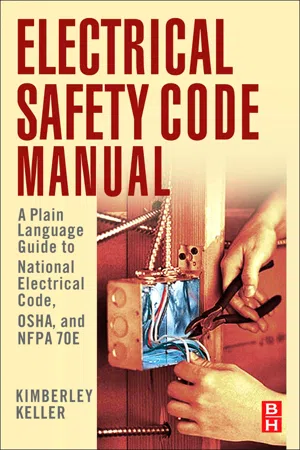
eBook - ePub
Electrical Safety Code Manual
A Plain Language Guide to National Electrical Code, OSHA and NFPA 70E
- 400 pages
- English
- ePUB (mobile friendly)
- Available on iOS & Android
eBook - ePub
Electrical Safety Code Manual
A Plain Language Guide to National Electrical Code, OSHA and NFPA 70E
About this book
Safety in any workplace is extremely important. In the case of the electrical industry, safety is critical and the codes and regulations which determine safe practices are both diverse and complicated. Employers, electricians, electrical system designers, inspectors, engineers and architects must comply with safety standards listed in the National Electrical Code, OSHA and NFPA 70E. Unfortunately, the publications which list these safety requirements are written in very technically advanced terms and the average person has an extremely difficult time understanding exactly what they need to do to ensure safe installations and working environments.
Electrical Safety Code Manual will tie together the various regulations and practices for electrical safety and translate these complicated standards into easy to understand terms. This will result in a publication that is a practical, if not essential, asset to not only designers and company owners but to the electricians who must put compliance requirements into action in the field.
- Best-practice methods for accident prevention and electrical hazard avoidance
- Current safety regulations, including new standards from OSHA, NEC, NESC, and NFPA
- Information on low-, medium-, and high-voltage safety systems
- Step-by-step guidelines on safety audits
- Training program how-to's, from setup to rescue and first aid procedures
Information
Chapter 1 Regulatory Agencies and Organizations
What Are They and What Do They Do?
Chapter Outline
- The Need for Standardized Code 2
- The National Electrical Code 3
- National Fire Protection Association 7
- Birth of a Code or Standard 8
- National Electrical Safety Code 9
- American National Standards Institute 10
- Occupational Safety and Health Association (OSHA) 11
- A Little Knowledge Goes a Long Way 14
All construction trades come with a degree of physical risk. Early in our country’s industrial history tradesman discovered through trial and error which construction methods were the easiest to perform. Unfortunately, easier was not necessarily safer, and many tradesmen were injured or even killed performing their jobs. Over time other factors surfaced, such as the results of poor quality construction methods that lead to the destruction of property. The potential for electricity to start fires, burn, shock, and even kill became quickly apparent and it was obvious that a set of guidelines was needed to reduce the likelihood of damage to both property and people.
By the late 1800s, more and more people were depending on electricity to power an ever-increasing number of conveniences from light bulbs to elevators. Installation techniques were based on trial-and-error, experience and best judgment. This left the door open to a multitude of installation techniques, a complete lack of continuity, and a dramatic increase in the number of injuries and fires caused by electricity. Coincidentally, in 1890 Edwin R. Davis, an Auburn Prison electrician, designed the electric chair that utilized 1400 V of direct electrical current for the sole purpose of causing death. Its first use in August of that year was a gruesome example that electricity could kill a person. Between the increasing demand for electricity and the shocking reality of its deadly potential, it is not surprising that the need became apparent for some kind of uniform regulation process for electrical installations. In 1897 the National Fire Protection Association (NFPA) issued the National Electrical Code (NEC), commonly known today as the NEC. Since that time, the NEC has instituted standards designed to protect both people and property from electrical damage. Although the NEC is not itself a U.S. law, it is commonly mandated by state and local laws.
The need for standardized code
The benefit to having one standardized set of regulations is clear. In the U.S., any person, company, or principality can be sued for creating a negligent situation that results in the loss of life or property. Never is the city issuing building permits exempt from this civil liability. Negligence is generally defined as failure to use reasonable care or prudence which results in injury or damage to a person or property. In order to establish reasonable care, uniform standards are needed which establish best practices for safety in trades and industry. A municipality can best avoid lawsuits by focusing on a single source of proven safety codes, and the NEC has become the most widely accepted standard set for electrical requirements. Most states require electrical installations to be inspected for compliance with the standards of the NEC. A failed inspection will cost you time and money to fix and can stop your project in its tracks. Additionally, a majority of states also base their licensing programs and mandatory examinations on the diverse conditions and methods covered in the NEC. The bottom line for an electrician is that if you don’t know the NEC standards, your livelihood will ultimately be affected.
The national electrical code
The NEC establishes regulations for the installation of electrical conductors, equipment, raceways, and signaling and communications systems. The code covers public and private premises including homes, buildings and structures, mobile homes, recreational vehicles, and floating buildings. Installation locations include yards, parking lots, carnivals, and industrial substations. The NEC also sets standards for the installation of conductors and equipment that connect to electricity supplies, and installations used by electrical utilities such as office buildings, garages, warehouses, machine shops, recreational buildings, and other structures that are not an integral part of generating plants, substations, or control centers (Figure 1.1).
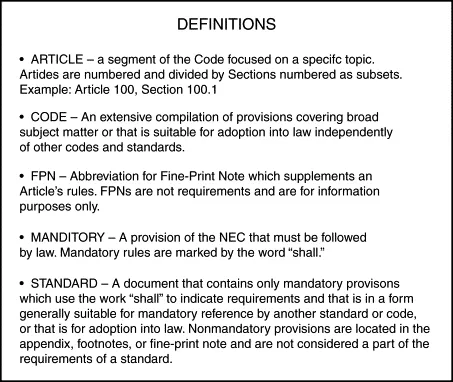
Figure 1.1 Key NEC Terms.
NFPA’s Committee on the NEC consists of 20 code-making panels and a technical committee that develops and updates the NEC. In order to draw on the collective wisdom of the international community, the code panels have members from countries other than the United States, as well as members of the world’s leading professional association for the advancement of technology which is the Institute of Electrical and Electronics Engineers, Inc. (IEEE). The NEC is formally identified as ANSI/NFPA 70 and is approved as an American national standard by the American National Standards Institute (ANSI). Even with it setting minimum standards, the NEC is the least amended model code. Changes to the code are typically made to allow for new technologies or to combine or clarify existing standards.
Composed of an introduction, nine chapters, annexes A through G, and an index, the NEC groups standards in a logical progression. The introduction explains the purpose and general rules for overall electrical safety and enforcement. Safeguarding people and property from hazards arising from the use of electricity is the primary purpose of the NEC. Distinctions are made between establishing safety provisions included in the NEC and additional effort that might be necessary for installations to be efficient, convenient, or adequate for good service or future expansion. In this way, the code establishes a baseline for installation practices, while making clear that it is not intended to be a design specification or instruction manual (Figure 1.2).
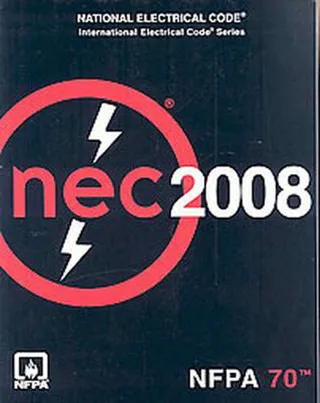
Figure 1.2 The NEC is updated every 3 years.
Article 90 of the NEC describes what the code does and does not cover, how it is arranged, and distinguishes between mandatory rules, permissive rules, and explanatory material. Governmental agencies that regulate construction processes, such as the municipality in which a project takes place, are identified as the authority having jurisdiction (AHJ) and are given a degree of enforcement flexibility by the code. Additionally, products that are listed, such as underwriters listed (UL) can be assumed to be adequate for their stated purpose and do not have to be inspected again, except for alterations or damage.
The first four chapters cover definitions and rules for installations for voltages, connections, markings, circuits, and circuit protection; however, voltage drop requirements are not covered. Standards for methods and materials for wiring, devices, conductors, cables, as well as general-purpose equipment including cords, receptacles, switches, and heaters are also outlined in the first four chapters of the NEC.
The next three chapters focus on special occupancies, ranging from multiple-family units to high risk installations, as well as specific equipment such as signs and machinery, and special conditions including emergency systems and alarms. Chapter 8 is dedicated to additional requirements for communications systems and Chapter 9 is comprised of tables that further clarify requirements for conductors, cables, and conduit properties. The appendix provides calculations, examples, and explanations of implementation of code articles, such as how many wires fit in a conduit.
In addition to the NEC book, an NEC Handbook is published which is the equivalent of an annotated edition of the NEC. The handbook offers insights and explanations of new and more difficult articles and provides a guide to interpreting and applying current code requirements to various types of electrical installations. Expert commentary explains the rationale behind the standards and offers practical, hands-on advice on how to comply with regulations. It contains color-coded commentary that is set apart from the mandatory NEC provisions and summaries of key changes in each article (Figure 1.3).
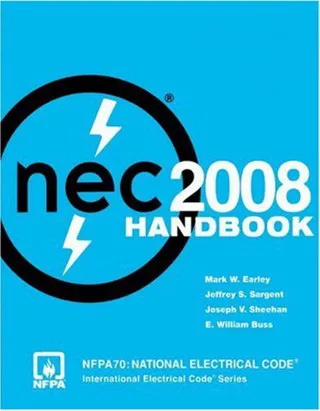
Figure 1.3 The NEC Handbook.
National fire protection association
The NEC is only one of several standardized safety volumes published by the NFPA. The NFPA is a U.S. o...
Table of contents
- Cover
- Title Page
- Copyright
- Table of Contents
- Preface
- Acknowledgments
- Chapter 1: Regulatory Agencies and Organizations
- Chapter 2: Establishing an Effective Electrical Safety Program
- Chapter 3: Recognizing the Real Dangers of Electricity
- Chapter 4: Working on Energized Parts and Equipment
- Chapter 5: Electrical System Grounding and Bonding
- Chapter 6: Safety Grounding Principals
- Chapter 7: Understanding Arc Flash and Arc Blast Hazards
- Chapter 8: Specific Requirements of the NESC
- Chapter 9: NEC Standards of Safety
- Chapter 10: OSHA Regulations Simplified
- Chapter 11: Accident and Injury Prevention and Procedures
- Chapter 12: Safe Work Practices
- Appendix
- Index
Trusted by 375,005 students
Access to over 1.5 million titles for a fair monthly price.
Study more efficiently using our study tools.
Frequently asked questions
Yes, you can cancel anytime from the Subscription tab in your account settings on the Perlego website. Your subscription will stay active until the end of your current billing period. Learn how to cancel your subscription
No, books cannot be downloaded as external files, such as PDFs, for use outside of Perlego. However, you can download books within the Perlego app for offline reading on mobile or tablet. Learn how to download books offline
Perlego offers two plans: Essential and Complete
- Essential is ideal for learners and professionals who enjoy exploring a wide range of subjects. Access the Essential Library with 800,000+ trusted titles and best-sellers across business, personal growth, and the humanities. Includes unlimited reading time and Standard Read Aloud voice.
- Complete: Perfect for advanced learners and researchers needing full, unrestricted access. Unlock 1.5M+ books across hundreds of subjects, including academic and specialized titles. The Complete Plan also includes advanced features like Premium Read Aloud and Research Assistant.
We are an online textbook subscription service, where you can get access to an entire online library for less than the price of a single book per month. With over 1.5 million books across 990+ topics, we’ve got you covered! Learn about our mission
Look out for the read-aloud symbol on your next book to see if you can listen to it. The read-aloud tool reads text aloud for you, highlighting the text as it is being read. You can pause it, speed it up and slow it down. Learn more about Read Aloud
Yes! You can use the Perlego app on both iOS and Android devices to read anytime, anywhere — even offline. Perfect for commutes or when you’re on the go.
Please note we cannot support devices running on iOS 13 and Android 7 or earlier. Learn more about using the app
Please note we cannot support devices running on iOS 13 and Android 7 or earlier. Learn more about using the app
Yes, you can access Electrical Safety Code Manual by Kimberley Keller in PDF and/or ePUB format, as well as other popular books in Technology & Engineering & Industrial Health & Safety. We have over 1.5 million books available in our catalogue for you to explore.