Diabetes mellitus affects approximately 20 million people in the US, or nearly 7% of the population. It is expected to increase by 70% within the next 25 years, and numerous epidemiologic studies have demonstrated that type 2 diabetes increases the risk of cardiovascular morbidity and mortality. It is estimated to cost over $92 billion in health care costs and lost productivity. The increased risk is due to the detrimental vascular effects of prolonged exposure to a hyperglycemic, oxidant-rich environment yielding associated cardiovascular risk factors: atherosclerosis, hypertension and clotting abnormalities. Hypertension and dyslipidemia in diabetic patients produces substantial decreases in cardiovascular and microvascular diseases.
Nutritional and Therapeutic Interventions for Diabetes and Metabolic Syndrome provides an overview of the current epidemic, outlines the consequences of this crisis and lays out strategies to forestall and prevent diabetes, obesity and other intricate issues of metabolic syndrome. The contributing experts from around the world give this book relevant and up-to-date global approaches to the critical consequences of metabolic syndrome and make it an important reference for those working with the treatment, evaluation or public health planning for the effects of metabolic syndrome and diabetes.
- Scientific discussion of the epidemiology and pathophysiology of the relationship between diabetes and metabolic syndrome
- Includes coverage of Pre-diabetes conditions plus both Type I and Type II Diabetes
- Presents both prevention and treatment options
Prevention and Treatment 1: Diet, Exercise, Supplements and Alternative Medicines
Chapter 24 Antioxidants, Healthy Diet, and Diabetes
Chapter 25 Molecular Mechanisms of Diabetes Prevention by Structurally Diverse Antioxidants
Chapter 26 Cardioprotective Roles of Selenium in Diabetes
Chapter 27 Exercise and Physical Activity in the Prevention of Diabetes and Metabolic Syndrome
Chapter 28 An Overview on Nutraceuticals and Herbal Supplements for Diabetes and Metabolic Syndrome
Chapter 29 Therapeutic Effect of Fucoxanthin on Metabolic Syndrome and Type 2 Diabetes
Chapter 30 Beneficial Effects of Chromium(III) and Vanadium Supplements in Diabetes
Chapter 31 Role of n-6 and n-3 Polyunsaturated Fatty Acids in Type 2 Diabetes
Chapter 32 Effects of Supplemental Fiber in Type 2 Diabetes Mellitus
Chapter 33 The Effects of Resveratrol on Diabetes and Obesity
Chapter 34 Meal Plans for Diabetics
Chapter 35 Ayurveda and Metabolic Diseases
Chapter 24
Antioxidants, Healthy Diet, and Diabetes Oxidative Stress and Nutrition in Diabetes
Dario Pitocco, Francesca Martini, Francesco Zaccardi and Giovanni Ghirlanda
Diabetes Care Unit, Catholic University School of Medicine, Rome, Italy
Outline
Introduction
What is Oxidative Stress? ROS and RNS
Oxidative Stress and Diabetes
Pathogenesis of Diabetes
Pathogenesis of Diabetic Complications
General Aspects of Antioxidant Therapy
Antioxidant Molecules and Diabetes
Vitamin C (Ascorbic Acid)
Biotin
Niacin
Vitamin D
Vitamin E
Chromium
Magnesium
Manganese
Zinc
Coenzyme Q10
Essential Fatty Acids
Alpha Lipoic Acid
Healthy Diet
Carbohydrates
Legumes
Proteins
Fat
Alcohol
Fruits and Vegetables
Coffee
309
Diabetes mellitus is characterized by an increased macrovascular morbidity and mortality, as well as by typical microangiopathic complications (retinopathy, nephropathy and neuropathy). Oxidative stress is considered the main cause of these complications. Indeed, it causes a complex dysregulation of cell metabolism and cell–cell homeostasis that has been implicated in both the pathogenesis of insulin resistance and β-cell dysfunction—the two most relevant mechanisms in the pathophysiology of type 2 diabetes, as well as in the pathogenesis of diabetic complications. Such considerations raise the concept that an antioxidant therapy may be of utility in these patients. To test this hypothesis, several studies have been carried out, although with conflicting results. In this chapter, we will focus on the effects of an “antioxidant therapy” and a “healthy” diet in diabetic subjects.
Introduction
Diabetes mellitus is characterized by an increased macrovascular morbidity and mortality, as well as by typical microangiopathic complications (retinopathy, nephropathy, and neuropathy). Oxidative stress is considered the main cause of these complications. Indeed, oxidative stress causes a complex dysregulation of cell metabolism and cell–cell homeostasis that has been implicated in both the pathogenesis of insulin resistance and β-cell dysfunction—the two most relevant mechanisms in the pathophysiology of type 2 diabetes, as well as in the pathogenesis of diabetic complications. Such considerations raise the concept that an antioxidant therapy may be of benefit in these patients. To test this hypothesis, several studies have been done, with conflicting results. In this chapter, we will focus on the effects of an “antioxidant therapy” and a “healthy” diet in diabetic subjects.
What is Oxidative Stress? ROS and RNS
Biological systems living in aerobic conditions are exposed to oxidants. Generally, such oxidants are divided in reactive oxygen and nitrogen species (ROS and RNS, respectively); ROS is a collective term that describes the chemical species that are formed upon incomplete reduction of oxygen and includes the superoxide anion (O2−), hydrogen peroxide (H2O2) and the hydroxyl radical (HO•), whereas RNS refers to all oxidation states and reactive adducts of nitric oxide synthase (NOS) products, ranging from nitric oxide (NO) to nitroxyl (NO−), S-nitrosothiols (RSNOs) and peroxynitrite (OONO−), the product of the reaction between NO and O2−.1 As ROS and RNS have critical biological functions essential for normal physiology overproduction or deficiency results in impaired homeostasis and associated pathology which is why oxidants are balanced by reductants (antioxidants). Production of ROS and RNS occur in response to a variety of stimuli including nutrients, such as glucose.2, 3 NADPH oxidase,4 NOS,5 and mitochondrial electron transfer6 are the most relevant sources of RS (ROS and RNS), that can react with multiple cellular components (proteins, lipids, nucleic acids), generating reversible or irreversible oxidative modifications. Reactive species (RS) involvement in normal physiological processes involves carefully regulated production in a tight spatial-temporal manner, leading to reversible oxidative modifications. Pathophysiological processes mediated by RS are more likely to involve irreversible modifications of cellular components, as proteins, lipids, or DNA.
Oxidative Stress and Diabetes
Pathogenesis of Diabetes
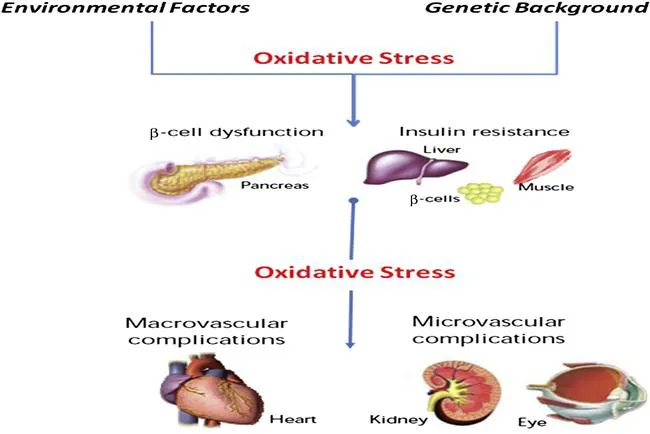
Oxidative stress has a pivotal role in the pathogenesis of insulin resistance and β-cell dysfunction (Figure 24.1). These are the two most relevant mechanisms in the pathophysiology of type 2 diabetes. A large number of studies have evidenced the pivotal role of oxidative stress in insulin resistance states such as metabolic syndrome, obesity, and type 2 diabetes.7–9 Decreased antioxidant capacity, increased production of ROS with oxidation products of lipids, DNA, and proteins have been reported in plasma, urine, and various tissues, suggesting systemic and organ-specific oxidative stress. Recent evidence for systemic oxidative stress includes the detection of increased circulating and urinary levels of the lipid peroxidation product F2-isoprostane (8-epi-prostaglandin F2α) in both type 1 and type 2 diabetic patients.10, 11 With regard to the relationship between oxidative stress and β-cell dysfunction, both glucotoxicity and lipotoxicity (that are diabetes-related phenomena that generate oxidative stress) are implicated in the pathogenesis of β-cell dysfunction.12 Hyperglycemia and hyperlipidemia follow the primary pathogenesis of diabetes and exert additional toxic effects on β-cells. Indeed, evidence from in vitro and in vivo studies indicates that glucose and lipids are harmful to β-cells. Interestingly, some studies reported that lipotoxicity only occurs in the presence of concomitant elevated glucose levels.13, 14 Consequently, hyperglycemia might be a prerequisite for the negative effects of lipotoxicity.
FIGURE 24.1 Oxidative stress and diabetes. (See the color plate section at the back of the book.)
Pathogenesis of Diabetic Complications
Cardiovascular risk factors promote the production of ROS. Imbalance between endogenous oxidants and antioxidants results in oxidative stress, a condition that contributes to impaired NO bioavailability and vascular dysfunction. In vivo studies revealed that oxidative stress due to hyperglycemia occurs before late complications become clinically evident.15 This finding suggests that oxidative stress plays a crucial role in the pathogenesis of late diabetic complications. It has also been documented that endothelial cells in diabetic subjects fail to produce sufficient amount of NO and fail to relax in response to endothelium-dependent vasorelaxants (e.g., acetylcholine, bradykinin, shear stress, etc.).16 Further clinical data have demonstrated that rapid glycemic swings are associated with an exacerbated degree of oxidant production in human diabetes,17 and are deleterious to the endothelial function of type 2 diabetic patients.18 Overall, these data outline the importance of steady glucose control and the potential involvement of oxidative and nitrosative stress in the pathogenesis of complications due to poorly controlled diabetes (Figure 24.1).
General Aspects of Antioxidant Therapy
There are two main approaches to modulate oxidative stress: preventing ROS/RNS or enhancing antioxidant defense. At the cellular level, it is possible to inhibit several sources of oxidative stress [i.e., mitochondrial uncoupling proteins 1 (UCP1), NADPH oxidases, iNOS] or enhance antioxidant defense (lipoic acid, vitamin C and E, GSH, increasing intracellular catalase or SOD activity). Different antioxidants, including vitamins C and E, lipoic acid, and flavanoids, have been shown to attenuate different markers of systemic oxidative stress in a variety of experimental animal models for obesity and diabetes, improving insulin and glucose levels, as well as reducing micro- and macrovascular dysfunction. Human intervention trials are limited to increase antioxidant defense by antioxidant supplementation. Enhanced insulin sensitivity has been demonstrated with lipoic acid,19 vitamin E,20 and vitamin C21 in small-sized, short-term trials; however, these results have not been confirmed in other studies. Late diabetes complications known to associate with metabolic control also do not seem to be positively affected by antioxidant therapy. Consequently, despite some supporting evidence for the ability to improve insulin action with antioxidants, current clinical guidelines do not recommend antioxidant supplementation for the general population of persons with impaired insulin action, like type 2 diabetes.
Antioxidant Molecules and Diabetes
Vitamin C (Ascorbic Acid)
Vitamin C (ascorbic acid) is a water-soluble vitamin that humans must obtain from the diet. It is a chain-breaking antioxidant that scavenges ROS directly, preventing the reactions that lead to protein glycation. Some prospective studies demonstrate the association between insufficient intake of dietary vitamin C diet and elevated cardiovascular risk, but do not support the hypothesis that its supplementation may reduce cardiovascular events in diabetic or other high-risk individuals.22 It is possible that genetic differences may influence the effect of vitamin C supplementation on cardiovascular disease. The results of one randomized controlled trial using antioxidant therapy (1,000 mg/day of vitamin C + 800 IU/day of vitamin E), reanalyzed based on ...
Table of contents
Cover image
Title page
Table of Contents
Copyright
Dedication
Preface
Contributors
SECTION I. Epidemiology and Overview
SECTION II. Types of Diabetes and its Correlation with other Diseases
SECTION III. Molecular Insights of Diabetes and Metabolic Syndrome
SECTION IV. Pathophysiology
SECTION V. Prevention and Treatment 1: Diet, Exercise, Supplements and Alternative Medicines
SECTION VI. Prevention and Treatment 2: Drugs and Pharmaceuticals
SECTION VII. Diabetes in Animals and Treatment
APPENDIX. Living with Diabetes: A Running Commentary
Index
Color Plates
Trusted by 375,005 students
Access to over 1.5 million titles for a fair monthly price.
Study more efficiently using our study tools.
Frequently asked questions
Yes, you can cancel anytime from the Subscription tab in your account settings on the Perlego website. Your subscription will stay active until the end of your current billing period. Learn how to cancel your subscription
No, books cannot be downloaded as external files, such as PDFs, for use outside of Perlego. However, you can download books within the Perlego app for offline reading on mobile or tablet. Learn how to download books offline
We are an online textbook subscription service, where you can get access to an entire online library for less than the price of a single book per month. With over 1.5 million books across 990+ topics, we’ve got you covered! Learn about our mission
Look out for the read-aloud symbol on your next book to see if you can listen to it. The read-aloud tool reads text aloud for you, highlighting the text as it is being read. You can pause it, speed it up and slow it down. Learn more about Read Aloud
Yes! You can use the Perlego app on both iOS and Android devices to read anytime, anywhere — even offline. Perfect for commutes or when you’re on the go. Please note we cannot support devices running on iOS 13 and Android 7 or earlier. Learn more about using the app
Yes, you can access Nutritional and Therapeutic Interventions for Diabetes and Metabolic Syndrome by Debasis Bagchi,Sreejayan Nair in PDF and/or ePUB format, as well as other popular books in Medicine & Endocrinology & Metabolism. We have over 1.5 million books available in our catalogue for you to explore.