eBook - ePub
Networked Collaborative Learning
Social interaction and Active Learning
- 184 pages
- English
- ePUB (mobile friendly)
- Available on iOS & Android
eBook - ePub
About this book
The sustainability of Networked Collaborative Learning (NCL) is a key topic of discussion amongst the institutions where it has been or may potentially be introduced. In order to determine the extent of NCL's sustainability, the added value university education may yield by adopting collaborative learning strategies must be quantified. In turn, an understanding of the implications NCL produces in terms of design and management is gained. After comparing NCL with other Technology Enhanced Learning (TEL) approaches and discussing the possible reasons for adopting it, a multidimensional model for the sustainability of NCL is proposed. The model is characterized by four dimensions: pedagogical approaches, e-teacher professional development, instructional design models and valuation/assessment approaches. Each of these dimensions is examined on the basis of the author's direct experience gained through applying NCL to his university teaching.
- Delineates a framework for NCL sustainability
- Provides an instructional design model for NC
- Describes an original approach to the evaluation of collaborative learning processes
Information
Topic
EducationSubtopic
Education General1
Technology-enhanced learning and networked collaborative learning
TEL (Technology Enhanced Learning) leverages technology to maximize learning within an environment of sound course design that can offer students the options of time, place, and pace and emphasizes different learning styles. (TEL Committee, University of Texas, 2004)
Information and communication technology (ICT) is opening up new possibilities for teaching/learning processes, promising added value in terms of efficacy and quality enhancement. Numerous examples come to mind: personal learning environments (PLEs); highly stimulating interactive study resources (simulation environments, adaptive computer-based tests, intelligent tutoring systems based on pedagogical agents, etc.); new forms of (distance) interaction and cooperation among actors in a training course; and different ways of relating to teachers/tutors during individual and/or collaborative study.
In view of these possibilities, it is worth reflecting on whether the extensive use of TEL in teaching/learning processes is pedagogically sustainable, especially given that changes in teaching (be they pedagogical or organisational) may well be called for which demand a radical divergence from traditional approaches.
Hence, the educational sustainability of TEL requires a clear understanding of the various ways that educational use of ICT can be interpreted and enacted, and how these can bring about major changes and improvements in the teaching/learning process: in other words, how TEL can really make a difference.
The aim of this chapter is twofold: to propose a kind of mapping of possible TEL approaches that brings to light the salient characteristics of networked collaborative learning (NCL); and to present the conditions for educational sustainability in NCL using a four-dimensional model that will serve as a roadmap for discussion in the following chapters.
Educational uses of ICT
The use of ICT for supporting learning/teaching processes is in constant evolution. In recent decades a number of different approaches have been studied, developed and tested. Among the most prominent of these are the use of specific software for computer-aided learning (CAL) (Shamsuar, 2008), large-scale network distribution of structured educational contents for self-directed learning (Garrison, 2003) and virtual learning environments for nurturing learning communities that can be either ‘formal’ (within distance-learning courses) or ‘informal’ (within online communities of practice) (Wenger et al., 2002; Cross, 2005; Trentin, 2005).
This undeniably intricate field can be disorienting, thanks in no small part to the casual (if not downright improper) use of terminology that is becoming ever more prevalent. The problem here lies in the overlap of two key areas: learning processes on the one hand and technology on the other.
Given the considerable scope of the TEL field, we need to identify a set of firm reference points that can help clarify the peculiarities and conditions of applicability/sustainability of different TEL approaches. In line with the aims of the book, these reference points will relate in particular to network-based approaches.
From mediator-centred to user-centred approaches
Over time there has been a steady shift in the way the educational use of ICT has been approached (Collins and Van der Wende, 2002; Howell et al., 2004). The early tendency was to attribute the leading role in learning/teaching processes to the technology (Figure 1.1), for example in the delivery of pre-set material to all learners via a single mode, irrespective of different learning styles, needs etc.
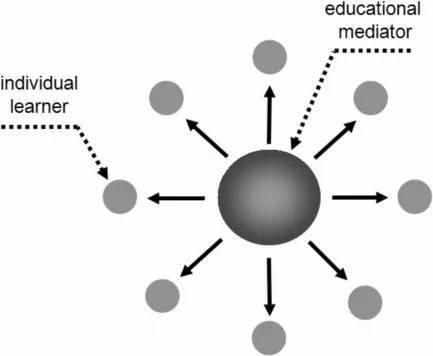
Figure 1.1 Centrality of the educational mediator
While this propensity to attribute a key role to the educational mediator1 (Trentin, 2002) is still fairly common, there has recently been a general tendency to position the learner closer to the centre of teaching/learning processes, thanks in part to the emergence of new technological affordances (Figure 1.2).
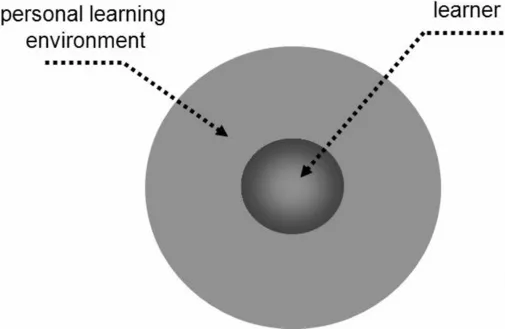
Figure 1.2 Centrality of the learner
This had led to the idea of building a personalised learning environment (PLE) (Attwell, 2007) around the learner that integrates a range of learning resources (Figure 1.3), making it possible to:
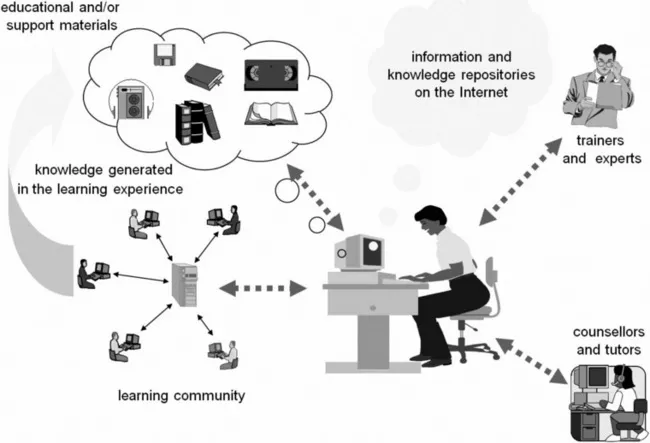
Figure 1.3 Personal learning environment

This vision of TEL integrates a range of different approaches which we will later attempt to categorise. Before doing so, however, a basic premise ought to be made.
TEL: ‘when’ it’s needed and ‘whether’ it’s needed at all
The decision to adopt technology for pursuing specific educational goals must take very careful account of the added value that can effectively be gained in teaching/learning processes. This concept is a cornerstone of the educational technology field: the use of ICT should only be considered when it can guarantee real added value in educational terms and open the way to learning activities that otherwise could not be enacted using traditional tools and approaches.
But when is TEL actually appropriate? Some examples are when the learning material:
TEL can also be used in cases where the most effective strategy for reaching a given objective is collaborative learning (local groups working at a computer or remote groups working in a virtual space).
In this sense we can say that the factor determining educational sustainability is effective exploitation of technology’s intrinsic potential to enrich and enhance the individ...
Table of contents
- Cover image
- Title page
- Table of Contents
- Copyright
- List of tables and figures
- About the author
- List of acronyms
- Preface
- Chapter 1: Technology-enhanced learning and networked collaborative learning
- Chapter 2: The pedagogical dimension
- Chapter 3: The e-teacher professional dimension
- Chapter 4: The instructional design dimension
- Chapter 5: The evaluation and assessment dimension
- Chapter 6: Conclusions
- Appendix – education design support grid
- References
- Index
Trusted by 375,005 students
Access to over 1.5 million titles for a fair monthly price.
Study more efficiently using our study tools.
Frequently asked questions
Yes, you can cancel anytime from the Subscription tab in your account settings on the Perlego website. Your subscription will stay active until the end of your current billing period. Learn how to cancel your subscription
No, books cannot be downloaded as external files, such as PDFs, for use outside of Perlego. However, you can download books within the Perlego app for offline reading on mobile or tablet. Learn how to download books offline
Perlego offers two plans: Essential and Complete
- Essential is ideal for learners and professionals who enjoy exploring a wide range of subjects. Access the Essential Library with 800,000+ trusted titles and best-sellers across business, personal growth, and the humanities. Includes unlimited reading time and Standard Read Aloud voice.
- Complete: Perfect for advanced learners and researchers needing full, unrestricted access. Unlock 1.5M+ books across hundreds of subjects, including academic and specialized titles. The Complete Plan also includes advanced features like Premium Read Aloud and Research Assistant.
We are an online textbook subscription service, where you can get access to an entire online library for less than the price of a single book per month. With over 1.5 million books across 990+ topics, we’ve got you covered! Learn about our mission
Look out for the read-aloud symbol on your next book to see if you can listen to it. The read-aloud tool reads text aloud for you, highlighting the text as it is being read. You can pause it, speed it up and slow it down. Learn more about Read Aloud
Yes! You can use the Perlego app on both iOS and Android devices to read anytime, anywhere — even offline. Perfect for commutes or when you’re on the go.
Please note we cannot support devices running on iOS 13 and Android 7 or earlier. Learn more about using the app
Please note we cannot support devices running on iOS 13 and Android 7 or earlier. Learn more about using the app
Yes, you can access Networked Collaborative Learning by Guglielmo Trentin in PDF and/or ePUB format, as well as other popular books in Education & Education General. We have over 1.5 million books available in our catalogue for you to explore.