![]()
CHAPTER ONE
Introduction
Finding Country Authenticity
“Authenticity, authenticity and originality.”
This is the response given most often by the nine leading country record producers interviewed in 1953 when asked by a reporter for Billboard, the music industry trade paper, “What factors do you consider in selecting new talent?” The two who didn’t use the word “authenticity” or a synonym in answering said they looked for a “distinctive” style (Billboard 1953h: 54).
“Authenticity” was also an answer to the next question asked of the record producers: “What do you look for in new song material?” But more often the record producers’ answers had to do with the song’s distinctiveness. They said they sought out songs that were “fresh and unique,” “different,” “original.” In retrospect it seems hardly surprising that producers were looking for artists with an authentic style who could successfully deliver songs that were original. These seemingly contradictory characteristics—authenticity and originality—exactly describe Hank Williams, who that year of 1953 had been propelled to the status of country music icon by the wholly unprecedented public outpouring of sentiment following his tragic death at age twenty-nine.
Thirty years earlier when unschooled white musicians first appeared on the fledgling medium of radio and began to make phonograph records, the designation “country music” was not in use, and in fact there was no agreed understanding of the extent and nature of the genre or the physical appearance of its performers, and there was no shared understanding of the characteristics of the potential audience. For that matter there were only the rudiments of a music industry as we now know it in 1923. Records were sold at furniture stores and radio was considered little more than a novelty. Under these conditions, it was not possible for more than a handful of performers to make a full-time living from the music, and they did so largely by appearing as comedic rustics on the vaudeville stage.
All this changed between 1923 when our story begins and its finale in 1953. Authenticity and originality had been fully fabricated by 1953; the audience had been identified, and the country music industry fully institutionalized.
Home-Made to Store-Bought
In 1923 millions of people in rural areas and towns all across North America sang and played the fiddle and the guitar,1 but “country music” was not recognized as a form of music distinct from others, and this became obvious when record company executives tried to merchandise the music. They didn’t know what music to include and what to exclude, and a number of appellations were applied by the early merchandisers, ranging from “Old-time,” “Old Time Tunes,” “Old Familiar Tunes” and “Hearth and Home,” to “Hill and Range,” and “Hillbilly and Western.” They did, however, make the strategic decision to market music by whites and African Americans separately.2
Just thirty years later, ironically, the situation was reversed. The look, sound, and lyric of country music was instantly recognizable,3 and the music that had been entirely home-made was largely store-bought. What had been the music of noncity regions across the continent became symbolically centered in the South and Southwest. In 1953 a few hundred largely Southern professionals played and sang for a living, while millions of people attended country music concerts, listened to it on the radio, and played it—on the phonograph. In the process, authenticity had became commodified, and thousands of men and women learned how to make a living from the music not only as performers and singers, but also as songwriters, comics, instrument makers, costumers, disk jockeys, managers, promoters, producers, publicists, publishers, photographers, video makers, and the like.
FABRICATING AUTHENTICITY
The first country music record was made in Atlanta, Georgia, in mid-June 1923.4 The New York executive overseeing the recording session pronounced the results to be “Awful” and refused to release the record, but the local record distributor prevailed on him to have 500 copies made for sale in the Atlanta region. These were all sold within days and the distributor ordered 1,000 more. When these sold out as quickly, the New York executive realized that there was an untapped market to be exploited and asked that the performer, Fiddlin’ John Carson, be brought to New York to make more records.
The surprising popularity of the Carson record was not an isolated incident. In the 1920s many impresarios of popular entertainment in the United States expressed similar dismay at the enthusiastic response to what is now called country music (Talking Machine World 1925, 1929). They were surprised because the music and its performers seemed to break all the conventions of what made for success in the world of urbane, sophisticated commercial popular music of the time, which featured an amalgam of jazz-based dance music and vocal music featuring song stylists with opera-trained voices. In stark contrast, the musical offerings of Fiddlin’ John and the other early country music entertainers relied on untrained, high-pitched nasal voices and simple musical accompaniments, evoking images of farm, family, and old-fashioned mores along with more than a dash of sexual double entendre.
Entertainment industry impresarios sensed that the essential appeal of the music was rooted in the feeling of authenticity conveyed by its performers. Accordingly, they sought out old men steeped in tradition, playing old songs in traditional ways. The performances of these old-timers, even if historically and aesthetically accurate, were, for the most part, taken by the radio audiences and record buyers as bemusing novelties. Clearly, the impresarios had misunderstood the appeal of Fiddlin’ John. To the consumer, apparently, authenticity was not synonymous with historical accuracy. Numerous permutations on the theme of rustic authenticity were tried over the next three decades, and the entertainment industry’s efforts to find the formulas, those that failed as much as those that succeeded, provide an excellent opportunity to understand the general process of fabricating authenticity in popular culture.
The ironic phrase “fabricating authenticity” is used here to highlight the fact that authenticity is not inherent in the object or event that is designated authentic but is a socially agreed-upon construct in which the past is to a degree misremembered (Halbwachs 1992). This tailoring of collective memory to serve the needs of the present has been studied by a number of researchers, and as they show, the process can take several forms depending on who has the power to enforce their distinctive interpretation of the past.5 Unlike these other situations that have been researched, no authority is in a position to dictate authenticity in country music. Rather, as we will discover in the chapters that follow, it is continuously negotiated in an ongoing interplay between performers, diverse commercial interests, fans, and the evolving image.6 As is the case in other aspects of commercial popular culture, creative people propose ideas (be they for recorded music, movies, videos, magazines, or computer games), the industry adapts them in the process of putting a product on the market, and the public chooses some while rejecting others. The entrepreneurs, in turn, try to understand why certain offerings have been accepted and others rejected in order to create more that are as much like the successful ones as possible. The disjunction between demand and supply is widest in the early days of a genre before its aesthetic has been consolidated; before, to use George Melly’s phrase, what began as a revolt against social and aesthetic conventions has become mere style (Melly 1970). This was the case for jazz in the decade before 1928 (Leonard 1962), rock in the 1950s (Shaw 1987; Peterson 1990; Ennis 1992), and country music for most of the 1923–53 era under review here.
A Music for Morons
Why did it take so much longer for country music to be institutionalized than it did for these other forms of popular culture? There are a number of reasons as will be shown in the chapters that follow, but to begin with, it had to do with the prejudices of those in the entertainment business.
The popularity of Fiddlin’ John Carson and the other early country music performers was very difficult for most popular entertainment impresarios to understand because they were urbane, middle-class sophisticates or recent rural-to-urban migrants who were trying to disguise their own rural origins. They did not see country music in its own terms but considered it simply the antithesis of their own aesthetic and worldview because it evoked the image of rural poverty and small-town morality that so many in the rapidly urbanizing American society were trying to escape. It was country to their city; the unchanged to their rapidly changing; traditionalism to their modernism; craft-made to their mass-produced; and aesthetically rear-guard to their avant-garde. The music’s maker was the country bumpkin, rube, linthead, cracker, or hillican to their up-to-date city sophisticate. Given this mind set, the natural assumption was that those attracted to the music were responding to representations of an unchanged past.7
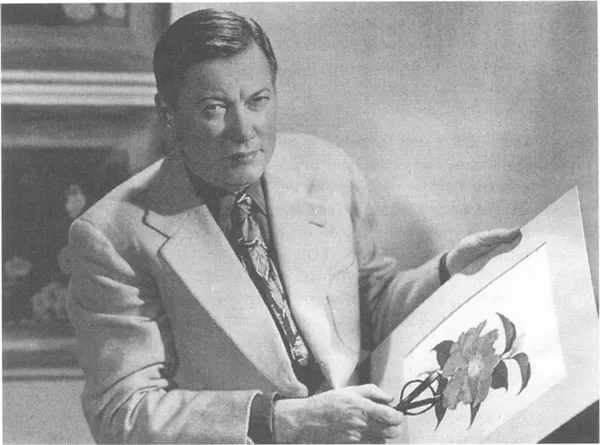
Figure 1.1 In this portrait Ralph Peer, the talent scout who found Jimmie Rodgers, the Carter Family, and numerous rural blues artists, is shown as a cultivated man of fine taste.
The contempt that music industry decision makers had for those who bought the early country music records, listened to country music played over the radio, and flocked to see country musicians perform is suggested by the term “hillbilly” that was given to the music within the entertainment industry. In American slang of the time a “billy” was a rough, unschooled, and simple-minded person, and a “hillbilly” was such a person from the remote backwoods of the Appalachian Mountains. The term was applied to its performers and to its most devoted fans as well. By extension the term was applied to all persons whose appearance, mode of talking, or accent suggested unschooled rural origins.8
The following characterization of the music’s fans appeared in a frontpage article, “Hill-Billy Music,” in the December 29, 1926, issue of Variety, the leading entertainment industry weekly of the day:
The “hillbilly” is a North Carolina or Tennessee and adjacent mountaineer type of illiterate white whose creed and allegiance are to the Bible, the Chautauqua, and the phonograph. . . . The mountaineer is of “poor white trash” genera. The great majority, probably 95 percent, can neither read nor write English. Theirs is a community all to themselves. [They are] illiterate and ignorant, with the intelligence of morons (quoted in Green 1965: 221).
Not all characterizations were this harsh, but, with rare exceptions, the entertainment industry impresarios distanced themselves from the country music audience. With this mind-set it is little wonder that most did not easily understand the appeal of country music. In the chapters that follow we will focus on the efforts of a number of those who were most influential, including early producer/publisher Ralph Peer; the creator of the “Grand Ole Opry,” George Hay; and songwriter/publisher Fred Rose, as well as on some of the most spectacular failures in identifying country music, including car maker Henry Ford.
INSTITUTIONALIZATION
The institutional apparatus that now supports country music with its recording companies, publishers, managers, disk jockeys, talent agencies, tour promoters, television networks, music venues, outfitters, trade press, trade associations, award shows, and fan magazines has the look of inevitability about it,9 but the music might have developed quite differently. In the decades following the American Civil War there was a profound upwelling of innovation in the musical expressions of poor and working-class people of the American South and a mixing with the commercial music of the day. By the end of the first decade of the twentieth century three streams were being distinguished: blues, jazz, and an amalgam that would become country music (Malone 1979; Ennis 1992).10
Popular—Not Art or Folk Music
Though similar in their origins, blues, jazz, and country music have followed quite different paths of institutionalization in the decades since. Jazz, which began in the marching band music of black New Orleans, is now often performed in classical music concert halls, is taught in conservatories of music, and is played along with classical music on “good music” radio stations, with the result that much jazz has become art music.11 The blues, which was created by rural blacks in the Mississippi delta, is now primarily the province of folk music experts, record collectors, and a wide range of entrepreneurs devoted to renewing the music through festivals and recorded performances. It is now, for the most part, a commercial folk music.12 Thus, both the blues and jazz have experienced a great deal of aesthetic mobility, and neither is today appreciated much by the working-class Southern black communities that originated jazz and blues. Their place in the musical life of working-class blacks has been taken by a succe...