Freedom's Ballot
eBook - ePub

Freedom's Ballot

African American Political Struggles in Chicago from Abolition to the Great Migration

  1. English
  2. ePUB (mobile friendly)
  3. Available on iOS & Android
eBook - ePub

Freedom's Ballot

African American Political Struggles in Chicago from Abolition to the Great Migration

About this book

In the spring of 1915, Chicagoans elected the city's first black alderman, Oscar De Priest. In a city where African Americans made up less than five percent of the voting population, and in a nation that dismissed and denied black political participation, De Priest's victory was astonishing. It did not, however, surprise the unruly group of black activists who had been working for several decades to win representation on the city council.

Freedom's Ballot is the history of three generations of African American activists—the ministers, professionals, labor leaders, clubwomen, and entrepreneurs—who transformed twentieth-century urban politics. This is a complex and important story of how black political power was institutionalized in Chicago in the half-century following the Civil War. Margaret Garb explores the social and political fabric of Chicago, revealing how the physical makeup of the city was shaped by both political corruption and racial empowerment—in ways that can still be seen and felt today.

Frequently asked questions

Yes, you can cancel anytime from the Subscription tab in your account settings on the Perlego website. Your subscription will stay active until the end of your current billing period. Learn how to cancel your subscription.
No, books cannot be downloaded as external files, such as PDFs, for use outside of Perlego. However, you can download books within the Perlego app for offline reading on mobile or tablet. Learn more here.
Perlego offers two plans: Essential and Complete
  • Essential is ideal for learners and professionals who enjoy exploring a wide range of subjects. Access the Essential Library with 800,000+ trusted titles and best-sellers across business, personal growth, and the humanities. Includes unlimited reading time and Standard Read Aloud voice.
  • Complete: Perfect for advanced learners and researchers needing full, unrestricted access. Unlock 1.4M+ books across hundreds of subjects, including academic and specialized titles. The Complete Plan also includes advanced features like Premium Read Aloud and Research Assistant.
Both plans are available with monthly, semester, or annual billing cycles.
We are an online textbook subscription service, where you can get access to an entire online library for less than the price of a single book per month. With over 1 million books across 1000+ topics, we’ve got you covered! Learn more here.
Look out for the read-aloud symbol on your next book to see if you can listen to it. The read-aloud tool reads text aloud for you, highlighting the text as it is being read. You can pause it, speed it up and slow it down. Learn more here.
Yes! You can use the Perlego app on both iOS or Android devices to read anytime, anywhere — even offline. Perfect for commutes or when you’re on the go.
Please note we cannot support devices running on iOS 13 and Android 7 or earlier. Learn more about using the app.
Yes, you can access Freedom's Ballot by Margaret Garb in PDF and/or ePUB format, as well as other popular books in History & North American History. We have over one million books available in our catalogue for you to explore.

Information

APPENDIX 1
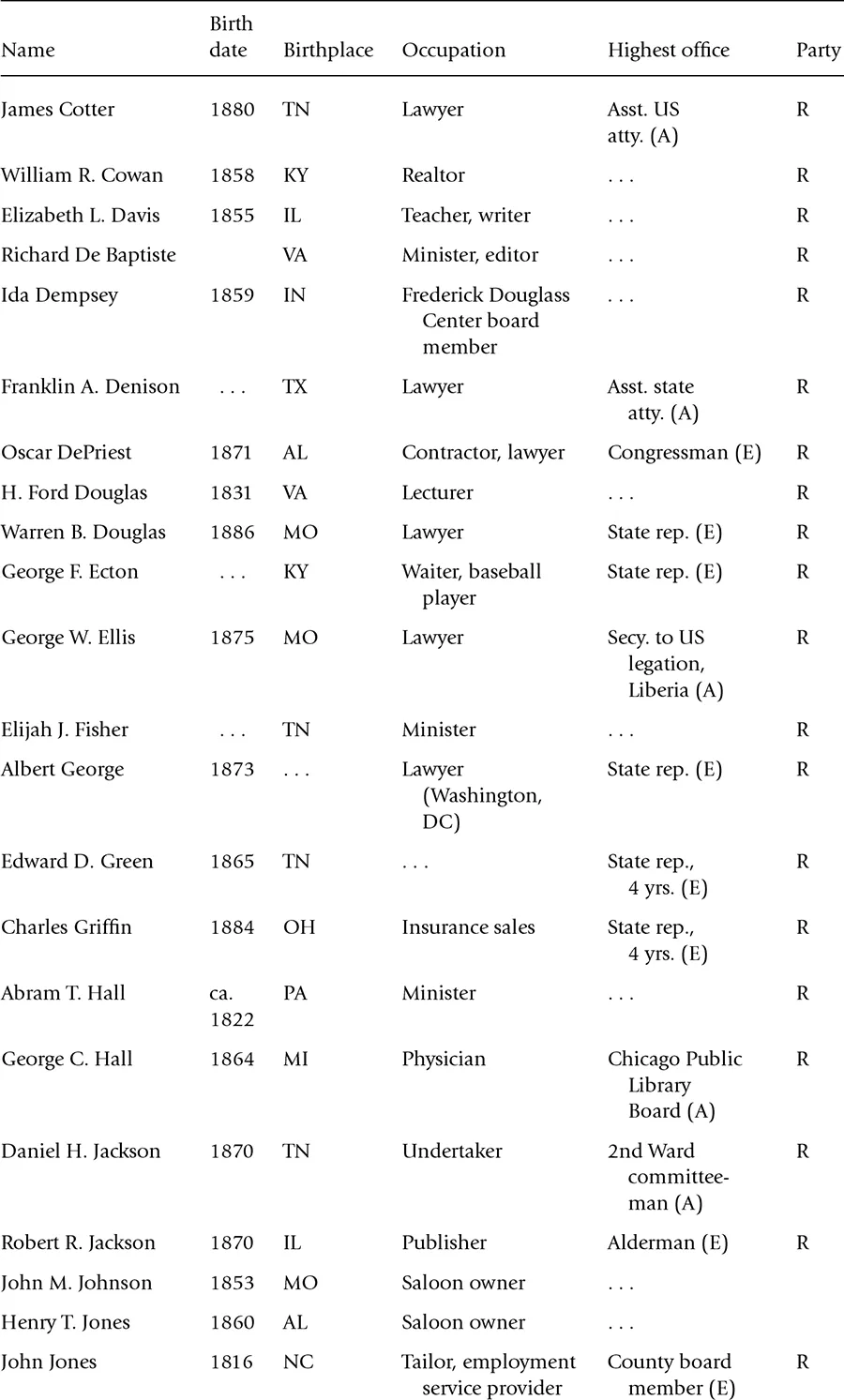
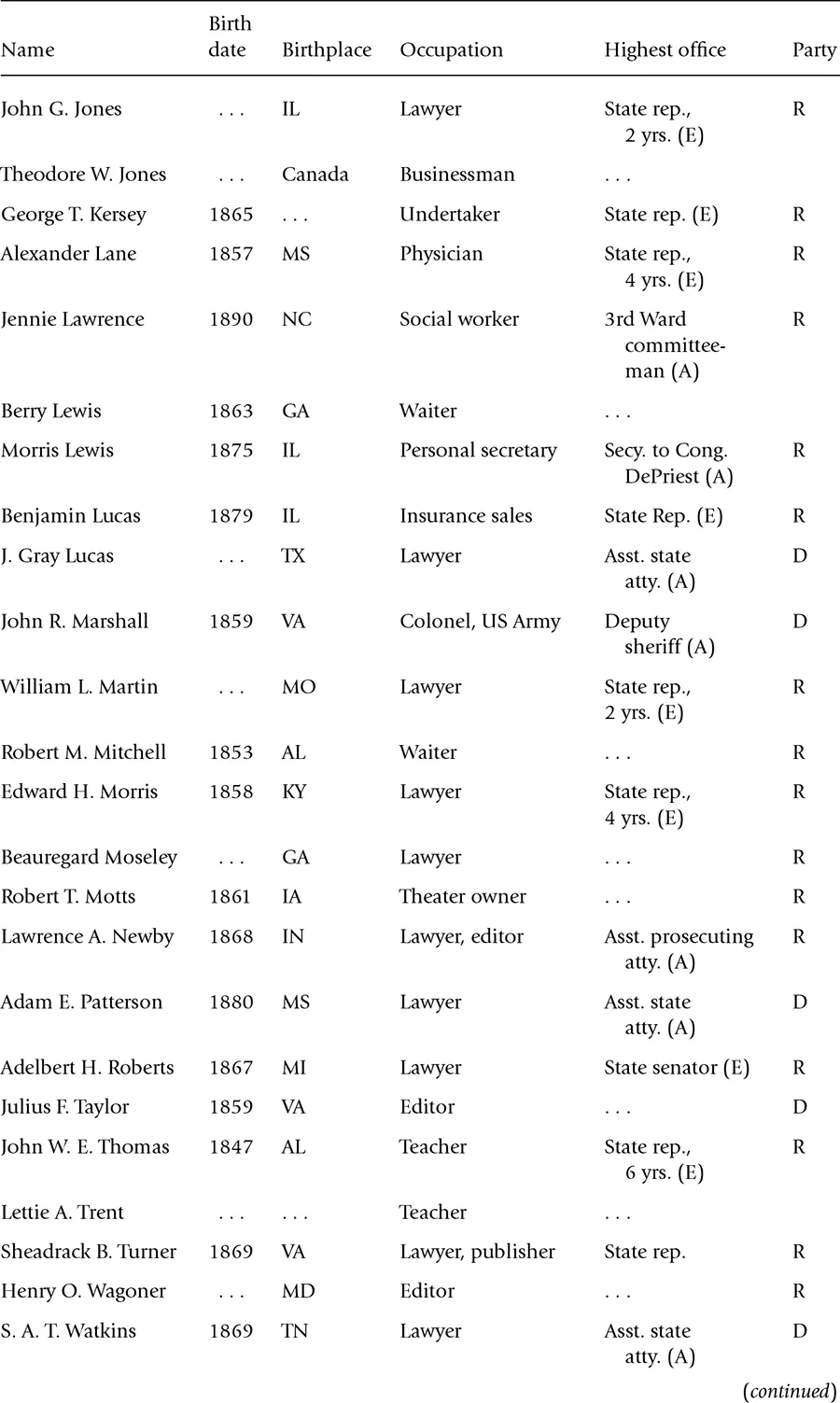
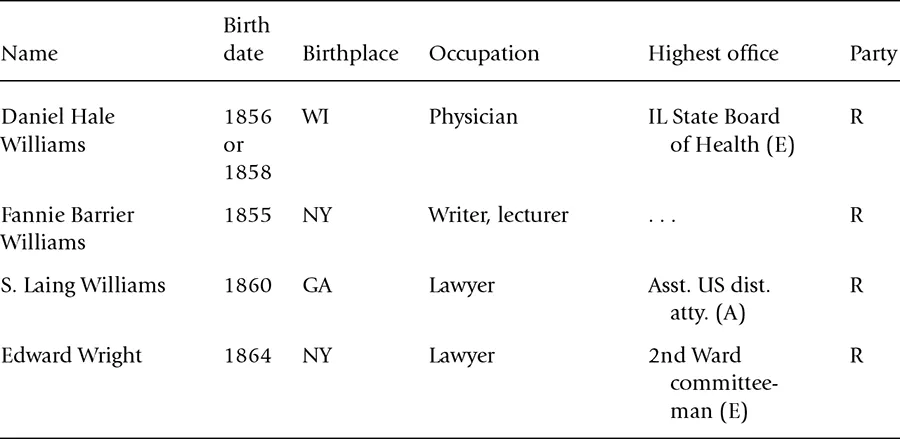
African American Political Leaders in Chicago, 1870–1920
Sources: Harold Foote Gosnell, Negro Politicians: The Rise of Negro Politics in Chicago (1935; reprint,
Chicago: University of Chicago Press, 1967); Charles Russell Branham, “The Transformation of Black Political Leadership in Chicago, 1864–1942,” (PhD diss., University of Chicago, 1981); Christopher Robert Reed, Black Chicago’s First Century, vol. 1, 1833–1900 (Columbia: University of Missouri Press, 2005).
Note: E = elected; A = appointed; R = Republican; D = Democrat
APPENDIX 2
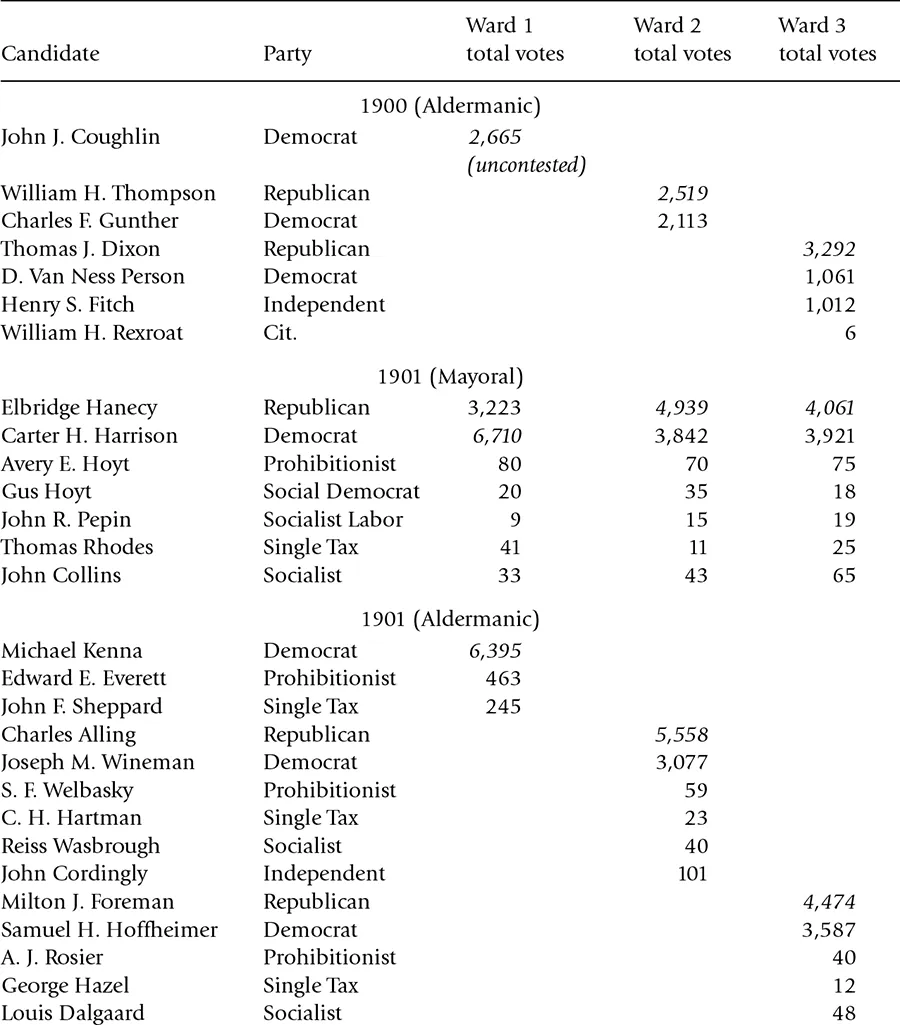
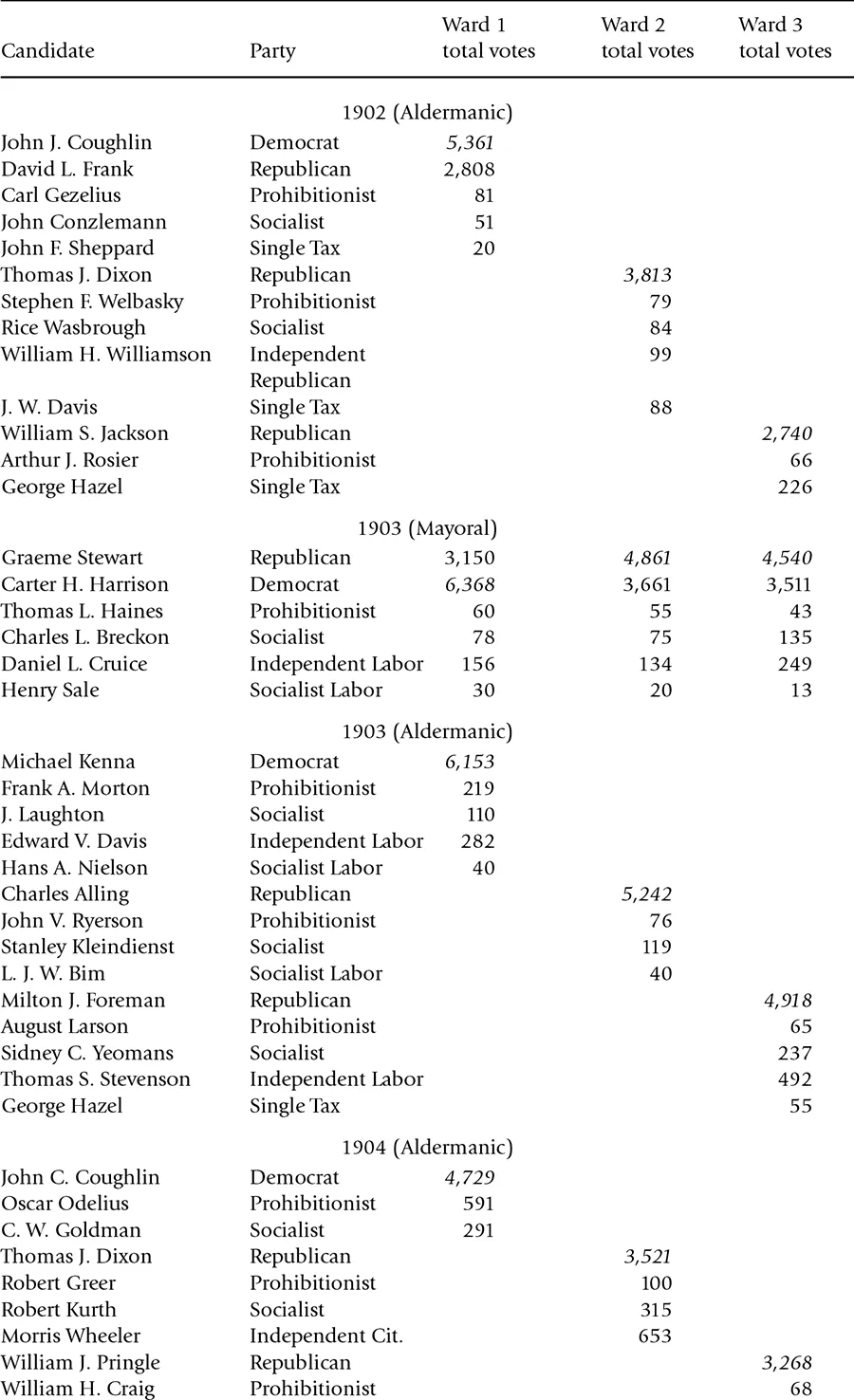
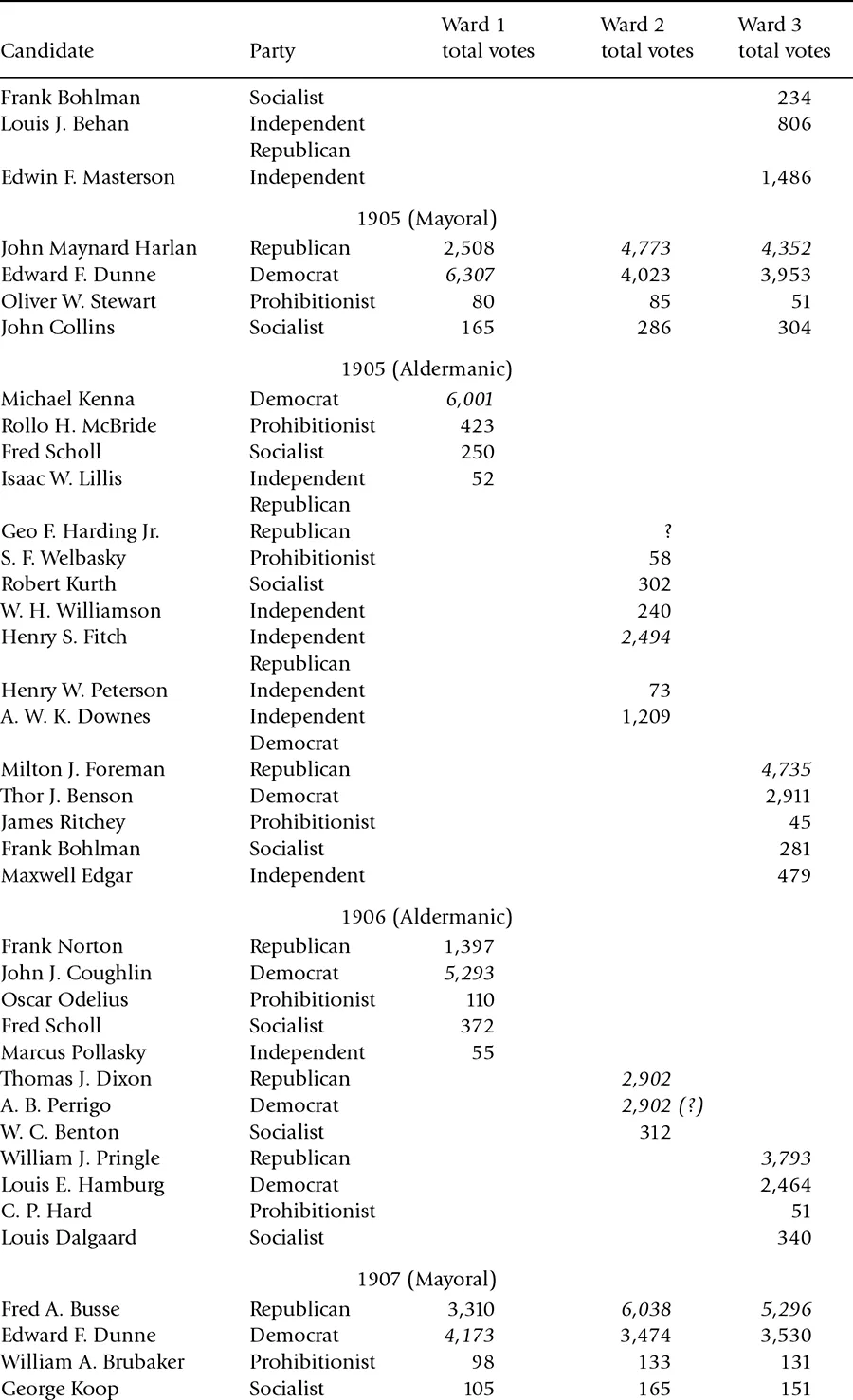
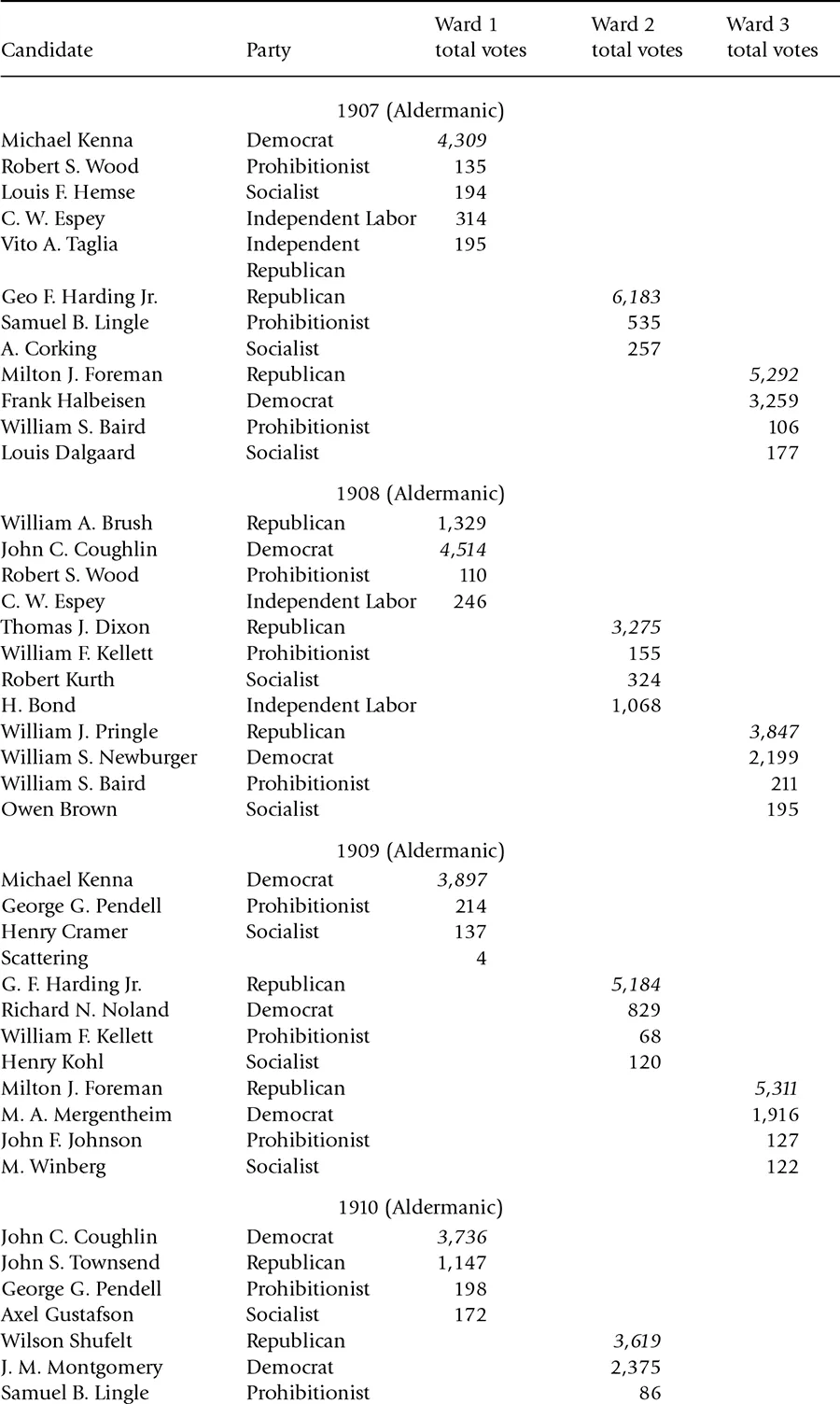
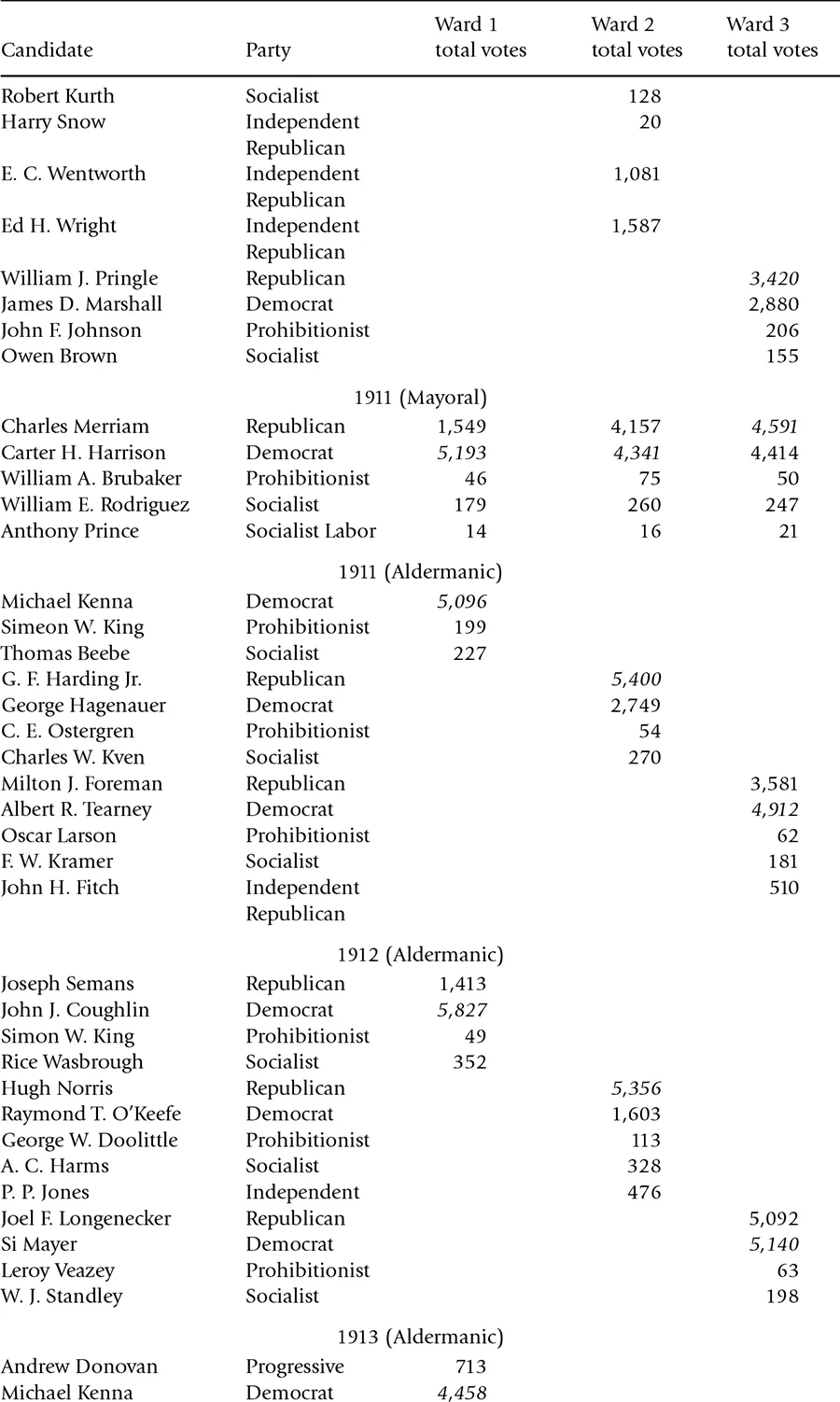
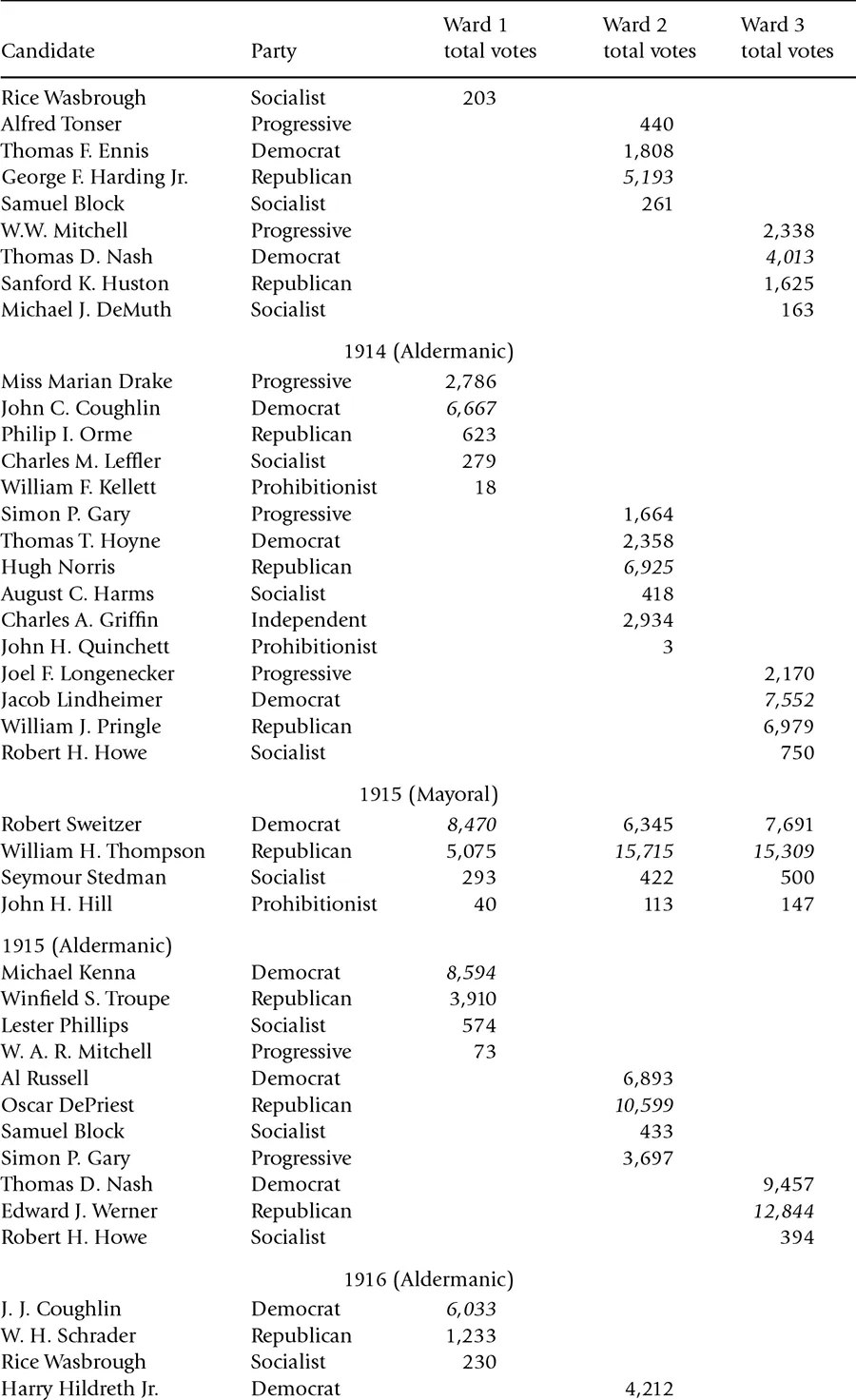
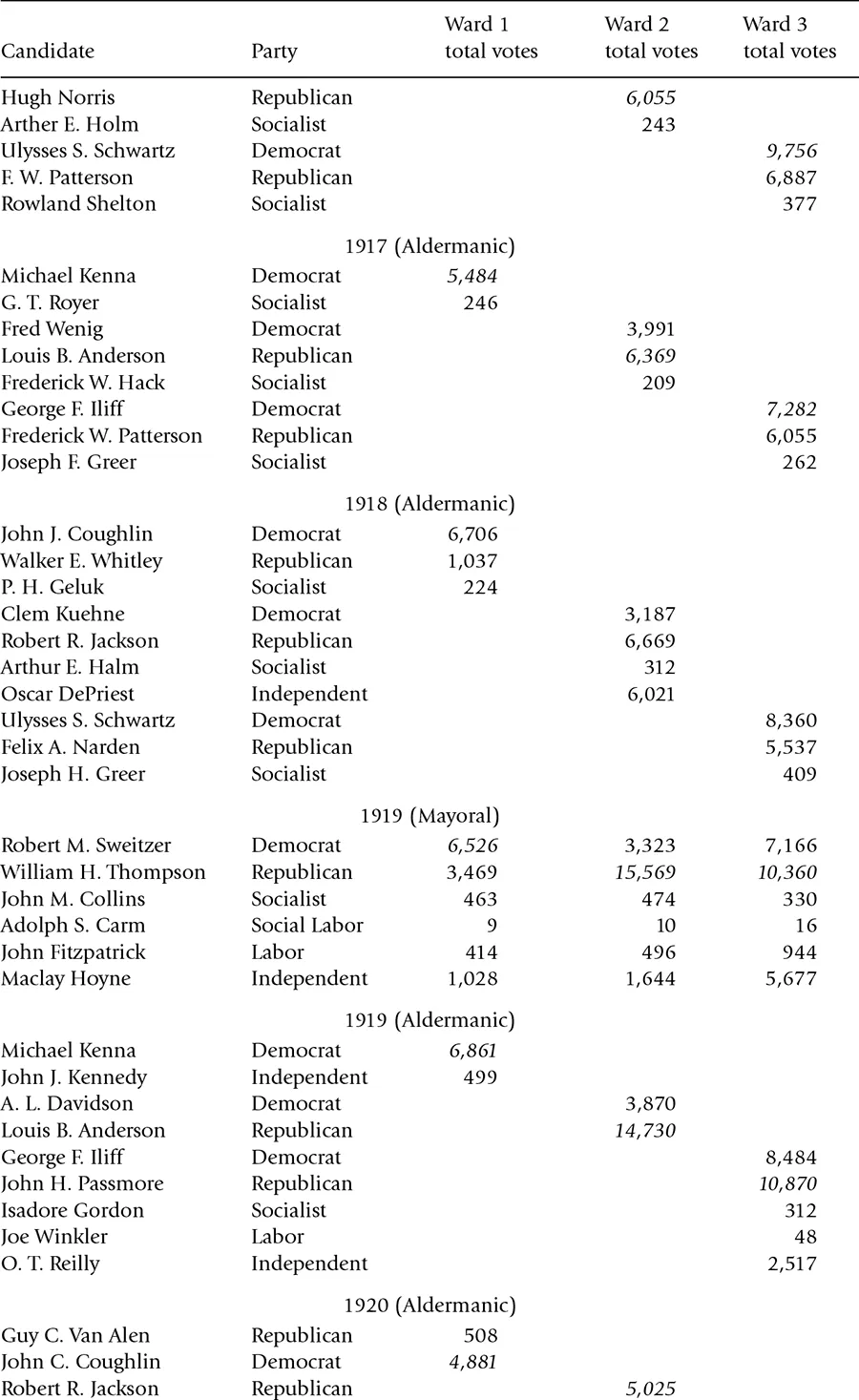
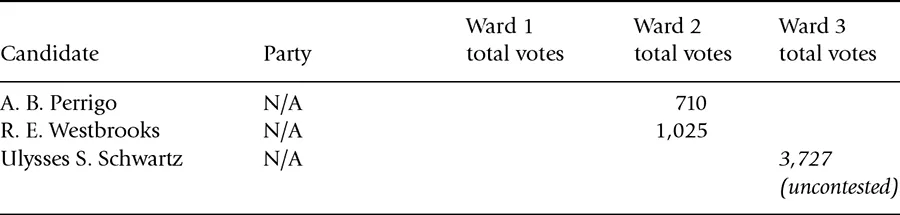
Election Results for Mayoral and Aldermanic Candidates in the First, Second, and Third Wards, 1900–1920
Sources: Chicago Daily News Almanac, 1900–1902; Chicago Daily News Almanac and Yearbook, 1903–1921.
Note: Italicized vote totals indicate election winners.
NOTES
INTRODUCTION
1. In 1900, 17 percent of southern African Americans lived in cities, making up about 31 percent of the region’s urban population. Most studies of the South in this period focus on rural and small-town life. Some work has focused on black community development in southern cities. See, for example, John W. Blassingame, Black New Orleans, 1860–1880 (Chicago: University of Chicago Press, 1973); Howard N. Rabinowitz, Race Relations in the Urban South, 1865–1890 (New York: Oxford University Press, 1978); George C. Wright, Life behind a Veil: Blacks in Louisville, Kentucky, 1865–1930 (Baton Rouge: Louisiana State University Press, 1985); Michael W. Fitzgerald, Urban Emancipation: Popular Politics in Reconstruction Mobile, 1860–1890 (Baton Rouge: Louisiana State University Press, 2002); David Goldfield, Region, Race, and Cities: Interpreting the Urban South (Baton Rouge: Louisiana State University Press, 1997).
2. William P. Jones, The Tribe of Black Ulysses: African American Lumber Workers in the Jim Crow South (Urbana: University of Illinois Press, 2005); Jones, “Black Milwaukee, Proletarianism, and the Making of Black Working-Class History,” Journal of Urban History 33 (2007): 544. Jones’s study of southern lumber workers and other recent works have gone a long way toward overturning the traditional narrative. But in much of the literature on African American life influenced by the 1920s and 1930s studies of Howard W. Odum and his students, black Americans were long portrayed, at best, as a prepolitical peasant class. See for example, Lynn Moss Sanders, Howard W. Odum’s Folklore Odyssey: Transformation to Tolerance through African American Folk Studies (Athens: University of Georgia Press, 2003). Among the important recent challenges to this view are Jones, The Tribe of Black Ulysses; Leslie Brown, Upbuilding Black Durham: Gender, Class, and Black Community Development in the Jim Crow South (Chapel Hill: University of North Carolina Press, 2008); Adele Oltman, Sacred Mission, Worldly Ambition: Black Christian Nationalism in the Age of Jim Crow (Athens: University of Georgia Press, 2008); Steven Hahn, A Nation under Our Feet: Black Political Struggles in the Rural South from Slavery to the Great Migration (Cambridge, MA: Harvard University Press, 2003).
3. See, for example, Daniel Letwin, The Challenge of Interracial Unionism: Alabama Coal Miners, 1878–1921 (Chapel Hill: University of North Carolina Press, 1998); Eric Arnesen, Waterfront Workers of New Orleans: Race, Class, and Politics, 1863–1923 (New York: Oxford University Press, 1991); Tera W. Hunter, To ’joy My Freedom: Southern Black Women’s Lives and Labor after the Civil War (Cambridge, MA: Harvard University Press, 1997); Peter J. Rachleff, Black Labor in the South: Richmond, Virginia, 1865–1890 (Philadelphia: Temple University Press, 1984).
4. In one of the very few efforts to compare African American life in southern and northern cities, Howard N. Rabinowitz writes, “In general, the differences in ...
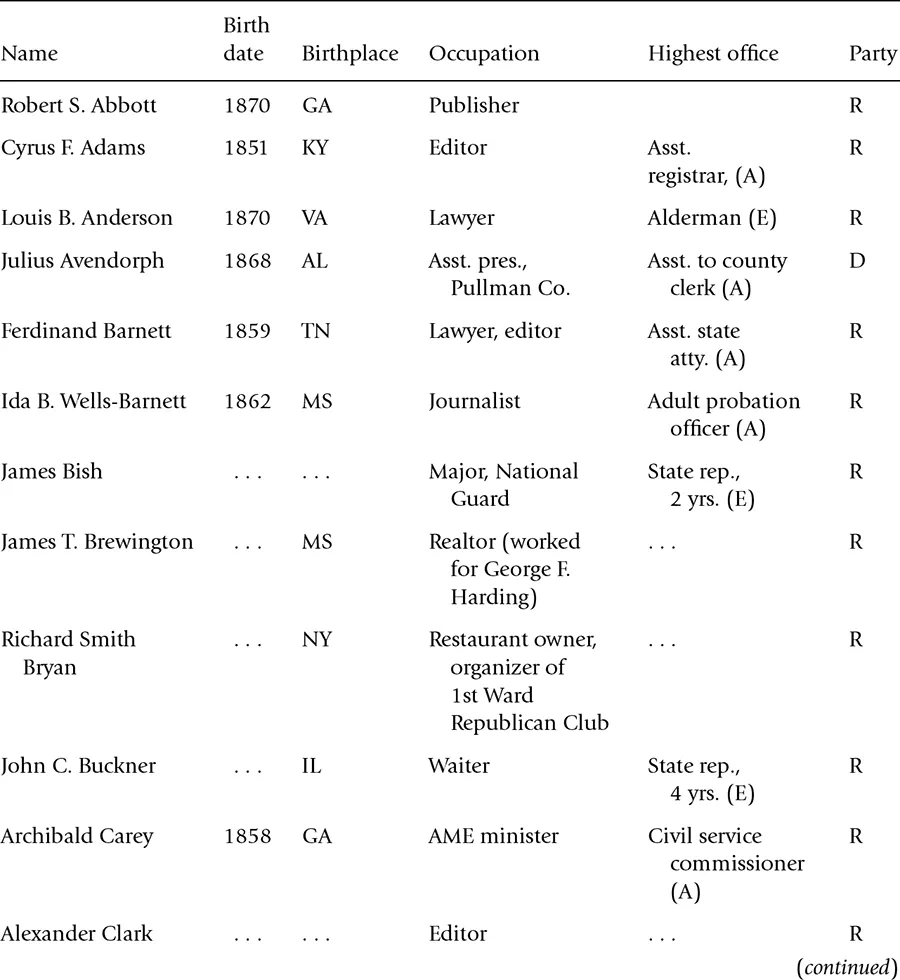
Table of contents

  1. Cover
  2. Copyright
  3. Title Page
  4. Dedication
  5. Epigraphs
  6. Contents
  7. Frontispiece
  8. Introduction. From Party to Race
  9. One. History, Memory, and One Man’s Vote
  10. Two. Setting Agendas, Demanding Rights, and the Black Press
  11. Three. Women’s Rights, the World’s Fair, and Activists on the National Stage
  12. Four. Challenging Urban Space, Organizing Labor
  13. Five. Virtue, Vice, and Building the Machine
  14. Six. Representation and “Race Men”
  15. Epilogue. Film, History, and the Birth of a Black Political Culture
  16. Acknowledgments
  17. Appendix 1: African American Political Leaders, 1870–1920
  18. Appendix 2: Election Results for Mayoral and Aldermanic Candidates in the First, Second, and Third Wards, 1900–1920
  19. Notes
  20. Index