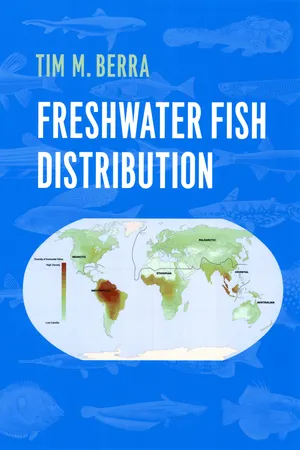
Freshwater Fish Distribution
eBook - PDF

Freshwater Fish Distribution

  1. English
  2. PDF
  3. Available on iOS & Android
eBook - PDF

Freshwater Fish Distribution

About this book

With more than 29,000 species, fishes are the most diverse group of vertebrates on the planet. Of that number, more than 12,000 species are found in freshwater ecosystems, which occupy less than 1 percent of the Earth's surface and contain only 2.4 percent of plant and animal species. But, on a hectare-for-hectare basis, freshwater ecosystems are richer in species than more extensive terrestrial and marine habitats. Examination of the distribution patterns of fishes in these fresh waters reveals much about continental movements and climate changes and has long been critical to biogeographical studies and research in ecology and evolution.

Tim Berra's seminal resource, Freshwater Fish Distribution,maps the 169 fish families that swim in fresh water around the world. Each family account includes the class, subclass, and order; a pronunciation guide to the family name; life cycle information; and interesting natural history facts. Each account is illustrated, many with historical nineteenth-century woodcuts.

Now available in paperback, this heavily cited work in ichthyology and biogeography will serve as a reference for students, a research support for professors, and a helpful guide to tropical fish hobbyists and anglers.

Frequently asked questions

Yes, you can cancel anytime from the Subscription tab in your account settings on the Perlego website. Your subscription will stay active until the end of your current billing period. Learn how to cancel your subscription.
No, books cannot be downloaded as external files, such as PDFs, for use outside of Perlego. However, you can download books within the Perlego app for offline reading on mobile or tablet. Learn more here.
Perlego offers two plans: Essential and Complete
  • Essential is ideal for learners and professionals who enjoy exploring a wide range of subjects. Access the Essential Library with 800,000+ trusted titles and best-sellers across business, personal growth, and the humanities. Includes unlimited reading time and Standard Read Aloud voice.
  • Complete: Perfect for advanced learners and researchers needing full, unrestricted access. Unlock 1.4M+ books across hundreds of subjects, including academic and specialized titles. The Complete Plan also includes advanced features like Premium Read Aloud and Research Assistant.
Both plans are available with monthly, semester, or annual billing cycles.
We are an online textbook subscription service, where you can get access to an entire online library for less than the price of a single book per month. With over 1 million books across 1000+ topics, we’ve got you covered! Learn more here.
Look out for the read-aloud symbol on your next book to see if you can listen to it. The read-aloud tool reads text aloud for you, highlighting the text as it is being read. You can pause it, speed it up and slow it down. Learn more here.
Yes! You can use the Perlego app on both iOS or Android devices to read anytime, anywhere — even offline. Perfect for commutes or when you’re on the go.
Please note we cannot support devices running on iOS 13 and Android 7 or earlier. Learn more about using the app.
Yes, you can access Freshwater Fish Distribution by Tim M. Berra in PDF and/or ePUB format, as well as other popular books in Biological Sciences & Biology. We have over one million books available in our catalogue for you to explore.

Table of contents

  1. Contents
  2. Preface to the Paperback Edition
  3. Preface to the 2001 Edition
  4. Acknowledgments
  5. Introduction
  6. Pronounciation of Family Names
  7. Families and Maps
  8. Agnatha-Jawless Fishes
  9. Petromyzontidae-Iampreys
  10. Geotridae-pouched lamprey
  11. Mordaciidae-Southern Hemisphere lampreys
  12. Gnathostomata-Jawed Fishes
  13. Chondrichthyes-Cartilaginous Fishes
  14. Carcharhinidae-requiem sharks
  15. Potamotrygonidae-river stingrays
  16. Dasyatidae-whiptail stingrays
  17. Sarcopterygii-Lungfishes
  18. Ceratodontidae-Australian lungfish
  19. Lepidosirenidae-South American lungfish
  20. Protopteridae-African lungfishes
  21. Actinopterygii-Ray-Finned Fishes
  22. Polypteridae-bichirs
  23. Acipenseridae-sturgeons
  24. Polyodontidae-paddlefishes
  25. Lepisosteidae-gars
  26. Amiidae-bowfin
  27. Osteoglossidae-bonytongues
  28. Pantodontidae-butterfly fish
  29. Hiodontidae-mooneye and goldeneye
  30. Notopteridae-featherbacks
  31. Mormyridae-elephantfishes
  32. Gymnarchidae-aba
  33. Anguillidae-freshwater eels
  34. Denticipitidae-denticle herring
  35. Engraulidae-anchovies
  36. Pristigasteridae-pristigasterids
  37. Clupeidae-herrings
  38. Sundasalangidae-sundasalangids
  39. Kneriidae-kneriids
  40. Phractolaemidae-snake mudhead
  41. Cyprindae-minnows, carps
  42. Gyrinoceilidae-algae eaters
  43. Catostomidae-suckers
  44. Cobitidae-loaches
  45. Balitoridae-river or hillstream loaches
  46. Distichodontidae-distichodontids
  47. Citharinidae-citharinids
  48. Parodontidae-parodontids
  49. Curmimatidae-curimatids
  50. Prochilodontidae-prochilodontids
  51. Anostomidae-anostomids, headstanders
  52. Chilodontidae-chilodontids, headstanders
  53. Crenuchidae-crenuchids, South American darters
  54. Hemiodontidae-hemiodontids
  55. Alestidae-African characins or tetras
  56. Gasteropelecidae-hatchetfishes, flying characins
  57. Characidae-characids
  58. Acestrorhynchidae-acestrorhynchids
  59. Cynodontidae-cynodontids
  60. Erythrinidae-trahiras
  61. Lebiasinidae-lesbiassinids
  62. Ctenoluciidae-pike characins
  63. Diplomystidae-diplomystids
  64. Cetopsidae-whale-like catfishes
  65. Ictaluridae-North American or bullhead catfishes
  66. Claroteidae-claroteid catfishes
  67. Austroglanididae-austroglanidid catfishes
  68. Bagridae-bagrid catfishes
  69. Pimelodidae-long-whiskered catfishes
  70. Cranoglanididae-armorhead catfishes
  71. Siluridae-silurid catfishes
  72. Schilbeidae-schilbeid catfishes
  73. Pangasiidae-pangasiid catfishes
  74. Chacidae-squarehead, angler, or frogmouth catfishes
  75. Plotosidae-eeltail catfishes
  76. Clariidae-air-breathing or walking catfishes
  77. Heteroponeustidae-air sac or stinging catfishes
  78. Malapteruridae-electric catfishes
  79. Arridae-sea catfishes
  80. Mochokidae-upside-down catfishes, squeakers
  81. Doradidae-thorny or talking catfishes
  82. Auchenipteridae-driftwood catfishes, slopehead catfishes
  83. Amblycipitidae-torrent catfishes
  84. Akysidae-stream catfishes
  85. Sisoridae-sisorid catfishes
  86. Erethistidae-erethistid catfishes
  87. Asprendinidae-banjo catfishes
  88. Amphiliidae-loach catfishes
  89. Nematogenyidae-nematogenyid catfishes
  90. Trichomycteridae-parasitic or pencil catfishes
  91. Callicthyidae-armored catfishes
  92. Scoloplacidae-spiny dwarf catfishes
  93. Loricariidae-suckermouth armored catfishes
  94. Astroblepidae-climbing catfishes
  95. Sternopygidae-glass knifefishes
  96. Rhamphichthyidae-sand knifefishes
  97. Hypopomidae-hypopomid knifefishes
  98. Apteronotidae-ghost knifefishes
  99. Gymnotidae-naked-back knifefishes
  100. Electrophoridae-electric eel or electric knifefish
  101. Esocidae-pikes
  102. Umbridae-mudminnows
  103. Osmeridae-smelts
  104. Salangidae-icefishes or noodlefishes
  105. Retropinnidae-Southern Hemisphere smelts and graylings
  106. Lepidogalaxiidae-galaxiids
  107. Salmonidae-salmons, trouts
  108. Percopsidae-trout-perches
  109. Aphredoderidae-pirate perch
  110. Bythitidae-viviparous brotulas
  111. Gadidae-cods
  112. Batrachoididae-toadfishes
  113. Mugilidae-mullets
  114. Bedotiidae-bedotiids
  115. Melanotaeniidae-rainbowfishes
  116. Pseudomugilidae-blue eyes
  117. Atherinidae-silversides
  118. Telmatherinidae-sailfin silversides or Celebes rainbowfishes
  119. Phallostethidae-phallostethids or priapium fishes
  120. Adrianichthyidae-ricefishes, medakas
  121. Belonidae-needlefishes
  122. Hemiramphidae-halfbreaks
  123. Aplocheilidae-Old World aplocheiloids
  124. Rivulidae-New World apolocheiloids or rivulines
  125. Profundulidae-Middle American killifishes
  126. Fundulidae-topminnows and killifishes
  127. Valenciidae-valenciids
  128. Anablepidae-four-eyed fishes
  129. Poeciliidae-poeciliids
  130. Goodeidae-goodeids
  131. Cyprinodontidae-pupfishes, killifishes
  132. Gasterosteidae-sticklebacks
  133. Syngnathidae-pipefishes and seahorses
  134. Indostomidae-indostomids
  135. Synbranchidae-swamp eels
  136. Chaudhuriidae-earthworm eels
  137. Mastacembelidae-spiny eels
  138. Cottidae-sculpins
  139. Comephoridae-Baikal oilfishes
  140. Abyssocottidae-abyssocottids
  141. Centropomidae-snooks
  142. Ambassidae-Asiatic glassfishes
  143. Moronidae-temperate basses
  144. Percichthyidae-temperate perches
  145. Centrarchidae-sunfishes
  146. Percidae-perches, darters
  147. Apogonidae-cardinalfishes, mouth-almighty
  148. Coiidae-tigerperches
  149. Polyneimidae-threadfins
  150. Sciaenidae-drums, croakers
  151. Monodactylidae-moonfishes
  152. Toxotidae-archerfishes
  153. Nandidae-Asian leaffishes
  154. Polycentridae-African and South American leaffishes
  155. Pristolepididae-pristolepidids
  156. Terapontidae-grunters
  157. Kuhliidae-flagtails
  158. Elassomatidae-pygmy sunfishes
  159. Cichlidae-cichlids
  160. Embiotocidae-surfperches
  161. Bovichthyidae-bovichthyids
  162. Cheimarrhichthyidae-torrentfish
  163. Rhyacicthyidae-odontobutids
  164. Odontobutidae-odontobutids
  165. Eleotridae-sleepers, gudgeons
  166. Gobiidae-gobies
  167. Kurtidae-nurseryfishes
  168. Scatophagidae-scats
  169. Luciocephalidae-pikehead
  170. Anabantidae-climbing gouramies
  171. Helostomatidae-kissing gourami
  172. Belontiidae-gouramies
  173. Osphronemidae-giant gouramies
  174. Channidae-snakeheads
  175. Achiridae-American soles
  176. Soleidae-soles
  177. Cynoglossidae-tonguefishes
  178. Tetraodontidae-puffers
  179. Glossary
  180. Appendix A: Principal Rivers of the World
  181. Appendix B: Principal Lakes of the World
  182. Bibliography
  183. Index
  184. Alphabetical List of Families